Third-longest US govt. shutdown in history continues: Here is what you need to know
By Ali Ziraatpishe
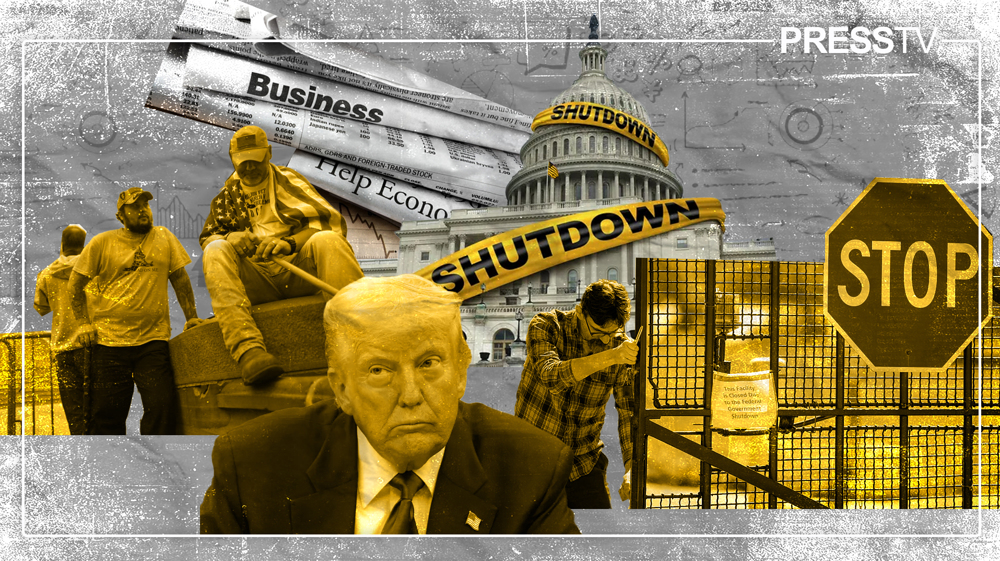
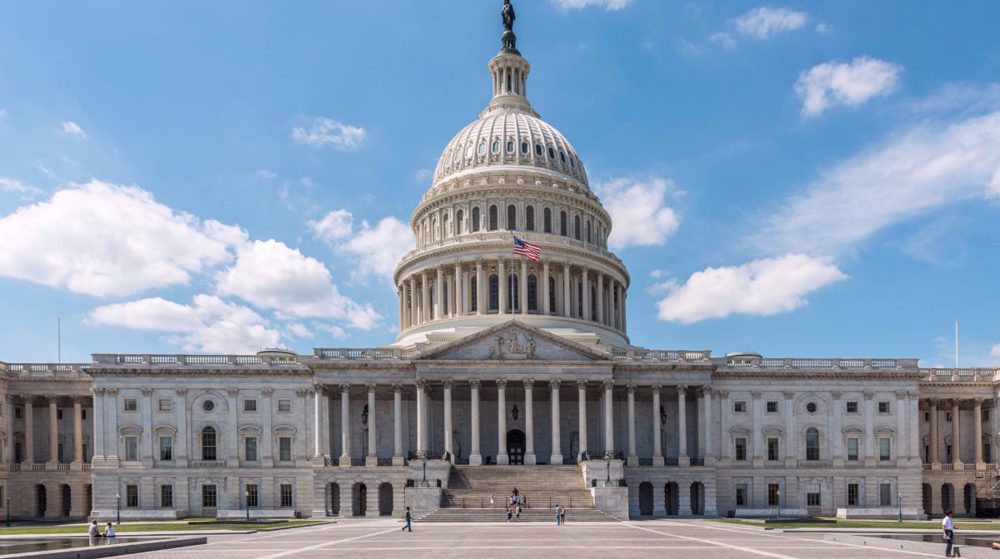
The US government shutdown has now entered its 18th day with seemingly no end in sight as Republicans and Democrats fail to reach an agreement to resolve the impasse.
It is now the third-longest shutdown in American history in its current form and shape, overshadowed only by the shutdowns of 1995 and 2018-19, according to US media.
US Senate Majority Leader John Thune adjourned the chamber for the weekend following Thursday’s votes, which effectively means the funding lapse will persist until at least Monday.
Meanwhile, the House of Representatives has been out of session since September 19 and has no plans on the agenda to reconvene until the shutdown ends.
The shutdown, which has in recent decades become a dark American phenomenon, has left hundreds of thousands of federal workers without pay and critical public services suspended.
Reports indicate that more than 900,000 federal employees are affected, including around 700,000 “essential” workers who have been forced to continue working without pay, while over 4,000 employees have been laid off.
Economic analysts estimate that each week of the shutdown costs the US economy over $1.5 billion in lost output, with additional indirect damage to small businesses, tourism, and public programs.
Key services are also under strain. The Internal Revenue Service (IRS) is furloughing nearly half its staff, while Social Security cost-of-living-adjustment (COLA) announcements have been delayed, and the Women, Infants, and Children (WIC) nutrition program has received emergency funding to keep operating.
According to reports, the Supreme Court is set to run out of federal funding on Saturday without new funds approved by Congress, effectively paralyzing the apex court.
On October 15, another attempt in the Senate to advance the House-passed funding bill failed, marking yet another stalled effort to reopen the government.
Washington remains trapped in a stalemate, with the Republican administration led by President Donald Trump insisting on passing its spending bill without changes, while Democrats demand renewed healthcare subsidies.
The US government shutdown is set to continue into the next week as both Republicans and Democrats fail to agree on extending federal funding for the fourth time.
— Press TV 🔻 (@PressTV) October 4, 2025
Follow Press TV on Telegram: https://t.co/LWoNSpkJSh pic.twitter.com/ozLyzQfIwV
What is a shutdown and why does it happen in the US?
In the United States, Congress must approve funding every fiscal year through appropriations bills. If it fails to do so, or fails to pass a temporary measure called a “continuing resolution,” the government legally loses the authority to spend money.
Under the “Anti-Deficiency Act,” federal agencies are prohibited from operating without approved funds. This leads to what is known as a “government shutdown.”
During such shutdowns, non-essential operations close, while essential services continue, often without pay, which makes the whole process problematic.
National parks, museums, and research institutions shut down. Tax offices stop processing returns. Workers are sent home, families go unpaid, and contractors lose jobs altogether.
US is the only major industrial country in the world where the government can routinely close its doors just because politicians cannot agree on a budget.
Shutdowns are not acts of economic necessity but symptoms of political infighting. They occur when one party uses government funding as leverage to extract concessions from the other.
How did the current shutdown happen?
The present crisis began after the US Congress failed to agree on appropriations for the 2026 fiscal year before the September 30 deadline.
Republicans passed a temporary funding bill, but Democrats blocked it in the Senate, demanding an extension of healthcare subsidies first introduced under the Affordable Care Act. Republicans, in turn, refused to include those provisions.
Meanwhile, Trump has turned the shutdown into a show of strength amid his falling ratings. His administration has frozen $26 billion in federal funds directed toward Democratic-led states for transit, renewable energy, and housing.
Observers call this an attempt to punish his political rivals. Trump’s allies argue that the cuts are necessary for “fiscal discipline,” even as ordinary citizens face uncertainty over pay, benefits, and healthcare.
US government shutting down again; Trump threatens permanent reductions @RaminMazaheri2 reports from Washington.
— Press TV 🔻 (@PressTV) October 2, 2025
Follow: https://t.co/B3zXG74hnU pic.twitter.com/LaLTb1yUlH
What are the worst effects of the current shutdown?
The consequences of the ongoing shutdown have been devastating for the Americans. Nearly three-quarters of a million federal employees have been laid off or are working without pay.
Many report skipping rent or relying on food banks. About one in four federal workers say they cannot cover basic expenses if the shutdown continues for another month.
Smithsonian museums and national parks are closed, halting tourism and small-business income. Environmental inspections, housing loans, and federal grants are suspended.
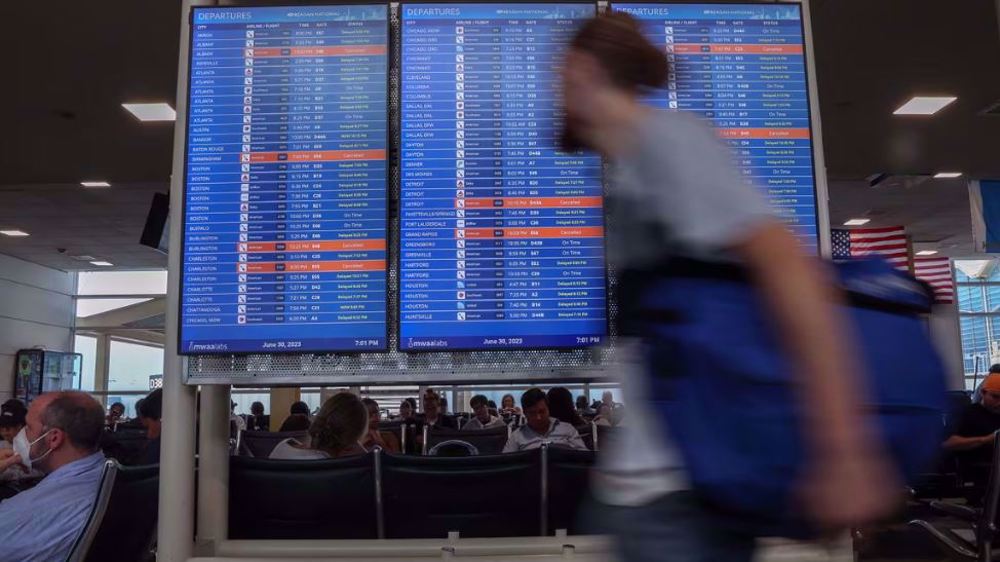
Even air travel has been affected, as shortages of air traffic controllers cause flight delays at major airports.
The broader economy is beginning to feel the shockwaves. According to the Washington Post, the shutdown could soon reduce GDP growth by up to 0.3 percent per month, translating into billions in lost productivity.
Small contractors, especially janitorial and security workers, will not receive back pay at all. Families depending on federal childcare and nutrition assistance risk losing benefits, leaving millions of children and elderly people vulnerable.
Military families are also under strain. Although the administration has ordered emergency payments to active-duty service members, many military spouses are among the unpaid civilian workers.
How is Trump using the shutdown to advance his political agenda?
For Trump, the shutdown has become a political weapon. By refusing to compromise, he presents himself as the defender of “fiscal responsibility” while portraying Democrats as reckless spenders. This strategy appeals to his base, who see federal agencies as part of a hostile “deep state.”
By freezing billions in federal aid to Democratic-governed states, Trump has turned public policy into a tool of punishment.
Governors in California, New York, and Illinois have accused the administration of using taxpayer money to coerce local governments.
The tactic further divides an already fractured nation, intensifying tensions between federal and state authorities.
Trump’s political team has also used the crisis to strengthen campaign messaging ahead of the 2026 elections.
By claiming that the shutdown proves Washington is “broken,” his camp seeks to portray Trump as the only figure capable of enforcing change, even if it means dismantling normal governance.
Meanwhile, millions of Americans are being forced to choose between paying bills and buying food, as politicians in Washington continue to argue along ideological lines.
US leaves UN Human Rights Council after probe finds possible American war crimes in Iran

Yemen dismisses Mecca drone allegation, says kiswa donors to Epstein target sanctities
US extends ban on Palestinians scheduled to attend UNGA



Syria’s HTS declines Saudi bid for militants against Yemeni forces: Report
VIDEO | Pentagon criticized for failing to release real number of US troops casualties
Araghchi: Military intervention cannot create security; coercion cannot bring peace
VIDEO | US president using Greenland as foreign policy success
VIDEO | Press TV's news headlines
Jordan: the Kingdom of compromise - Part 2
University of Tehran scientists develop bio-scaffolds for bone repair
Handala hacker group publishes selfie images of 700 Israeli ‘security’ personnel




 PressTV NEWSLETTER
now
PressTV NEWSLETTER
now
 This makes it easy to access the Press TV website
