How Hezbollah joined pro-Gaza front in a game-changing move on Oct. 8, 2023
By Roya Pour Bagher
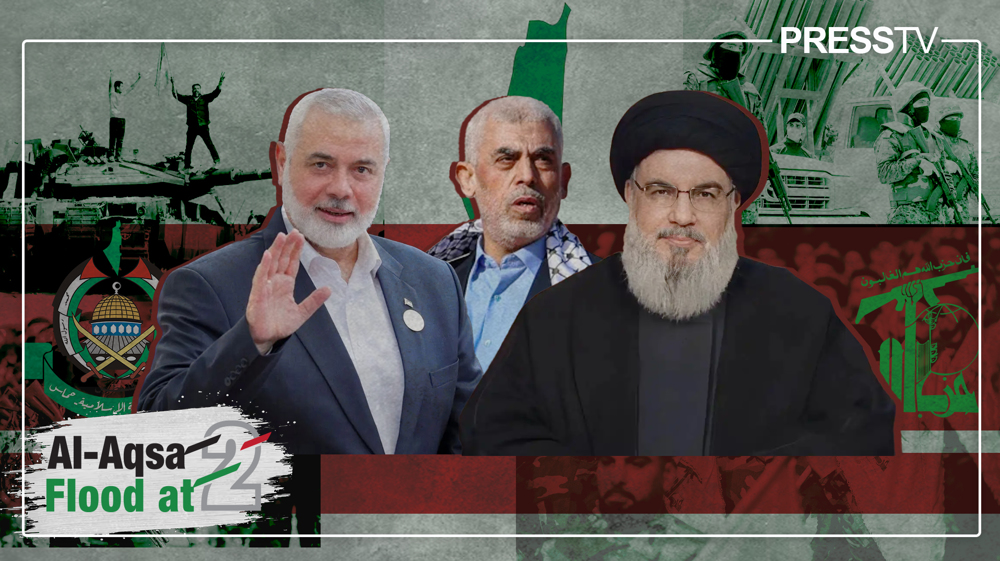
On October 7, 2023, the Palestinian resistance rose against decades of Israeli occupation and oppression, striking a decisive blow to the settler-colonial Zionist entity.
The Gaza-based resistance movement Hamas launched the historic Operation al-Aqsa Flood without any coordination with other resistance factions in the region. It was a purely independent move that surprised everyone around the globe, including its allies in the region.
While Hamas did not ask for any support, the Lebanese resistance movement Hezbollah did not hesitate to fulfill its moral and humane responsibility to support the Palestinian brethren.
Just a day later, on October 8, 2023, Hezbollah joined the front and launched its own operations against the Israeli regime in solidarity with the people and resistance of Palestine.
Hezbollah is profoundly familiar with the Zionist entity’s aggression and brutality, having prevailed in two wars previously imposed by Israel on the people of Lebanon. It successfully forced out the Israeli occupation in the 1980s and later compelled the regime to a ceasefire just 33 days after Israel began another war on Lebanon in 2006.
In spite of the many challenges Hezbollah was facing, with its people under immense political and economic pressure, the resistance demonstrated to the world what true honor and dignity mean—in a world that shamelessly witnessed the genocide unfold without doing anything.
Hezbollah proved that a front’s size does not matter, material strength is an illusion, and that true glory belongs to the free who stand up to evil. A cliché applauded in theatres and cinemas was embodied by the resistance, but it did not expect a standing ovation at the end.
Despite all the anti-Hezbollah rhetoric that circulated online, both by pro-Israeli elements and resentful Takfiris who claimed it was all for show, the missiles were seamlessly raining down in the northern occupied territories.
They mocked Hezbollah’s targeting strategy like ignorant observers of a chess game. The observatory towers that were targeted blinded the enemy. Like a chess player planning every move to hit checkmate, Hezbollah was planning each strike strategically, a mastermind only to be understood and appreciated too late by many around the world.
These resistance operations forced the Israeli army to divide its forces, resources, and attention between a strong Palestinian resistance in Gaza and a brave, persistent front in the north
Hezbollah: Operation Al-Aqsa Flood will have historic, strategic implications for regionhttps://t.co/eoQKDwK4Xc
— Press TV 🔻 (@PressTV) October 7, 2024
This exhausted the Israeli military, particularly once the regime began its ground invasion against Hezbollah in south Lebanon—a major miscalculation, since the resistance’s forte is in its field soldiers and their familiarity with the territory.
The land, known by the resistance fighters like the back of their hand, was a maze to the foreign occupation forces. In less than 24 hours, several Israeli tanks were destroyed by Hezbollah.
True to martyred Hezbollah leader Sayyed Hassan Nasrallah’s words, the occupation soldiers entered vertically and were returned horizontally to be buried or treated.
Hezbollah’s relentless and calculated campaign rendered vast swathes of the northern occupied territories uninhabitable, forcing the mass flight of tens of thousands of Israeli settlers who understood after 75 years that they would never make sacrifices for land that is not theirs.
This flight was highly significant in shaking the foundation of the illegal settler entity.
The supportive front was a turning point, effectively paralyzing the Zionist entity. The greatest proof of this was the Israeli war on Lebanon in October 2024. The regime understood that it could not possibly eliminate the Palestinian resistance as long as Hezbollah existed.
While international alliances exist, calling the resistance factions in the region mere allies is an injustice. Lebanon’s Hezbollah, Iraq’s Hashd al-Shabi, Yemen’s Ansarallah, and the Islamic Republic of Iran proved that this is an honorable brotherhood, the only moral soldiers on earth with a soul and humane conscience, something the world considered dead, having watched genocide live-streamed in the presence of so-called international peacekeeping bodies.
Hezbollah’s supportive front came at a tremendous cost. What was a brotherhood of arms soon became a brotherhood of blood as the people of Lebanon endured incalculable losses.
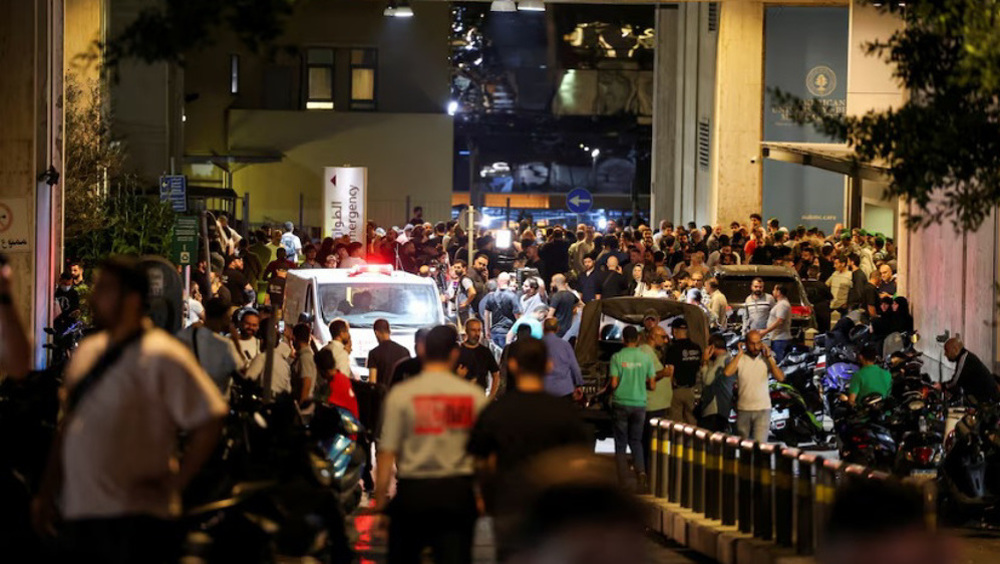
The Israeli regime launched thousands of airstrikes across Lebanon, deliberately targeting residential areas, hospitals, ambulances, journalists, and everything else. The sacrifices made by the Lebanese people and the resistance fighters were, and continue to be, a testament to the depth of their commitment to the principles of humanity.
The supporters of Hezbollah raised the slogan, ‘Never to Humiliation,’ and that voice echoed loudly in the 2024 Israeli war. Everyone understood that Lebanon would never surrender to tyrants because they had been raised in the school of Karbala.
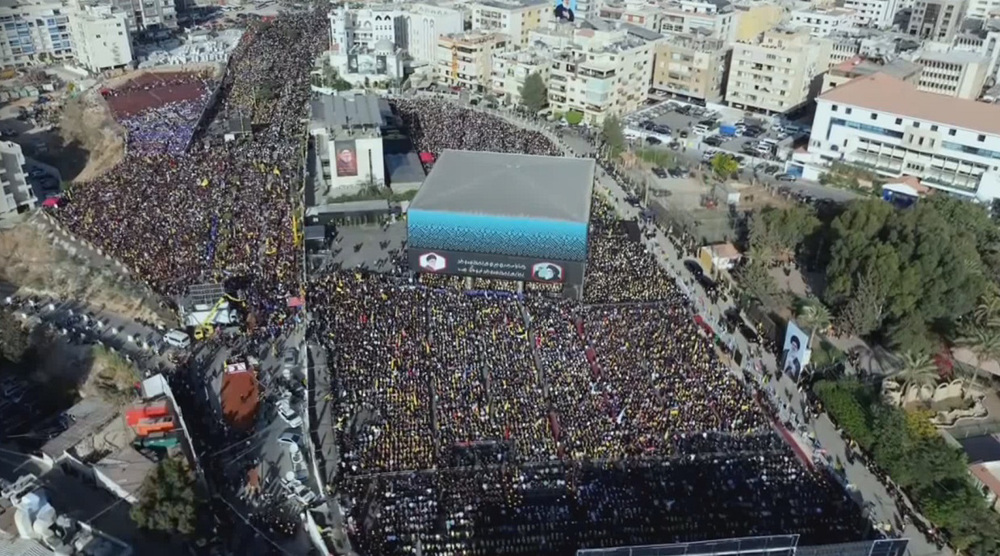
✍️ Feature - 'More alive than ever': Life and legacy of martyred Hezbollah leaders, told by their families
— Press TV 🔻 (@PressTV) September 29, 2025
By @hibamoradd and @latifahusseinihttps://t.co/FUjU3GPD6N pic.twitter.com/oRMAdFL4Xx
However, the Israeli war on Lebanon was inevitable, regardless of the front opened by Hezbollah. The regime had blatantly announced its “Greater Israel” project—a long-held, expansionist ambition—several times.
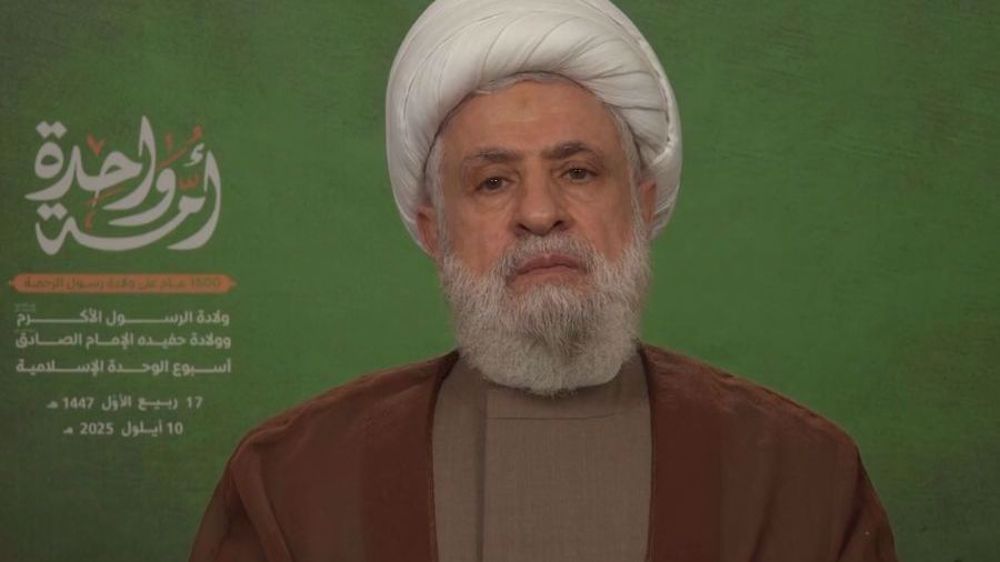
Resistance leaders like Yemen’s Ansarallah chief, Sayyed Abdul Malik al-Houthi, and Hezbollah chief, Sheikh Naim Qassem, repeatedly warned that the attacks on Gaza are simply the first step of that plan. By opening several fronts, the resistance factions revealed that the only path to liberation for all people of the region lies in a unified resistance.
The Lebanese resistance’s operation on October 8 was the beginning of a chain reaction of support from across the region, creating a multi-front struggle that the Zionist entity could not contain.
Soon enough, Yemen joined. The honorable Ansarallah entered the battlefield, imposing a naval blockade in the Red Sea and striking vessels linked to the Israeli regime, thereby disrupting a vital economic and military supply line.
Their missiles also struck deep inside the occupied territories, hitting Israeli occupation targets. From the east, the resistance in Iraq joined, launching decisive strikes against strategic American military positions in the region.
The Islamic Republic, the backbone of the resistance axis, decisively avenged the blood of martyrs Ismail Haniyeh and Sayyed Hassan Nasrallah, assassinated by the Zionist regime.
Later on, the three rounds of True Promise operations destroyed Zionist infrastructures within the occupied territories. There are 195 countries, and yet, only four fronts carried humanity on their shoulders. The axis of resistance may one day be recognized as its sole defender.
The supportive front in Lebanon, ignited within 24 hours of the al-Aqsa Flood and sustained for two years, has without a doubt been a game-changer.
It shattered the enemy’s illusion of invincibility and proved that the fate of Palestine is linked to the entire region. The chain of resistance that was forged was one of a shared belief in justice and has shown to the world that while empires may carry out unimaginable crimes, it is the people who, when united in the path of truth and justice, will reach the pre-destined fate of liberation.
Roya Pour Bagher is a Tehran-based writer.
(The views expressed in this article do not necessarily reflect those of Press TV.)
Israel's Ali al-Taher ‘operational control’ claim aims to shape perceptions than reflect reality
Hezbollah blames Lebanon govt.’s ‘failure’ as Israel escalates ‘killing and destruction’
Three killed, 23 wounded in fresh Israeli strikes on Lebanon



Iran military warns US of ‘more severe blows’ to warships if aggression continues
‘Governments continue to fail’: Freedom Flotilla sails again to break Israel’s Gaza blockade
US approves $5 billion arms sale to Saudi Arabia as it renews aggression against Iran
VIDEO | Palestinian football returns after 3-year pause due to genocidal war
Iran releases details of US bomb used in attack on wedding ceremony
VIDEO | Press TV's news headlines
Syria’s Suweida: Fresh fighting reported between HTS forces, Druze fighters
US military claims it struck three Iranian oil tankers in Persian Gulf waters


 PressTV NEWSLETTER
now
PressTV NEWSLETTER
now
 This makes it easy to access the Press TV website
