From Bush’s poodle to Trump’s henchman, Tony Blair’s world comes full circle
By Ivan Kesic
Last week, US President Donald Trump unveiled a 20-point proposal for post-war Gaza, which immediately raised eyebrows with many seeing it as a blueprint for Palestinian surrender cloaked in bad diplomatic language.
At its core, the plan demands that the Hamas resistance movement disarm within 72 hours and release all Israeli captives in exchange for a phased Israeli troop withdrawal.
Yet it provides no binding commitment to end the military occupation, no clear path to Palestinian sovereignty, and no guarantee against a resumption of genocidal aggression against Palestinians.
While Hamas did not outright reject the proposal in its response on Friday, it also refrained from giving an unconditional ‘yes.’ The reply was measured and smart, emphasizing the need for a national consensus on discussions concerning Palestinian rights.
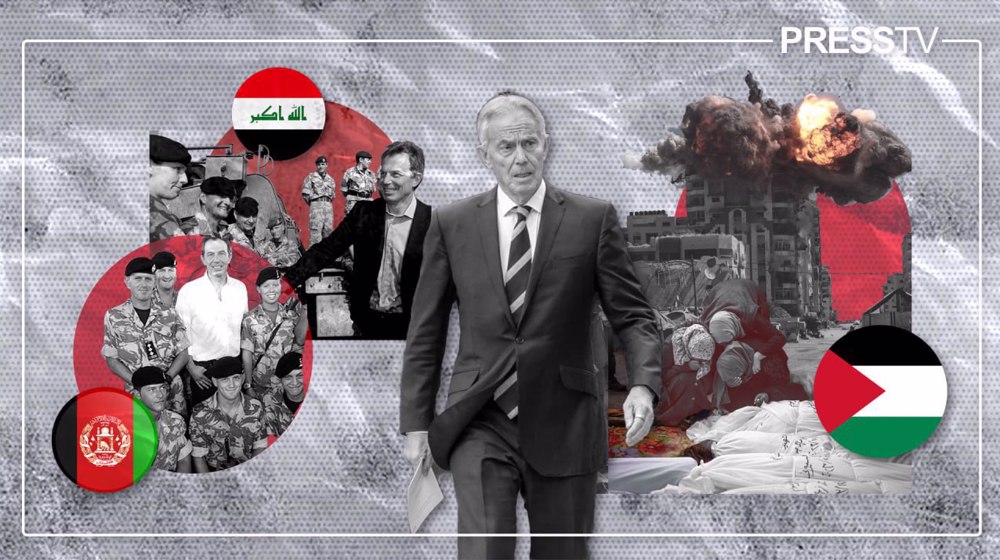
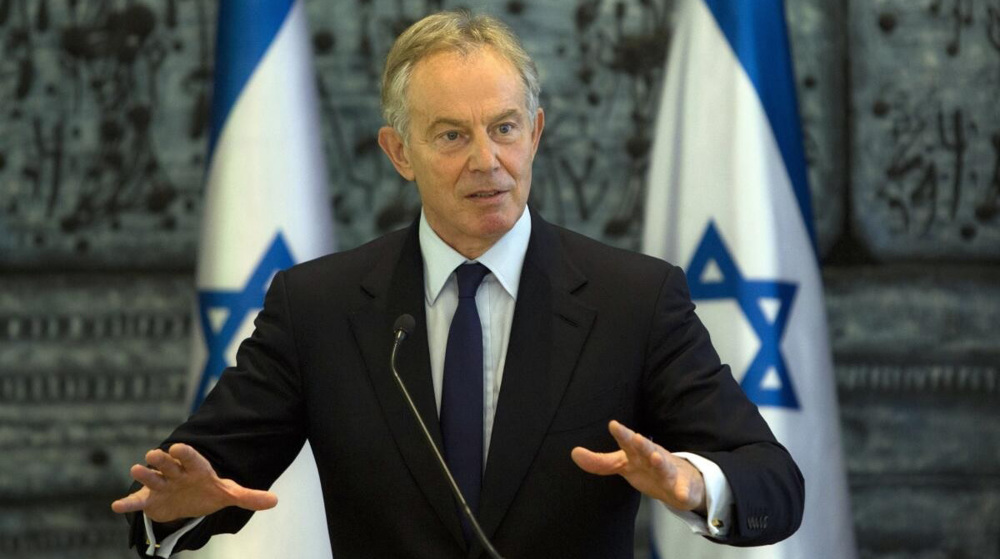
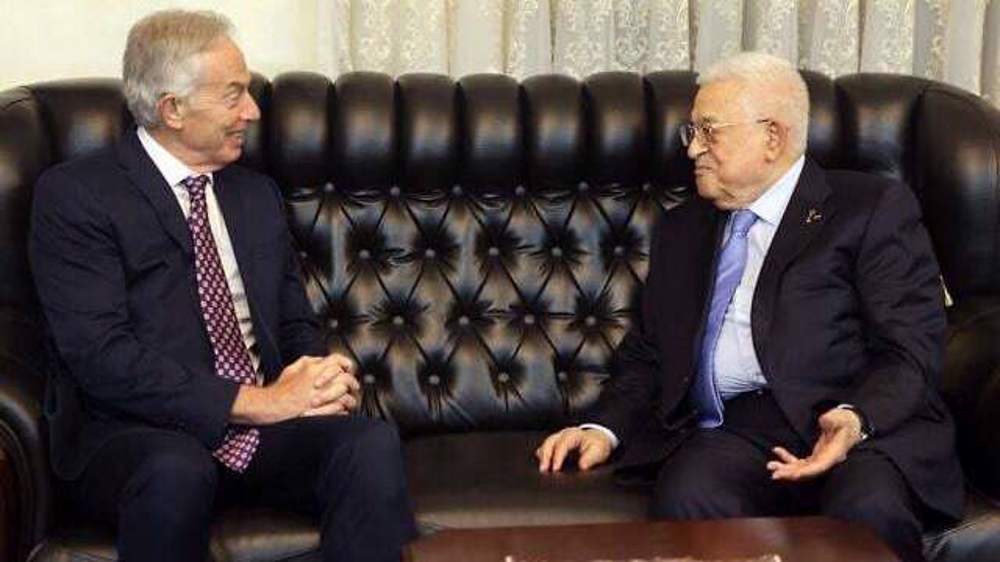
Trump’s plan includes a so-called transitional body, known as the “Board of Peace,” which will be chaired by the US president himself. A key member of this board and most likely the executive head is former British Prime Minister Tony Blair, signaling his return to mainstream politics.
Blair’s proposed role has ignited fierce condemnation from Palestinians, with a senior Hamas official labeling him "the devil's brother" who "deserves to stand before international courts for his crimes."
His re-emergence on this volatile geopolitical stage is not an anomaly but a continuation of a career defined by steadfast belief in Western-led interventionism, a philosophy that propelled him to global prominence and cemented his legacy as one of the most divisive political figures of the 21st century.
Blair’s involvement in Trump’s plan, reportedly including concepts like a "Trump Riviera" and paying Palestinians to leave their homeland for economic development, underscores a persistent faith in top-down solutions imposed by external powers, a faith repeatedly tested by history.
"The idea that Tony Blair would administer Gaza is worse than a joke"@RobertFantina says the Palestinians should govern themselves and have free elections without foreign interference.
— Press TV 🔻 (@PressTV) October 4, 2025
Follow: https://t.co/LWoNSpkJSh pic.twitter.com/F8OCp1RDe7
A character defined by controversy
Blair’s ascent began with a political revolution in Britain. Elected Labour Prime Minister in a 1997 election, he promised a modernized "New Britain" under the banner of "New Labour."
His early tenure featured significant domestic achievements that reshaped the country: establishing the Scottish Parliament and Welsh Assembly, introducing the National Minimum Wage, incorporating the European Convention on Human Rights into UK law, and playing a key role in the historic Good Friday Agreement in Northern Ireland.
This era of "Cool Britannia" projected an image of a vibrant, socially conscious country. Yet even at the height of his popularity, the seeds of future controversies were already being sown.
Many questioned his government’s reliance on media spin and marketing strategies, while his embrace of market-friendly reforms alienated the party’s traditional left-wing base.
He exhibited a top-down, often messianic leadership style, convinced of his ability to determine the correct path, a characteristic that would come to define his approach on the world stage.
Blair’s domestic record was permanently overshadowed by the dramatic and consequential turn his premiership took, a turn that began with a speech in Chicago and culminated in the deserts of Iraq.
Hawkish architect of wars
The pivotal shift in Blair’s political career came with his articulation of the so-called “Doctrine of the International Community” in a 1999 speech in Chicago.
He laid out a philosophy of liberal interventionism, arguing that globalization created a moral duty for the international community to intervene against alleged human rights abuses, even if it meant overriding national sovereignty.
This doctrine was first tested in Kosovo, where Blair became a leading advocate for a NATO air campaign carried out without a UN mandate, setting a precedent for his future interventions.
David Miller discusses the friendship between Tony Blair and pro-Israeli tech billionaire Larry Ellison@Tracking_Power pic.twitter.com/oXC1PFRv3j
— Palestine Declassified (@PDeclassified) July 29, 2025
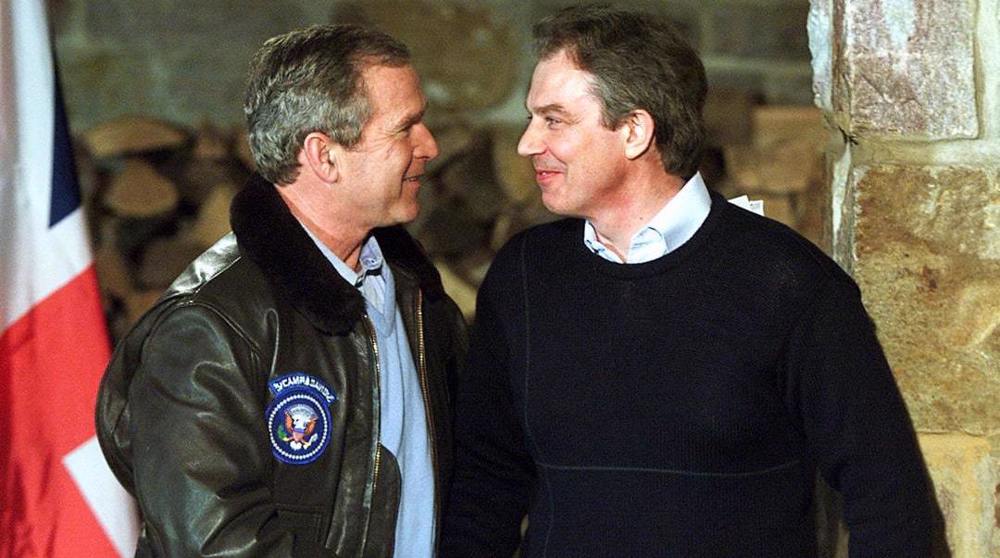
The September 11, 2001, attacks further cemented this worldview, binding Britain in a “shoulder-to-shoulder” alliance with the United States under President George W. Bush. While the invasion of Afghanistan enjoyed broad support, it was the pivot to Iraq that would come to define Blair’s legacy.
Despite private reservations, Blair became the foremost international advocate for the Iraq War, basing his case largely on claims that Iraq possessed weapons of mass destruction (WMDs) deployable within “45 minutes.”
This assertion, reinforced by the infamous “dodgy dossier” later revealed to be plagiarized, formed the public case that subsequent official inquiries would harshly criticize.
The 2016 Chilcot Report delivered a damning verdict, finding that Blair had presented the case for war with “a certainty that was not justified,” exhausted no peaceful alternatives, and privately pledged to Bush, “I will be with you, whatever,” long before diplomatic avenues were exhausted.
The disastrous invasion, launched without a clear UN mandate, led to a catastrophic military occupation, for which planning was deemed “wholly inadequate.”
The eventual failure to find WMDs destroyed the last vestiges of Blair’s credibility, earning him the enduring epithet “Bush’s poodle” and sparking the largest public protests in British history.
The human cost—hundreds of thousands of Iraqi civilian deaths, regional destabilization, and the rise of the Daesh terrorist group—remains an indelible stain on his record as the British leader.
Even after leaving office, through the Tony Blair Institute, he has maintained influence, advising some authoritarian Persian Gulf regimes and amassing a personal fortune, prompting charges of profiteering from the very conflicts and relationships he helped foster.
One of the donors to the Tony Blair Institute is Larry Ellison, the American billionaire and Oracle owner, who recently finalized a deal to acquire TikTok’s US operations. Ellison is also a major contributor to the Israeli military and is considered closely aligned with Israeli leaders and Zionist lobbying groups.
Poodle to hechman
Blair’s proposed role in Trump’s Gaza plan is a direct extension of his lifelong philosophy.
Just as he once envisioned a “corridor for peace and prosperity” in the occupied West Bank, his institute now backs concepts like a “Trump Riviera” in Gaza, a lucrative economic project built on displacement that disregards Palestinian aspirations for self-determination.
For the people of Gaza, who have endured unimaginable suffering, the prospect of being governed by an architect of the Iraq war is not a promise of stability but a warning of a foreign-imposed order.
Hamas’s statement that “the Palestinian people are capable of managing themselves” is a direct rebuttal of the core of Blair’s interventionist creed.
His return to the center of West Asian politics underscores a consistent pattern: a belief that complex, deeply rooted issues can be solved by external powers and technocratic plans, which history has repeatedly shown to be tragically flawed.
As Trump’s proposal advances, the ghost of Iraq looms large, serving as a stark reminder of the human cost when hawkish foreign policy is executed with moral certainty and a disregard for the voices of those it claims to help.
From being Bush’s poodle to being Trump’s henchman, Blair’s world has come full circle.
Gaza health system nears collapse amid shortages and fuel crisis

Hamas condemns Netanyahu’s illegal entry into Al-Aqsa Mosque
Poll: Over half of US Jews say Netanyahu fueling American anti-Semitism



VIDEO | Trump's America is dying for Israel
US visa ban on Iranian president’s media team is bid to hide the truth: FM spokesman
VIDEO | Iran fully prepared to respond to new aggression
US aggression, economic warfare amount to crimes against humanity: Iran's UN envoy
Protests erupt in US as ICE agent shoots Venezuelan driver
US pressure fuels cooperation among Muslim states: Pezeshkian
Major TV networks suspend White House pool coverage after Trump ban
US visa ban on Palestinian UN delegation violates international agreements: Hamas


 PressTV NEWSLETTER
now
PressTV NEWSLETTER
now
 This makes it easy to access the Press TV website
