Blair feared invasion of Iraq would ignite 'regime change in London': Secret memo
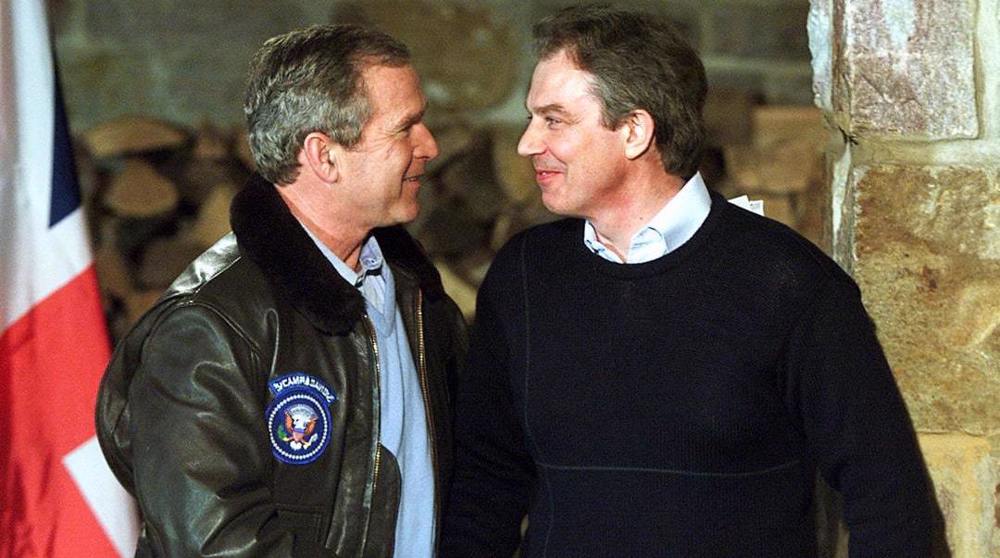
Newly disclosed documents show Britain warned the US that invading Iraq without a second UN Security Council resolution could cost then-Prime Minister Tony Blair his premiership.
According to the papers, Blair’s foreign policy adviser, David Manning, warned Condoleezza Rice, the then US national security adviser, that the US “must not promote regime change in Baghdad at the price of regime change in London.”
The meeting occurred prior to Blair’s visit with US President George W. Bush at Camp David on January 31, 2003, just two months before the Iraq invasion.
At the time, the US had not yet committed to seeking a second UN Security Council resolution. However, documents from the UK National Archives reveal that at Camp David, Blair aimed to persuade Bush of the resolution’s necessity, arguing it was “politically essential for the UK and almost certainly legally essential as well.”
He also sought to delay the invasion from February to late March, as outlined in a pre-summit briefing note by his adviser, David Manning.
In a memo to Blair, Manning said he told Rice, “A second resolution is a political necessity for you [Blair] domestically. Without it, you would not secure cabinet and parliamentary support for military action. She must understand that you could be forced from office if you tried.”
Manning continued that Bush could take the risk—while he preferred a second UN resolution, it wasn’t critical for him, as he already had congressional approval to act alone. Blair, however, faced a different situation.
“Condi acknowledged this but said that there came a point in any poker game when you had to show your cards. I said that was fine for Bush. He would still be at the table if he showed his cards later. You [Blair] would not,” Manning added.
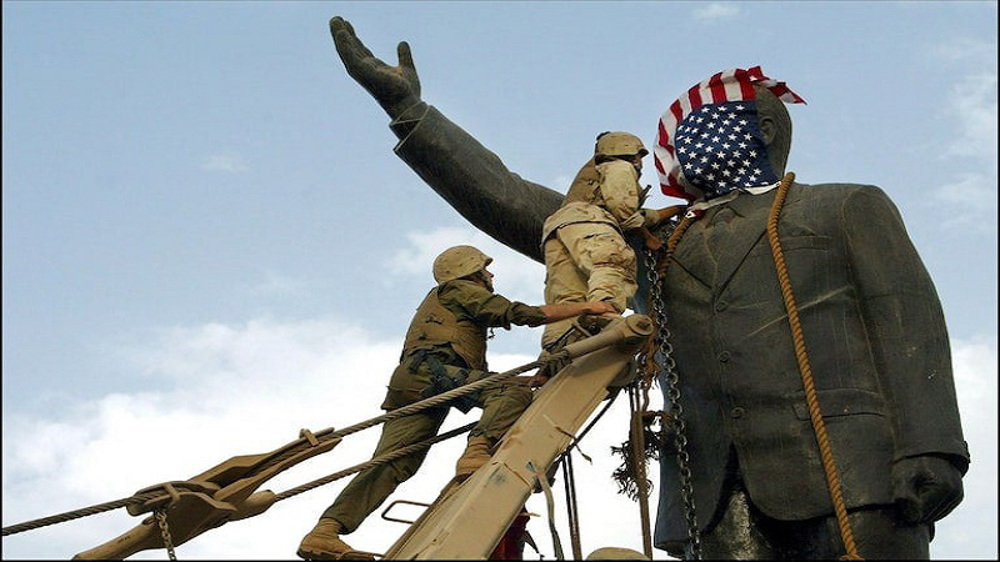
The US grew increasingly frustrated with France and Russia—both holding UN Security Council veto power—for refusing to back a resolution while weapons inspectors found no proof of Saddam Hussein’s weapons of mass destruction (WMD), the supposed justification for war.
Just before Blair’s visit, following Bush’s State of the Union speech, UK ambassador Christopher Meyer cautioned that diplomatic options had all but evaporated.
Meyer described Bush’s message on Iraq by this point as “messianic”. It was now “politically impossible” for Bush to back down from war “absent Saddam’s surrender or disappearance from the scene,” he wrote.
“In the high-flown prose to which Bush is drawn on these set-piece occasions, he said in effect that destroying Saddam is a crusade against evil to be undertaken by God’s chosen people,” Meyer informed London.
In another cable the previous month, he said of Bush, “His view of the world is Manichean. He sees his mission as ridding it of evil-doers.”
Ultimately, the US and UK gave up their push for a UN resolution, blaming French President Jacques Chirac for making it clear he would never consent.
In a separate briefing note before Camp David, the British Ministry of Defense cautioned, “The loosening of Saddam’s grip on power may give rise to significant levels of internecine violence.”
According to the Chilcot Report, Blair had ignored warnings about what would happen in Iraq after the invasion.
Irish, Scottish and Welsh leaders to meet to discuss UK break-up
UK chancellor sounds alarm over economic fallout from war on Iran
UK to adopt 'comprehensive' measures against Israel over West Bank settlements



Iran slams US for blaming Iran over rising fuel prices, Strait of Hormuz closure
VIDEO | Putin’s United Russia wins landslide victory in parliamentary election
2026 Asian Games: Iran’s karate practitioners win one gold, three silver medals
VIDEO | Record fuel prices in France spark fears of new 'Yellow Vest' uprising
VIDEO | US diesel gas hits all-time record, could cost Trump Congress
VIDEO | Escalating Pakistan-Afghanistan cross-border tensions: Can diplomacy outpace military friction?
Ansarullah: Yemeni armed forces fighting ‘decisive battle’ against Saudi Arabia
Pezeshkian vows to firmly defend Iran’s positions, convey its strength at UN


 PressTV NEWSLETTER
now
PressTV NEWSLETTER
now
 This makes it easy to access the Press TV website
