'War revealed Iran's true power': Snippets from top security official Ali Larijani's interview
By Press TV Political Desk
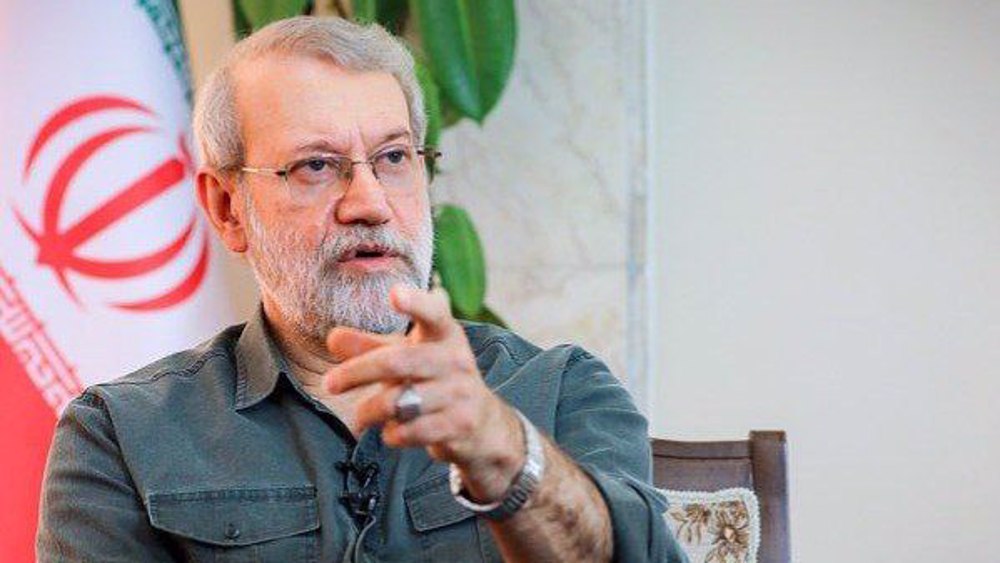
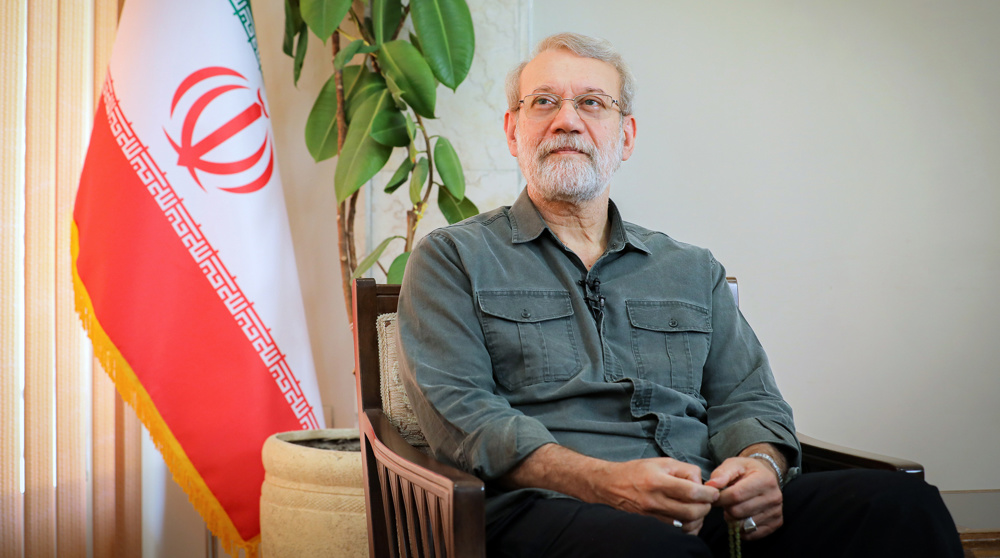
Ali Larijani, the secretary of Iran's Supreme National Security Council (SNSC), in an exhaustive interview with khamenei.ir spoke about a range of issues in the aftermath of the recent 12-day imposed aggression.
Larijani emphasized national unity, readiness, and trust in leadership as key to victory in the 12-day Israeli-American war of aggression.
He emphasized that resistance, faith, and people’s participation ensured the country's defense, post-war recovery, and strengthened the resistance axis regionally.
Following are the snippets from the interview:
- The Supreme National Security Council's (SNSC) primary task is to manage national challenges to create a calm environment for growth.
- SNSC's work ensures citizens can live predictable, stable lives despite crises.
- Challenges vary: today war, yesterday regional issues, and sometimes international pressures.
- Effective management requires combining diplomacy, military capabilities, and Resistance forces strategically.
- SNSC must safeguard national interests while enabling balanced societal growth.
- War conditions demand creating capacities to prevent future enemy attacks.
- Security measures extend to related issues like nuclear negotiations and regional dynamics.
- Leadership must integrate all aspects—political, military, and social—for national stability.
- SNSC continuously adapts its strategies to emerging threats.
- Maintaining a comprehensive view ensures both immediate security and long-term development.
- National readiness is the most critical capacity for safeguarding security.
- Readiness involves citizens, armed forces, and Resistance groups prepared to act decisively.
- Unity of people around the leadership strengthens deterrence against enemies.
- Coordinated action of all groups ensures operational efficiency and success.
- The twelve-day war against Iran showed that preparation and cohesion lead to victory.
- When the people act seriously, the enemy reassesses its aggression plans.
- Deterrence is achieved by a combination of societal, military, and Resistance strength.
- Unity and readiness form a protective shield for national security.
- Public participation multiplies the effectiveness of military and strategic efforts.
- Preparedness must be continuous, not reactive, to prevent future threats.
- National unity and trust in leadership are the most powerful deterrents.
- Reliance on citizens’ capacities enhances resilience against foreign aggression.
- Enemies attempted to sow internal discord but failed due to unity.
- Resistance forces and armed forces were decisive in ensuring victory.
- Leader of the Islamic Revolution's guidance strengthened collective action and morale.
- The 12-day war highlighted the importance of combining strategic planning and field operations.
- Even in short wars, cohesion among leadership, military, and people ensures success.
- The twelve-day war of aggression proved that a united nation cannot be defeated.
- The victory reinforced confidence in national institutions and leadership.
- Lessons of war extend beyond military strategy to societal solidarity and faith-based resilience.
- SNSC ensured citizens’ basic needs were met during the imposed war
- It supported armed forces and Resistance groups to operate without interruption.
- Diplomatic efforts were aligned with military actions to defend national rights.
- Security measures prevented enemy infiltration and psychological disruption.
- Coordination with intelligence organizations neutralized attempts to disturb public opinion.
- Media played a crucial role in informing and mobilizing the people during war.
- National and regional media strengthened morale and the spirit of resistance.
- SNSC emphasized reliance on God, trust in people, and self-capacity.
- Directives included firmness against the enemy and protection of civilians’ lives.
- The diplomatic apparatus revealed enemy crimes, gained international sympathy, and applied pressure globally.
- Nuclear negotiations continued alongside defense efforts, strengthening Iran’s negotiating position.
- Resistance in the region benefits from faith, unity, and reliance on self-capacity.
- Post-war efforts focus on reconstruction, strengthening defenses, and preserving war achievements.
- Iran’s regional standing improved, neighbors recognized its stability, and the Resistance axis grew stronger.
- Several meetings of SNSC were held during the 12-day war, sometimes multiple sessions per day.
- Discussion of all war-related matters were held, including military, economic, social, and civilian conditions.
- Direct link between SNSC decisions and operational commanders ensured precise, swift implementation.
- Regional diplomacy during war included strengthening relations with neighboring countries to counter Zionist and American propaganda.
- War and its outcome demonstrated true power of Iran and the Resistance front.
- The war was a test of willpower, faith, and unity, not just a military conflict.
- Achieving victory in 12 days is seen as a historic turning point for the Islamic Revolution and the Resistance front.
- Lessons from the 12-day war are relevant for free nations worldwide, not only Iran.
Pezeshkian to US: Drop the bullying, force won’t solve anything
Bolivia’s former president hails Iran as ‘model of sovereign resistance against US empire’
Iran’s trade partners won’t listen to US ‘big talk’: Qalibaf



Pezeshkian to US: Drop the bullying, force won’t solve anything
VIDEO | Desperate US ‘Economic D-Day’
Bolivia’s former president hails Iran as ‘model of sovereign resistance against US empire’
Iran’s trade partners won’t listen to US ‘big talk’: Qalibaf
Iran’s top security official says US must change its behavior
Israel denies Swedish MEPs entry to occupied lands over criticism of Gaza genocide
Israeli court extends detention of Palestinian doctor despite heart catheterization
VIDEO | Iran court orders $37 million in US oil funds for Butterfly Patients


 PressTV NEWSLETTER
now
PressTV NEWSLETTER
now
 This makes it easy to access the Press TV website
