Remembering Mahmoud Darwish, the Palestinian poet of olive trees and resistance
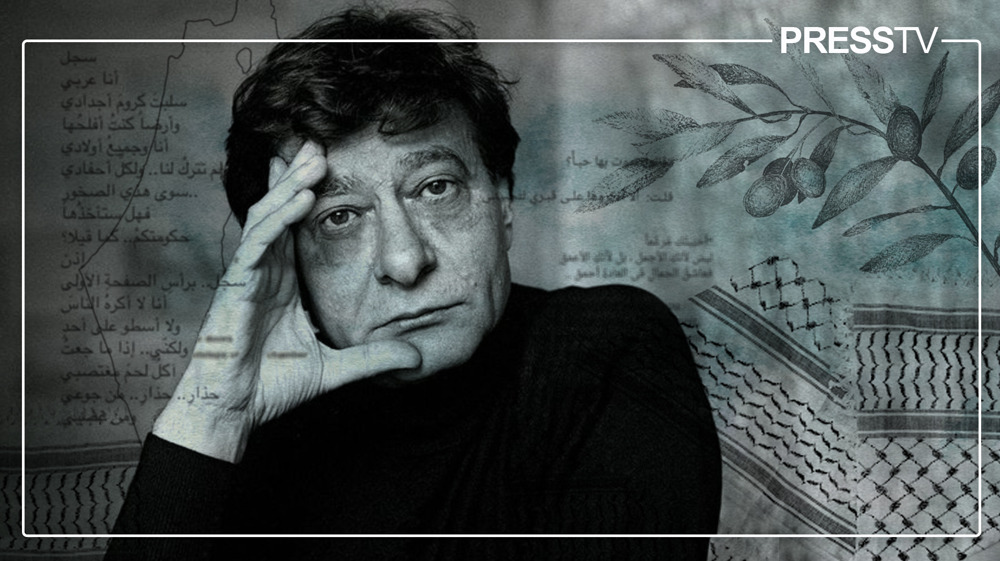
By Humaira Ahad
Before he attained fame worldwide and his works were translated into more than 20 languages, Mahmoud Darwish was a boy from an exterminated Palestinian village, carrying in his pocket the rubble of his homeland and in his heart a voice filled with wisdom.
Darwish’s words did not just describe Palestine; they became Palestine, its olive trees and stone walls, its grief and defiance, its memory and dream of return. His verses whispered even in prison cells forged a language of survival that could cross borders and outlast exile.
Today, he is known as one of the most influential poets in the modern Arab world, whose works have become inseparable from the Palestinian struggle for identity and justice.
Widely taught in schools and often set to music, Darwish’s soul-stirring verses have evolved into powerful anthems that articulate collective pain, hope, and resistance, resonating deeply across generations and borders.
Childhood marked by loss and displacement
Born in 1941 in the Palestinian village of al-Birwah, Darwish entered the world in a land and among people who were on the brink of catastrophic change.
His parents were landowners, living in relative prosperity. But this was shattered in 1948 when Zionist militias invaded his village, forcing the young Darwish and his family into exile in Lebanon.
When Darwish’s family returned to what remained of their homeland the following year, they discovered their village had been completely demolished.
Instead of their ancestral lands, they resettled in Deir al-Asad, over 15 kilometres away from the fertile grounds where they once prospered.
Their status as Palestinians who missed the official Israeli census under the apartheid regime rendered them “internal refugees”, Palestinians denied the minimal recognition granted to settlers, locked in an imposed status of subjugation and displacement.
This experience of uprootedness, loss, and dispossession became the foundation of Darwish’s poetic voice that resonated far and wide in later years.
Palestine’s literary voice
Growing up under occupation, Darwish was acutely aware that he, his family, and his fellow Palestinians were systematically marginalised and dehumanised.
Even as a schoolboy, Darwish’s work reflected his keen awareness of the injustices around him. One of his earliest poems, written for an anniversary of the Israeli occupation of Palestine, was a poignant outcry from an Arab boy to a Jewish boy, asking why the simple joys of childhood, like playing in the sun, having a home, and celebrating holidays, were denied to him.
Your cut arm just dropped; pick it up and hit your foe with it...
— Press TV 🔻 (@PressTV) October 21, 2024
- Mahmoud Darwish pic.twitter.com/Vwd2KvXzk4
“You can play in the sun as you please,
and have your toys, but I can’t.
You have a house, and I have none.
You have celebrations, but I have none.
Why can’t we play together?”
His poetry soon drew the ire of the apartheid regime’s authorities. He was summoned by an Israeli military governor who threatened that if he continued writing such works, his father would lose his livelihood.
Over the years, the revolutionary Palestinian poet endured multiple arrests and periods of house arrest. From age 16, he was repeatedly detained for reciting poetry and travelling without permits between Palestinian villages.
Poetry of resistance, identity card and beyond
Darwish’s early poetry followed classical Arabic forms but evolved in the mid-1960s into a direct, populist style that resonated deeply with the Palestinian population.
Among his most iconic works is the poem "Identity Card" (Bitaqat Huwiyya), published in his first poetry collection, Awraq al-zaytun (Leaves of the Olive Tree) in 1964.
The poem became a rallying cry, adopted as a protest song by Palestinians under occupation and a declaration of enduring dignity in the face of dehumanisation.
It speaks through the voice of a Palestinian man stopped at an Israeli military checkpoint, confronting the system that reduces him to a number:
“Write down
I am an Arab
My I.D. card number is 50,000
My children are eight in number
The ninth arrives next summer.
Does this bother you?”
Lines like,
“Streets encircle us
As we walk among the bombs.
Are you used to death?
I am used to life and to endless desire,” evokes the persistence of hope amidst violence.
The poet in exile and the voice of a nation
In 1970, while studying in Moscow, Darwish was barred from returning to the occupied Palestinian territories, beginning a long period of exile.
Over the next two decades, he lived mainly in Beirut and Paris, cities that became crucibles for his evolving literary style and political vision.
During exile, his poetry shifted further towards metaphor and symbolism, melding personal loss with the collective trauma of Palestinians uprooted from their homeland. He often personified Palestine as a mother, a cruel beloved, or an eternal presence intertwined with the land and people.
American actor, Richard Gere shows his solidarity amid the ongoing Israeli genocide by reciting a Palestinian poem by famed poet Mahmoud Darwish.
— Palestine Highlights (@PalHighlight) April 25, 2025
Follow Press TV on Telegram: https://t.co/fvRn3KuApw pic.twitter.com/OdrvdawiFQ
The central theme of exile in Darwish’s poetry speaks to the psychological and emotional toll of forced displacement. His verses explore the complex relationship between identity and belonging in the diaspora, revealing how uprooting fractures the self as it fosters a yearning for return.
Darwish’s poetry resonated well beyond Palestinian communities. His works earned him international recognition and awards, including the Lannan Cultural Freedom Prize, the Lenin Peace Prize, and France’s Belles-Lettres Medal.
Poetry as trauma and resistance
Literary critics say that Darwish’s work does more than express suffering; it transforms trauma into a powerful form of resistance.
By articulating the pain of exile, dispossession, and daily struggles under occupation, the celebrated Palestinian poet preserves the memory of trauma while challenging dominant narratives imposed by oppressive regimes.
His poetry serves as a repository of Palestinian culture, heritage, and folklore, underscoring the crucial role of cultural resistance in maintaining national identity.
His repeated references to nature, olive trees, rocks, and thyme are not just pastoral images but symbols of the Palestinian people’s deep-rooted connection to their land.
The recurring image of the identity card number represents the trauma of dehumanisation, a stark reminder of being reduced to a mere statistic in a system of control and occupation.
This experience resonates universally with oppressed groups worldwide, reflecting themes of confinement, sacrifice, and resilience.
Land and people: eco-resistance and identity
Literary critics highlight how Darwish’s poetry embodies what some call “eco-resistance,” emphasising the inseparability of Palestinians and their homeland in their struggle against Israeli occupation. The loss of land triggers an outpouring of poetry and resistance, forging a unique unity of people and place in the fight for liberation.
In this context, nature becomes a living symbol of national identity and resilience. The earth, the olive trees, and the herbs all bear witness to the Palestinian story and refuse to be erased.
Darwishi’s verses evoked the olive groves, orchards, rocks, and wild herbs, such as basil and thyme. His language carried a sharp, staccato rhythm, “verbal hand grenades,” as some critics describe them, that expressed anger, outrage, resilience and most importantly, the connection with the land.
A line from Darwish’s poetry expresses this inseparability:
“If one day I return,
Take me as a veil to your eyelashes
Clothe my bones with grass.”
The words evoke longing for return and a spiritual unity with the land, denoting a defiant claim of belongingness that no occupation can erase.
On the 50th anniversary of the Israeli occupation, Darwish spoke of the unbreakable bond between Palestinians and their land:
“We, the Palestinian, offspring of this sacred land, declare our resounding presence in time and place. We have refused to adopt their version of our history. In addition, we remain advocates and witnesses of the authentic narrative of Palestinian fortitude and will to live.”
This declaration encapsulates the essence of Darwish’s poetic mission: to give voice to the voiceless, to breathe life where despair looms, and to kindle a steadfast resistance.
He passed away in August 2008 at the age of 67 following complications from heart surgery.
Darwish’s life and works show that poetry is not merely an art form but a vital act of political and cultural resistance. Through his enduring verses, the Palestinian struggle remains alive, reminding the world of the enduring quest for justice, dignity, and freedom.
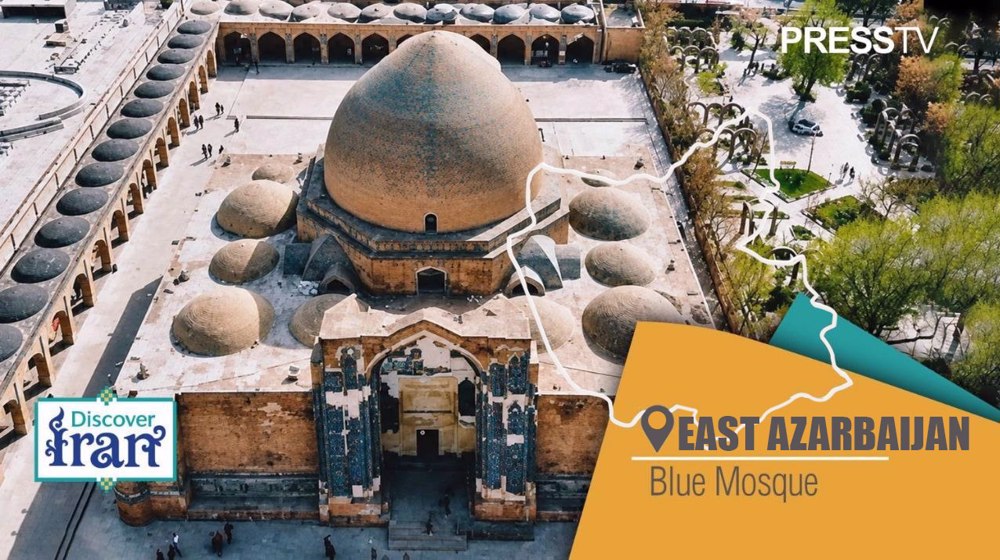
Discover Iran: Tabriz’s Blue Mosque, where glorious history meets timeless Iranian architecture
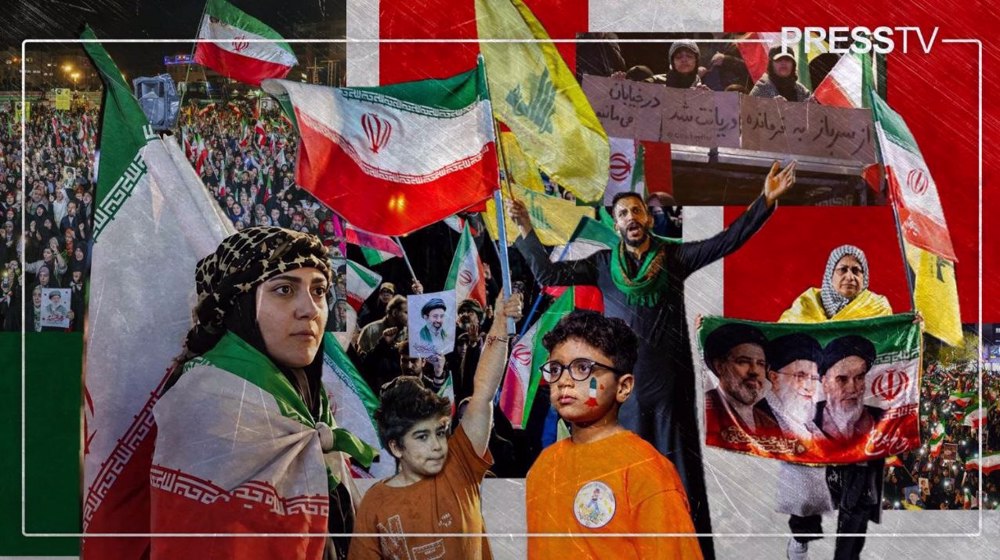
200 nights, one resilient nation: Iranian people’s epic in defense of homeland and Revolution
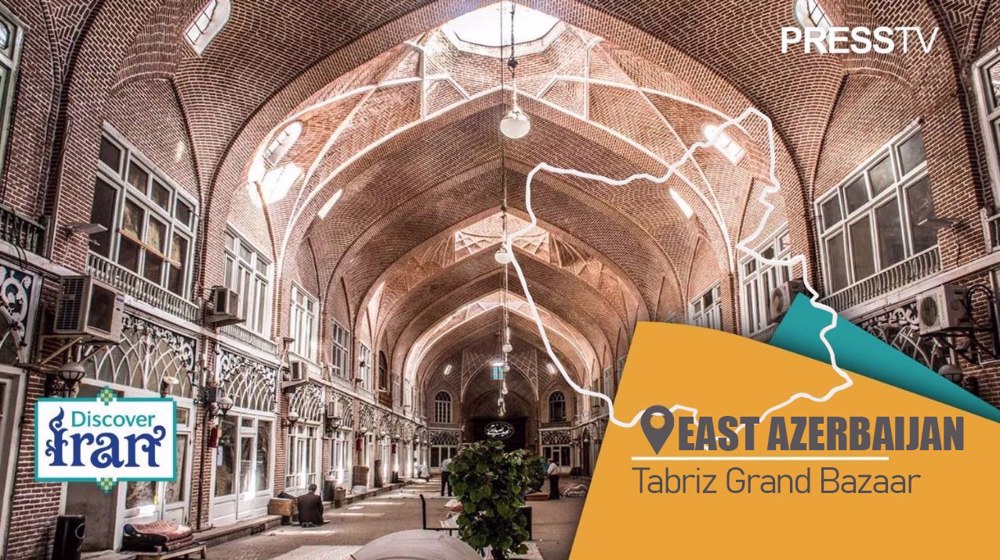
Discover Iran: Tabriz Grand Bazaar, where centuries of trade, culture and craftsmanship still thrive



Iran’s president to attend UN General Assembly in New York
Hamas condemns Netanyahu’s illegal entry into Al-Aqsa Mosque
Iran dismantles terrorist cells in three provinces
VIDEO | Claim that new deal won’t undermine Greenland sovereignty is a lie: Author
VIDEO | Press TV's news headlines
Iranian lawmakers push for NPT withdrawal, submit bill to Parliament's Presiding Board
Persian Gulf markets plunge as Yemeni forces strike Riyadh
VIDEO | Iran war will break America



 PressTV NEWSLETTER
now
PressTV NEWSLETTER
now
 This makes it easy to access the Press TV website
