
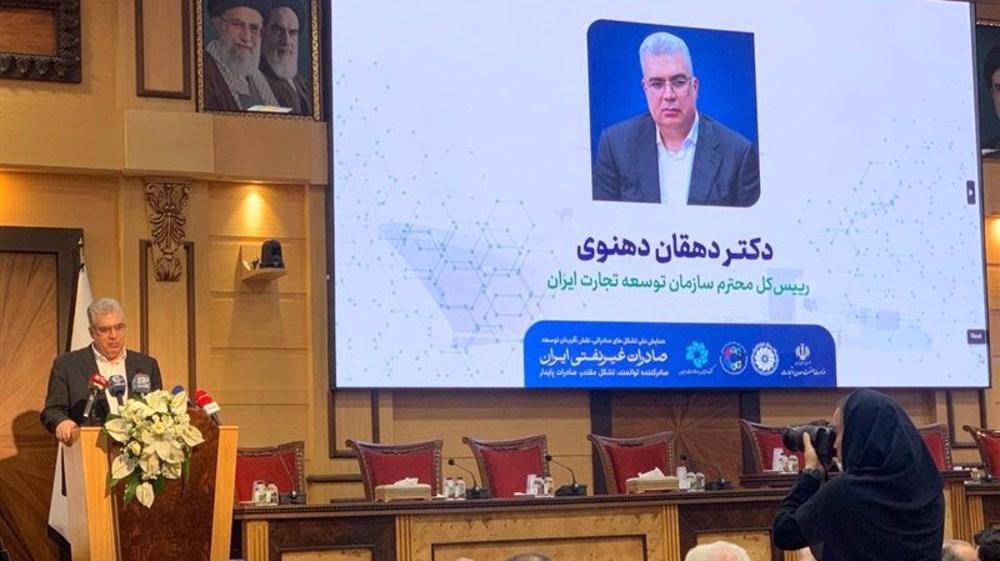
Iran’s trade promotion chief said Sunday that achieving $1 billion in non-oil exports per day is “not out of reach” even as the country contends with a US-imposed naval blockade, calling for higher-value production, regulatory reforms and closer cooperation between the government and the private sector.
Mohammad Ali Dehghan Dehnavi, head of the Trade Promotion Organization, told a national gathering of export associations on Monday that Iran’s non-oil exports stood at about $58 billion in the Iranian year 1403 (ended on March 21, 2025), the highest on record, before falling to roughly $52 billion in 1404 (ended on March 21) amid what he described as one of the toughest trade environments the country has faced.
“This year we confronted one of the hardest trade conditions, namely a blockade,” Dehghan Dehnavi said, according to Tasnim News Agency. “But the performance of the private sector in this situation has been noteworthy.”
The remarks come against the backdrop of a war that has reshaped Iran’s economic landscape.
The United States and Israel launched a joint war on Iran on February 28, 2026, and Washington imposed a comprehensive naval blockade on Iranian ports on April 13.
The blockade was briefly lifted in June before being reimposed on July 14, and US Central Command has since claimed that, with the exception of permitted humanitarian aid, “Iran has no exports and no imports by sea.”
CENTCOM Commander Adm. Brad Cooper said in mid-October that US forces had prevented Iran from exporting at least $25 billion worth of crude oil in recent months.

Official data place Iran’s total non-oil exports for the 1404 fiscal year (March 2025–March 2026) at 150.5 million tonnes valued at $51.66 billion, with petrochemicals, minerals and industrial goods dominating the mix.
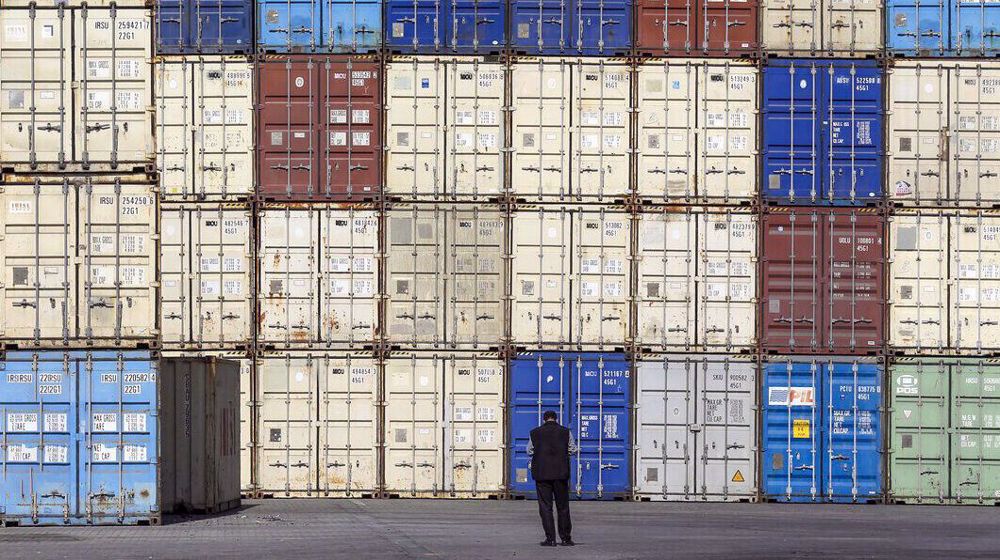
Dehghan Dehnavi acknowledged that the blockade had taken a measurable toll: about 75 percent of Iran’s trade by weight moves by sea, and the six-month data show export weight down 30 to 35 percent, with export value down roughly 20 percent.
Part of that decline, he argued, reflects the economics of transport rather than a collapse in productive capacity.
“When transportation costs rise, exporting a good worth $100 to $300 may no longer make economic sense,” he said, suggesting that low-value shipments have been squeezed out while private firms found new routes to keep trade moving.
Iran urged to move up the value chain
Beyond the immediate challenges posed by sanctions and shipping restrictions, Dehghan Dehnavi argued that Iran must reconsider the structure of its exports.
The trade chief noted that Iran’s export basket remains weighted toward low-value raw and semi-processed goods, with average per-tonne value in the low hundreds of dollars, compared with several times that when the same materials are processed one step further abroad.
He called for more domestic processing and higher value-added output, and pointed to neighboring Turkey’s $1 billion in daily non-oil exports as a benchmark Iran should be able to match given its resources, skilled workforce and technology base.
Dehghan Dehnavi stressed that the responsibility spreads beyond external constraints.
While sanctions and the blockade are real obstacles, he said, many of the complaints raised by exporters in his two years at the organization have concerned domestic regulations, administrative hurdles and the foreign-exchange repatriation system rather than the blockade itself.
Some exporters, he added, have simply abandoned the trade, “as if they had been doing something wrong.”
He called for a coordinated overhaul involving legislators, regulators and the private sector, and invited export associations to submit concrete expansion plans—whether $100 million, $300 million or $1 billion—that the organization could help implement.
 This makes it easy to access the Press TV website