
By Ali Zeraatpisheh
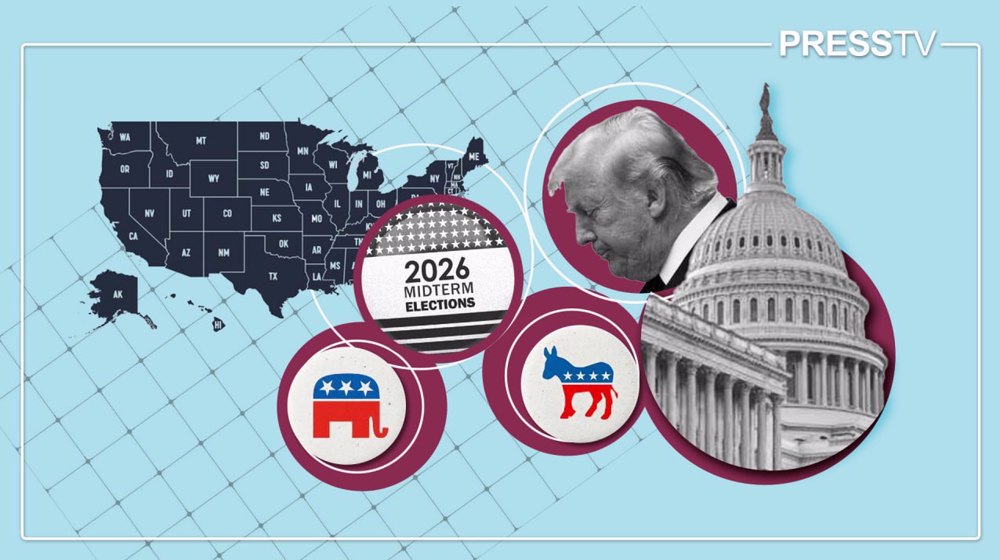
The US midterm elections on November 3, 2026, will determine whether President Donald Trump can continue relying on a Republican-controlled Congress or face a Democratic majority with the power to block his agenda, investigate his administration and challenge his spending priorities.
All 435 seats in the House of Representatives and 35 Senate seats are up for grabs in a decisive electoral battle at a very critical juncture in the country's history, alongside 36 governorships.
Republicans hold a narrow House majority and a 53–47 advantage in the Senate, where Democrats need a net gain of four seats to take control.
The latest national polling points to a difficult political environment for Trump. A Pew Research Center survey conducted from September 28 to October 4 found that only 30% of Americans approved of his performance, while 68% disapproved.
Among registered voters, 44% viewed their congressional vote as a vote against Trump, compared with just 19% who saw it as a vote for him. Democratic supporters were also more engaged and motivated to vote than their Republican counterparts.
Economic dissatisfaction adds to the pressure. A Harris Poll conducted from September 24 to October 3 found that 61% of Americans believed the country was effectively in a recession.
Rising grocery and fuel costs were among the leading concerns, while the unprovoked and illegal war against Iran has added pressure to global energy prices.
The election therefore presents Trump with more than a test of Republican campaign strength. It will measure whether his administration can retain congressional support amid historically low approval ratings, economic frustration and public opposition to the war against Iran, or whether voters will give his opponents greater power to challenge his presidency.
Which Senate races put Republicans on the defensive?
Republicans are facing competitive Senate races in several states Trump carried in 2024, including Alaska, Kansas, Iowa, Ohio and Texas.
Democratic challengers have drawn within a few percentage points of Republican candidates in several contests, while Republican campaign groups are redirecting money to defend vulnerable seats.
The pressure is significant because Democrats need to flip only a small number of Republican-held seats to change control of the chamber, putting the GOP’s Senate majority at risk across states that backed Trump.
In Alaska, former Democratic Representative Mary Peltola is challenging Republican Senator Dan Sullivan, who is seeking a third term. Trump carried the state by 13.1 percentage points in 2024, yet polling averages for September 14-October 10 placed Peltola at 48.8% and Sullivan at 47.4%.
An October 9-10 survey put Peltola ahead by two points, making the race competitive enough to draw Trump to Wasilla on October 13 to rally support for Sullivan.
Phenomenally high energy costs and severe voter dissatisfaction have made the contest more difficult for Republicans than the state’s presidential voting history would suggest.
Kansas presents another challenge. Republican Senator Roger Marshall is seeking reelection against Democrat Adam Hamilton, a pastor who has received support from two former Republican governors.
A polling average published on October 14 put both candidates at approximately 46%, with Libertarian David Graham at about 4%.
Kansas has not elected a Democrat to the Senate in more than 90 years. A contest this close in such a traditionally Republican state puts pressure on the GOP to defend a seat it would normally expect to retain.
In Iowa, Republican Ashley Hinson and Democrat Josh Turek are competing for an open Senate seat after Republican Senator Joni Ernst decided not to seek reelection. The race is among those drawing Republican resources as the party tries to protect its Senate position.
Iowa voted for Trump by a double-digit margin in 2024, yet the Senate contest has become competitive, underscoring the limits of relying on presidential results to secure down-ballot victories.
Ohio is also on the Republican defensive map. Democrat Sherrod Brown is challenging Republican Jon Husted in a special election, with recent polling showing Brown competitive despite Ohio’s support for Trump in 2024.
The contest has attracted heavy outside spending, and Republican-aligned groups are devoting substantial resources to protecting the seat. A Democratic victory would allow the party to take a Republican-held seat in a state that has moved toward Republicans in recent presidential elections.
In Texas, Democrat James Talarico is challenging Republican Ken Paxton. A University of Texas survey conducted from September 25 to October 5 put Talarico ahead, 50% to 47%.
Texas has not elected a Democrat to statewide office since 1994, and Trump carried it by roughly 14 points in 2024. A close Senate contest there puts Republican dominance under renewed pressure.
Republicans must also defend seats in states that have recently favored Democrats in presidential elections. In Maine, Democrat Troy Jackson led Republican Senator Susan Collins, 50% to 46%, in a poll conducted from September 30 to October 5.
In New Hampshire, Democrat Chris Pappas is challenging Republican John Sununu for an open seat, with recent surveys showing Pappas ahead. In Georgia, Democratic Senator Jon Ossoff has maintained polling and fundraising advantages over Republican challenger Mike Collins.
In North Carolina, Democrat Roy Cooper is competing against Republican Michael Whatley for an open seat. Michigan, meanwhile, has emerged as a closely watched contest between Democrat Abdul El-Sayed and Republican Mike Rogers.
Together, these races expose the breadth of the challenge facing Republicans. Democratic challengers are polling competitively in states Trump carried.
Republican groups are shifting resources toward defending seats rather than concentrating solely on expanding their majority.
The GOP must now fight to protect its Senate position across multiple fronts, including states where its recent presidential victories might have suggested a more secure position.

Where could Republicans lose House seats?
Republicans are increasingly at risk of losing control of the House, as per polls, with Democratic gains potentially extending well beyond the usual battleground districts.
The latest assessment from the Cook Political Report projects that Democrats could gain between nine and 19 seats, enough to take the majority.
On October 9, 18 House race ratings shifted in Democrats’ favor, including four Republican-held seats moving from toss-ups to races in which Democrats are favored. Heavy Republican advertising has so far failed to reverse the trend.
New York Republican Mike Lawler is among the party’s most exposed incumbents. His district backed Kamala Harris in 2024, leaving him particularly vulnerable in an election increasingly shaped by dissatisfaction with Trump.
Democratic challenger Cait Conley has benefited from greater spending by her party, although Lawler retains a substantial cash advantage.
In Iowa, Republican Mariannette Miller-Meeks faces Democrat Christina Bohannan in a rematch that has become a major Democratic target. Pennsylvania and Washington also offer opportunities, with several contests shifting toward Democrats in the latest ratings.
In North Carolina, Democrat Don Davis must defend his seat after Republican gerrymandering made his district more favorable to the GOP.
Republicans also face risks in Texas, where redrawn congressional gerrymandering intended to strengthen the party could fail to prevent Democratic gains.
Three South Texas districts are among the targets, including seats held by Democrats Vicente Gonzalez and Henry Cuellar. In Ohio, Republican Max Miller faces a more difficult contest than the party had anticipated.
In Colorado’s 5th Congressional District, Democrat and Army veteran Jessica Killin is challenging Republican Jeff Crank in a district Trump won by nine points in 2024. Similar efforts are underway in Virginia, Florida and South Carolina.
Republican campaign groups are meanwhile shifting money away from some battlegrounds to protect incumbents elsewhere, forcing the party to choose which seats to defend as the list of vulnerable districts grows.
If the projected Democratic gains materialize, Republicans could lose the House despite their efforts to redraw districts and pour money into competitive races.
How do Black, Hispanic and Muslim voters count?
Black, Hispanic and Muslim voters could prove decisive in closely contested House and Senate races, particularly if dissatisfaction with Trump’s policies drives higher Democratic turnout.
Trump’s gains among some minority voters in 2024 had raised Republican hopes of building a broader electoral coalition, but recent polling points to a weakening of that support.
A Pew Research Center survey conducted from September 28 to October 4 found that 70% of Black registered voters supported Democratic House candidates, compared with just 7% who backed Republicans.
Black voters could also influence races in states such as Michigan and Georgia. In Michigan, a September poll found that 83% of likely Black voters wanted Democrats to control the Senate.
Among Hispanic voters, Democrats led Republicans by 51% to 24%, pointing to a challenge for Republicans as they try to retain minority voters who helped Trump improve his performance in 2024.
Immigration enforcement is a particular vulnerability among Hispanic voters. Sweeping deportation policies have unsettled some voters who supported Trump’s pledge to control illegal immigration but oppose how his administration has carried out the crackdown.
In Texas, where Republicans redrew congressional districts to improve their electoral position, declining support for Trump among Latino voters could weaken that strategy and give Democrats an opportunity to dislodge Republicans completely.
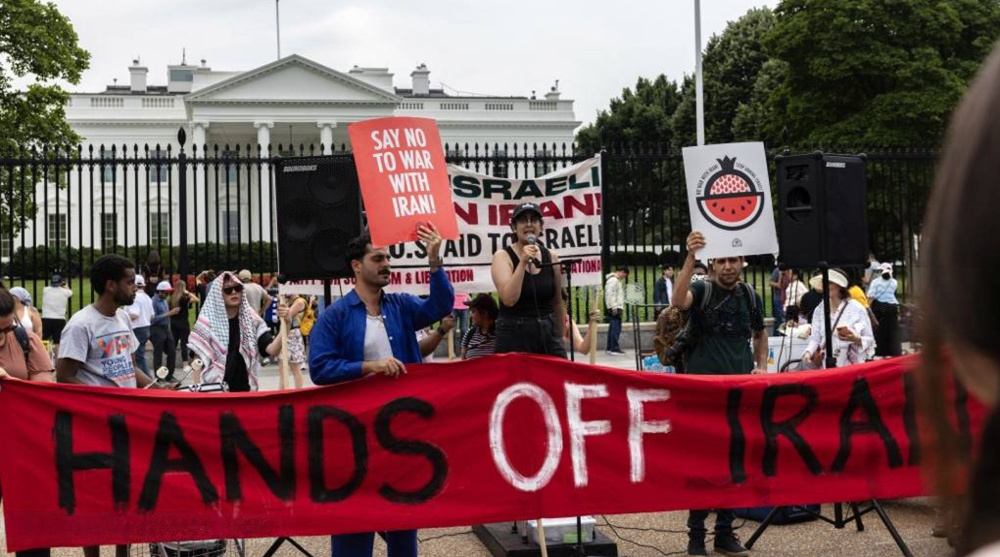
Muslim and Arab American voters could prove particularly consequential in Michigan, where opposition to the US-Israeli war against Iran and anger over Washington’s support for Israeli genocidal war in Gaza remain politically sensitive issues.
Trump’s decision to wage war on Iran also puts his promise to avoid new wars under pressure. Candidates opposing US military interventions abroad and continued support for Israel may appeal to voters who believe both major parties have failed to reflect their views on the Israeli genocide in Gaza.

How the war on Iran and Gaza genocide shape the midterms?
Trump’s dastardly war on Iran has imposed measurable economic costs on American households. In September 2026, US gasoline prices jumped 9.1% in a single month, while consumer inflation rose to 3.7% year-on-year, up from 3.4% in August.
Higher diesel prices also threaten to drive up the cost of transporting goods and delivering products to supermarkets. These increases came just weeks before the November 3 midterms, putting further pressure on the administration’s economic record.
The disruption extends far beyond American petrol stations. The Strait of Hormuz, which carried roughly one-fifth of global oil supplies before the war, has faced repeated shipping disruptions.
On October 8, Brent crude settled at $104.28 a barrel, while US West Texas Intermediate reached $91.49. Higher oil prices and tanker transport costs have added to the financial burden on businesses and consumers.
Trump’s handling of Israel presents a separate political challenge. His continued support for the regime amid its genocidal war on Gaza has drawn growing condemnation.
A Chicago Council on Global Affairs survey published on October 5 found that American views of Israel had fallen to their lowest level in the organization’s polling since 1978. Majorities of Democrats and independents favored reducing or ending US military assistance to Israel.
A Pew Research Center survey published in April found that 60% of Americans held an unfavorable view of Israel, while 55% lacked confidence in Trump’s ability to make good decisions on US-Israeli relations.
Among Democrats and Democratic-leaning independents, 80% viewed Israel unfavorably, pointing to a political problem that extends well beyond Arab American and Muslim voters.
Trump must defend both his decision to wage an illegal and unprovoked war on Iran and his administration’s continued support for Israel, while Democrats face pressure from voters demanding a change in US policy toward Gaza.
What would losing Congress mean for Trump?
Losing control of either chamber would leave Trump facing a hostile Congress during the final two years of his presidency, threatening his domestic agenda, his war on Iran and his support for Israel.
A Democratic-controlled House could launch investigations into the administration’s decisions, demand documents, summon officials to testify and scrutinize the president’s use of executive power.
Committee hearings and subpoenas could keep damaging questions about his administration in the headlines, forcing Republicans to defend the White House rather than advance their own agenda.
The consequences could be particularly significant for the war on Iran. Congress has already challenged Trump’s authority to continue the aggression without its approval.
In June, both chambers passed a war powers resolution directing the removal of US forces from from the war, but Trump refused to comply and the measure did not end the fighting.
A Democratic-controlled House could intensify hearings on the war’s objectives, financial costs, casualties and legal basis, while using budget negotiations to push for restrictions on further military offensives.
Congress could also scrutinize the administration’s strategy for the Strait of Hormuz and any future negotiations with Tehran.
Trump’s policy toward Israel could face similar scrutiny. Democratic lawmakers critical of continued US military support could push for votes on arms transfers, conditions on military aid and greater oversight of Israel’s genocidal conduct in Gaza.
Congressional hearings and votes could expose divisions within both parties, making it harder for the administration to maintain its current approach without sustained political pressure.
A Democratic House could also block parts of Trump’s legislative agenda and turn congressional oversight into a central political battle ahead of the 2028 presidential election.
If Democrats capture the Senate as well, they would gain additional leverage over legislation and nominations. Democrats have already discussed investigations into Trump’s business dealings, the expansion of his family’s commercial interests, government contracts, corporate donations and the administration’s use of federal power.
Control of congressional committees would give Democrats subpoena authority, investigative budgets and the ability to hold public hearings.
 This makes it easy to access the Press TV website