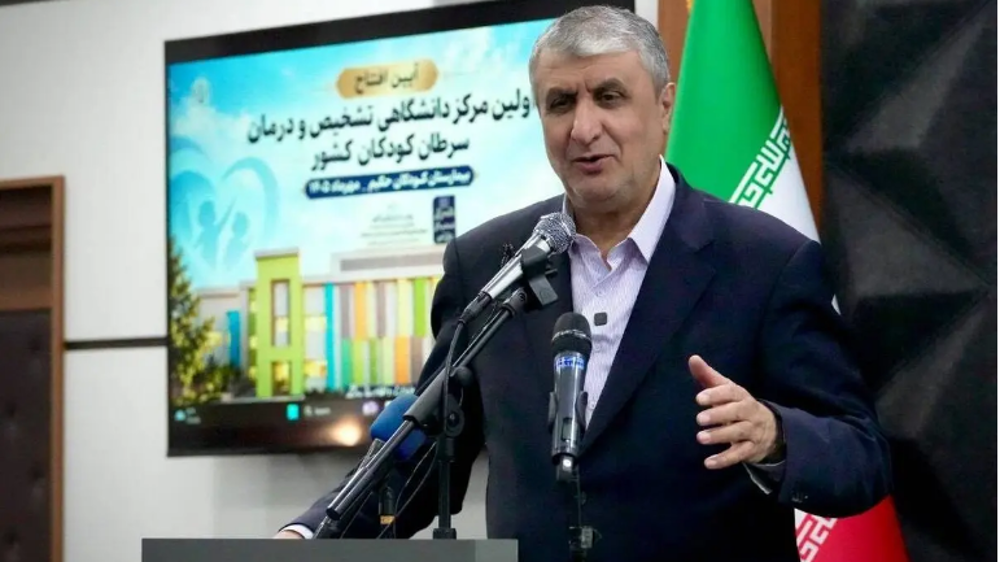
Iran's nuclear chief has declared that uranium enrichment is an "indispensable part" of the nuclear process and dismissed fresh US demands to include the issue on the agenda of any potential new negotiations as "a mere bunch of lies aimed at deception," underscoring Tehran's refusal to compromise on its sovereign right to scientific progress.
Mohammad Eslami, head of the Atomic Energy Organization of Iran (AEOI), pushed back Thursday directly against recent comments by US Vice President JD Vance, who demanded that Iran make a "meaningful" reduction in its nuclear enrichment capacity as a precondition for ending the seven-month US-Israeli war of aggression.
"Once again, they [the Americans] have brought up the issue of nuclear enrichment, claiming it must be added to the agenda for a new round of negotiations, even though uranium enrichment is an indispensable part of the nuclear process," Eslami said.
"Can one not have the starting point of the nuclear process and then claim to possess a nuclear industry?" he asked. "The nuclear industry is the driving force behind science and technology."
In an interview with Reuters, Vance — who previously brokered a provisional peace agreement in June that quickly collapsed — attempted to frame Washington's maximalist demands as a "basic threshold issue."
"If you don't want a nuclear weapon, then why do you need 60% enriched fuel? And if you want to show commitment to not building a nuclear weapon, don't build highly enriched fuel," Vance claimed, demanding concrete nuclear concessions and stating, "We're not going to trade words for actions."
Eslami countered that even the United States has prioritized nuclear technology in its national development, national security, and national defense documents, adding that all other countries have accelerated their pursuit of this technology.
"Therefore, such claims are a mere bunch of lies aimed at deception. What is definitive is the progress of a nation. Iran is not a nation left behind. Possessing great talent and high capacities, the Iranian nation is a first-rate nation. The right to progress and to explore the frontiers of science is reserved for Iranians. We will not back down from this right," Eslami stressed.
Eslami also stated explicitly that Iran will not hand over its enriched uranium, dismissing any suggestion to the contrary. "No," he said. "There is no such thing."
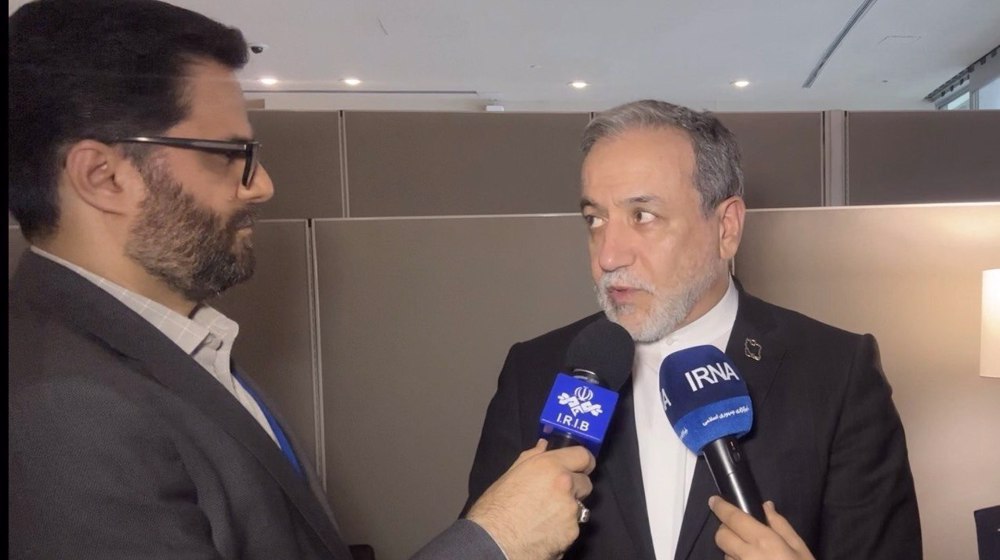
Turning to Washington's threats against Iran's nuclear facilities, the AEOI chief emphasized that such rhetoric is nothing new.
He said that the Americans have issued, and even acted upon, such threats for years, yet the Islamic Republic has maintained its steadfast stance.
"The Iranian people are resilient, and so is the nation. Iran's nuclear program runs in accordance with the safeguards agreement and operates within the framework of the Non-Proliferation Treaty (NPT) with no deviation whatsoever," Eslami stressed.
He noted that Washington's actions amount to much ado about nothing, a fact that demonstrates their diplomatic position has reached a dead end and they have nothing more to say.
Speaking at the inauguration of Iran's first university-level pediatric cancer diagnosis and treatment center, Eslami highlighted the country's achievements in nuclear medicine, saying Iran is among the first countries to have introduced alpha-emitting radiopharmaceuticals into treatment.
"The country's radiopharmaceutical basket has reached 78 products," Eslami said, adding that Iran has managed to compete in this field even with advanced countries such as the United States, advancing this path under difficult and turbulent conditions.
The center — the first of its kind at the university level in medical sciences — was opened simultaneously with World Children's Day at Hakim Children's Hospital in the presence of First Vice President Mohammad Reza Aref, Health Minister Mohammad Reza Zafarghandi, Eslami, and a group of deputies and managers from the Health Ministry.
During the visit, Aref and Zafarghandi toured various sections of the hospital and were briefed on the process of providing medical services to children. They also visited inpatient wards, met with sick children and their families, and inquired about their conditions.
Reza Raeeskarami, president of Tehran University of Medical Sciences, said at the opening ceremony that the center could play an effective role in reducing people's out-of-pocket payments.
"Today is an important day, as we have two major projects. One of them was inaugurated today — the first university center for the diagnosis and treatment of pediatric cancer — and the executive operation of the other project, the construction of the 320-bed Amir Alam 2 Hospital, begins today," Raeeskarami said.
"It is expected that the construction process of the second project will be completed soon so that it can serve the people."
He said: "The opening of the comprehensive pediatric cancer diagnosis and treatment center is considered a turning point for the country. Before the opening of this center, only the private sector was active in this field, but the first university and governmental center in the field of pediatric cancer treatment is beginning its work."
He credited good cooperation between benefactors and the government for launching the project.
"Radiotherapy costs are very high in both public and private sectors. The opening and launch of the pediatric cancer diagnosis and treatment center can play an important role in reducing people's out-of-pocket payments," he said.
Iran and the US have exchanged proposals in recent weeks aimed at ending the war and reopening the strategic Strait of Hormuz, which Iran has secured in response to US aggression, but the diplomatic efforts remain at a stalemate.
US President Donald Trump recently rejected Tehran's latest offer, resorting instead to threats of intensifying military operations after the upcoming US midterm elections.
Tehran maintains that its nuclear program is strictly peaceful, fully compliant with the NPT, and non-negotiable, serving as the driving force behind the nation's scientific and technological sovereignty.
 This makes it easy to access the Press TV website