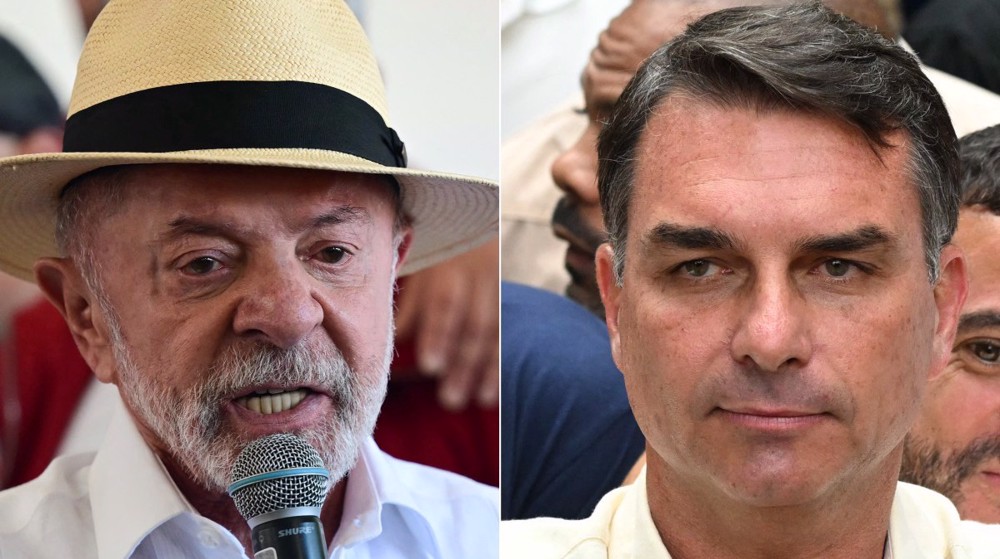
Sen. Flávio Bolsonaro, an ally of US President Donald Trump, and Brazil's veteran President Luiz Inácio Lula da Silva will face off in a runoff Oct. 25 for the top job of Latin America's powerhouse economy.
The country's electoral court in Brasilia said neither the 80-year-old incumbent, seeking his fourth non-consecutive term, nor the 45-year-old son of former President Jair Bolsonaro would garner more than 50% of the total vote needed for an outright win.
Brazil's electoral court in Brasilia had Bolsonaro with just over 55.8 million votes to Lula's nearly 53.2 million, according to AP.
Lula has accused the US administration of trying to sway his country's election to Bolsonaro by imposing tariffs, revoking the visa of the country's ambassador to Washington, and imposing sanctions on government officials and one Supreme Court justice.
The next presidential term begins on Jan. 5, 2027.
The winner will be in charge of Latin America's biggest economy and a population of 214 million.
A win for Bolsonaro would increase US influence in Latin America.
If Lula wins, Brazil will keep its distance from Washington and continue to deepen its relationship with China.
With another 21 days of campaign ahead, Lula is expected to try to capitalize on the popularity of his social policies and his rival's many legal woes.
While the once widely popular Lula saw his approval ratings plummet during his third term, standing up to the US gave him a boost. And he still enjoys a strong base of supporters who credit his social policies for improving millions of Brazilians' lives.
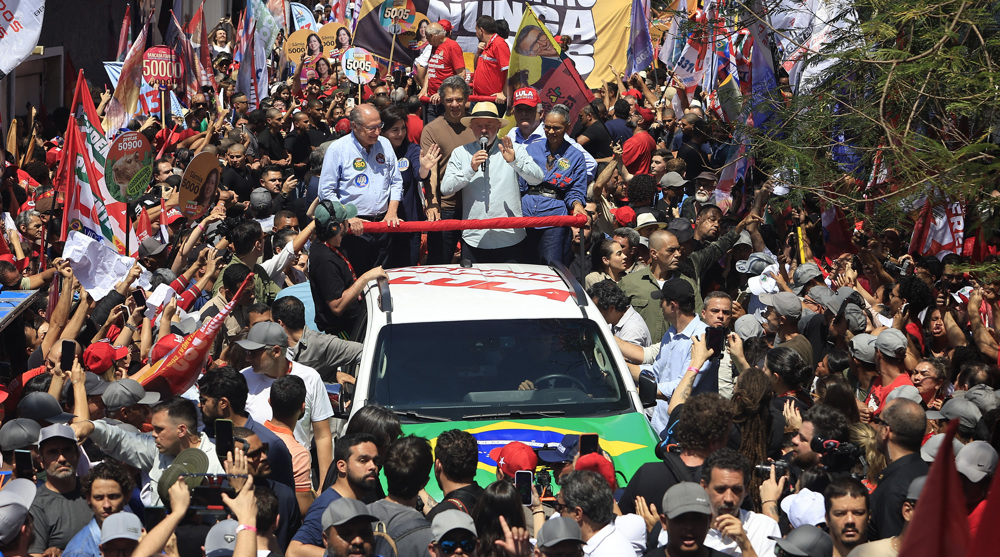
But the incumbent faces a tough battle because of an affordability crisis and a corruption scandal that ensnared the same justice who led the investigation into Bolsonaro.
Sen. Bolsonaro will likely lean into his messaging on affordability and link the president to corruption scandals.
He has promised to crack down on Brazilian criminal groups and insisted that Brazil needs to strike better deals with the Trump administration, including in the rare minerals economy, second only to China. Bolsonaro has also campaigned on releasing his father and bringing him back to politics.
Both candidates face image problems: Roughly half of Brazil's population disapproves of the Bolsonaro family, and roughly half disapprove of Lula's Workers Party, according to multiple polls.
Four years ago, Lula beat then-incumbent Jair Bolsonaro by about 2.1 million votes.
 This makes it easy to access the Press TV website
