Discover Iran: Tabriz’s iconic ‘Mausoleum of Poets,’ where centuries of Persian literary history lives on
By Humaira Ahad
On the night of September 18, 1988, an ambulance carried the body of an 82-year-old poet out of a Tehran hospital, beginning the journey back to the city where he was born.
His name was Seyyed Mohammad-Hossein Behjat Tabrizi, known to millions of readers simply as Shahryar. By the time his body reached Tabriz, the building that awaited him had already taken seventeen years to complete.
Shahryar was buried exactly where he had asked to be laid to rest, among some 400 poets, mystics, scholars and sufis who had been buried on the same patch of ground in Tabriz's Sarab district for nearly eight centuries.
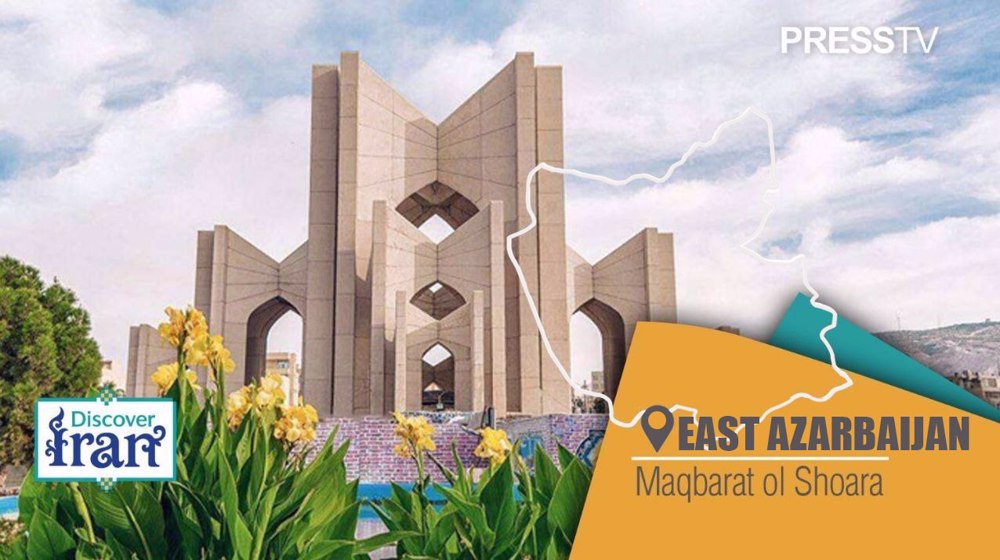
That place is Maqbarat al-Shu'ara, the Mausoleum of Poets – perhaps the only cemetery in Iran to have been rebuilt from ruins because of the extraordinary number of eminent figures buried there.
What's actually there now
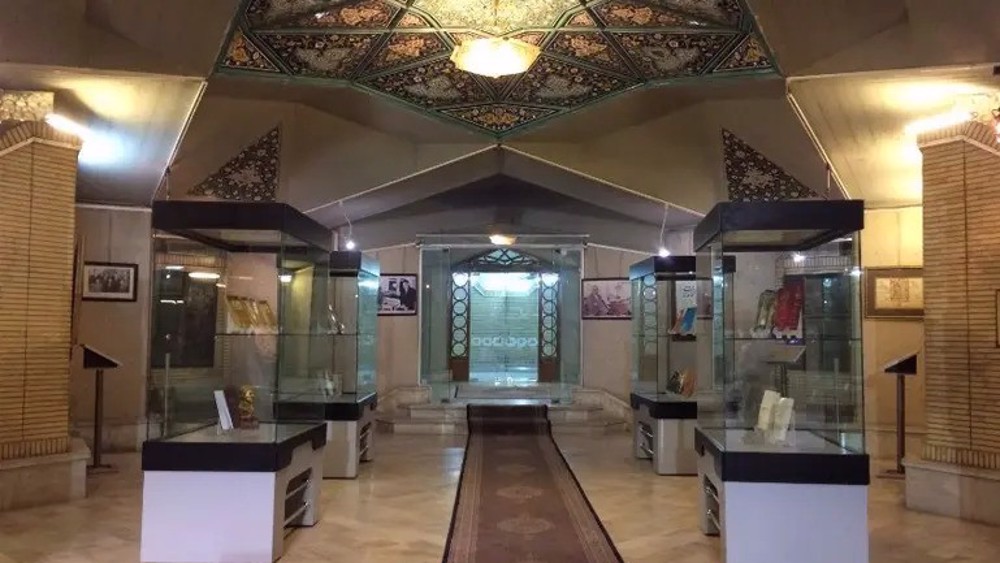
Walk up the stone steps today and you enter a single, vast chamber ringed by smaller rooms, every wall inscribed with verses by poets buried beneath the floor.
Calligraphy and old photographs are woven among the inscriptions, making the walls read less like those of a monument than the pages of an open book.
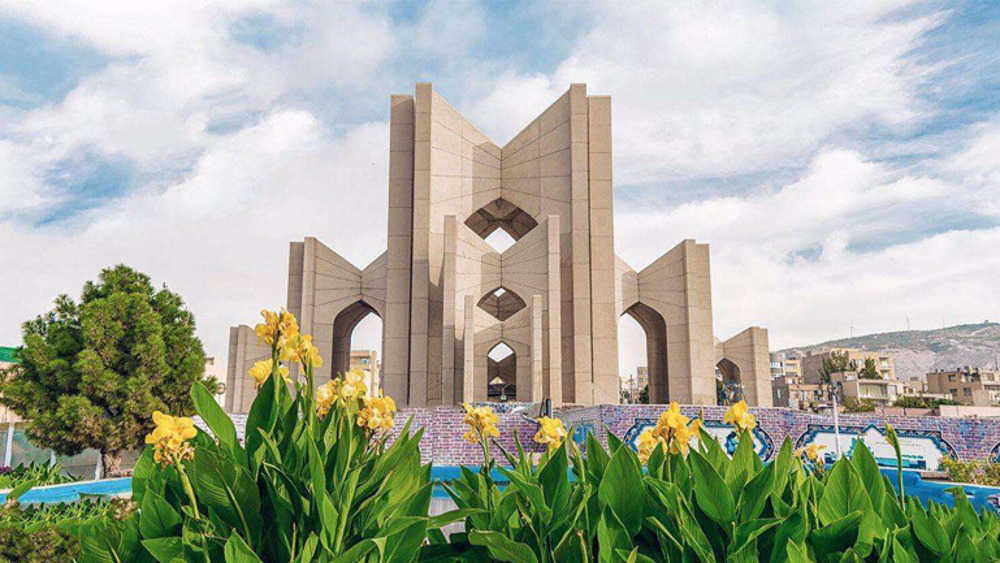
From the reflecting pool on its southern side, the concrete arches lock together into a silhouette photographed often enough to have become one of Tabriz's most recognizable modern images: thirty metres of steel frame wrapped in prefabricated panels, rising above a neighbourhood otherwise dominated by low stone and brick.
Beyond the main hall, the complex contains a bookstore, stalls selling handicrafts and administrative offices – signs that this is not simply a monument, but a working cultural site, visited and maintained.
The structure itself is barely fifty years old. Before construction began, the ground beneath it had already witnessed eight centuries of burials, at least two major earthquakes and an Ottoman sack of the city.
A city that paid poets to move there
The habit of burying poets in Sarab began in the twelfth century, when Tabriz sat at the heart of the Atabakan of Azerbaijan, a court wealthy enough to pay handsomely for verse written in its honour.
Word travelled, and poets arrived in the city from hundreds of miles away. The celebrated poet Khaqani Shirvani came from Shirvan, in the Caucasus; the poet and prose writer Anvari Abivardi followed from the same direction; Zahir al-Din Faryabi made the longer journey from Khorasan, in northeastern Iran.
All three breathed their last in Tabriz and were buried in the same modest enclosure on the edge of the Sarab neighbourhood.
Their graves transformed an ordinary burial ground into a destination in its own right. Within a generation, chroniclers were calling the site Hazirat al-Shu'ara – the Poets' Ground.
The pattern continued for another six centuries, through three successive dynasties. Under the Ilkhanids, the Jalairids and the Aq Qoyunlu, poets continued to be buried near Khaqani: Humam-i Tabrizi in the early 1300s, the mystic poet Assar Tabrizi a generation later, and Maghrebi Tabrizi not long after.
By the time the burials began to slow, the enclosure held names spanning three centuries and two literary languages, Persian and Azerbaijani Turkish, side by side.
Not everyone buried there was a poet though. Aziz Khan Mokri, a nineteenth-century army general, lies there as well, alongside the legendary poets and mystics.
The earliest surviving written record to name the cemetery comes from the historian Hamdallah Mustawfi, around 1339.
Within two centuries of its first burials, a modest graveyard had already entered the written history of Persian literature.
Wrecked twice, rebuilt once
An Ottoman army sacked Tabriz in 1514 and plundered its treasuries. Earthquakes followed through the sixteenth to eighteenth centuries, damaging monuments across the city.
The cemetery's worst damage came in 1779 and 1780, when two massive earthquakes in successive years destroyed much of the burial ground.
Gravestones toppled, inscriptions were lost, and the number of names erased has never been fully recorded. The site remained abandoned, its boundaries unclear, for close to two centuries.
In 1971, a public design competition was announced in the major newspapers Kayhan and Ettela'at, as well as in the literary magazine Yaghma.
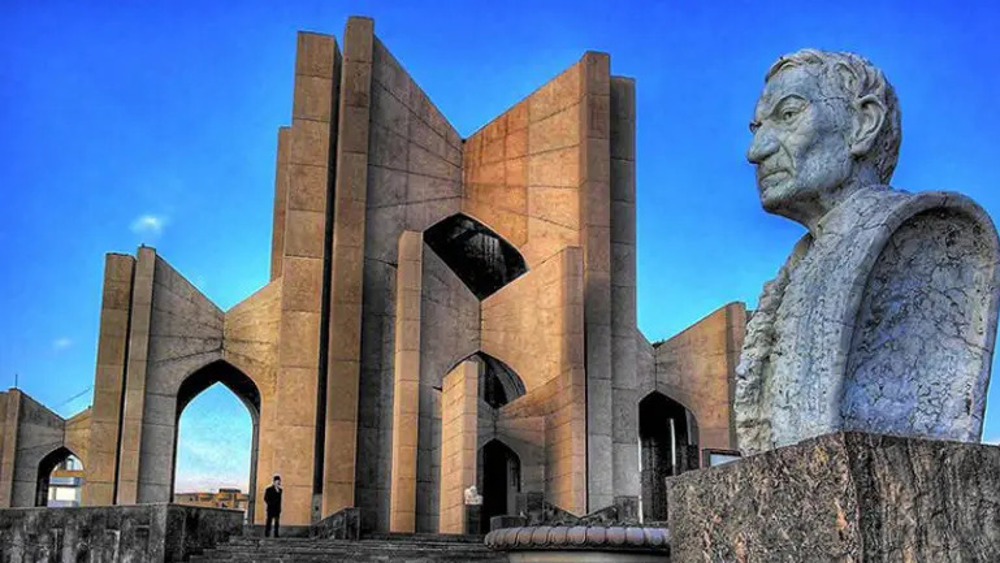
The aim was to create a memorial for the roughly 400 people believed to be buried there. The winning design came from architect Gholamreza Farzanmehr, a steel-framed, concrete-clad structure built around thirty meters of interlocking arches, the same arches visitors walk beneath today.
Construction began that year and continued over the following years. The building was completed in 1988, the same year the poet Shahryar died. He was buried there shortly after its completion.
Shams Tabrizi: The name that isn't there
One name people often expect to find here isn't here. Shams Tabrizi, Moulana Rumi's companion, and the figure addressed in Moulana's Divan-i Shams-i Tabrizi, shares Tabriz's name but is not buried in its cemetery.
Born in Tabriz around 1185, he later left Moulana in Konya and settled in Khoy, roughly 150 kilometers northwest, where he died around 1248 and was buried.
Many historians regard that grave as authentic. Konya maintains a cenotaph for him, honored within the Mevlevi order but not believed to contain his remains.
The tomb in Khoy has since been rebuilt as a copper-clad garden complex and has been put forward for UNESCO recognition.
Why it still matters
Estimates of the number of people buried at Maqbarat al-Shu'ara range from roughly 320 to more than 400, reflecting the loss of graves and inscriptions in the 1779–80 earthquakes.
Researchers continue to identify graves that were missing from earlier records.
Shahryar was not the last person buried there. The poet Mahmoud Melmasi was interred in 1991, followed by the writer Aziz Dowlatabadi in 2009, both after the current memorial was completed.
As researchers continue to catalogue the site’s inscriptions, the exact number of people buried at Maqbarat al-Shu'ara remains uncertain.
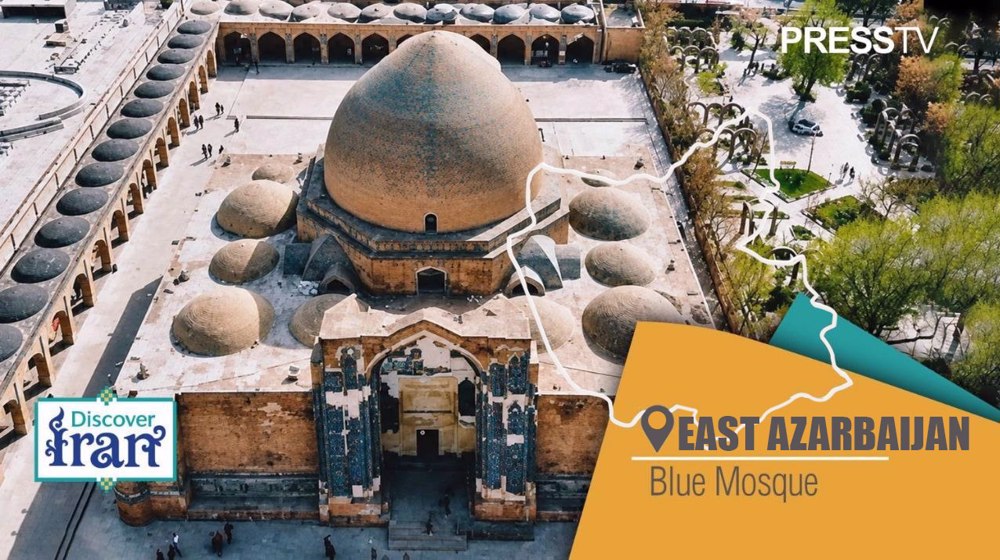
Discover Iran: Tabriz’s Blue Mosque, where glorious history meets timeless Iranian architecture
200 nights, one resilient nation: Iranian people’s epic in defense of homeland and Revolution
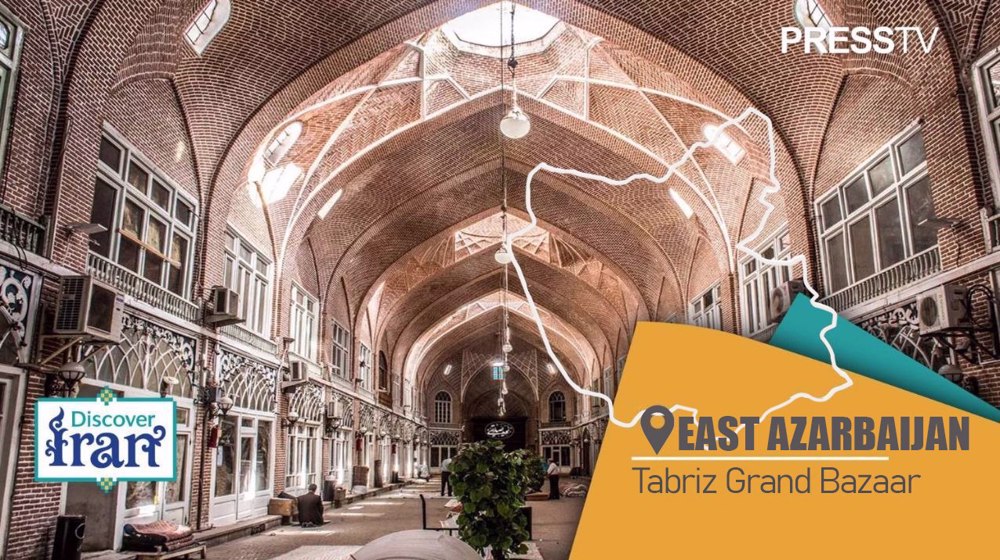
Discover Iran: Tabriz Grand Bazaar, where centuries of trade, culture and craftsmanship still thrive



US visa ban on Iranian president’s media team is bid to hide the truth: FM spokesman
US aggression, economic warfare amount to crimes against humanity: Iran's UN envoy
Protests erupt in US as ICE agent shoots Venezuelan driver
US pressure fuels cooperation among Muslim states: Pezeshkian
Major TV networks suspend White House pool coverage after Trump ban
US visa ban on Palestinian UN delegation violates international agreements: Hamas
VIDEO | Press TV's news headlines
Iran calls on France to respect law after suspending French cultural institute in Tehran



 PressTV NEWSLETTER
now
PressTV NEWSLETTER
now
 This makes it easy to access the Press TV website
