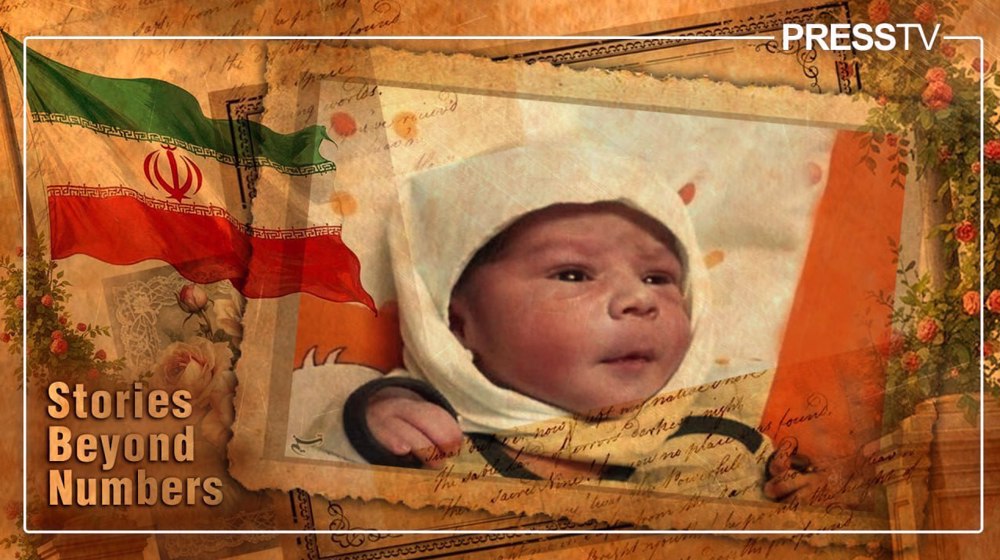
Stories Beyond Numbers: Mojtaba, the three-day-old infant whose life was cut short before it could bloom
By Humaira Ahad
“Mojtaba was a moon.” That is how artist Parisa Rashidi describes him – the three-day-old infant she came to know only afterward, through the portrait she painted in his memory.
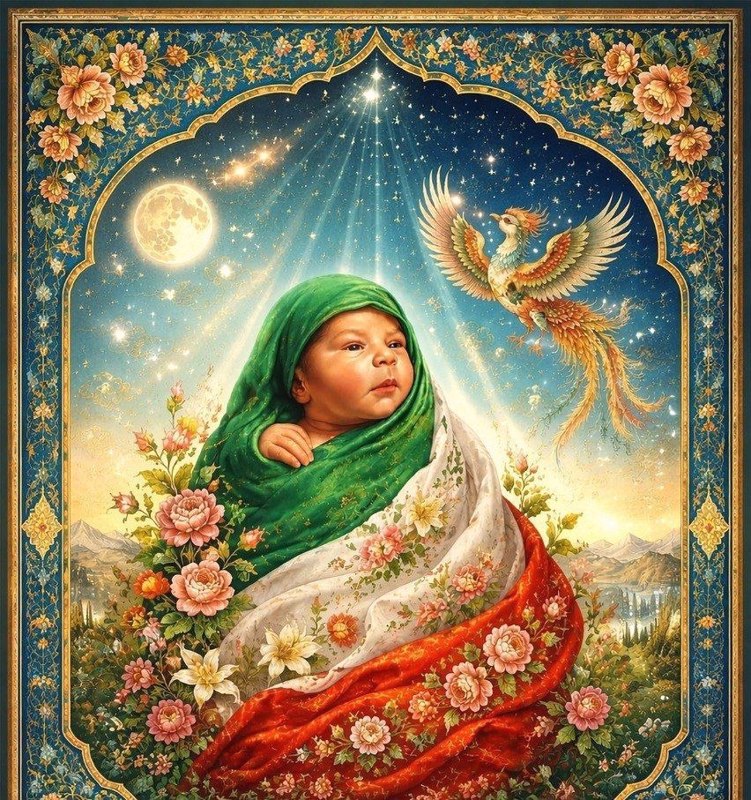
In the painting, a crescent moon hangs above the infant, surrounded by stars and flowers, while a Simurgh rises behind him. Titled Heavenly Infant, Three-Day-Old Martyr, the work was unveiled during the month of Muharram.
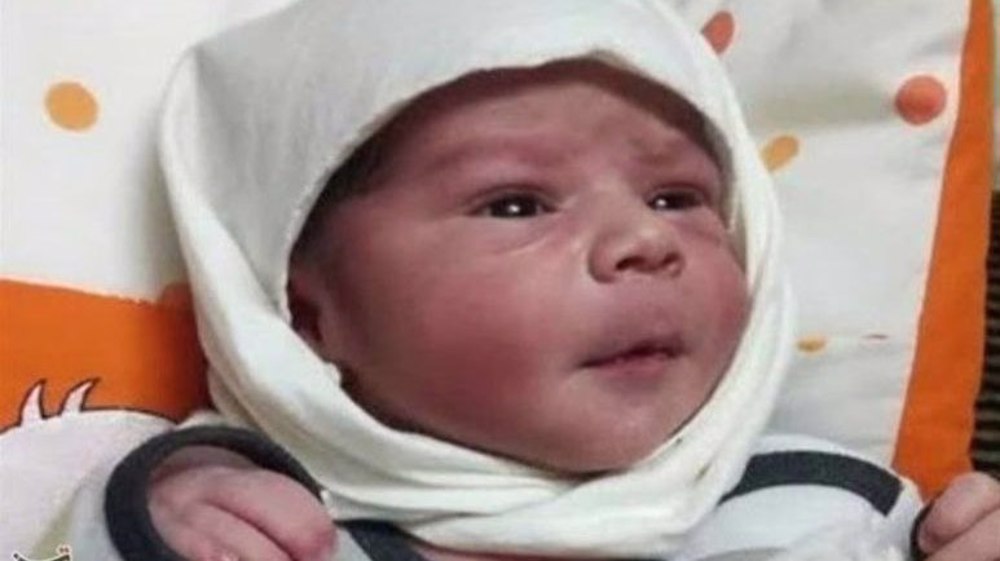
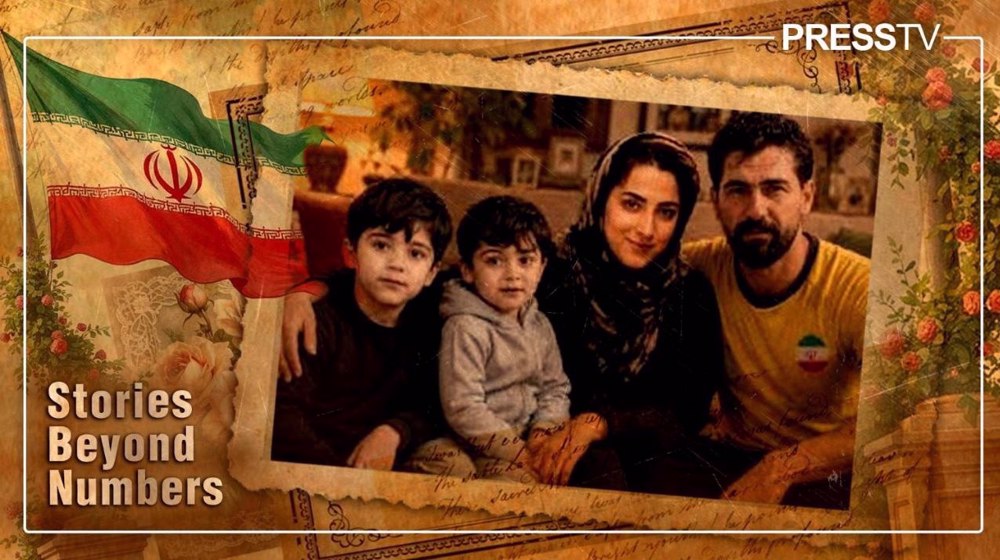
Seyyed Mojtaba Sajedifar was three days old when he was killed in a US-Israeli airstrike on his family’s home near Arak, in Markazi Province, central Iran.
The strike hit at around 4:36 a.m. on March 15, 2026, in Amrabad, a village in Masumieh district, about 30 kilometres along the Arak–Qom road. Mojtaba was in his mother’s arms.
His two-year-old sister, Fatemeh Noura, was also killed in the attack. Their mother, Somayeh Mohammadi, and their grandmother were killed as well. One other person was injured.
Four members of the family were killed inside their home. Mojtaba had been born only three days earlier
House in Amrabad
The dastardly attack came during the 40-day war of aggression against Iran. Around Arak, residential areas and villages were among the sites hit deliberately, including places where families were living far from any battlefield.
For people in Arak, Mojtaba’s brief life came to represent the story of a child who had barely entered the world before being killed in an attack, his life cut short just three days after his birth.
“The martyrdom of a three-day-old infant may be just a news story to many people around the world, but for us, it is a deep wound,” a young student from Arak told a local news website.
For a father of two young children in Arak, the distance between Mojtaba’s three days of life and his own children’s lives was enough to make the story deeply personal.
“When I heard that a three-day-old infant had been killed in his mother’s arms, my heart truly broke,” he was quoted as saying by a news website.
“One cannot even imagine that a child who has just been born and has not yet seen the world could become a victim of such a crime,” he added, his voice filled with emotion.
The killing of the newborn particularly affected parents who saw in the tragedy the devastating human cost of the unprovoked, unjustified and illegal war imposed on the Iranian people.
“I am a mother myself,” a woman from Arak said, “and when I heard that martyr Mojtaba had been killed in his mother’s arms, my heart was truly on fire.”
She had a question for the United States and Israel, the perpetrators of the heinous crime.
“Mojtaba's mother, his little sister and their grandmother were also killed in the same attack. Imagine an entire family being wiped out in a single moment. What threat did they pose to the world, to the US and the Israeli regime? They were simply an ordinary family living in their home.”
The circumstances surrounding the family’s killing underscored the devastating toll of the US-Israeli attacks on Iranian civilians and civilian neighbourhoods across the country.
As per reliable reports, there was no military position or known military installation near the site. The missile struck an ordinary family home in rural Iran, a place of everyday life, where the family lived.
“When we see enemies attacking residential areas and targeting children, we understand their true nature more clearly than ever,” the Araki student added, reflecting a sentiment shared by Iranians who see the attacks on ordinary families as evidence of the US and Israeli designs against the Iranian people.
For them, the targeting of residential areas and the killing of children have reinforced the belief that the military campaign against Iran is aimed at intimidating and harming ordinary civilians.
The child they were preparing for
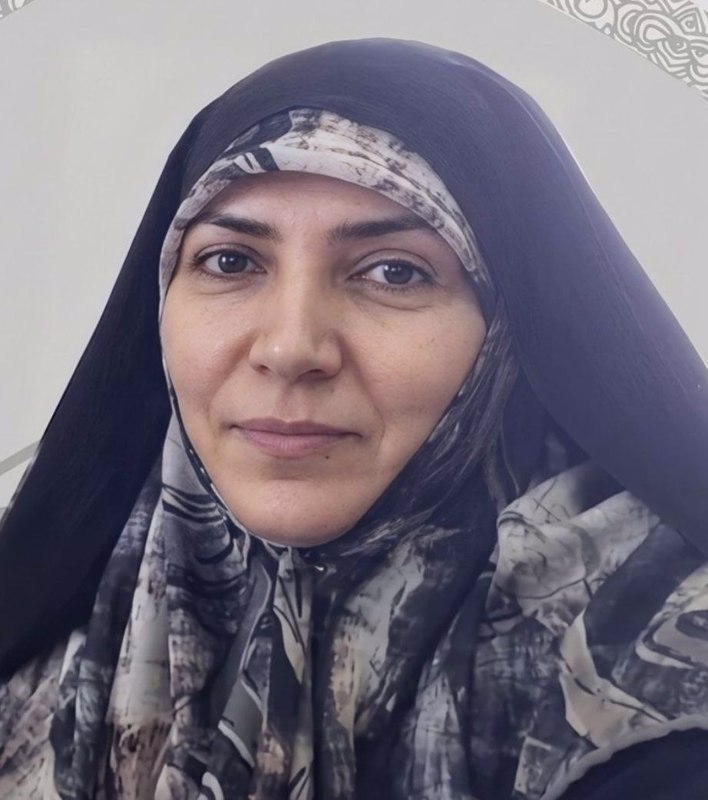
There had been plans for Mojtaba long before he was born. His family had prepared for his arrival, imagining the life that lay ahead of him.
During Somayeh’s pregnancy, the family had planned to take their newborn to the Worldwide Hosseini Infants Gathering, held on the first Friday of Muharram.
The annual gathering brings together mothers with their infants to commemorate Hazrat Ali Asghar, the infant son of Imam Hussein (AS), and remember his killing at the Battle of Karbala.
The gathering came about four months after the US-Israeli attack. By then, the family that had expected to bring the newborn to the religious gathering was grieving four deaths.
An elderly resident of the area remembered the somber story through the generations of imposed wars, including the one in the 1980s, and the suffering he had witnessed.
“I have lived through many years. I have seen war and hardship, but the killing of a three-day-old infant truly shakes every human heart,” he said.
“When I heard about the martyrdom of this three-day-old child and his family, I was reminded of the suffering of children throughout history and of Imam Hussein’s (AS) infant, who was killed by the criminals of his time,” he added, referring to the tragedy of Karbala.
For the young Araki student, Mojtaba’s age has become an important part of the way the child is remembered.
“History has shown that the blood of the oppressed never goes unanswered,” the student said. “This three-day-old child may be the youngest martyr of this war today, but his name will become a symbol of innocent killings and, at the same time, resistance.”
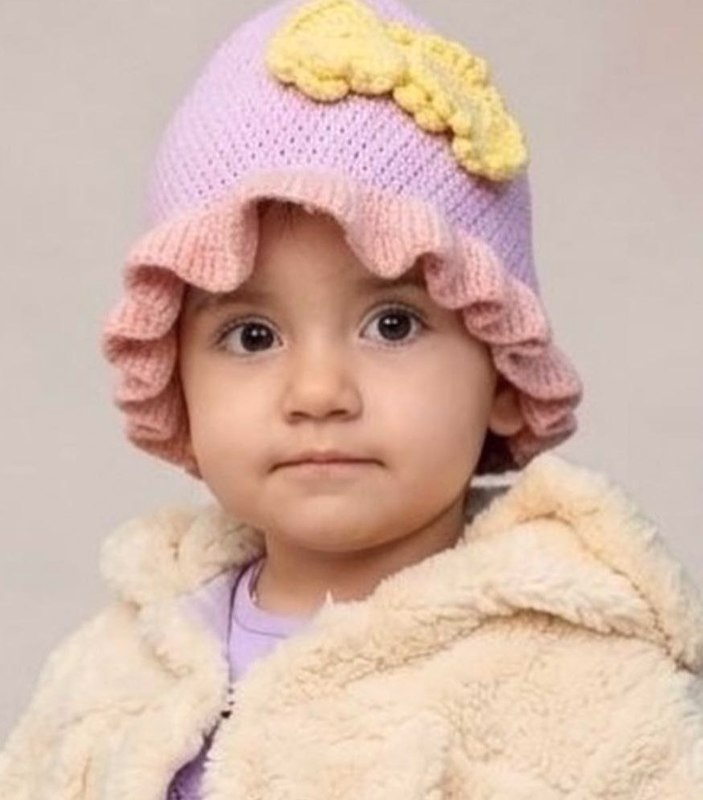
Moon for Mojtaba
During the month of Muharram, Rashidi unveiled her painting of Mojtaba and presented it to his father.
Heavenly Infant, Three-Day-Old Martyr had a crescent moon, stars, flowers and Simurgh surrounding the child, while the Iranian tricolor was wrapped around the infant.
According to the artist, the imagery draws together Ramadan, innocence, Iranian identity and the Karbala tradition associated with Hazrat Ali Asghar (AS), the infant son of Imam Hussein (AS).
“My aim was not simply to depict a face, but to narrate a form of ‘heroic innocence,’” Rashidi said.
She explained that the moon serves as an image through which the infant is remembered — a child whose life was measured not in years, but in three days.
The painting also places Mojtaba within a much older visual language of mourning and remembrance in Shia Islam and Iranian culture.
In Rashidi’s interpretation, the Simurgh represents the ascent of the infant’s soul, while the stars signify the light of truth and the enduring presence of the righteous.
“This frame is the image of an infant who was never given the opportunity to live, yet, through his innocence, he left in history an eternal narrative of sacrifice, injustice and a life taken before it had even begun,” Rashidi said.
“This work was my tribute to the great spirit of this little man.”
Trump administration prepares wide-ranging sanctions on ICC: Reports
Italy’s Meloni plans to ban schoolgirls from wearing Burqa, Niqab
Persian Gulf markets plunge as Yemeni forces strike Riyadh



VIDEO | AIPAC raises millions against candidates critical of Israel: Political commentator
Iran slams US for blaming Tehran over rising fuel prices, Strait of Hormuz closure
VIDEO | Putin’s United Russia wins landslide victory in parliamentary election
2026 Asian Games: Iran’s karate practitioners win one gold, three silver medals
VIDEO | Record fuel prices in France spark fears of new 'Yellow Vest' uprising
VIDEO | US diesel gas hits all-time record, could cost Trump Congress
VIDEO | Escalating Pakistan-Afghanistan cross-border tensions: Can diplomacy outpace military friction?
Ansarullah: Yemeni armed forces fighting ‘decisive battle’ against Saudi Arabia


 PressTV NEWSLETTER
now
PressTV NEWSLETTER
now
 This makes it easy to access the Press TV website
