How Yemeni retaliatory strike on Saudi East-West pipeline exposed limits of bypassing Strait of Hormuz
By Mohammad Molaei
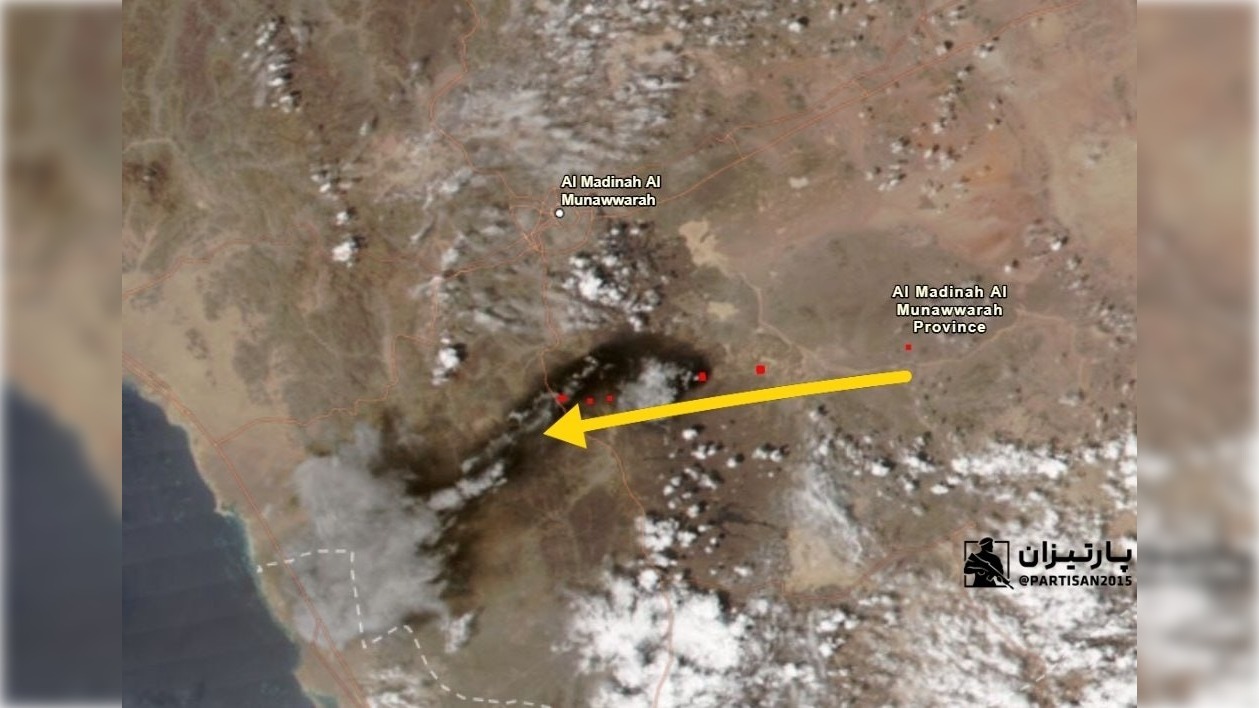
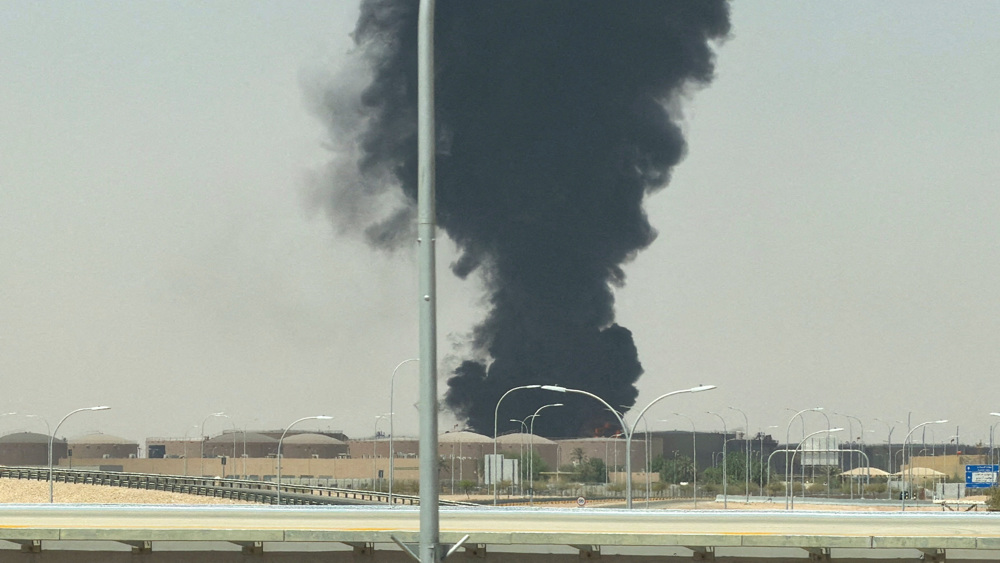
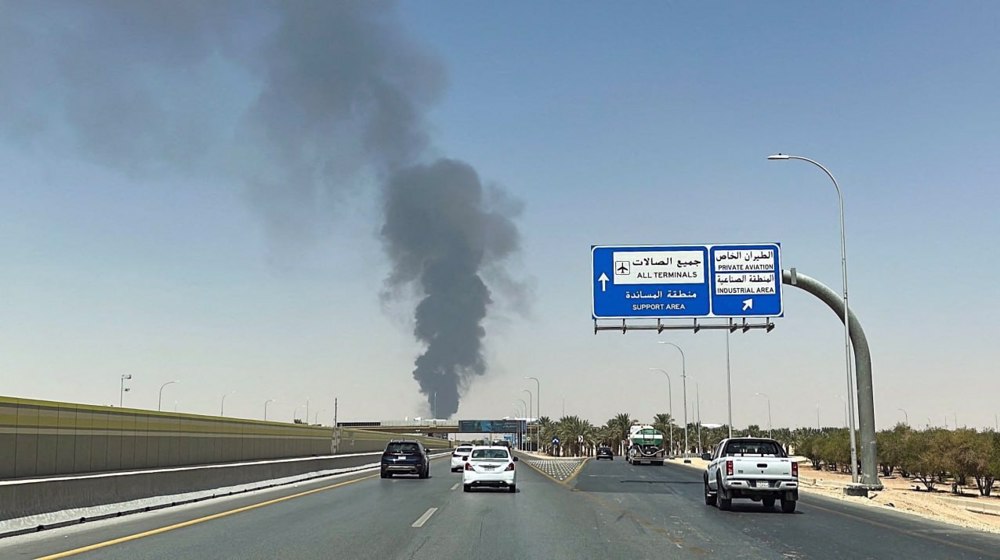
The first public signs appeared before dawn on satellite feeds. It included a cluster of thermal spikes across the barren expanse of Al-Mesabaah, Saudi Arabia, followed by a towering plume of black smoke unspooling against the arid horizon.
Out in the open desert, where Saudi Aramco’s 1,200-kilometer East-West Pipeline cuts a straight scar from the kingdom’s eastern oil fields to the Red Sea port of Yanbu, two vital pumping stations, Al-Dhekra and Al-Misbaah, were ablaze.
High-pressure crude oil lines had ruptured, turbine manifolds were shattered, and emergency safety valves hissed as they triggered an automated lockdown. Within hours, the Saudi Ministry of Energy issued a terse statement confirming that operations along the country’s most strategic overland conduit had been halted in a “precautionary shutdown.”
To the casual observer of global oil markets, the incident might have seemed like just another periodic disruption in a turbulent region, a flare-up that nudged Brent crude prices before trader calculations settled back into routine.
But in the corridors of military offices, intelligence agencies, and energy centers from Riyadh to Washington and beyond, the strikes registered as something vastly more dangerous.
The retaliatory attack on the East-West Pipeline must be viewed on a par with – and in several critical dimensions, as surpassing – the seismic September 2019 retaliatory attacks on Aramco’s processing hub at Abqaiq and the Khurais oil field.
Seven years ago, a salvo of low-flying drones and cruise missiles temporarily knocked out 5.7 million barrels per day, roughly half of Saudi Arabia’s production, exposing the vulnerability of concentrated industrial nodes. The world gasped, oil prices spiked by 15 percent, and military planners promised that hardened air defenses, distributed networks, and overland bypass arteries would insulate the kingdom’s lifeblood against future coercion.
That promise was built on an illusion. What the 2019 strikes proved about static processing facilities, this new strike demonstrates about the broader geographic architecture of Persian Gulf energy exports. There is no overland sanctuary.
By disabling the pumping stations of Petroline, the crown jewel designed specifically to bypass the Strait of Hormuz, the attackers did not merely damage steel and concrete; they shattered a foundational assumption of Western and Persian Gulf energy-security planning.
How the Saudi war on Yemen reached Petroline
The escalation that culminated in the burning of Petroline’s pumping stations was not an isolated bolt from the blue, but the direct consequence of shifting frontlines hundreds of kilometers to the south along Yemen’s Red Sea coast.
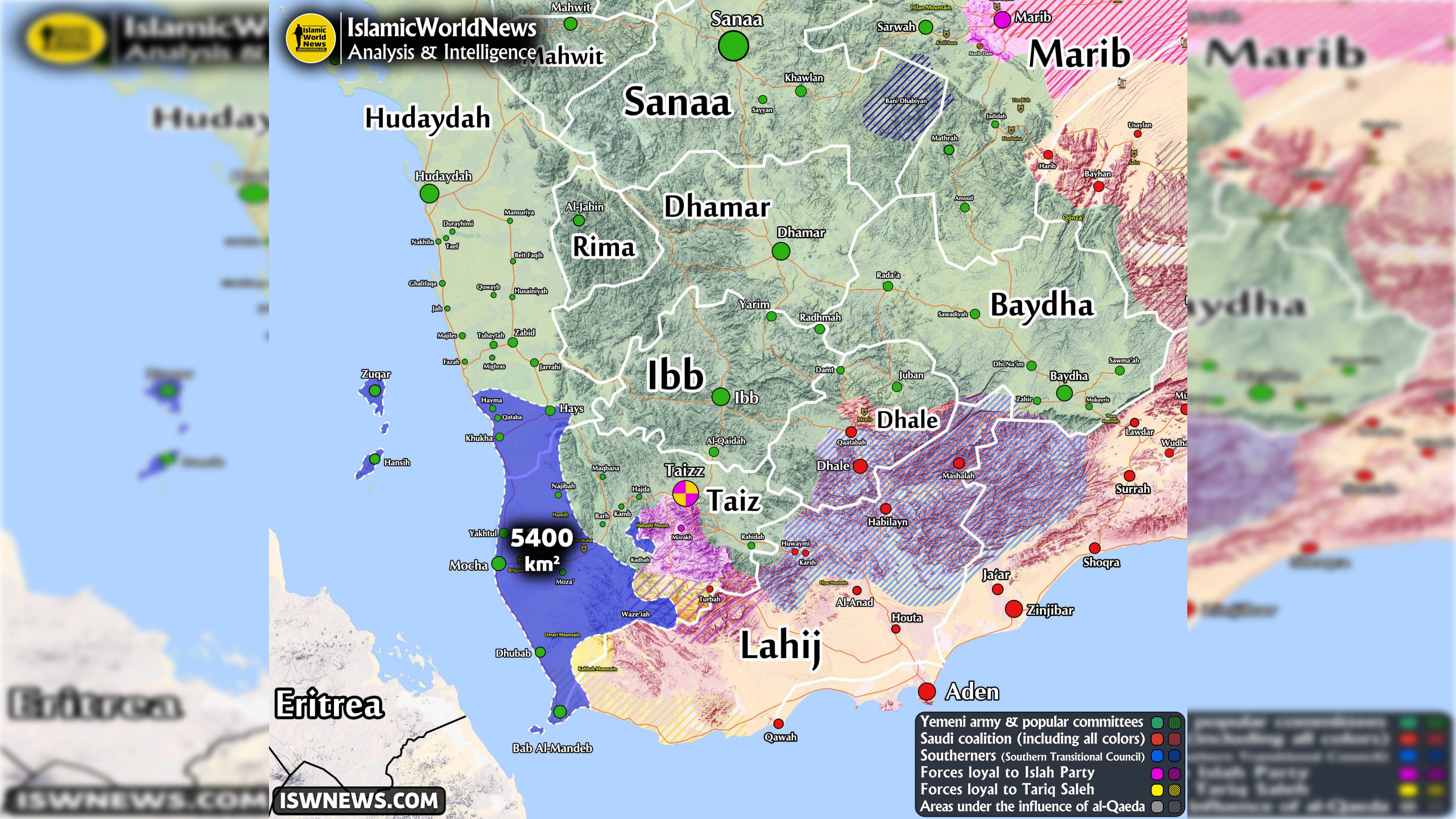
In recent weeks, Yemeni military forces launched a series of lightning offensives across the western coastal plains, sweeping through key strategic positions and overwhelming Saudi-backed mercenary units in the Arab country. The rapid fall of positions along the coastal belt, culminating in the liberation of Mokha and strategic islands controlling the southern approach to the Bab el-Mandeb Strait, completely dislodged the anti-Yemeni coalition’s foothold along the maritime gateway.
Faced with the collapse of their allied defensive line, Saudi military commanders resumed heavy aerial bombardments of Yemeni territory, unleashing waves of airstrikes against Yemeni military positions in an attempt to halt the coastal advance. Riyadh’s renewed air campaign was intended to re-establish deterrence and force the Yemeni movement to freeze its offensive operations.
Instead, it triggered a calibrated and devastating counter-response. Warning that any continuation of coalition airstrikes would meet with retaliatory strikes deep inside the Saudi heartland, the Yemeni military activated an extensive deep-strike campaign.
Over the following days, swarms of one-way attack drones and precision-guided missiles were launched at Saudi military bases, command installations, and economic infrastructure. The culmination of this retaliatory campaign was the strike on the East-West Pipeline, the single asset Riyadh had long regarded as its principal insurance policy against disruption in the region.
“We have made it explicitly clear that aggression will be met with symmetrical consequences,” declared Yahya Saree, spokesperson for the Yemeni Armed Forces, following the strike. “No facility, regardless of its distance or strategic weight, is immune while our people remain under bombardment and siege.”
The choice of target was deliberate: it struck directly at the artery Saudi Arabia had spent years and billions of dollars developing as its primary insurance policy.
What the satellite images show
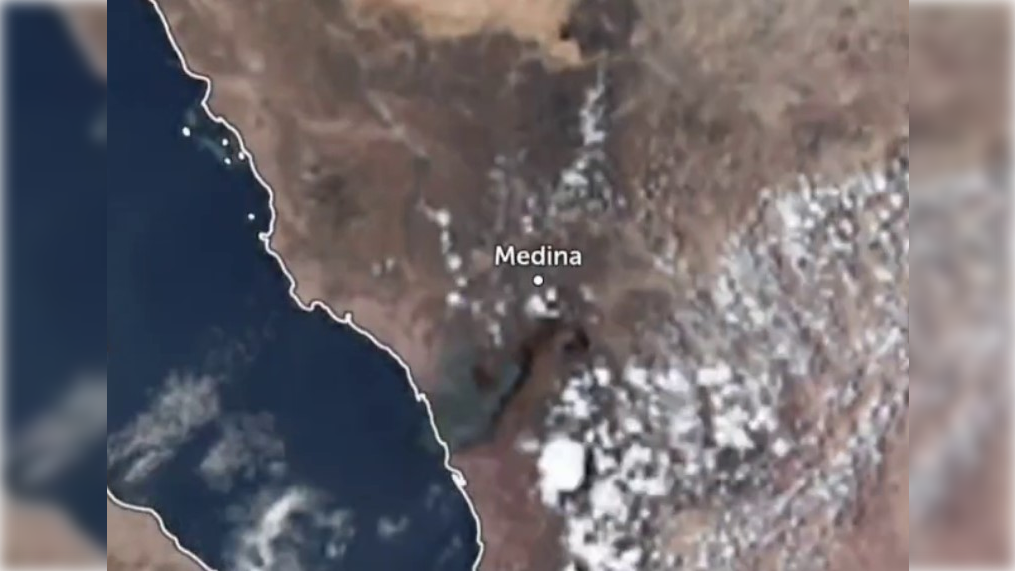
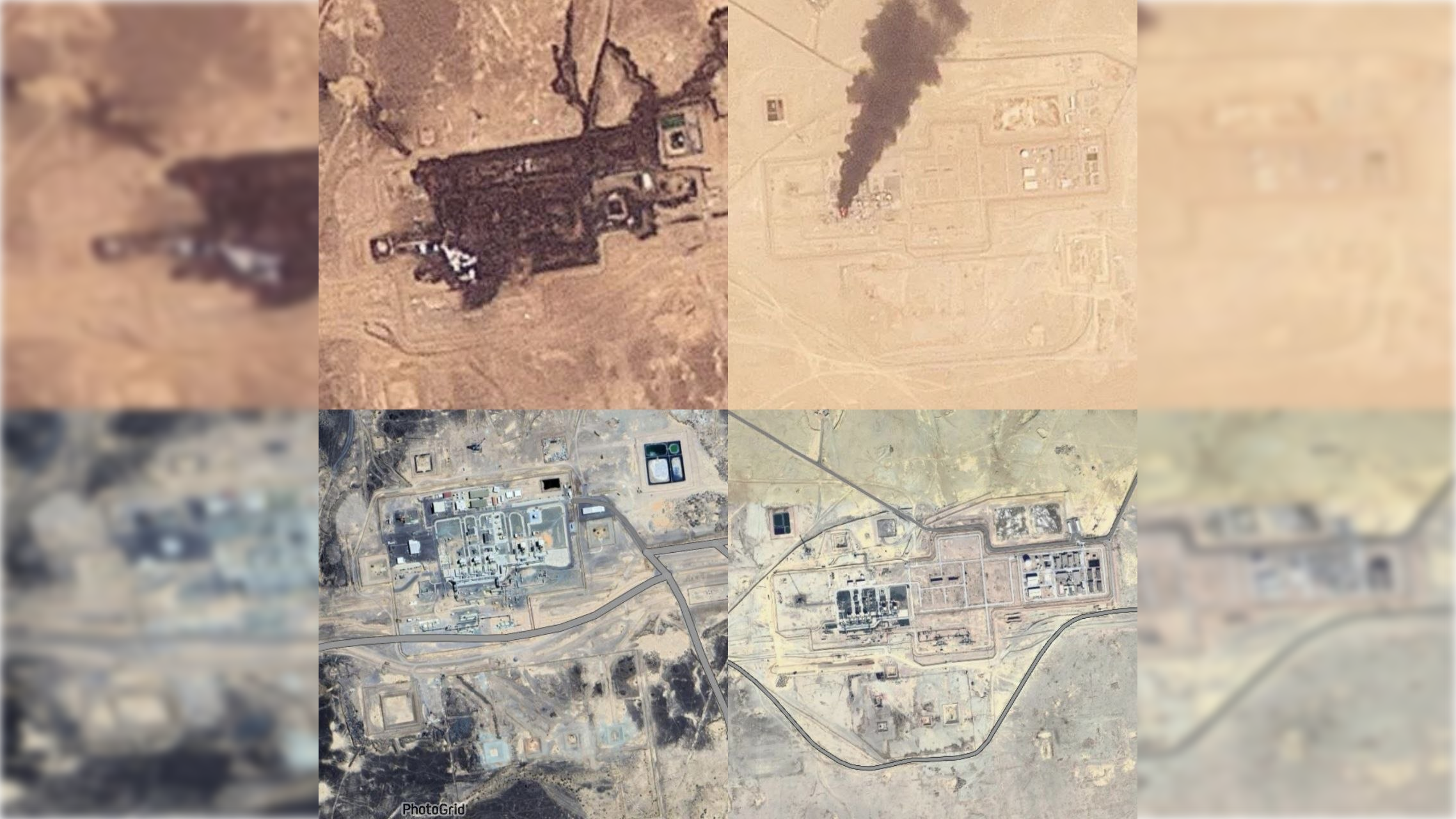
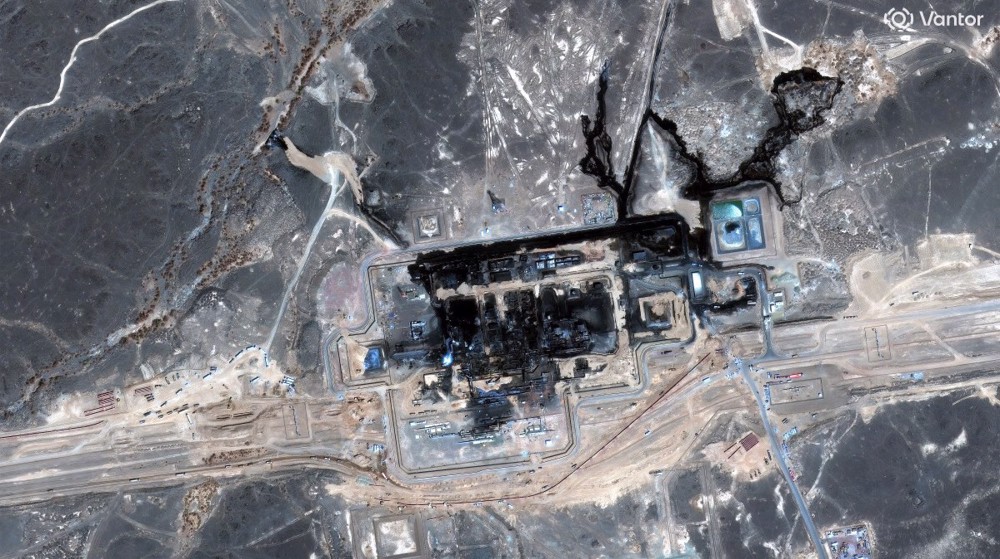
Commercial and military high-resolution satellite imagery gathered in the aftermath of the attack has stripped away much of the official ambiguity surrounding the scale of the physical destruction. The visual evidence indicates direct, precision strikes against two critical nodes along the 1,200-kilometer route.
While one pumping station appears to have suffered localized damage, the other sustained catastrophic destruction. Satellite imagery shows the central pumping bay, which houses high-volume centrifugal pumps and heavy turbine drives responsible for moving crude over the coastal mountain ridge toward Yanbu, gutted by intense fire.
Scorch patterns surrounding the primary manifold distribution units suggest that the incoming projectiles did not strike at random, but were directed toward specific high-value components.
NASA’s FIRMS thermal-detection system registered intense, clustered heat anomalies over the affected areas for hours following the strikes, while high-altitude imagery captured an unbroken plume of dense hydrocarbon smoke drifting tens of kilometers across the desert.
The Saudi foreign ministry acknowledged that several drones had infiltrated domestic airspace, attributing the launches to sites in southern Iraq, while regional intelligence assessments pointed to a synchronized operation involving multiple flight paths designed to evade Saudi air defenses.
Whatever the origin of the attacks, their consequences were immediate. The damage forced Aramco engineers to reduce flow rates to zero across the affected network to prevent dangerous pressure buildup and environmental contamination.
Anatomy of an undefendable artery
The successful interdiction of Petroline exposes a fundamental flaw embedded in Western and Persian Gulf energy-security thinking: the unquestioned assumption that overland pipelines represent an inherently more defensible and reliable alternative to maritime chokepoints.
Strategic thinkers in Washington, London, and Riyadh have long treated the Strait of Hormuz as a perilous single point of failure while viewing terrestrial pipelines as robust, protectable engineering feats. In reality, modern precision warfare has fundamentally inverted this logic.
A maritime waterway like the Strait of Hormuz is vast, deep, and dynamic. Permanently closing a 21-mile-wide strait would require a massive and sustained expenditure of naval power, including mine-laying operations, anti-ship missile salvos, and prolonged sea-denial efforts, an undertaking that would also invite naval counter-intervention.
By contrast, a linear pipeline stretching 1,200 kilometers through barren, sparsely populated desert presents an enormous surveillance and protection dilemma.
Consider the mathematics of pipeline defense. No conventional air-defense umbrella, regardless of how many billions are spent on Patriot batteries or short-range point-defense systems, can establish an uninterrupted protective dome over hundreds of miles of remote terrain.
A single loitering munition or precision missile costing anywhere from $10,000 to $100,000 can exploit radar blind spots or fly at low altitude to strike an unhardened pumping station costing hundreds of millions of dollars, potentially triggering prolonged repairs.
A pipeline is not merely a hollow tube, it is an active mechanical system reliant on highly pressurized pumping stations, power substations, compressor units, and valve assemblies spaced at regular intervals. Destroying two or three of these critical nodes can render an entire thousand-kilometer system functionally inert.
You can guard the perimeter of a refinery, and you can escort a tanker convoy through a channel. What you cannot do is place a surface-to-air missile battery and an active radar crew every 10 kilometers across a thousand kilometers of desert. The pipeline is the ultimate soft, linear target. The cost-exchange ratio can be heavily stacked in favor of the attacker.
The proliferation of autonomous drone swarms, satellite-guided navigation kits, and low-observable missiles across the West Asia region has transformed the operational playbook. Infrastructure warfare has evolved from the blunt mass-bombardment tactics of the 20th century into asymmetric, nodal disruption. The East-West Pipeline retaliatory strike in response to the Saudi bombardment and blockade demonstrates that, in an era of precision warfare, overland transit routes through contested geography can be exceptionally difficult to defend.
Hormuz, the trump card that wouldn’t die
In recent months, a narrative has circulated through American and Israeli policy circles and affiliated media arguing that the Persian Gulf’s traditional chokepoint will gradually lose its strategic relevance, and that Iran’s ultimate geopolitical lever – the ability to exert pressure on the Strait of Hormuz – is slowly fading into irrelevance.
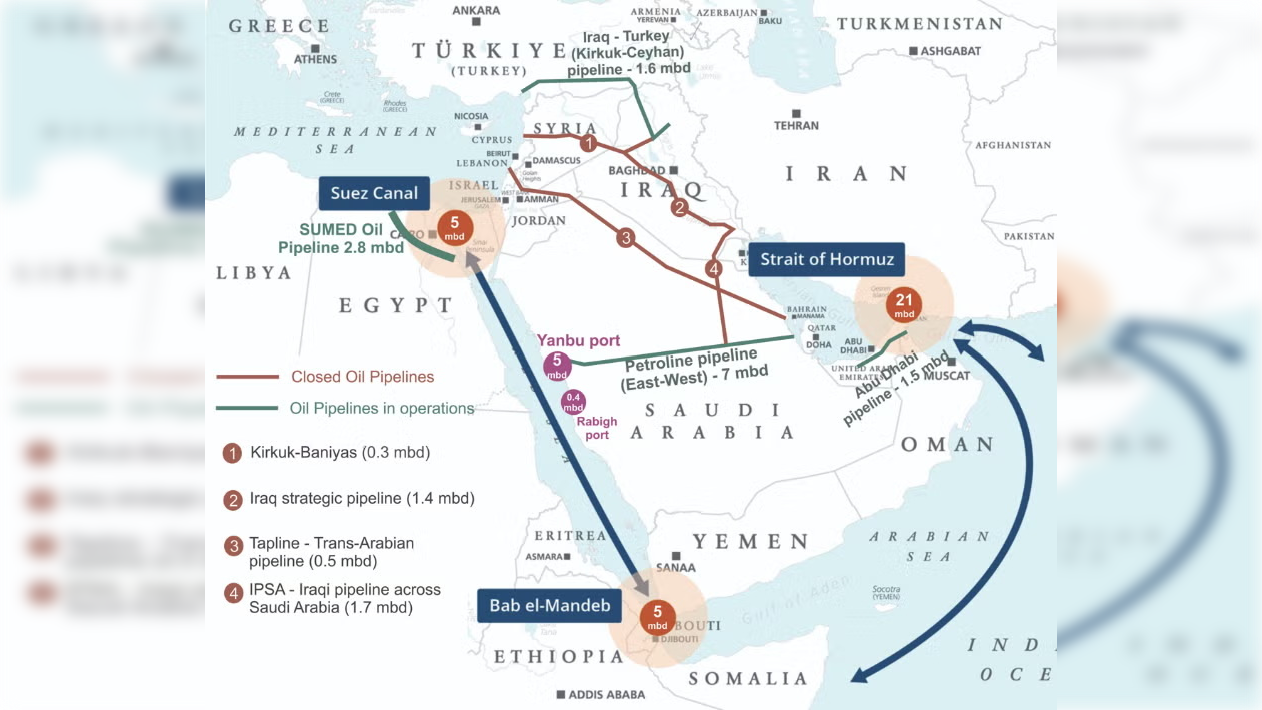
This notion has been built around ambitious engineering concepts and pipeline diplomacy. Western analysts have pointed to Saudi Aramco’s multibillion-dollar capacity expansions along Petroline, which aim to raise throughput capacity from 5 million to 7 million barrels per day, theoretically enabling Riyadh to reroute a substantial portion of its crude directly to the Red Sea port of Yanbu.
Similar enthusiasm has surrounded Israeli and regional proposals for overland logistics corridors, including conceptual pipeline networks designed to link the Red Sea directly to the Mediterranean while bypassing both Hormuz and the Suez Canal.
The underlying premise is alluringly simple. By routing hydrocarbons overland through “friendly, allied sovereign territory,” regional powers and their Western backers could construct an energy architecture largely decoupled from Iranian maritime influence.
This retaliatory strike challenges that narrative. If the Yemeni military, operating under sustained naval blockade and aerial bombardment, possesses the intelligence, targeting capabilities, and long-range precision arsenal required to disable critical Petroline infrastructure, then other overland pipeline corridors are hardly immune to attack.
The idea that the Negev pipeline, the Abu Dhabi Crude Oil Pipeline (ADCOP) to Fujairah, or Yanbu’s loading terminals provide a permanent escape hatch from regional escalation is therefore questionable. Transporting crude to Yanbu does not eliminate the security dilemma; it shifts the geographical point of vulnerability from the waters of the Persian Gulf to the open deserts of the Hijaz and the volatile shores of the Red Sea.
Far from being obsolete, the Strait of Hormuz retains substantial strategic weight. The notion that Western policymakers could engineer their way out of Persian Gulf geopolitics with steel pipes was always overly optimistic. Iran’s leverage over Hormuz never depended on the absence of pipelines; it depended on the reality that no alternative route can match the sheer volume, established infrastructure, and geographic significance of the maritime highway.
Hormuz and Bab el-Mandeb: The dream of buying security Is hattered
The flames that consumed the pumping stations of the East-West Pipeline mark the definitive end of an era in Middle Eastern energy security. For nearly half a century, the petrostates of the Arabian Peninsula and their Western security guarantors operated under the conviction that security could be purchased, engineered, and diverted.
The geopolitical landscape of 2026 presents a reality that neither Riyadh nor Washington can engineer away. At the eastern gateway, Iran maintains unchallenged operational leverage over the Strait of Hormuz, capable of imposing unacceptable costs on maritime traffic through anti-ship missile batteries, fast-attack craft, and naval mining. At the western gateway, Ansarullah exercises de facto dominance over the Bab el-Mandeb and the southern Red Sea, demonstrating the capability to target shipping and strike overland targets.
Between these two maritime pincers, the dream of an overland sanctuary has dissolved. A tanker loading at Yanbu to avoid Hormuz immediately finds itself navigating a Red Sea corridor contested by Yemeni anti-ship cruise missiles and naval drones. And as the strikes on Saudi pumping stations proved, even the overland pipe feeding Yanbu can be cut in half with a handful of loitering drones launched from a flatbed truck hundreds of miles away.
The dream of buying security and going around the Persian Gulf is shattered. The illusion that technology, money, or overland routing could bypass the political and military realities of the region has run its course. For the global economy, the lesson of the East-West Pipeline attack is as stark as it is unavoidable. There is no detour around the Persian Gulf, and the waterways of Hormuz and Bab el-Mandeb will continue to dictate the pulse of global energy for generations to come.
Persian Gulf markets plunge as Yemeni forces strike Riyadh
New images reveal severe destruction at US base in Kuwait after Iranian strikes
Saudi Aramco halts European crude supplies amid disruption to key oil route



US visa ban on Iranian president’s media team is bid to hide the truth: FM spokesman
US aggression, economic warfare amount to crimes against humanity: Iran's UN envoy
Protests erupt in US as ICE agent shoots Venezuelan driver
US pressure fuels cooperation among Muslim states: Pezeshkian
Major TV networks suspend White House pool coverage after Trump ban
US visa ban on Palestinian UN delegation violates international agreements: Hamas
VIDEO | Press TV's news headlines
Iran calls on France to respect law after suspending French cultural institute in Tehran



 PressTV NEWSLETTER
now
PressTV NEWSLETTER
now
 This makes it easy to access the Press TV website
