
By Press TV Strategic Analysis Desk
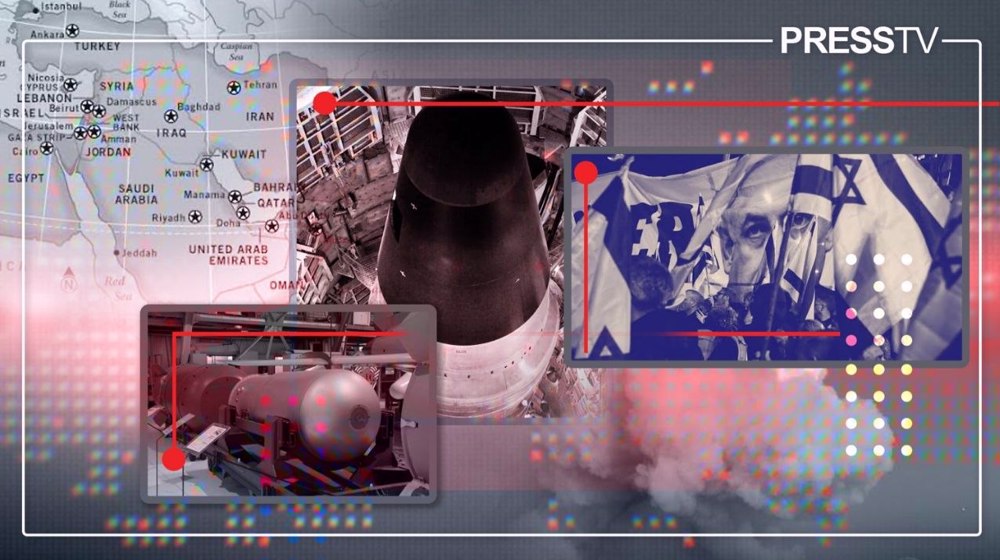
For over seven decades, a singular contradiction has underpinned the global nuclear order. An illegitimate entity possessing one of the world's most sophisticated nuclear arsenals operates entirely outside the international legal framework designed to prevent nuclear proliferation.
It has never signed the Nuclear Non-Proliferation Treaty (NPT) and has never submitted to International Atomic Energy Agency (IAEA) inspections. It maintains a policy of deliberate ambiguity that is less a secret than an openly acknowledged privilege. And the international community, particularly the Western powers that champion non-proliferation as a cornerstone of global security, has permitted this anomaly to persist with a silence that speaks volumes.
The question that must be confronted is not whether the Israeli regime possesses nuclear weapons – it does, by all credible estimates – but why the world has allowed this exception to become the rule, and what the consequences of that exception have been for regional stability, international law, and the credibility of the entire non-proliferation regime.
The answer, uncomfortable as it may be, points to a systemic failure of the international legal order, a failure rooted in geopolitical convenience, the disproportionate influence of lobbying networks, and a lingering post-colonial mindset that continues to distinguish between "acceptable" nuclear entities and "unacceptable" ones.
More fundamentally, this double standard boils down to the patronage of the United States and European states. It was the US and France that helped the regime develop a secret nuclear program, so they bear equal responsibility for its rogue behavior.
As Iran’s envoy to international organizations in Vienna earlier this week warned, Israel’s possession of nuclear weapons and its continued refusal to join the NPT constitute one of the most serious challenges to the credibility of the global disarmament and nuclear non-proliferation regime.
The time has come to call out the structural hypocrisy that has not only enabled Israeli nuclear exceptionalism but has actively weaponized the institutions of global governance against those who dare to challenge it.
The secret that everyone knows
Israel's nuclear program did not emerge from a vacuum. It was built, quite literally, with Western technology and Western complicity. In 1952, Israel established its Atomic Energy Commission, laying the groundwork for what would become one of the most advanced nuclear enterprises on the planet.
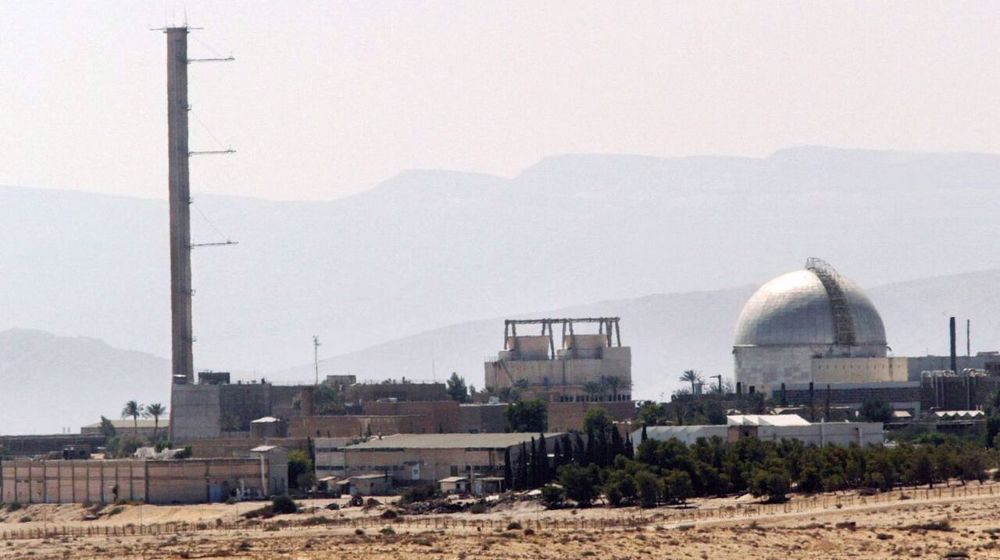
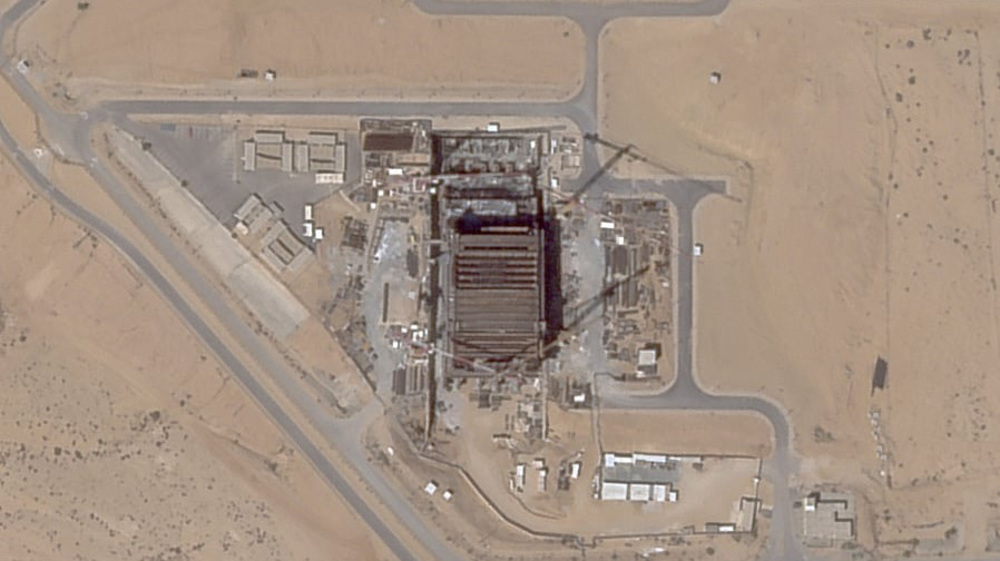
By 1957, France had agreed to supply a nuclear reactor and a plutonium reprocessing plant, the core components of a weapons program disguised as a research facility. The Dimona facility in the Negev desert, which remains the heart of Israel's secret nuclear enterprise, was a French-Israeli project from its inception, built with a sophistication that belied its official designation as a mere research center.
The United States, for its part, played a more complex and ultimately more consequential role. While President John F. Kennedy was the first US president to supply arms to the Israeli regime and called their relationship “special,” it was during the administrations of Johnson and Nixon that Washington actively and overtly helped Israel's bomb in the basement to expand considerably while maintaining the fiction of official ignorance.
A tacit understanding emerged that would define the next half-century of American policy. Israel would maintain ambiguity, and the US would maintain silence. Israeli leaders understood that any formal declaration of nuclear status would trigger legal obligations and political consequences they were unwilling to accept. American leaders understood that any formal pressure would alienate a key ally and provoke a domestic political backlash from powerful pro-Israel constituencies. The bargain was unspoken and it has proven remarkably durable.
That silence has been the enabling condition for everything that followed. By 1967, on the eve of the Six-Day War, Israel had already crossed the nuclear weapons threshold. Military think tanks and intelligence agencies now estimate that the first nuclear devices were assembled somewhere between 1967 and 1968. Production accelerated rapidly thereafter, with zero international outcry. The world that had mobilized against nuclear proliferation in the wake of Hiroshima and Nagasaki simply looked away when it came to Israel.
In 1986, Mordechai Vanunu, a technician at Dimona, provided The Sunday Times with photographs and testimony revealing that Israel had stockpiled approximately 100 nuclear weapons. Vanunu's disclosures blew the lid off Pandora's Box, confirming what many had long suspected but few had been willing to state publicly. His whistleblowing and the response to it were not international action, but international complicity. Vanunu was abducted by Mossad, drugged, smuggled back to the occupied territories, and imprisoned for eighteen years.
Today, estimates of Israel's nuclear arsenal range from ninety to over four hundred warheads. It possesses a nuclear triad: Jericho ballistic missiles capable of reaching targets across the region and beyond, modified F-15I fighter jets configured for nuclear delivery, and Dolphin-class submarines capable of launching nuclear-armed cruise missiles. It has enough plutonium to produce at least two hundred nuclear weapons, with approximately 0.9 metric tons of plutonium stockpiled as of 2025. By any measure, Israel ranks among the world's major nuclear powers, yet it operates with none of the transparency, accountability, or diplomatic constraints that bind every other nuclear-armed entity.
The institutional capture that enables impunity
Israel's refusal to join the NPT is not an oversight or a temporary delay. It is a deliberate strategic choice, and it has been facilitated by a decades-long campaign of institutional capture that has compromised the credibility of the IAEA and the United Nations system more broadly.
The NPT, which came into force in 1970, represents the cornerstone of the international nuclear non-proliferation regime. It has been signed by 191 states, making it one of the most widely adhered-to treaties in history. India, Pakistan, and North Korea have developed nuclear weapons outside the NPT framework, but Israel stands alone as a nuclear-armed entity that maintains a policy of deliberate ambiguity while receiving the full military and diplomatic backing of the Western powers, especially the United States.
Iran, a signatory to the NPT, has opened its nuclear facilities to IAEA inspectors, endured years of crippling and illegal sanctions, and subjected its nuclear program to international scrutiny that no other country has endured. Under the 2015 Joint Comprehensive Plan of Action (JCPOA), Iran agreed to limit uranium enrichment to 3.67 percent and reduce its stockpile by 98 percent. In response, the US unilaterally withdrew from the accord in 2018 and reimposed sanctions. Yet the same Western powers that have led the campaign against Iran's peaceful nuclear program have shielded Israel's actual nuclear arsenal from any accountability.
When Arab states have repeatedly called for a weapons of mass destruction-free zone in the region, the United States and its allies have routinely blocked such initiatives to preserve Israel's exceptional status. The annual resolutions at the IAEA General Conference calling for Israel to accede to the NPT and place its nuclear facilities under agency safeguards are consistently defeated or deferred. The 2024 resolution on Israeli nuclear capabilities was blocked by the US at the IAEA Board of Governors, continuing a pattern that has persisted for decades.
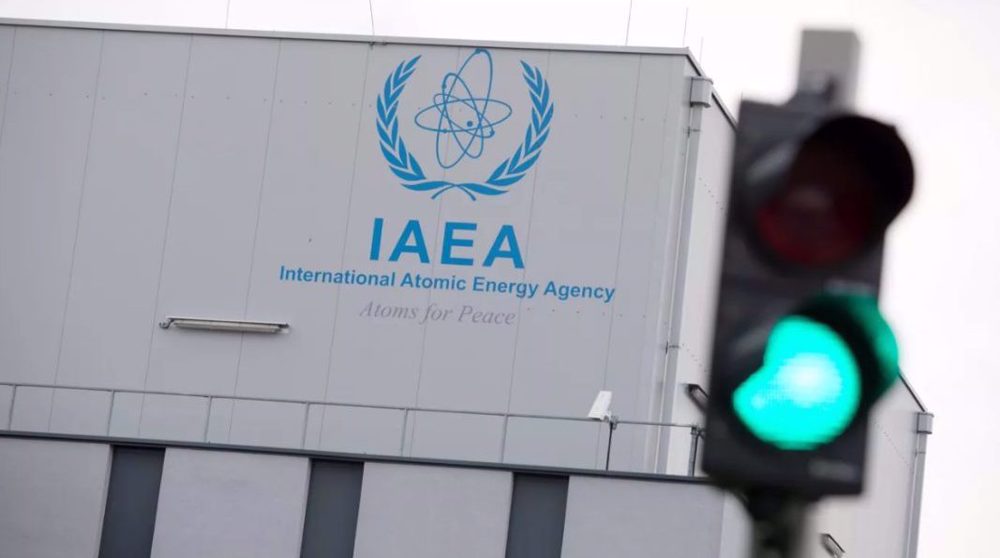
As experts opine, it is preposterous that the IAEA has been taken hostage by the Israeli regime, which raises fundamental questions over its credibility and independence. Worse, the UN agency has allowed itself to be politically manipulated by the United States and its allies, including the Israeli regime, in intensifying the maximum pressure crusade against Iran. The IAEA's credibility has been severely undermined by this double standard, transforming it from an impartial technical body into a political instrument of Western policy.
The Begin Doctrine and the enforcement of nuclear monopoly
Israel's nuclear arsenal has been actively enforced through a doctrine of preemptive military action formalized in 1981 and known as the Begin Doctrine. This doctrine asserts that Israel will not allow any West Asian country to acquire weapons of mass destruction, coming from a regime whose own nuclear arsenal is undeclared and unregulated.
Its first manifestation came on June 7, 1981, when Israeli fighter jets destroyed Iraq's Osirak nuclear reactor. Operation Opera, as it was called, killed one French engineer and a number of Iraqi personnel. Despite UN Security Council Resolution 487 condemning the attack, the United States abstained on the resolution rather than vetoing it, but the absence of meaningful consequences for Israel signaled that such actions would be tolerated.
This pattern repeated in 2007 with the so-called Operation Outside the Box, which destroyed Syria's Al-Kibar facility. The Syrian reactor was still under construction, and Israeli intelligence had identified it as a potential nuclear facility. The strike was conducted with the clear calculation that major global powers would continue to grant Israel impunity. Once again, there were no meaningful consequences and no international outcry.
Against Iran, this architecture of sabotage has reached unprecedented levels of sophistication and lethality. Over the past two decades, Israel has waged a shadow war involving the assassination of nuclear scientists, cyberattacks such as Stuxnet that damaged thousands of centrifuges at Natanz, and the systematic attacks on Iran's peaceful nuclear infrastructure with the full and open backing from the US and other Western countries.
In the past year, two wars of aggression were launched against Iran with large-scale airstrikes targeting Iran's nuclear facilities. These attacks were conducted in close coordination with US military and intelligence, underscoring how Western non-proliferation policy has frequently functioned as an instrument to advance the regime’s regional goals.
‘Greater Israel’ and the regional security architecture
The threat posed by Israel's undeclared nuclear arsenal extends far beyond. It is inextricably linked to the so-called “Greater Israel” project, an expansionist campaign that threatens the territorial integrity of multiple Arab countries and the identity of the entire region. This project, which envisions the seizure of territories in Egypt, Saudi Arabia, Iraq, Syria, and Lebanon, has been the driving force behind Israeli policy for decades, influencing everything from settlement expansion in the occupied West Bank to genocidal wars on Gaza and Lebanon.
The language of “Greater Israel” may sound extreme to Western ears, but it is grounded in official Israeli regime documents, mapping projects, and political movements. The original Zionist vision, articulated in the 1919 Faisal-Weizmann Agreement and later in the Revisionist Zionist ideology of Ze'ev Jabotinsky, explicitly called for a “Jewish state” on both banks of the Jordan River. While these aspirations have been tempered by political realities, the underlying vision persists in settler movements, political rhetoric, and military aggressions.
Nuclear weapons in the hands of such an unhinged and rogue regime are an instrument of coercion and a shield for aggression. Without nuclear weapons, Israel's expansionist ambitions would be constrained by the conventional military balance. With nuclear weapons, those ambitions are shielded from any meaningful challenge.
Every Arab state understands that any conventional confrontation with Israel carries the risk of nuclear escalation. This asymmetry has distorted the regional security architecture, creating a situation in which Arab states, out of fear and cowardice, have to normalize with the regime.
The United States itself has been part of the cause of insecurity in the region through its comprehensive support for the Israeli regime. As Iranian officials maintain, the Israeli regime is the biggest threat to the stability, security, and cooperation of countries in the region. The regime's attacks on Lebanon and Syria, its threats against numerous other countries, and its genocidal war on Gaza have meant that regional countries can no longer rely on US claims of providing security. The normalization agreements did nothing to address the underlying threat posed by Israel's nuclear arsenal to regional Arab states.
The de-nuclearization imperative
To make sure there is peace and stability in the region, Israel needs to be de-nuclearized to start with. If pressure is imposed on Iran from all ends even though Iran is yet to embark on the campaign to produce nuclear weapons, then more pressure must be put on the Israeli regime to completely dismantle its nuclear program. The selective application of non-proliferation norms undermines their legitimacy and only encourages proliferation.
The problem is not Iran – the problem is the rogue, genocidal, child-murdering Israeli regime. The problem is not Iran's peaceful nuclear program but the secret and dangerous nuclear weapons of the regime in Tel Aviv that continues to threaten all countries in the region and continues to bomb many of them. Iran's enrichment remains at 60 percent, well below the 90 percent threshold needed for weapons-grade material. In contrast, Israel possesses hundreds of nuclear warheads and continues to threaten all countries in the region.
The path forward requires a fundamental recalibration of international priorities. Arab countries must lead the campaign to de-nuclearize Israel and put pressure on their allies in Washington and Europe to make it happen. The international community must treat Israel's nuclear arsenal as the threat to global non-proliferation that it is. And the IAEA must apply the same standards to Israel that it applies to Iran and other signatories to the NPT.
This would require a comprehensive approach. First, a legally binding UN Security Council resolution demanding that Israel accede to the NPT and submit to IAEA inspections. Second, targeted economic and diplomatic measures against Israeli nuclear facilities. Third, the creation of a verified nuclear-weapon-free zone in the West Asia region.
The crises of an international order under strain
The Israeli nuclear exception has been allowed to persist for two reasons: Western geopolitical convenience and the disproportionate influence of pro-Israel lobbying networks in the West. The United States needs Israel as a strategic ally in the region. European powers, while occasionally and reluctantly critical of Israeli policies, have been unwilling to confront Israel on the nuclear issue for fear of alienating the United States or their own domestic constituencies.
The lobbying networks have been the key to this arrangement. Organizations such as AIPAC in the United States and similar bodies in Europe have worked tirelessly to ensure that Israel's nuclear program remains off the agenda. They have funded election campaigns, cultivated relationships with policymakers, and mobilized grassroots support for Israel.
They have also worked to delegitimize any criticism of Israeli apartheid and genocidal policies, including on the nuclear issue, by labeling it as anti-Semitic. It has created an environment in which even discussing Israel's nuclear program is considered taboo in Western political circles.
The result is an international order that has completely lost its credibility. The Global South has watched this process unfold with growing cynicism, seeing how the West champions a so-called “rules-based international order” while applying its principles with staggering selectivity. This cynicism has totally eroded the legitimacy of global governance and created a vacuum that is increasingly filled by emerging powers and alternative frameworks.
Iran is a military power today with a massive arsenal of missiles and drones; the United States had overthrown its democratically elected government in 1953, and Iraq had launched a devastating war against it with Western support. Iran has a peaceful nuclear program because it sees it as a key to scientific progress. Iran still engaged in negotiations with the West to prove its sincerity, inking a nuclear deal in 2015, but the subsequent US withdrawal from that agreement and the resumption of “maximum pressure” sanctions confirmed the Iranian leadership's view that Western promises are not to be trusted.
If the international community genuinely wants to prevent nuclear proliferation in the region, it must address the source of the insecurity that drives it – Israeli nuclear exceptionalism. The nuclear warheads that threaten the region are not Iranian; they are Israeli. The rogue regime that refuses to join the NPT and doesn’t allow IAEA inspections is Israel.
The challenge of international law and the fight for justice
Iran has repeatedly called on the international community to address Israel's nuclear status to strengthen the global nuclear disarmament and non-proliferation framework. As long as Israel's nuclear arsenal remains undeclared and unregulated, the NPT is a hollow treaty and the IAEA is a hijacked and hollow institution. The credibility of the entire international legal order depends on addressing this anomaly.
A genuine commitment to non-proliferation requires a universal approach. If proliferation is a threat, then it is a threat regardless of which party is pursuing it. The silence of the West on Israel's nuclear program is both cowardice and complicity. Cowardice because Western leaders have been unwilling to confront an ally and the domestic political constituencies that support it. Complicity because they have actively shielded Israel from accountability, prevented international action, and maintained the fiction of Israeli nuclear ambiguity.
The current moment demands a reckoning. The path forward requires clear thinking and moral clarity. If the law is to mean anything, it must mean something for everyone. If international institutions are to retain their credibility, they must apply their principles without exception. The Israeli nuclear arsenal, undeclared and unregulated, is the most dangerous anomaly of all. It is time for the silence to end and build a case to dismantle the regime's nuclear infrastructure.
 This makes it easy to access the Press TV website