
By Mina Mosallanejad
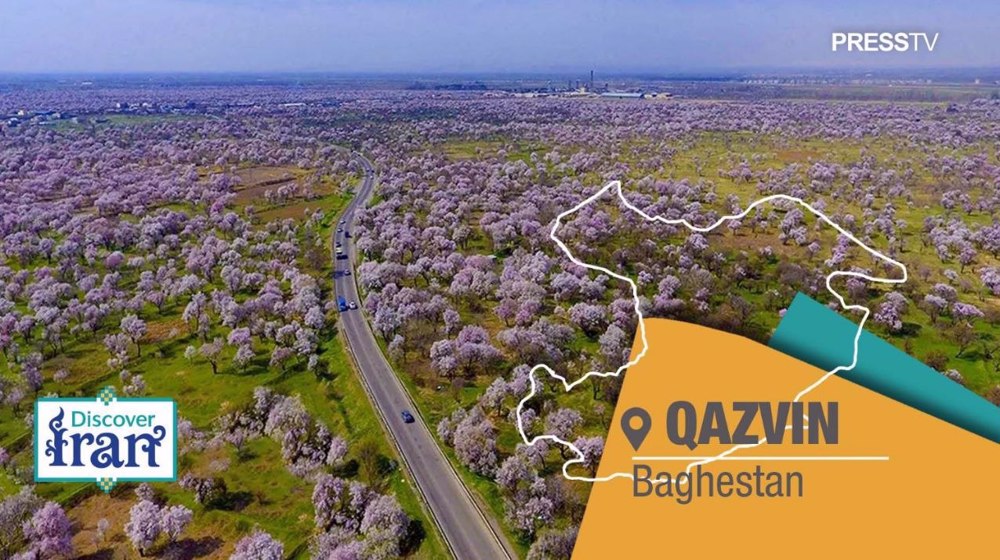
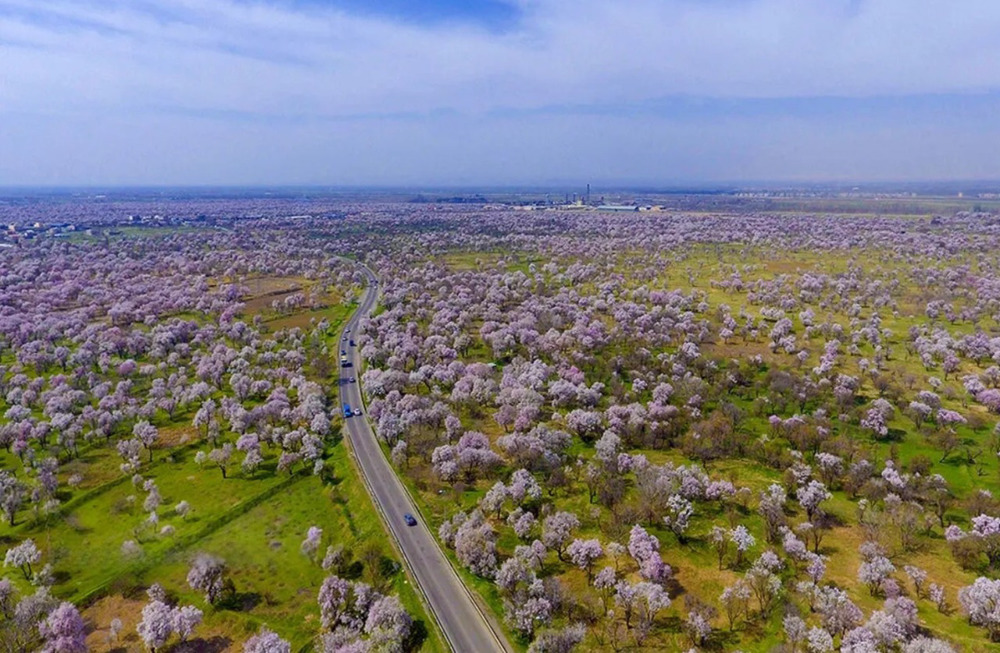
Baghestan, an ancient agricultural landscape surrounding Qazvin, has a history spanning more than a thousand years, covers around 2,700 hectares and is widely regarded as a breathtaking green jewel embracing the city.
Most tourists who visit the city located in northwest Iran, 130 kilometers west of Tehran, know the city for its wealth of historic monuments and architectural treasures. Yet Qazvin’s Baghestan is itself one of the city’s most remarkable attractions, an exceptional cultural landscape of regional and national significance.
Listed on Iran’s National Heritage List and recognized by the Food and Agriculture Organization of the United Nations (FAO), Qazvin’s Baghestan once encircled the city to the east, south, and west, forming a U-shaped green belt around it.
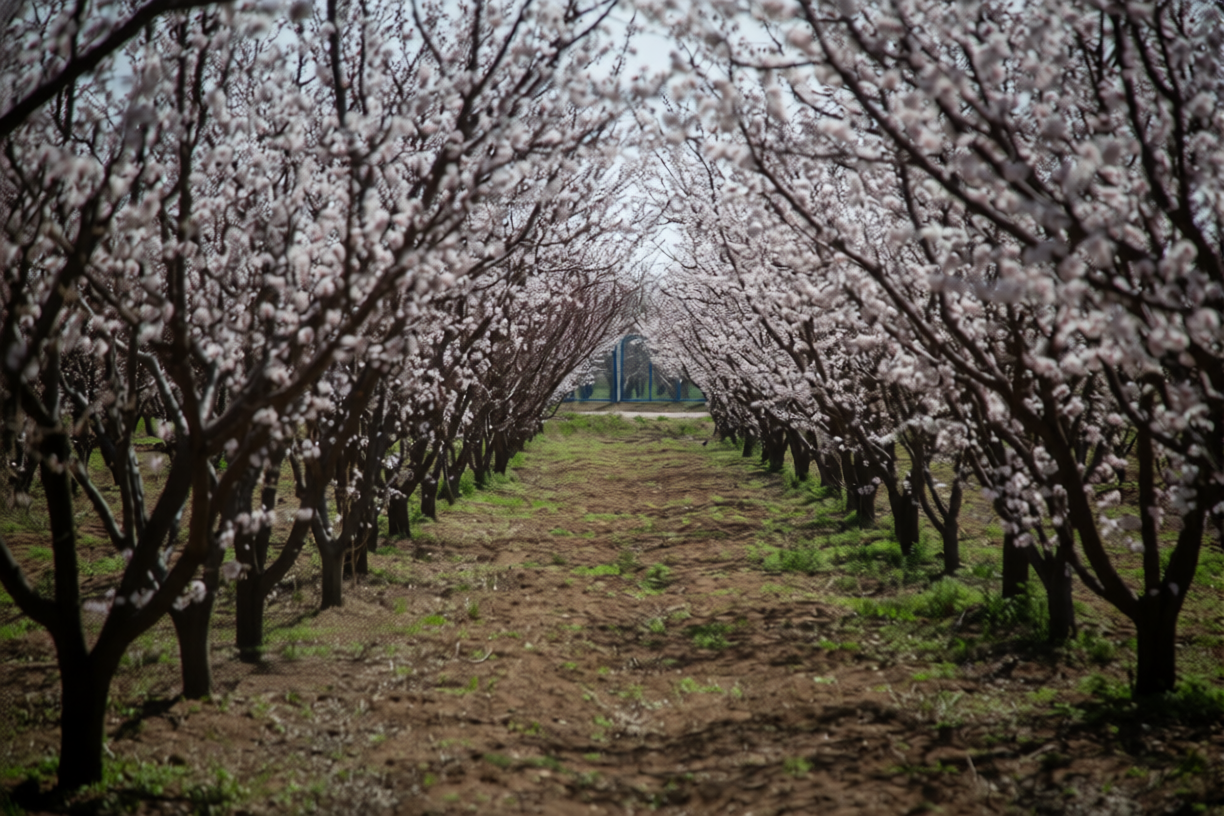
Almond and pistachio trees account for much of this traditional garden landscape, reflecting the region’s semi-arid climate and demonstrating how carefully local communities adapted their agricultural practices to environmental conditions. Grapes, apricots, and walnuts are also cultivated throughout the garden.
Once an important pillar of the local economy, this vast green heritage now serves as the city’s lungs. It also functions as a natural buffer against dust storms, floods, and strong winds, helping to mitigate the effects of these environmental hazards.
Baghestan through history
Numerous travelers and historians have mentioned Qazvin’s gardens and orchards in their travelogues and writings, offering glimpses into the importance and beauty of this centuries-old landscape.
One of the most famous historical accounts comes from the renowned Persian traveler Nasir Khusraw, who described Qazvin as a fine city with extensive gardens that were open and without walls or barriers.
Some sources also credit the Arab geographer Ibn Hawqal with one of the earliest references to Qazvin’s Baghestan, dating back to 350 AH. He noted that the city had numerous trees and vineyards, which were largely dependent on rainwater for irrigation.
Jean-Baptiste Tavernier, the French traveler who visited Iran during the Safavid era, was likewise struck by the grandeur and beauty of Qazvin’s gardens. He wrote that the city had no walls or ramparts and that more than half of it consisted of gardens.
References to Qazvin’s gardens can also be found in the works of Hamdallah Mustawfi, the prominent Persian geographer; Abd al-Karim ibn Muhammad al-Rafi‘i, author of al-Tadwin fi Akhbar Qazvin; Zakariya Muhammad ibn Mahmud al-Qazwini, author of Athar al-Bilad; and the French traveler Jean Chardin.
Chah-khaneh: Historic structures in the heart of the garden
The chah-khaneh, or traditional garden shelter, can itself be considered a distinct attraction within Qazvin’s Baghestan.
These structures once provided gardeners with places to rest and also served as storage facilities. Baghestan is believed to have around 100 shelters, although many have disappeared over time.
In the past, gardeners often used these structures collectively. Some also stored their harvest there temporarily, keeping their produce until the entire crop had been gathered and was ready to be taken to market.
Some of the surviving shelters date back to the Safavid period, while the most recent examples were built during the Pahlavi era. As employment and agricultural activity in the traditional garden declined, however, these structures gradually fell into disuse.
Although many shelters have been damaged or lost, the surviving examples are under the protection of Qazvin’s Cultural Heritage authorities, and some have been restored in recent years.
A garden without walls
One of the most distinctive features of Qazvin’s baghestan is its lack of walls and fences, something that sets it apart from many modern orchards and enclosed gardens.
This open character is not a recent development. Historical accounts also describe Qazvin’s gardens as being open and accessible, a feature that has remained part of their identity for centuries.
Best time to visit
Over the past half-century, urban expansion, land speculation and changing lifestyles have led to the loss of a significant portion of Qazvin’s baghestan. Yet the surviving sections of this green belt still offer a remarkable glimpse of the deep connection between the city and its natural surroundings.
The almond trees burst into bloom from late February to mid-March, transforming the garden into a spectacular sea of blossoms.
Visitors traveling to Qazvin during the Nowruz, Iranian New Year holidays, have the opportunity to experience this precious green heritage at one of its most beautiful times of the year.
The gentle spring air, almond blossoms, and fields often transformed into lush green meadows by late-winter and early-spring rainfall create a stunning landscape for visitors to explore and enjoy.
Recognition by FAO
In November 2023, Baghestan was officially recognized by the FAO as the 56th Globally Important Agricultural Heritage System (GIAHS).
One of the major benefits of this designation is that it has helped introduce baghestan as an important tourism destination while also creating opportunities for its agricultural products to reach international markets.
Today, more than 3,000 farmers and landholders are involved in the cultivation and management of this remarkable traditional landscape, keeping alive a centuries-old agricultural heritage at the heart of Qazvin.
 This makes it easy to access the Press TV website