
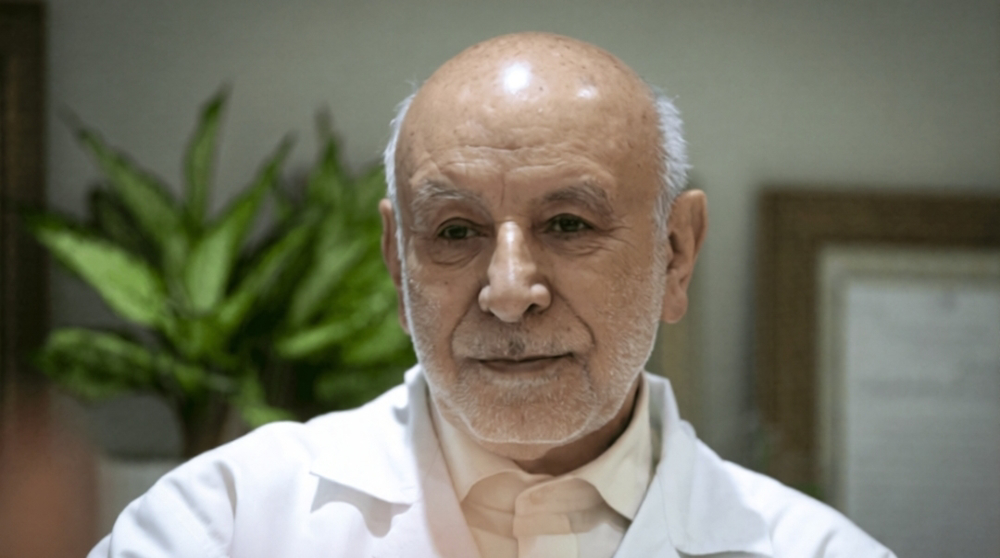
Iranian doctors introduced a new diagnostic and treatment method for advanced and metastatic solid cancers, describing it as the first such technique developed and used in the world.
Professor Mohammad Esmail Akbari, a prominent Iranian cancer surgeon and founder of the country's subspecialty of cancer surgery, said the method, introduced in 2024, represents the first time Iran has developed a cancer treatment technique with "no previous equivalent worldwide."
Akbari, a former head of the first university of medical sciences in Iran and head of the Cancer Research Center, said the approach was developed through a collaboration with the Atomic Energy Organization of Iran (AEOI).
According to Akbari, the method is based on a shift in the way cancer is targeted. Rather than focusing exclusively on cancer cells, the researchers targeted the tumor's microenvironment — the microscopic environment surrounding the tumor that can play a key role in cancer progression.
"We have always been looking for the cancer cell itself, but we realized that the environment around the tumor, the microenvironment, also plays a key role in the progression of cancer," Akbari said.
He said the researchers targeted a protein known as fibroblast activation protein (FAP), which is secreted by cells surrounding tumors.
"We developed a FAP-targeting inhibitor, known as FAPI, and combined it with a radioisotope produced by the AEOI to develop a targeted diagnostic and therapeutic agent," he added.
Akbari said the resulting drug travels specifically to the tissue surrounding the tumor and destroys cancer cells from within.
The surgeon said the initial patients treated with the method were individuals with advanced metastatic cancers for whom conventional treatment options were no longer effective.
‼️ Iran develops smart device to measure depth of anesthesia using EEG, brain modeling#IranFirsthttps://t.co/LOX1WxCt6w pic.twitter.com/RrV7UGBhzv
— Iran First (@IranFirst_PTV) August 22, 2026
"We worked on patients who were completely at the end of the line and for whom there was no effective treatment. We have now been able to extend the lives of some of these patients by up to four years," Akbari said.
He said the first patient was an Atomic Energy Organization employee suffering from metastatic lung sarcoma, followed by a physician and a provincial governor, describing the treatment outcomes in these cases as "miraculous."
Akbari also pointed to international attention to the work, saying the research was published in leading international medical journals, including the European Journal of Nuclear Medicine and Molecular Imaging.
"The world saw this for the first time coming from a so-called Third World country," he said, adding that the method had subsequently attracted significant international interest.
According to Akbari, four major global pharmaceutical companies have invested around $45 million in the approach, while clinical trials are being conducted at 51 medical centers worldwide.
He said the final results of the international trials are expected to be released next year, while Iranian researchers hope to publish their own complete long-term treatment results by the end of the current year (March 2027).
Akbari said the treatment has also expanded beyond the initial research setting and is now being used at several medical centers in Iran, including centers in Bushehr, Tabriz and Mashhad.
"This treatment method has now become quite widespread, and it is being carried out at several centers across the country by my students," he said.
More than 500 patients have so far been diagnosed and treated using the method, according to Akbari, who said his team is preparing a five-year final report that they intend to present internationally as the largest group of metastatic cancer patients treated with the approach.
Akbari also highlighted another area of research involving exosomes, microscopic vesicles released by cancer cells that can contribute to resistance to cancer drugs.
"Cancer is not just a cell. Cancer cells secrete vesicles called exosomes that prevent drugs from working and cause drug resistance. By inhibiting these exosomes, we were able to increase the effectiveness of drugs by around tenfold," he said.
He added that Iranian researchers had succeeded in producing exosomes that, according to their assessments, meet the highest international standards and have potential applications in cancer treatment, tissue regeneration, osteoarthritis and aesthetic medicine.
Akbari said the product is expected to be formally unveiled at an upcoming scientific event and that around 25 specialized clinical trials are currently underway in different medical fields.
 This makes it easy to access the Press TV website