
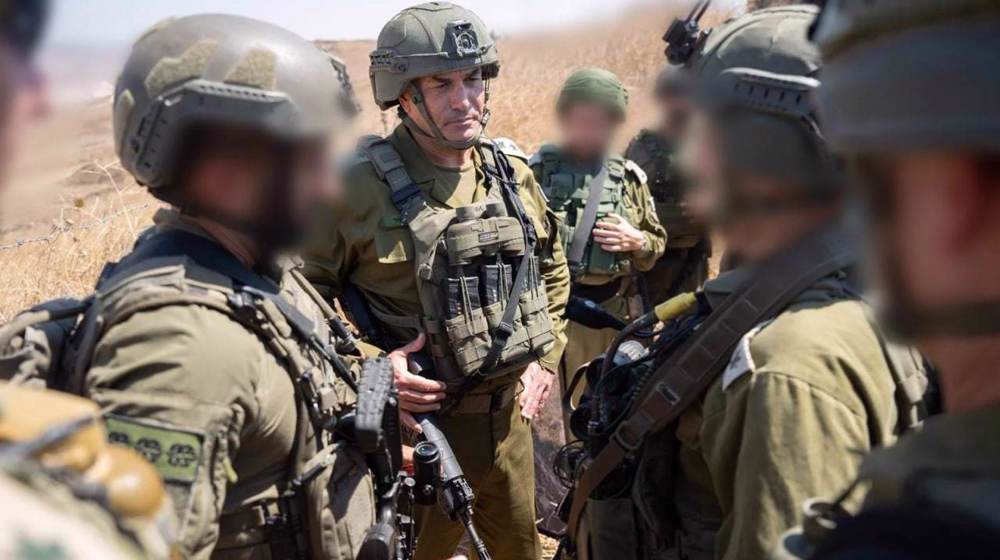
Israel is deepening its military presence inside Syria, with its army chief visiting troops in the country’s south just a day after Israeli warplanes struck Syrian territory, including the Abu al-Duhur military airbase in northwestern Idlib province.
Israeli military chief of staff Eyal Zamir visited southern Syria on Wednesday accompanied by army officers, according to Israeli media. He received a security briefing and met with reserve troops deployed in the area.
According to the Israeli military, Zamir said Israel was closely monitoring developments on the Syrian front and would respond to "emerging threats along its borders."
“We will not allow hostile forces to establish themselves along our borders,” Zamir said, adding that the military would use force “where it is needed and when it is needed.”
The remarks came as Israel continues to maintain forces inside a "security zone" in southern Syria, following its seizure of positions beyond the occupied Golan Heights after the collapse of former president Bashar al-Assad’s government in late 2024.
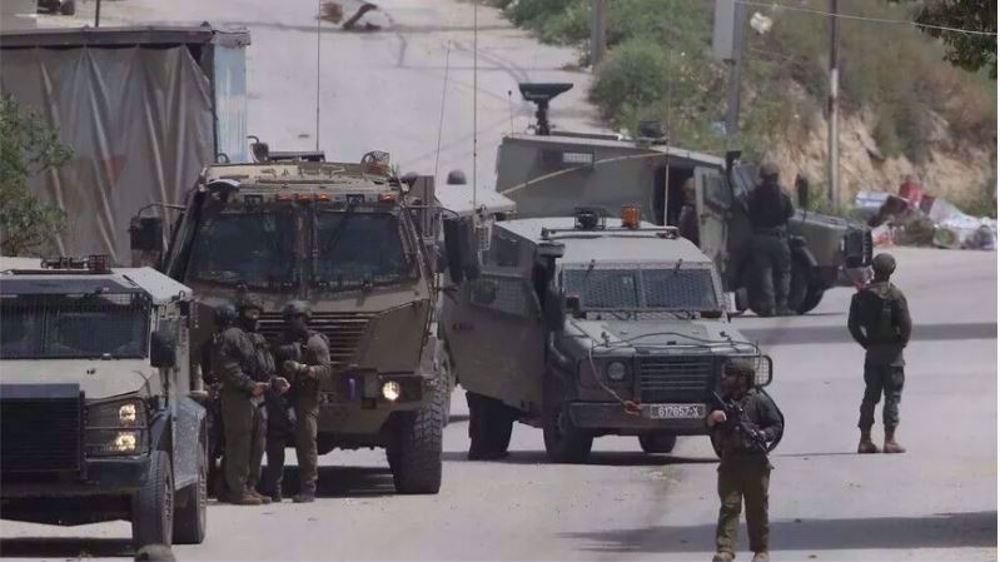
Israeli forces also raided a town in Syria’s southwestern Quneitra province early Wednesday, abducting two people, a day after Israeli warplanes struck a military airbase in the northwestern Idlib province.
“Israeli occupation forces entered the town of Jabata al-Khashab with more than 100 personnel and 15 vehicles, abducted two people and searched several homes early Wednesday,” Syrian state television reported.
UN Disengagement Observer Force (UNDOF) conducted a field tour in the town of Al-Rafid in southern Quneitra to assess the impact of repeated Israeli violations and incursions, Syrian official news agency SANA reported.
Israeli forces also shelled the Wadi area of Abdeen village in the western countryside of southern Syria’s Daraa province on Tuesday.
Southern Syria has witnessed near-daily Israeli attacks, including raids, searches, arrests, and the establishment of military checkpoints.
Israel’s military presence in southern Syria has expanded significantly since late 2024, when Israeli forces seized the Syrian buffer zone, effectively ending the framework established by the 1974 Disengagement of Forces Agreement.
Syria has repeatedly called for an end to Israel’s incursions and attacks, demanding that the occupying forces withdraw from areas they seized since late 2024.
Syria sent two letters to the UN Security Council warning that Israel’s continued airstrikes, territorial incursions and reported abductions “undermine stabilization efforts and threaten the region with further tensions.”
The escalation has also prompted a response from Turkey, with the office of President Recep Tayyip Erdogan slamming Israeli prime minister Benjamin Netanyahu for his “expansionist and destabilizing policies” ahead of elections in Israel.
Netanyahu’s office had claimed Syria was close to allowing Turkish troops to be deployed at the Abu al-Duhur airbase near the borders between Idlib, Aleppo and Hama provinces, describing such a move as a "threat to Israel’s security" and a "breach" of an existing security "status quo.”
Ankara has rejected the “untenable allegations” from Netanyahu’s office, saying the Israeli prime minister was pursuing an expansionist agenda.
It added that lasting peace in the region could only be achieved if Israel "respected" international law and abandoned its “aggressive and coercive policies.”
“Turkey will resolutely continue to cooperate with the Syrian Government on a legitimate basis for the establishment of peace, stability, and prosperity in Syria, and will never allow the destabilization of Syria,” the Turkish presidency said.
The Abu al-Duhur military airbase in Syria’s northwestern Idlib province, near the Turkish border, had been undergoing rehabilitation with Turkish involvement before Israeli warplanes struck it on Tuesday.
The strikes have raised concerns that Israel’s continued military aggression in Syria could further heighten tensions with Ankara and bring the two sides closer to a confrontation.
 This makes it easy to access the Press TV website