PMU part of Iraqi security apparatus, its weapons under state control: Senior security official
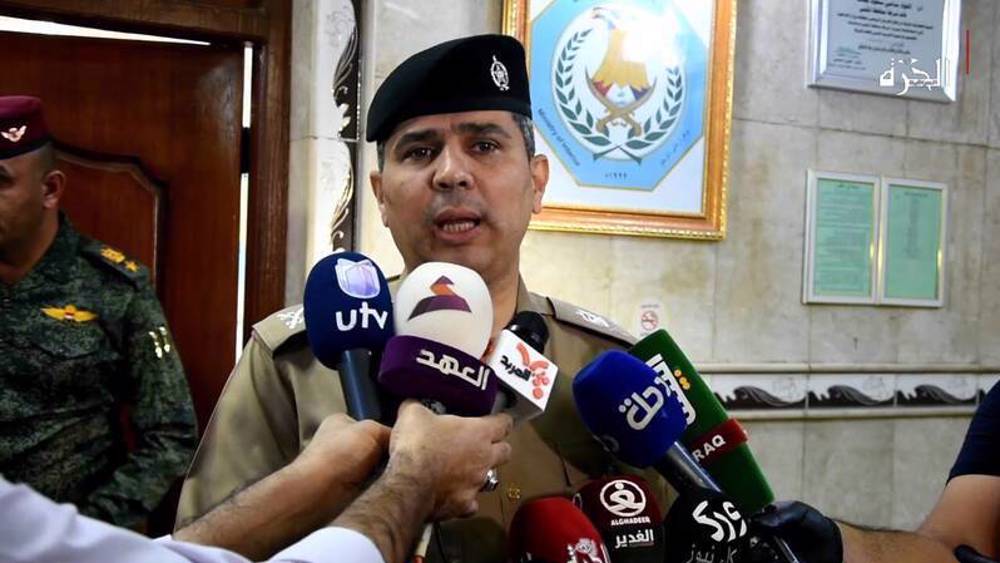
The head of the Iraqi Security Media Cell (SMC) has praised the Popular Mobilization Units (PMU) as part of the country’s security apparatus, stressing that the decision to place all weapons under exclusive state control applies to entities not affiliated with security institutions.
“The Popular Mobilization Units (PMU) are part of the Iraqi armed forces, and their members are subject to applicable military laws,” Lieutenant General Saad Maan said on Saturday.
He emphasized that efforts to reinforce the state’s monopoly on arms are aimed at entities operating outside the framework of state security institutions.
Maan went on to note that all fighters of the PMU, better known by the Arabic word Hashd al-Sha’abi, are bound by relevant military laws under Law No. 40 of 2016.
“The decision that all weapons must remain under state control is meant to ensure that there is no parallel or other leadership using weapons outside the framework of the state,” he stated.
The issue of weapons outside state control remains one of Iraq’s most significant security and political challenges, with some armed groups operating within the PMU framework and others functioning independently.
Hashd al-Sha’abi is a state security umbrella organization that was founded in 2014 as a result of a religious decree from Iraq’s most prominent Shia cleric, Grand Ayatollah Ali al-Sistani, to assist in the fight against the Takfiri Daesh terrorist group.
The force was formally incorporated into the Iraqi armed forces in 2016.
Successive administrations in Iraq have vowed to bolster state power and to bring all weaponry under the jurisdiction of recognized institutions.
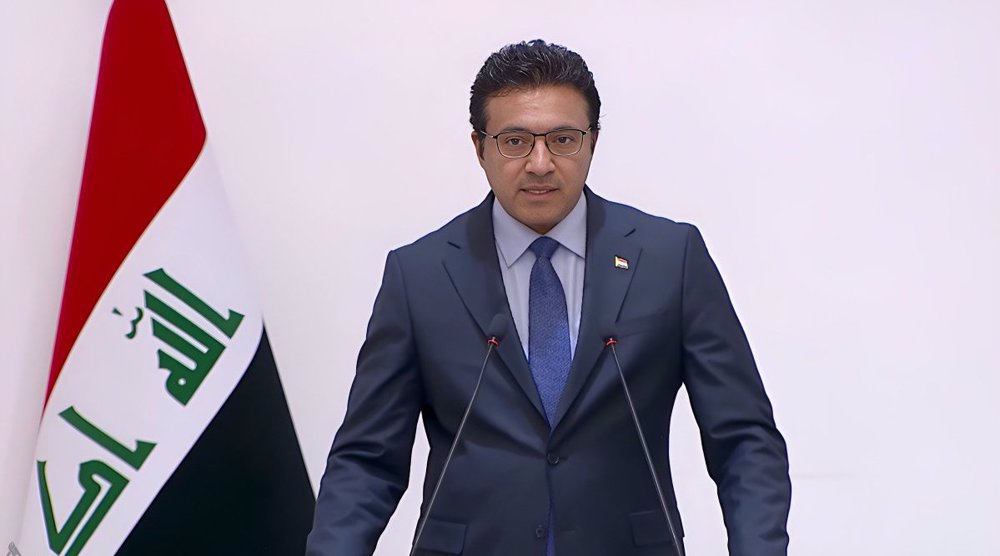
On August 11, the Iraqi prime minister directed officials to draft a bill to place weapons under exclusive state control.
Ali Al-Zaidi gave the instructions during his meeting in Baghdad with Khalid al-Obeidi, head of the Iraqi parliament’s Security and Defense Committee, the premier’s office said in a statement carried by the official Iraqi News Agency (INA).
Their meeting covered “the situation in the country and the efforts exerted by the various branches and formations of the security services to impose security and stability and protect the country's borders and airspace against various threats," the office said.
Earlier, Iraq's top political and judicial leaders had reaffirmed that all weapons must remain under state control, stressing that security and military decisions should be exercised exclusively by state institutions.
The position was announced following a meeting hosted by President Nizar Amidi at the Baghdad Palace on June 10, attended by Prime Minister Ali al-Zaidi, Parliament Speaker Haibat al-Halbousi and Supreme Judicial Council President Faiq Zaidan.
On June 3, Sabah al-Numan, the spokesperson for the commander-in-chief of the armed forces, declared the establishment of a committee aimed at restricting weapons to state control, affirming that the committee had commenced its operations.
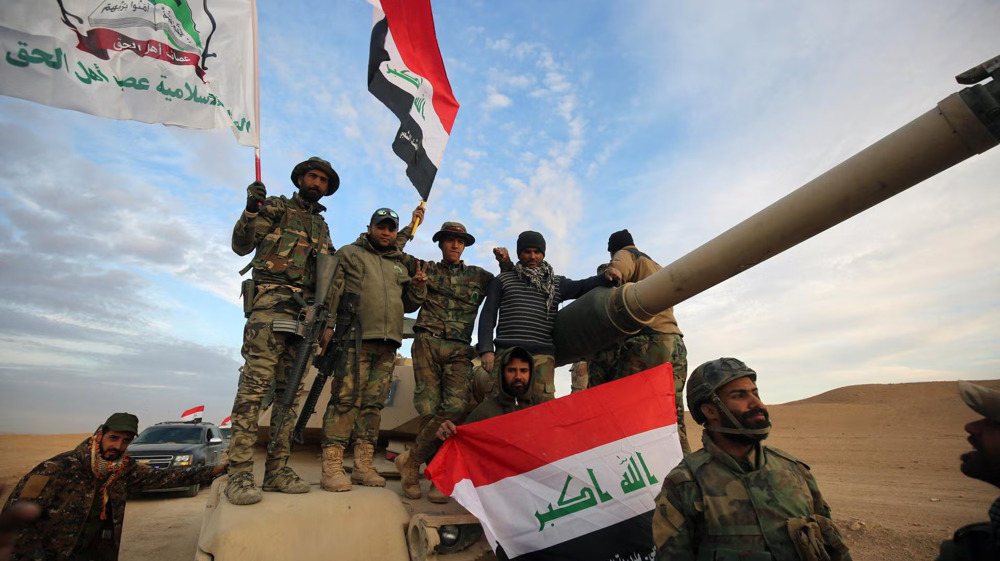
Iraqi resistance vows to keep arms, says US forces withdraw after 'painful blows'
Iraqi resistance group urges stronger air defenses amid US withdrawal
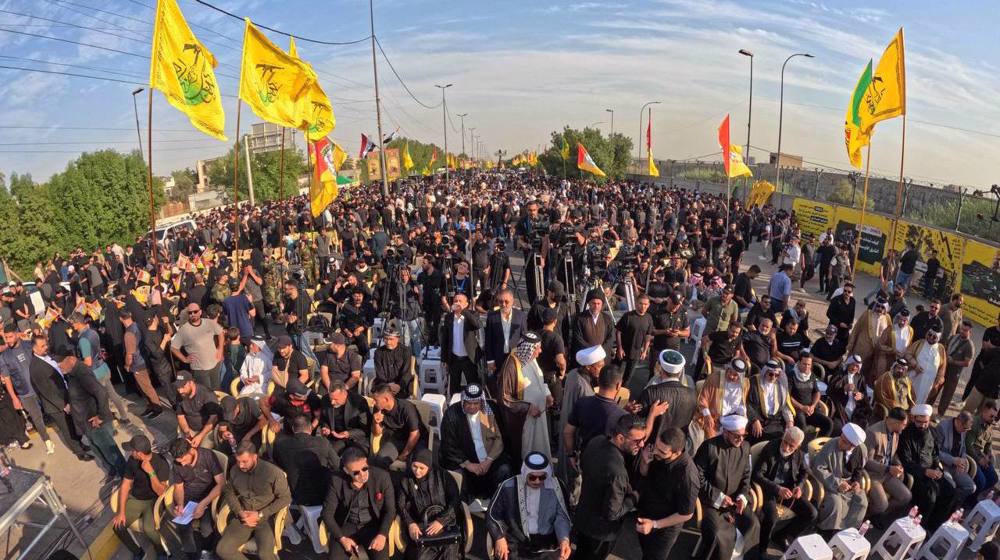
Iraqis celebrate US troop withdrawal as country marks National Sovereignty Day



Seven killed in bus attack in central Syria as blast hits gas pipeline near Damascus
Genuine sovereignty lies in independent decision-making, says Iraqi MP after US pullout
Israel’s next cabinet faces mounting debt, war costs: Report
VIDEO | News Review: UK economic challenges
2026 Asian Games: Abdevali beats Olympic champion to win Greco-Roman gold for Iran
VIDEO | Press TV's news headlines
US exit from Iraq heralds ‘beginning of expulsion’ from West Asia: IRGC
UNICEF cautions against generational crisis in Lebanon amid Israeli attacks


 PressTV NEWSLETTER
now
PressTV NEWSLETTER
now
 This makes it easy to access the Press TV website
