Journalists’ Day: Mazar-e-Sharif consulate attack and Iranian journalist who reported under fire

By Press TV Website Staff
On this day, twenty-eight years ago, an Iranian journalist made one final appeal to his editors in Tehran from a besieged diplomatic compound in northern Afghanistan’s Balkh province.
“Mahmoud Saremi. Correspondent of the Islamic Republic News Agency. Urgent news: I am reporting from Iran's consulate in Mazar-e-Sharif. Some Taliban members are seen entering the premises of the consulate. Let me know what I should do,” he said.
Those were among his last recorded words to the newsroom.
Within hours, Saremi would be dead, alongside eight Iranian diplomats, in one of the darkest episodes in the region’s history – one that brought Iran to the brink of direct military confrontation with the Taliban.
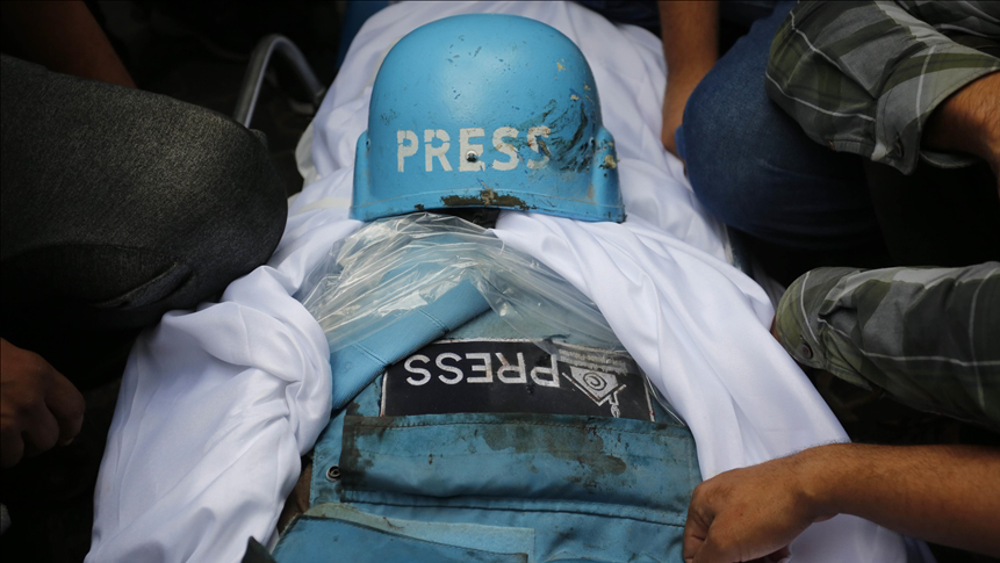
The day is marked in the Islamic Republic of Iran as Journalists’ Day in memory of Saremi, who was martyred while carrying out his journalistic duties during the deadly 1998 siege and attack on Iran’s consulate in Mazar-e-Sharif.
The eight diplomats killed alongside him were Nasser Rigi, Noorollah Norouzi, Karim Heidarian, Rashid Pariav Fallah, Heydar-Ali Bagheri, Mohammad-Ali Ghiyasi, Majid Noori Niyarki and Mohammad-Nasser Naseri.
On August 8, 1998, Iranian reporter Mahmoud Saremi along with 8 other diplomats were martyred by Taliban militants' attack in the Afghan city of Mazar-i-Sharif.
— Press TV 🔻 (@PressTV) August 8, 2026
Every year on this day, Iranians hold ceremonies throughout the country to pay tribute in honor of the journalists. pic.twitter.com/hJcd3UkfED
A consulate under siege
The tragedy unfolded on August 8, 1998, as heavily armed Taliban fighters swept into Mazar-e-Sharif, the strategically important capital of Afghanistan’s northern Balkh province.
The city had become a major center of resistance to the Taliban and was at the time caught in fierce fighting between Taliban forces and the Northern Alliance, led by the legendary anti-Taliban commander Ahmad Shah Massoud.
As the Taliban seized control of the city, their fighters stormed the Iranian diplomatic mission.
Initial reports said that at least 11 Iranian diplomats and a journalist had gone missing under suspicious circumstances. It was later confirmed that eight diplomats and IRNA correspondent Mahmoud Saremi had been killed by the marauding Taliban forces.
The attack prompted widespread condemnation. The Taliban denied responsibility and claimed that others were behind the killings. Suspicion was also directed toward Pakistan-based Sipah-e-Sahaba Pakistan (SSP), a Takfiri militant group.
Whatever the precise chain of command behind the killings, the attack raised grave questions over the protection of diplomatic personnel and journalists and the responsibility of those who carried out, ordered or enabled the massacre.
Just two days later, on August 10, 1998, the Committee to Protect Journalists called on then-Taliban group leader Mullah Mohammad Omar to investigate Saremi’s killing.
No investigation was launched. The Taliban continued to deny responsibility, even as human rights groups and journalists’ bodies continued to hold the Taliban responsible.
Statement by the Islamic Revolution Guards Corps (IRGC) on the occasion of August 8, Journalists’ Day and the anniversary of the martyrdom of Martyr Mahmoud Sarami: pic.twitter.com/sZ0oH7JbCs
— Press TV 🔻 (@PressTV) August 8, 2026
Saremi’s final hours
For Saremi, however, the events were not simply another breaking-news story. He was trapped inside the very place from which he was reporting.
In an interview published by IRNA in 2018, Saremi’s wife, Khadijeh Rouzbehani, recalled her final telephone conversation she had with him.
Her husband, she said, held the phone up so she could hear the sound of Taliban tanks moving through the neighborhood. “I could clearly hear the tank treads screeching,” she recalled.
Saremi understood the seriousness of what was happening. Shortly before the consulate was overrun, he sent his urgent message to editors in Tehran, warning them that Taliban fighters were entering the diplomatic compound.
It would be his final communication with the newsroom. Rouzbehani later recalled repeatedly urging her husband to abandon his post and flee Afghanistan.
“As his wife, I repeatedly asked him to resign from his job and escape the horrible situation in Afghanistan,” she said. “But he would insist that he should stay until the end of his mission.”
And that decision ultimately cost him his life as he refused to leave the mission.
Iranian Parliament Speaker Mohammad Bagher Ghalibaf congratulated journalists on Journalists’ Day, saying that the children of this land will not allow the enemy to build its imagined victories in the minds of the public.
— Press TV 🔻 (@PressTV) August 8, 2026
Follow: https://t.co/LWoNSpkc2J pic.twitter.com/haaMdSLOAu
From tragedy to a day of remembrance
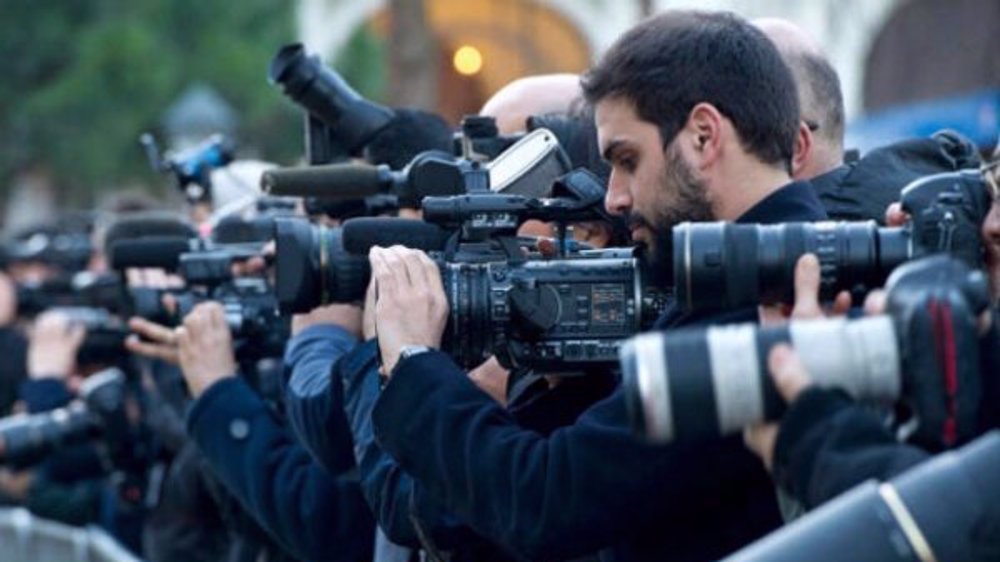
In the years that followed, August 8 became a day of remembrance for Iranian journalists, honoring Saremi and, more broadly, those who have lost their lives while reporting from dangerous places.
His story has come to represent the risks journalists take when they remain at the scene of a crisis to document events as they unfold.
The Mazar-e-Sharif attack also had consequences far beyond the consulate itself. The killings sharply increased tensions along Iran’s eastern border. Iranian military units were placed on alert, raising fears that the crisis could escalate into an open confrontation between Iran and the Taliban.
Iran ultimately chose restraint, avoiding military retaliation and preventing the crisis from developing into a wider conflict. That decision reflected Tehran’s broader emphasis on regional stability, particularly given Iran’s 921-kilometer border with Afghanistan.
But restraint did not mean forgetting. For years, Iran’s Foreign Ministry has continued to call on successive governments in Kabul to investigate the killings and establish the full truth about what happened.
The Islamic Republic of Iran's Army on the occasion of Journalist Day:
— Press TV 🔻 (@PressTV) August 8, 2026
🔹Journalists are considered the frontline commanders of the media battle against the enemy. pic.twitter.com/woBlJOW1Rk
The story that became a film
The Mazar-e-Sharif tragedy has also found its way into Iranian cinema. In August 2015, director Abdolhassan Barzideh released Mazar-e-Sharif, a film dramatizing the attack and its aftermath.
The film centers on Allahmadad Shahsavand, an Iranian diplomat who miraculously survived the massacre and later recounted his harrowing 19-day journey to safety.
Years after the attack, Shahsavand told ISNA that the Iranian diplomats had maintained their dignity even as the situation around them deteriorated.
According to his account, they offered the attackers fruit and tea, apparently hoping to avoid further bloodshed.
Their efforts did not save them. The diplomats were nevertheless executed in cold blood.
Shahsavand survived because of the extraordinary courage of a local Afghan man living near the consulate, who helped him escape.
Iran's Judiciary Chief Mohseni Eje'i praises journos for confronting foe's psychological warfare in Journalists’ Day message pic.twitter.com/TJ9COOeHne
— Press TV 🔻 (@PressTV) August 8, 2026
Remembering what happened
The Mazar-e-Sharif attack is remembered in Iran not only as a diplomatic tragedy, but also as a reminder of the dangers journalists can face when they report from the heart of conflict.
Saremi was not a soldier. He was not carrying a weapon. He was a reporter documenting events as they happened.
Every August 8, Iran remembers Saremi as it marks Journalists’ Day, a day that carries both the weight of a national tragedy and a tribute to journalists who continue to report from the most dangerous places in the world.
The questions surrounding Mazar-e-Sharif may remain unanswered, but Saremi’s final act of journalism has endured as he stayed at his post, reported what he saw, and sent the warning that would become his last dispatch.
Journalists as frontline warriors
Nearly three decades later, questions surrounding the attack remain. Who ordered the killings? Who carried them out? And why were Iranian diplomats and a journalist, protected under international law, deliberately targeted? For Iran, those questions remain unresolved.
Iranian journalists have continued to face attacks. In the previous two imposed wars – in June last year and February this year – Iranian media houses were attacked by the US-Israeli war machine, including the news office of the national broadcaster, IRIB.
Iran’s Armed Forces General Staff’s Defense Communications, Media and Publicity Center and Khatam al-Anbiya Central Headquarters in a statement on Saturday said the Journalists’ Day is an opportunity to honor media professionals who, with commitment, courage and dedication, work to inform the public and counter disinformation.
Iran’s Foreign Ministry issued a statement marking the 28th anniversary of the terrorist attack on Iran’s consulate in Mazar-i-Sharif and the martyrdom of Iranian diplomats and a journalist on National Journalists’ Day. pic.twitter.com/rTymtvlEWc
— Press TV 🔻 (@PressTV) August 8, 2026
They paid tribute to journalists killed in the line of duty and praised reporters, filmmakers, producers, writers and digital media activists for their role during the second and third imposed wars against Iran. They said journalists constitute an important pillar of national power and psychological security, urging them to continue defending truth and confronting hostile propaganda campaigns.
The Islamic Revolution Guards Corps (IRGC) said journalists who, during the Second and Third Imposed Wars, did not waver for a moment in carrying out their responsibilities while under fire and facing threats deserve the highest honors and appreciation.
Iranian Army, in a statement, noted that journalists are regarded as commanders on the front lines of the media battle against the enemy, who, through the tools of the pen, images, and narrative, stand firm against the organized campaigns of the enemy.
“Through continuous efforts to shed light on events and expose the truth, journalists help nations distinguish truth from falsehood and contribute to strengthening public awareness in the face of waves of deception and cognitive warfare operations,” it stated.
Parliament Speaker Mohammad Baqer Qalibaf said that the children of the Islamic Republic will not allow the enemy to build its imagined victories in the minds of the public.
Iran's foreign ministry also issued a statement, paying tribute to the martyred diplomats and the journalist, once again emphasising the importance of identifying the cause and perpetrators of the heinous terrorist attack that took place on this day 28 years ago.
Discover Iran: Tabriz’s extraordinary architectural legacy through royal palaces, merchant mansions
Discover Iran: Tabriz’s ‘Mausoleum of Poets,’ where centuries of Persian literary history live on
Discover Iran: Tabriz’s Blue Mosque, where glorious history meets timeless Iranian architecture



Leader’s advisor: Any foreign forces attempting to land in Iran ‘will certainly be destroyed’
VIDEO | Press TV's news headlines
VIDEO | Priests rally in Rome to honor Palestinian, Lebanese children murdered by Israel
Iran’s military warns of ‘unpredictable blows’ in response to US threats
VIDEO | US economic war on Iran
Iran FM meets with US envoy on UN meeting’s sidelines at American side’s insistence: Report
UN chief warns Israeli violence in West Bank raises ‘specter of ethnic cleansing’
VIDEO | ‘Korea gets nothing, loses everything, with Hormuz deployment’



 PressTV NEWSLETTER
now
PressTV NEWSLETTER
now
 This makes it easy to access the Press TV website
