Iran helped save Kuwait in 1990 – now Kuwait hosts US bases, aids aggression against Iran
By Mina Mosallanejad
Iran’s foreign ministry spokesman Esmaeil Baghaei on Tuesday invoked Iran’s assistance to Kuwait following Iraq’s 1990 invasion, saying that a country once rescued with Iranian help has now chosen to host the military infrastructure used in attacks against the Iranian people.
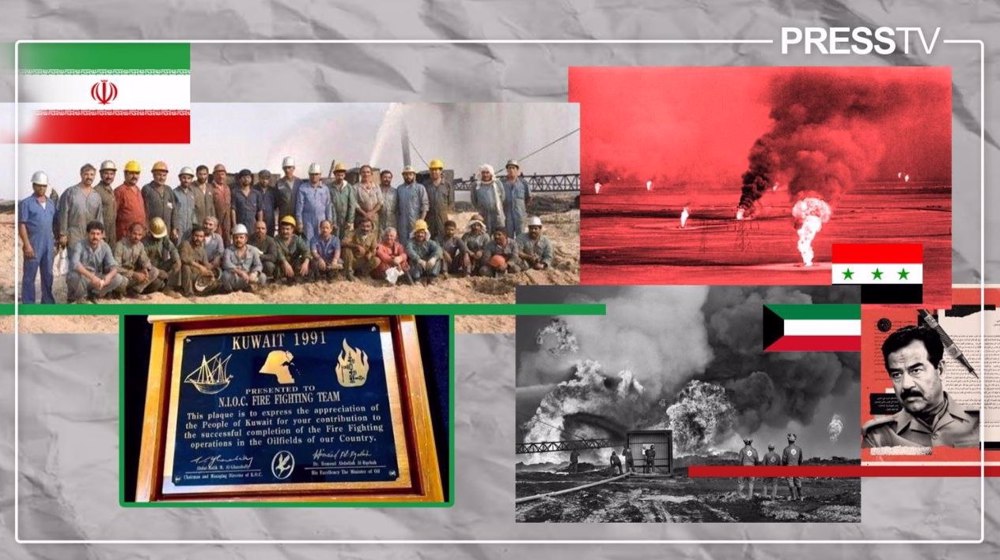
Sharing a historic photograph of Iranian oil specialists working in Kuwait in 1991, in a post on X, Baghaei described it as a reminder of a chapter of cooperation that has been overshadowed by Kuwait’s alignment with Washington.
“This historic photograph shows the noble and selfless Iranian specialists who travelled to Kuwait in 1991 to extinguish the country’s burning oil wells after the retreat of Saddam Hussein’s Baathist army,” he wrote.
The spokesperson noted that Iran’s assistance came despite the fresh wounds left by the eight-year Iraqi-imposed war on the Islamic Republic, during which Kuwait, alongside other members of the Persian Gulf Cooperation Council, had provided extensive political, financial and logistical backing to Saddam Hussein’s Ba’athist regime.
“Although only three years had passed since the end of Saddam’s imposed war against Iran and the wounds caused by Kuwait’s comprehensive support for the aggressor regime were still fresh, Iran responded to Kuwait’s request by dispatching a 47-member team of oil industry specialists,” he said.
According to Baghaei, the Iranian team assumed responsibility for bringing under control 28 blazing oil wells in the giant Burgan oil field, an operation that became part of what is internationally recognized as the largest oil-well firefighting campaign in history.
The spokesman contrasted that history with Kuwait’s current position during the latest US military aggression against Iran, saying Tehran sees a painful contradiction between its past goodwill and Kuwait’s present conduct.
“The noble Iranians extinguished the fire that had engulfed your nation, yet today you have become part of the fire of the evildoers directed against our people,” he said.
“Iran has always remained committed to good-neighborliness, but the smoke of ingratitude and shortsightedness will ultimately blind those who show no gratitude. Whoever sows thorns will never harvest grapes.”
Baghaei’s remarks come as Washington continues its attacks against Iran while relying on an extensive network of bases and logistical facilities across the Persian Gulf region.
Iran has repeatedly warned neighboring states that allowing the United States to use their territories for military attacks against the Islamic Republic would inevitably draw them into the consequences of Washington’s actions.
During both the 12-day US-Israeli aggression in June 2025 and the ongoing US-Israeli aggression that began on February 28, Iranian officials stressed that any regional country facilitating attacks against Iran would bear political and strategic responsibility.
Kuwait’s military role in the US war on Iran
Iranian officials say that Kuwait is far more than a passive observer of the war illegally imposed on the Iranian nation, which has claimed more than a thousand lives since February.
For decades, the country has hosted one of the largest American military footprints in West Asia, serving as a critical logistics hub for the US Central Command (CENTCOM).
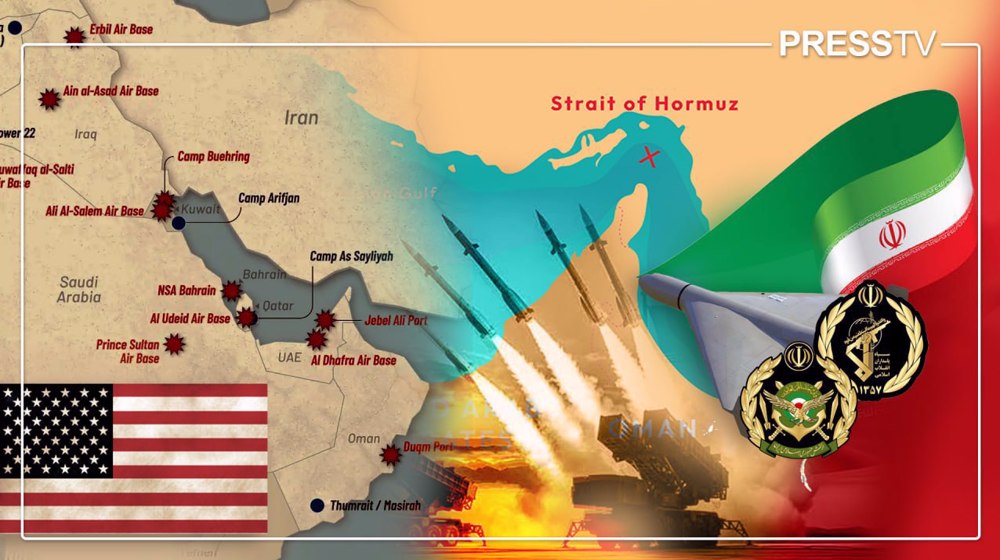
Approximately 13,000 American troops are stationed across multiple military facilities in Kuwait, including Camp Arifjan, Camp Buehring, the Port of Shuaiba and Ali Al Salem Air Base.
Also, following Iranian retaliatory missile strikes on American positions in the region, US forces reportedly dispersed personnel and equipment to additional emergency facilities on Bubiyan Island, Mubarak Port and other locations connected to Kuwaiti infrastructure.
These installations have long functioned as command, transportation and supply centers supporting US attacks across the region.
According to Iranian and international military assessments, the same infrastructure has played a significant role in sustaining Washington’s latest attacks against Iran.
Iranian officials also point to a series of foreign media reports indicating a dramatic increase in American military cargo flights into Kuwait immediately before and during the war on Iran.
Dozens of C-17 Globemaster transport aircraft reportedly landed at Kuwaiti air bases carrying troops, ammunition and military equipment required for sustained attacks against Iran.
Iranian officials also point to reports by Western media and research organizations indicating that US forces used military bases across the Persian Gulf to conduct direct strikes against Iran.
According to those reports, the US military deployed Precision Strike Missiles (PrSM) from regional bases, with some of the attacks hitting civilian areas inside Iran.
In a report published on March 29, The New York Times revealed that US forces launched ballistic missiles from bases in the Persian Gulf toward the Iranian city of Lamerd in Fars province. The strike killed dozens of civilians, including teenage girls who were attending a volleyball training session.
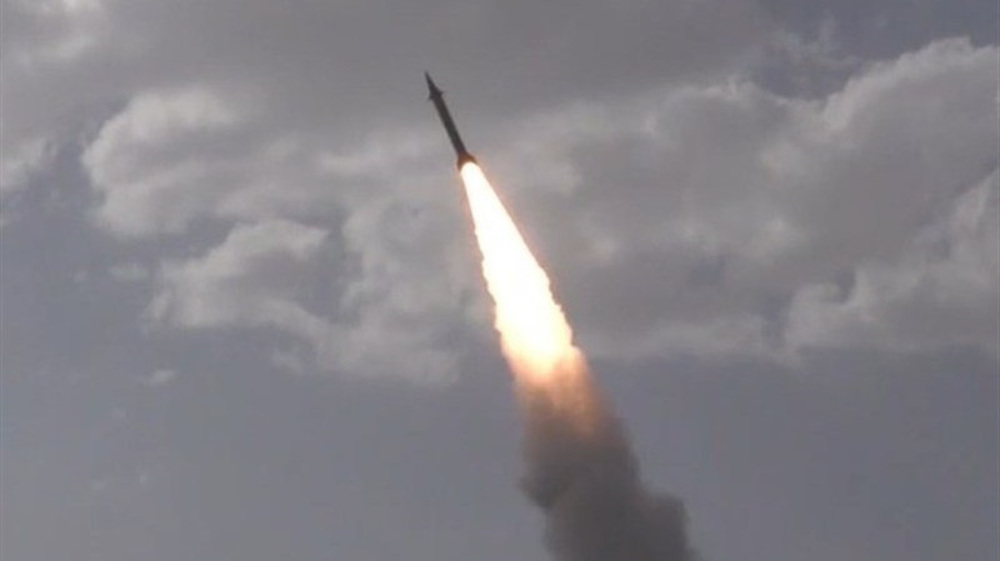
Additional evidence emerged in early April 2026, when France 24 reported that its verification team had geolocated and authenticated videos showing the launch of at least 13 US missiles from HIMARS rocket systems deployed in Kuwait on March 24 and March 31.
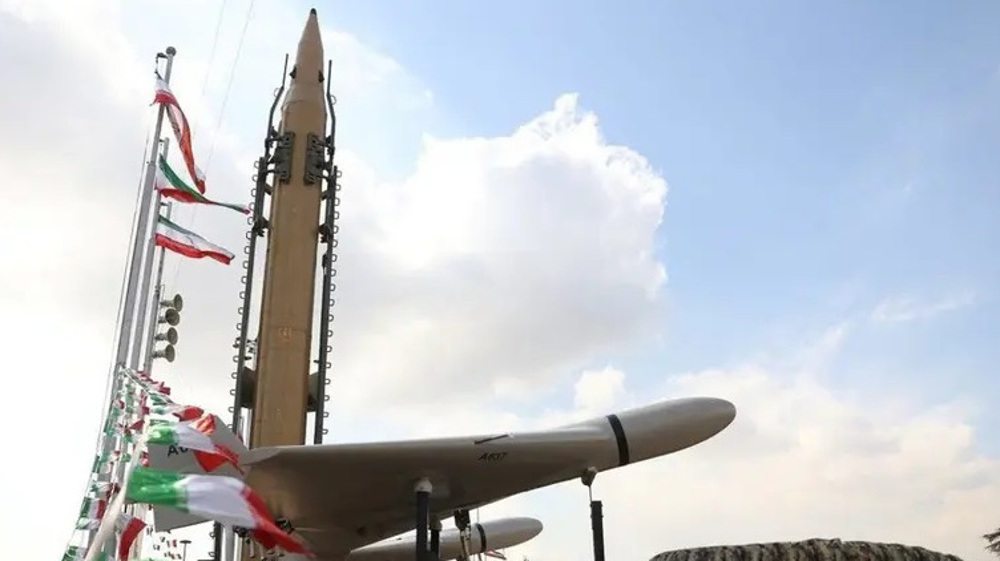
According to the report, the launches were directed toward targets inside Iran, further reinforcing Tehran’s assertion that Kuwaiti territory played an operational role in the US aggression and continues to be complicit in the war against Iran.
Kuwait forms an integral component of the US-led regional air defense network established to protect both American military installations and the Israeli-occupied territories. This integrated system links advanced radar installations, early-warning capabilities and missile defense assets across several Persian Gulf states under American operational command.
Iranian officials and security observers have also cited statements made by senior US military and political figures acknowledging cooperation from Persian Gulf states.
US President Donald Trump, War Secretary Pete Hegseth and Chairman of the Joint Chiefs of Staff General Dan Caine publicly thanked regional partners for supporting American attacks.
General Caine stated that Persian Gulf partners had fought “shoulder to shoulder” with US forces and specifically included Kuwait among the countries that had joined efforts to protect American personnel and assets.
For Tehran, such statements reinforce the fact that Kuwait cannot credibly portray itself as a neutral actor while simultaneously hosting the military infrastructure aiding US aggression.
However, the Islamic Republic of Iran has stressed its commitment to maintaining friendly relations with Kuwait, based on“mutual respect, the principle of good-neighborliness, and respect for the sovereignty and territorial integrity of both countries.”
Iranian officials have also emphasized that “defensive operations targeting US military bases and facilities in the region are in no way directed against the sovereignty or territorial integrity of the State of Kuwait.”
What makes Kuwait’s current posture particularly difficult to accept is not simply its overt and covert military cooperation with the United States, but the historical memory of Iran’s extraordinary assistance at a time when Kuwait itself faced national catastrophe.
That chapter, according to Iranian observers, remains one of the clearest examples of Tehran placing humanitarian responsibility above political grievances.
When Iran helped extinguish Kuwait’s burning oil fields
Decades ago, Iran played a central role in helping Kuwait recover from one of the worst environmental and industrial disasters in modern history.
On August 2, 1990, Saddam’s Baathist regime invaded Kuwait, occupying the country within hours. The occupation lasted for nearly seven months before Iraqi troops withdrew.
As Iraqi forces retreated, they adopted a scorched-earth strategy unprecedented in modern warfare. Hundreds of oil wells were deliberately blown up and set ablaze, transforming Kuwait’s vast oil fields into an inferno visible from space.
Out of roughly 1,000 producing oil and gas wells across Kuwait, Iraqi forces ignited 727.
Nearly six million barrels of crude oil burned every day alongside around 70 million cubic meters of natural gas, creating what has since been recognized as the largest oil-well fire disaster in history.
The consequences extended far beyond Kuwait’s borders. Thick black smoke covered the skies over the Persian Gulf for months, temperatures around the burning wells reached extraordinary levels, acid rain contaminated large areas, agricultural production suffered severe damage, and millions of tons of pollutants were released into the atmosphere.
Although only three years had passed since the end of Baathist regime’s eight-year imposed war against Iran, a war during which Kuwait had openly backed Saddam politically, financially and logistically, Tehran chose not to let past grievances dictate its response.
Responding to an official request from the Kuwaiti government, Iran dispatched a 47-member team of elite oil industry specialists to participate in the international firefighting effort.
Despite extensive technical preparations and detailed reconstruction proposals presented by Tehran, Kuwaiti authorities, under the strong influence of American contractors overseeing the operation, limited Iran’s participation to oil-well firefighting.
Iranian specialists were therefore forced to wait before receiving their first assignment. When they were finally entrusted with Well No. 180 in the Burgan oil field, they encountered one of the operation’s most difficult challenges.
Towering flames, damaged infrastructure and the absence of water reservoirs convinced many observers that extinguishing the well would take weeks.
Yet when Iranian engineers returned to the site after conducting further assessments, they discovered that the flames had unexpectedly subsided while crude oil continued to erupt violently from the wellhead.
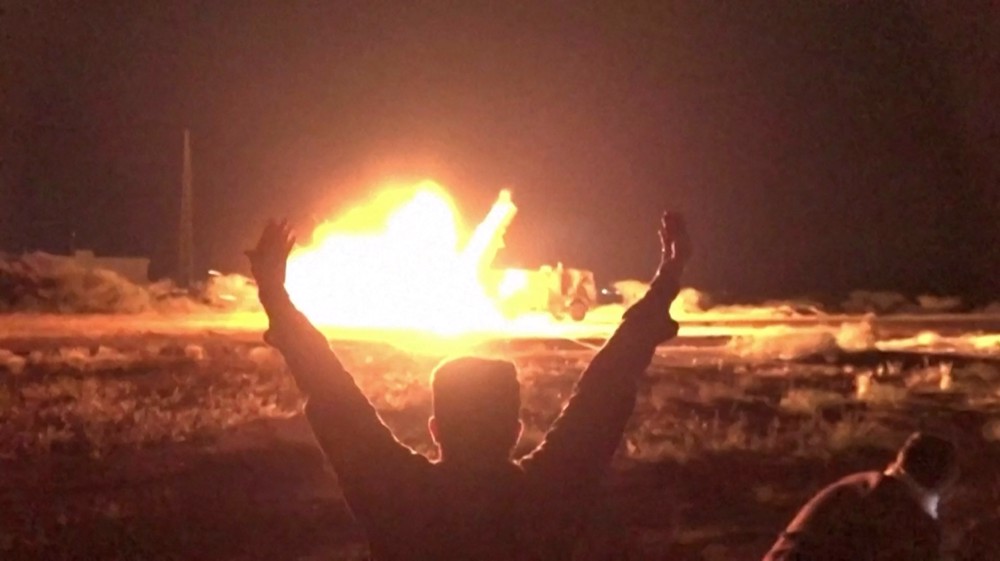
Rather than abandoning the operation, the team devised an innovative engineering solution.
Without relying on the conventional water-intensive methods used by many international contractors, the Iranian specialists successfully isolated the damaged wellhead, installed new safety equipment, and injected drilling fluids to regain control of the well.
The achievement astonished engineers from other countries. Representatives of Kuwait Oil Company and American specialists rushed to the site to witness the operation firsthand.
The successful control of the first well became a turning point. Kuwaiti officials subsequently entrusted additional wells to the Iranian team, acknowledging both their technical competence and operational efficiency.
Over the following weeks, Iranian specialists extinguished and secured a series of high-production wells across the Burgan oil field. Working around the clock under extreme temperatures, they introduced innovative methods that reduced damage to underground reservoirs while significantly accelerating the firefighting process.
One of the team’s most remarkable accomplishments came when it successfully completed the transfer of equipment, operational planning, firefighting, and full control of three separate wells within only three days – a pace unmatched by any other participating team.
Their performance eventually earned recognition as the fastest among the 27 firefighting teams representing 16 countries. The overall international operation involved approximately 9,000 personnel from 43 countries, supported by thousands of heavy machines, hundreds of kilometers of water pipelines and massive artificial reservoirs built specifically for the mission.
What had initially been expected to take nearly two years was completed seven months ahead of schedule. Iranian specialists played an important role in achieving that outcome.
Beyond the technical achievement, the mission carried profound political symbolism.
Only a few years earlier, Iraqi warplanes had crossed Kuwaiti airspace to bomb Iranian cities, Kuwaiti ports had facilitated the shipment of military supplies to Saddam Hussein’s forces, and Kuwait had helped finance Baghdad’s war machine.
Yet when Kuwait itself became the victim of Iraqi aggression, Iran chose humanitarian responsibility over retaliation, representing the true meaning of good-neighborliness.
Iran recognized Kuwait long before many others
Iran’s support for Kuwait was not limited to the events of 1990 and 1991. Following Kuwait’s independence, Iran was among the first countries to formally recognize the new state.
Diplomatic relations officially began with the establishment of the Iranian Embassy in Kuwait on January 12, 1962, laying the foundation for decades of bilateral engagement.
Iran consistently advocated stability in the Persian Gulf and repeatedly emphasized the importance of dialogue and regional cooperation among neighboring states.
This historical record, regional observers say, demonstrates that Tehran has long viewed relations with Kuwait through the lens of coexistence rather than confrontation.
They note that Kuwait was one of Saddam’s principal regional supporters throughout the 1980-1988 imposed war. Kuwait provided Iraq with extensive financial assistance, opened its ports to shipments carrying military equipment and supplies destined for Baghdad, and facilitated the movement of Iraqi logistics.
As Iraq struggled to sustain its wartime economy, Kuwait became one of its main suppliers of petroleum products and fuel. Iraqi military aircraft used Kuwaiti facilities and airspace during attacks against Iranian targets, while Kuwait, together with Saudi Arabia, extended massive loans that helped finance Baghdad’s war effort.
Despite this history, Tehran reacted differently when Iraq invaded Kuwait in August 1990. The Islamic Republic was one of the first countries in the region to denounce Baghdad’s actions.
Throughout the occupation, Iran also welcomed tens of thousands of displaced Kuwaitis who had fled Saddam’s forces, providing refuge despite the bitter legacy of the previous decade.
For Iranian officials, these episodes illustrate a consistent policy of separating humanitarian obligations from political disputes.
A country that once received diplomatic recognition, political support, humanitarian assistance, refuge for its displaced citizens and highly skilled Iranian engineers during its greatest national crisis has now become an indispensable host for the very military infrastructure being used against the Iranian people, observers say.
That, they assert, is why Kuwait’s current alignment with Washington is viewed not merely as a political disagreement, but as an act of profound ingratitude toward a neighbor that repeatedly stood by it during moments of national peril.
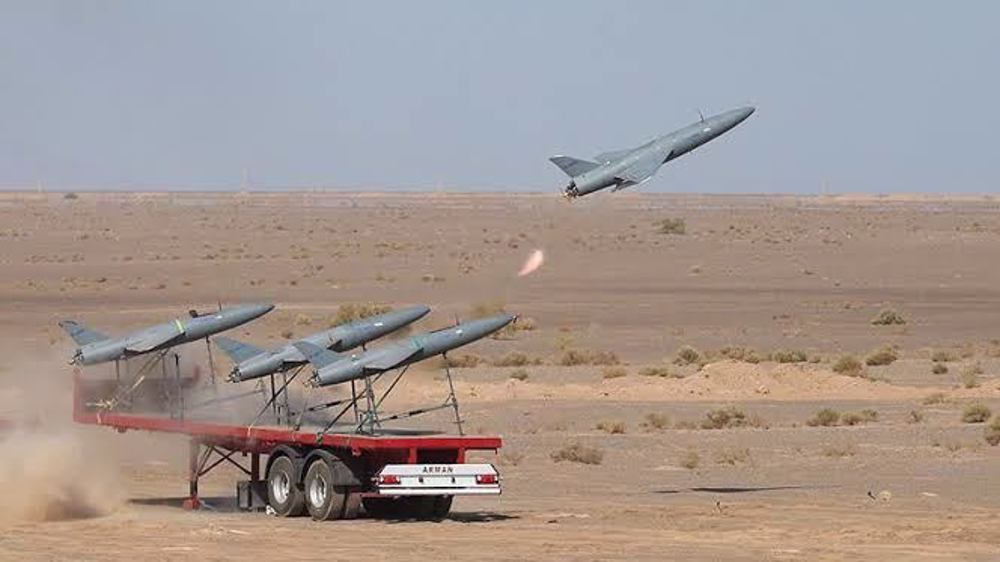
Iran reconfigures military capabilities, upgrades Arash drone for battlefield: Army
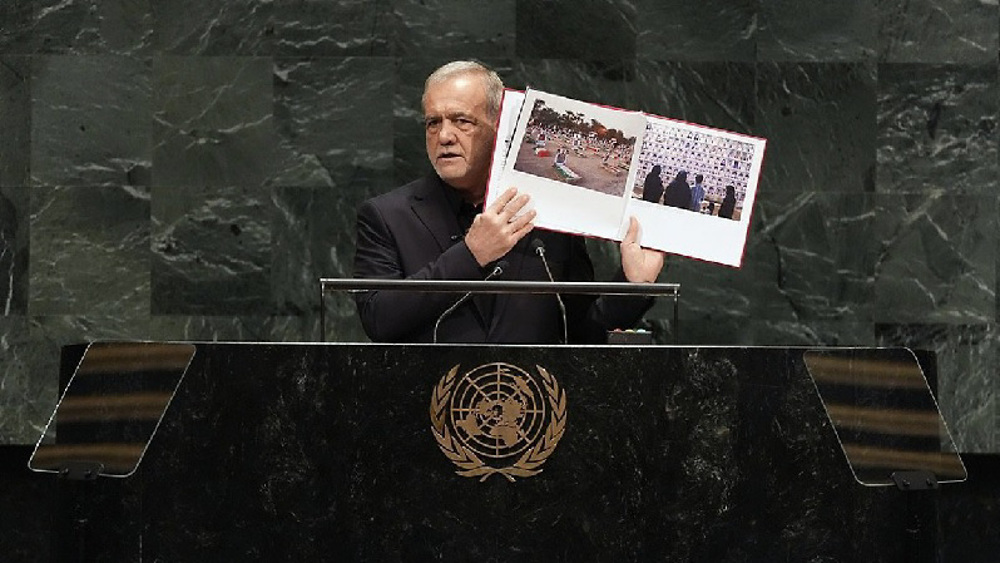
President Pezeshkian UN speech
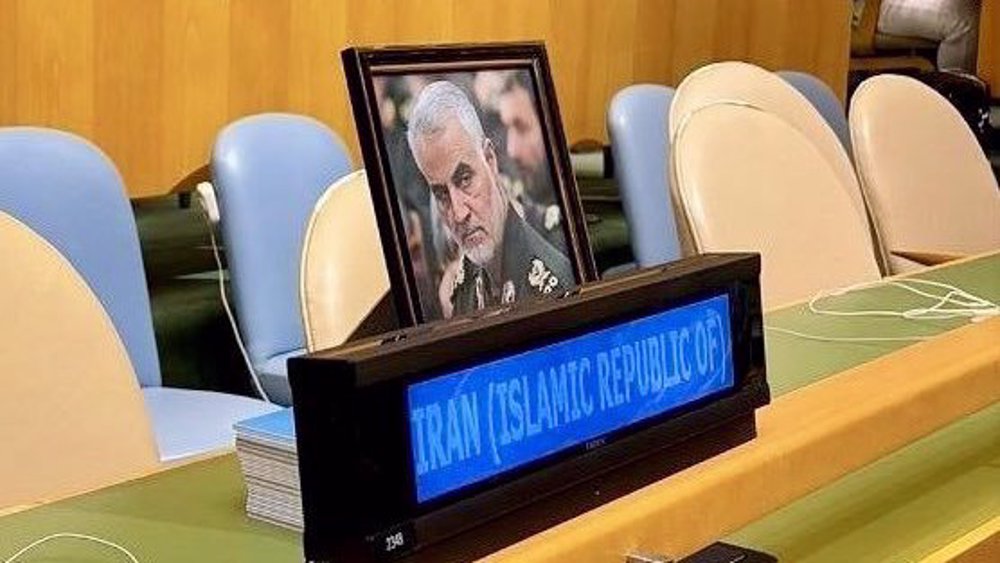
Martyr Soleimani’s portrait confronts Gaza butcher as world walks out on Netanyahu at UN



IRGC: Iran will continue punishing US until Tehran’s conditions are met
VIDEO | German teens skip schools nationwide in protest at compulsory military service
VIDEO | Tehran children center marks 1,000th stem cell transplant
VIDEO | Palestinians decry world officials' inaction on Israeli crimes at UNGA
VIDEO | 'We’re seeing a replay of the US-backed 1964 coup in Brazil': Analyst
Iran FM outlines seven-day plan for conditional reopening of Strait of Hormuz
Saudi Arabia has kept nuclear weapons option open: Report
VIDEO | 26th ICCU focuses on future of cardiovascular medicine


 PressTV NEWSLETTER
now
PressTV NEWSLETTER
now
 This makes it easy to access the Press TV website
