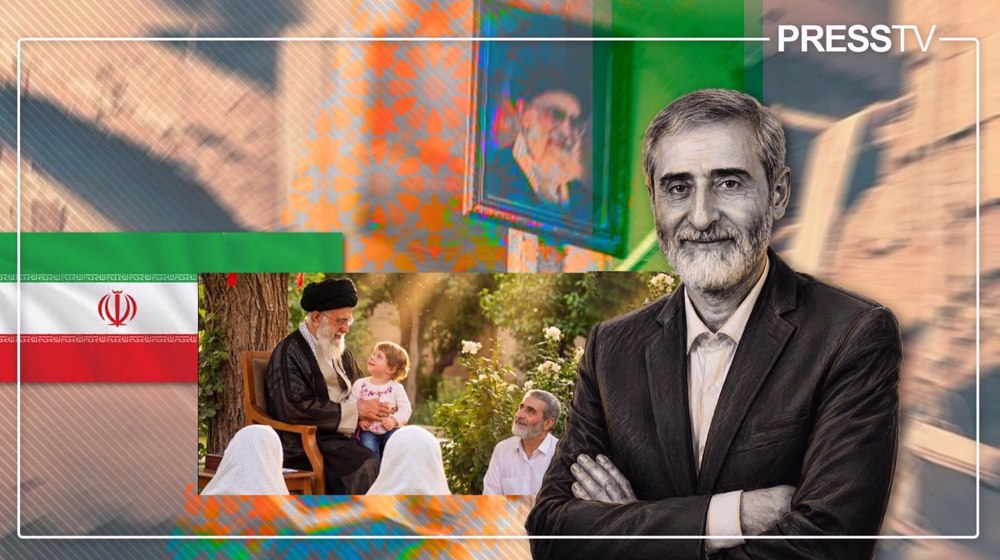
Martyr Dr. Mesbah Bagheri Kani devoted a lifetime to scholarship, cultural advocacy and social service
By Mina Mosallanejad
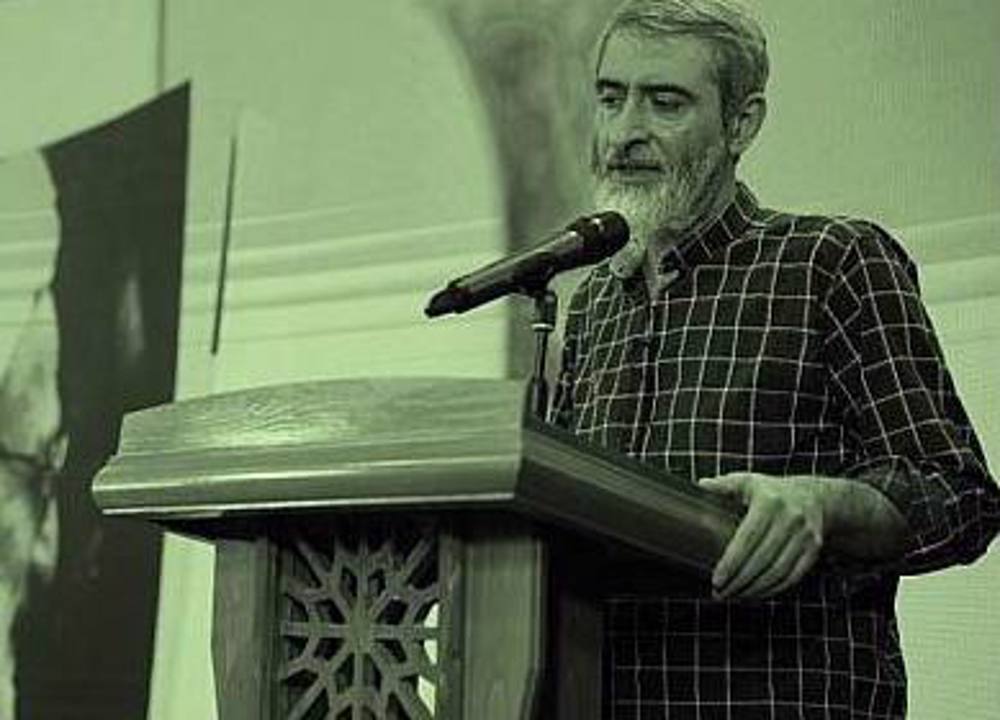
A number of scholars, students and faculty members gathered at the Shaheed Mohattari auditorium of Imam Sadiq University (AS) earlier this week to remember an educator whose scholarship was inseparable from moral refinement, humility and service to others.
At the ceremony, organized by the university’s Markaz e Roshd (Center for Growth), attendees reflected on Dr. Mesbah al-Hoda Bagheri Kani’s enduring intellectual and educational legacy.
In his opening remarks, Imam Sadiq University President Dr. Asghar Eftekhari identified two defining qualities of an ideal Islamic educator: leading by example through continuous self-improvement and serving as a facilitator who removes obstacles to students’ growth.
Dr. Eftekhari said their martyred colleague exemplified both these characteristics, describing him as an educator who consistently prioritized the development and success of others.
One of the students painted a deeply personal portrait of the martyred professor, recalling his unconventional leadership style and people-centered approach.
Rather than focusing on rules and organizational hierarchy, he believed that “people matter” and often adapted procedures to serve individuals’ needs. The student said the martyred professor, a faculty member at the university, acted less as a conventional manager than as a mentor and trusted companion whose quiet influence transformed those around him.
In his keynote address, Dr. Mohammad Pourezzat, a professor at the University of Tehran, described the martyred professor as a rare embodiment of sincerity, ethical integrity and problem-oriented scholarship, who viewed research not as an end in itself but as a means to address society’s real challenges.
Pourezzat also highlighted Professor Bagheri Kani’s remarkable ability to listen with empathy, mobilize networks to solve problems and place others’ interests ahead of his own.
Participants unanimously agreed that the martyr’s educational philosophy, moral character and commitment to nurturing future generations made him a lasting model for the Islamic university and an enduring source of inspiration for educators and students alike.
Thousands of Iranians take part in the funeral procession of Ayatollah Khamenei's martyred son-in-law Mesbah Alhoda Bagheri-Kani in Tehran.
— PressTV Extra (@PresstvExtra) July 3, 2026
Follow Press TV on Telegram: https://t.co/h0eMpifVIe pic.twitter.com/jNav6udjj0
The martyr professor’s family, academic background
Dr. Mesbah al-Hoda Bagheri Kani, a scholar of management, a professor at Imam Sadiq University, and son-in-law of the martyred Leader of the Islamic Revolution, Ayatollah Seyyed Ali Khamenei, was also martyred in the February 28 US-Israeli attack on the Islamic Republic.
He was widely known not only for his academic work in Islamic management and public policy as well as his cultural activism but also for a life his friends and colleagues say was defined by humility, integrity, an unwavering commitment to public service, and a profound commitment to moral and spiritual growth.
The son of Ayatollah Mohammad Bagher Bagheri Kani and nephew of the late Ayatollah Mohammad-Reza Mahdavi Kani, the former chairman of the Assembly of Experts, Dr. Bagheri Kani belonged to one of Iran’s prominent and distinguished religious and scholarly families.
He was also the brother of Dr. Ali Bagheri Kani, Deputy Secretary of Iran’s Supreme National Security Council (SNSC), and Dr. Mohammad Amin Bagheri Kani, a university professor.
Yet despite his prominent family connections and later marriage into the family of the Leader of the Islamic Revolution, those closest to him say he consistently avoided seeking privilege, influence, or personal gain.
Instead, they say, he devoted his career to scholarship, teaching, and serving society while deliberately avoiding political and economic domains.
Born in 1973, Dr. Bagheri Kani earned his Ph.D. in International Marketing from Tarbiat Modares University in Tehran in 2004. Throughout his academic career, he specialized in Islamic marketing, political marketing, Islamic management, and public policy.
His research explored the application of Islamic principles to modern management, and he authored more than twenty academic papers published in leading Iranian and international journals between 2001 and 2017.
Among his latest works were studies on customer relationship management in Islam and prioritizing the organizational structure of entrepreneurial universities.
Martyr professor’s affiliation with Imam Sadiq University
His association with Imam Sadiq University, a premier higher education institute in northeast Tehran founded by his uncle, spanned more than two decades.
In 1999, he joined the Faculty of Islamic Studies and Management as a member of the academic staff and went on to teach courses including Principles of Management, Operations Research, Marketing Management, General Management Theory, Administrative Systems, and Planning Principles.
In later years, he taught doctoral students the course “Research in Islamic Public Policy.”
Beyond the classroom, Dr. Bagheri Kani held a number of academic leadership positions. He served as managing editor of the university’s Strategic Management Thought journal, later becoming deputy dean of the Faculty of Islamic Studies and Management, and in 2014 was appointed to the Board of Trustees of the university’s Innovation Center.
From 2017 until his martyrdom, he served as editor-in-chief of the Jihadi Management quarterly and the Growth Reflections biannual journal, while also chairing the Islamic Management Commission of the Congress on Islamic Humanities.
Before entering the world of academia, he worked as an information technology specialist at the Foundation of the Oppressed and Disabled, later joining Iran’s national broadcaster in the Office of the Presidency before serving in planning and inspection affairs at the Ministry of Commerce.
Apart from academic work, he was also closely engaged in cultural activities. Many literary luminaries, cinema personalities and media figures have spoken highly of him and how he always went out of his way to contribute in different ways.
Martyr professor’s family link with martyred Leader
Dr. Bagheri Kani was married to Seyyedeh Hoda Khamenei, the youngest daughter of the martyred Leader of the Islamic Revolution.
In a recent televised interview, his brothers recalled that years before the marriage, he had spoken to his mother about his desire to marry into the Leader’s family.
At the time, the Bagheri Kani family knew little about the personal details of the Leader’s household. Through mutual acquaintances, the proposal eventually reached Ayatollah Khamenei, whose longstanding friendship and familiarity with the Bagheri Kani family helped facilitate the marriage.
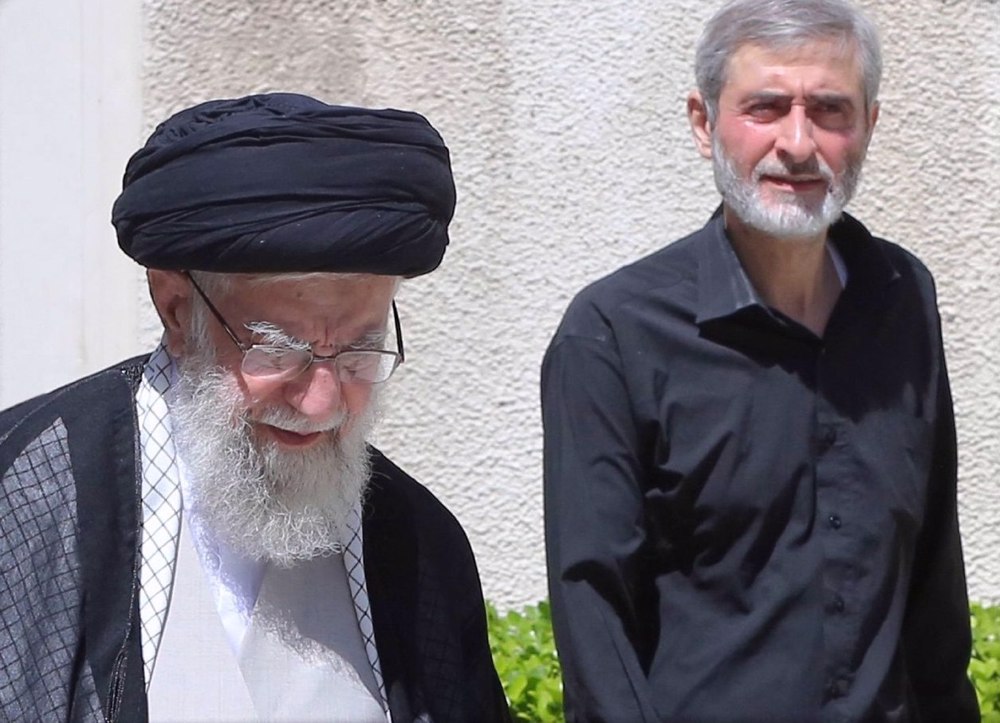
His younger brother recalled that the martyred Leader put forward a condition during the marriage process: “He should not enter economic or political activities. Dr. Bagheri Kani remained faithful to that principle throughout his life, dedicating himself to service.
His brothers described him as a man deeply devoted to self-improvement and moral discipline.
They said he did not simply obey his father out of duty but constantly sought “to understand the deeper meaning behind his father’s guidance.”
“Every brief remark from our father became an opportunity for reflection and self-correction,” they recalled.
Likewise, they said his relationship with the martyred Leader and his father-in-law extended beyond formal respect; he consistently tried to comprehend and implement the Leader’s intellectual and moral vision in both his personal and professional life.
Martyr professor’s unique traits
Ali Bagheri Kani described respect for human dignity as one of his younger brother’s defining characteristics that distinguished him from many others.
“For him, people’s social status or position mattered far less than their human dignity,” he said, recalling how his martyred younger brother frequently devoted his personal time to helping individuals resolve their problems and believed that “no one in an Islamic society should ever feel neglected or humiliated.”
His brothers also reflected on what they described as a remarkable spiritual transformation following his marriage. They said that over the years, his personal conduct, social behavior, and outlook on life increasingly reflected a deeper commitment to faith, humility, and service.
Among those who paid tribute to him was Dr. Alireza Amirpour, assistant professor at the Faculty of Law of Islamic Azad University, South Tehran Branch, who had been a close friend of Dr. Bagheri Kani for more than three decades.
In a heartfelt obituary, Amirpour wrote that although Dr. Bagheri Kani “stood at the crossroads of opportunity” because of his connection to the Leader’s family, he never used that position to pursue wealth or personal interests in any sphere.
Instead, Amirpour wrote, he dedicated his life to promoting good governance and addressing Iran’s cultural, social, and political challenges.
He further noted that despite facing threats and security risks in recent years, Dr. Bagheri Kani continued his scholarly and public service activities without hesitation.
“He never feared death,” Amirpour wrote. “He continued his sincere and scholarly service until his final moments,” he added, adding that he ultimately “chose flight over the prison of the body.”
The fateful day and the martyrdom
According to accounts provided by his brothers, Dr. Bagheri Kani was at his home near the residence of the martyred Leader when the US-Israeli attack began.
At the time, a meeting was underway at the Strategic Council on Foreign Relations office a few blocks away from the Leader’s residence, where Dr. Ali Bagheri Kani was also present.
He recalled hearing powerful explosions that shook the surrounding area. Windows shattered, and nearby buildings sustained significant damage, he said.
Initially, family members did not believe he had been among the victims. Only later did they learn that he had been martyred in the opening moments of the attack.
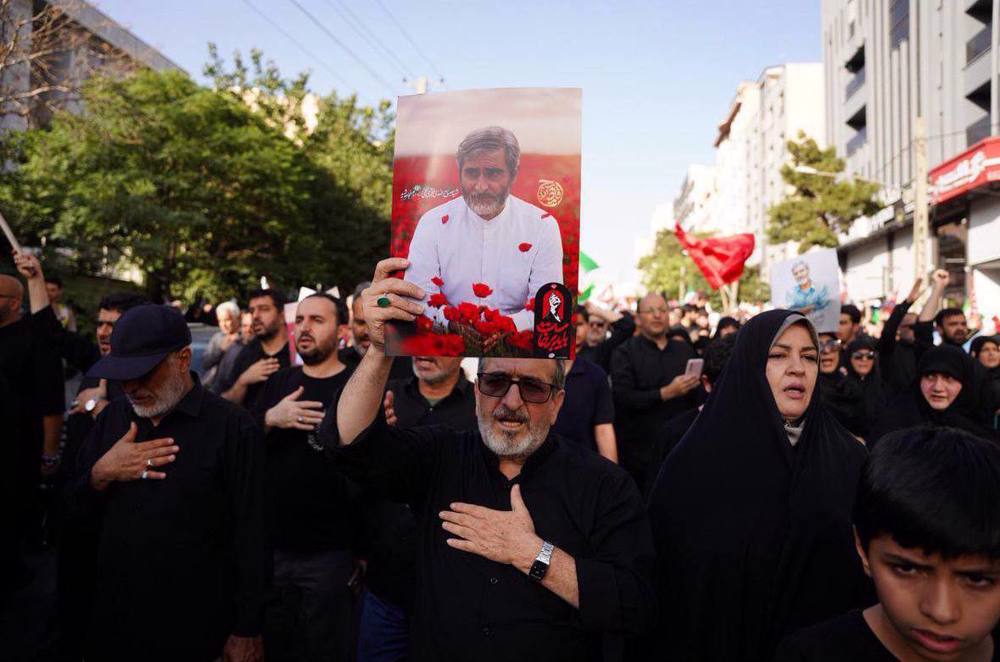
His brothers said they do not view his death as a mere tragedy or accident. Rather, they believe that the course of his life, his personal conduct, and his spiritual journey ultimately led him to the station of martyrdom.
He had refused to leave the compound, insisting on staying with the Leader and the rest of the family despite open and public threats by the wicked enemy.
Other martyrs in Leader’s family
The February 28 attack also claimed the lives of several other members of the Leader’s family, including Zahra Haddad Adel, Seyyedeh Boshra Hosseini Khamenei, and Zahra Mohammadi Golpayegani.
Zahra Haddad Adel, daughter of Dr. Gholam-Ali Haddad Adel and wife of Ayatollah Seyyed Mojtaba Hosseini Khamenei, the current Leader of the Islamic Revolution, taught at Farhang High School.
Seyyedeh Boshra Hosseini Khamenei, the fifth child and eldest daughter of the martyred Leader of the Islamic Revolution, was martyred alongside her 14-month-old daughter, Zahra Mohammadi Golpayegani.
Like her sister-in-law, she was also a teacher at Farhang High School. She was the daughter-in-law of Hojjatoleslam Mohammad Mohammadi Golpayegani, the longtime chief of staff of the martyred Leader.
For colleagues and students, Dr. Mesbah al-Hoda Bagheri Kani will be remembered as a pioneering academic and educator who lived the life of simplicity away from arc lights of fame and wealth.
For family and friends, he will be remembered as a man who, despite standing close to power and influence, chose a life centered on learning, service, humility, and faith, like his mentor and Leader.
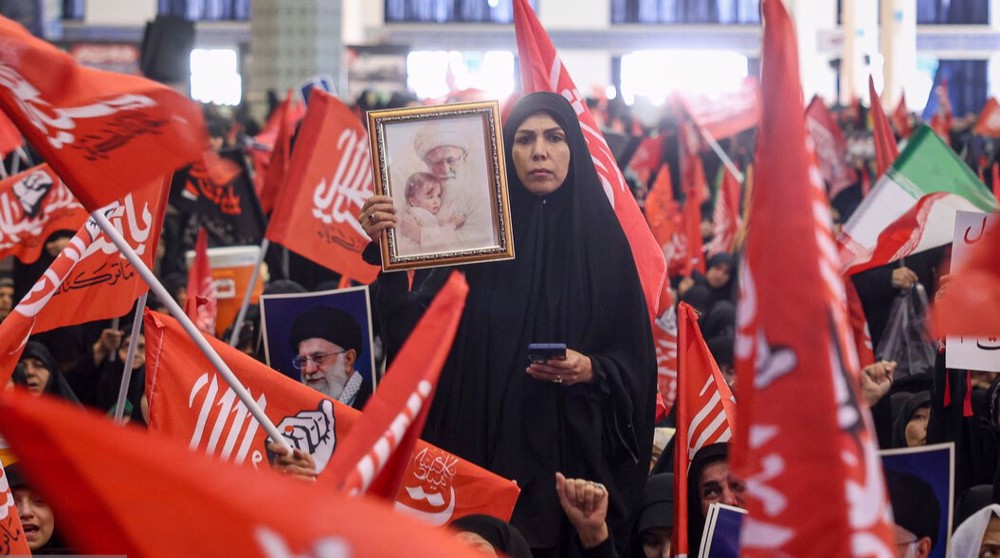
Red flags of vengeance fly as crowds mark 40th day of martyred Leader’s funeral

Gayatri and George Galloway
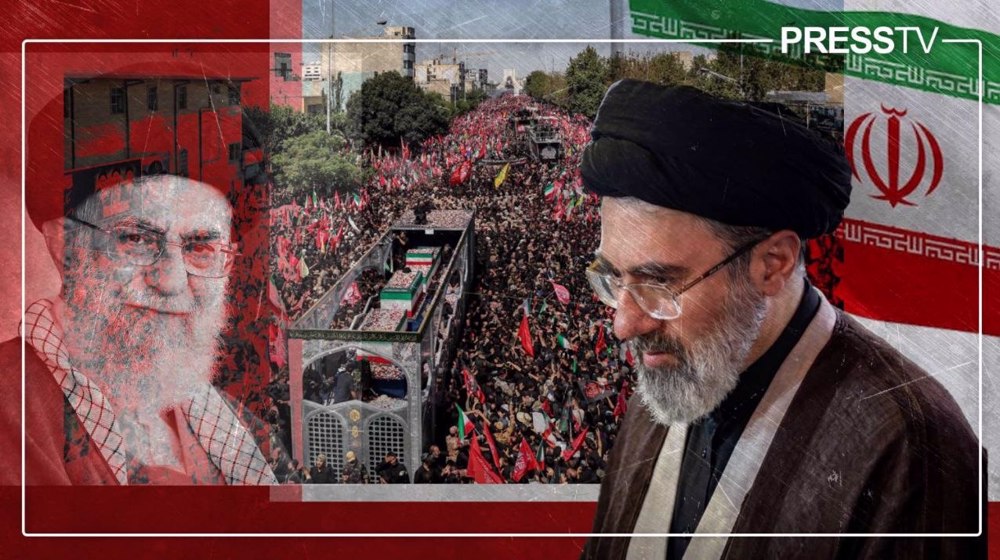
‘Great Satan again showed its true face’: Snippets from Leader’s message on US attacks, epic funeral



Iran’s nanocoating industry powering high-tech manufacturing, exports and industrial innovation
VIDEO | Why did Damascus agree to talks with Tel Aviv despite escalating attacks?
Iran: Israel’s nuclear arsenal threatens global non-proliferation regime
Energy minister: Iran's power grid can withstand full-scale attack
VIDEO | Press TV's news headlines
Pezeshkian: US will achieve nothing through economic pressure on Iran
VIDEO | Navy under media strain
Iran to expand successful air defense systems, revise tactics: Commander


 PressTV NEWSLETTER
now
PressTV NEWSLETTER
now
 This makes it easy to access the Press TV website
