
By Prof. Abdullahi Danladi
Death, in the Islamic understanding, is neither annihilation nor oblivion. It is not the extinction of existence but the passage from one realm to another, from the fleeting world of appearances to the permanence of Divine reality.
Yet while every soul must ultimately embark upon this final journey, history teaches us that not all departures bear the same weight, nor do all graves speak with equal eloquence.
There are moments when death transcends the boundaries of the personal and becomes an event of civilizational significance, moments when geography, memory, spirituality, and history converge to produce symbols that will endure for generations.
The martyrdom of Ayatollah Seyyed Ali Hosseini Khamenei marks one such moment.
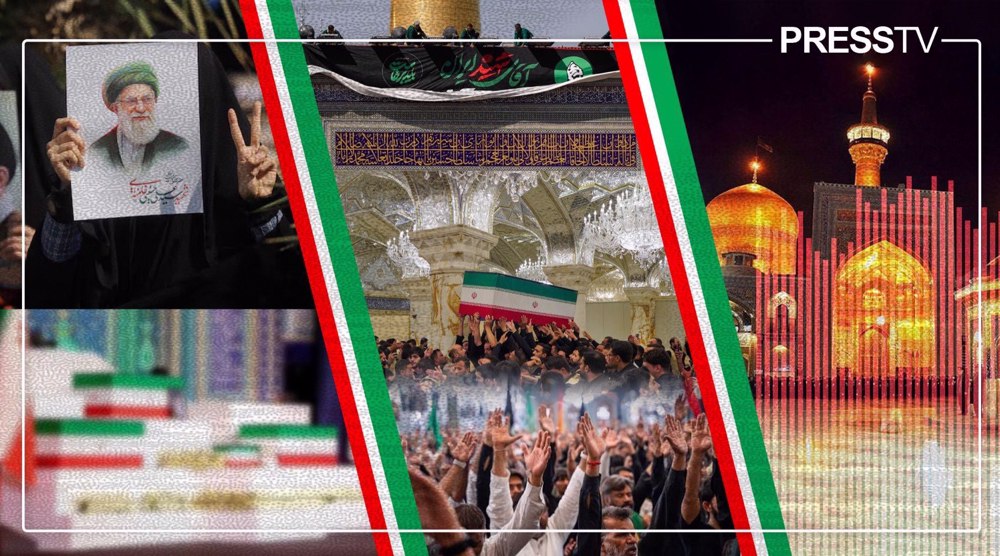
The days of mourning that followed his departure transcended the boundaries of an ordinary state funeral. Reports from various quarters described scenes unprecedented in contemporary history as mourners from different nations, cultures, professions, and social backgrounds converged upon Iran, from Tehran to Qom to Mashhad, to pay their final respects.
Scholars walked alongside labourers, statesmen stood beside ordinary citizens, and young men and women joined elderly pilgrims in a remarkable display of collective grief and devotion.
Various reports estimated that the funeral ceremonies, which extended over several days and culminated in his burial in the holy shrine of Imam Reza (AS), attracted tens of millions of participants, with some estimates placing the figure at more than thirty million people across three Iranian cities.
Whatever the precise number, the sheer scale of the gathering transformed the funeral into one of the largest public assemblies of modern times and testified to the extraordinary influence that Ayatollah Khamenei exercised over millions of people across the Muslim world and beyond.
Yet the significance of those historic scenes lies not merely in the number of mourners who filled the streets of Tehran or Qom or Mashhad, or the Iraqi holy cities of Najaf and Karbala, nor in the multitude of voices that joined in prayer and lamentation for the martyred Leader of the Islamic Revolution.
Hundreds of thousands perform the funeral prayers for the martyred Leader of the Islamic Revolution at the Holy Shrine of Imam Reza (AS) in Mashhad.
— PressTV Extra (@PresstvExtra) July 9, 2026
Follow Press TV on Telegram: https://t.co/h0eMpifVIe pic.twitter.com/Xznx0QfXWk
Their deeper meaning derives from the sacred geography within which this final farewell unfolded. For Imam Reza (AS) is not simply a revered figure from a distant age. He is, for countless believers worldwide, the eighth Imam from the progeny of the Holy Prophet (PBUH), an enduring embodiment of knowledge, piety, patience, and devotion to Allah.
For centuries, his shrine has stood not only as a monument to a great personality but as one of the most important spiritual centres in the Islamic world. It has attracted pilgrims, scholars, mystics, rulers, and ordinary men and women from every corner of the globe.
They arrive carrying their hopes and fears, their gratitude and grief, seeking solace in the presence of one whose earthly life ended more than a millennium ago, yet whose spiritual influence continues to illuminate hearts.
Such is the mystery of sanctity that powerful empires weaken, dynasties vanish, and political systems fade into history, but the memory of the righteous continues to inspire humanity. It is within this sacred landscape, beneath the spiritual canopy of Imam Reza (AS), that Ayatollah Khamenei has now found his final abode.
There is something profoundly moving in this reality. For a man whose life was inseparable from the teachings of the Ahlul Bayt (AS), whose political philosophy was shaped by the ideals of justice and resistance, and whose spiritual outlook was deeply rooted in the Holy Qur'an and the Prophetic traditions, to be laid to rest beside Imam Reza (AS) carries a symbolism that transcends ordinary historical coincidence.
Many great scholars have lived and died throughout Islamic history. Many rulers have commanded vast armies and governed extensive territories. Many intellectuals have left behind libraries of books and schools of thought.
Yet only a select few have been granted the extraordinary privilege of becoming neighbours to one of the most beloved descendants of the Holy Prophet (PBUH). This honour is neither inherited nor acquired by worldly status. It is an honour bestowed by Allah, who alone determines where His servants shall begin and end their earthly journeys.
Ayatollah Seyyed Mostafa Khamenei leads the prayer at the funeral procession of his father, the martyred Leader of the Islamic Revolution, Ayatollah Seyyed Ali Khamenei, at the Holy Shrine of Imam Reza (AS) in Mashhad.
— PressTV Extra (@PresstvExtra) July 9, 2026
Follow Press TV on Telegram: https://t.co/h0eMpifVIe pic.twitter.com/9t2qgUaO2X
The holy city of Mashhad occupied a special place in Ayatollah Khamenei's life long before it became the place of his burial. It was there that he first opened his eyes to the world. It was there that his intellectual and spiritual personality was nurtured. It was there that he encountered the atmosphere of scholarship and devotion that would shape his future.
And now, after decades spent at the centre of some of the most consequential events in contemporary Islamic history, he has returned to the city of his birth, not only as a statesman and a revolutionary leader, but most importantly as a servant of Allah returning to the dust from which all human beings are created.
There is a remarkable harmony in this journey. The child who grew up in the shadow of Imam Reza (AS) shrine has, at the end of his life, returned to rest beneath that same shadow.
In this, believers find a powerful reminder that life itself is a circle of Divine wisdom: from Allah we come, and to Him we shall return.
For those who admired and followed Ayatollah Khamenei, his burial beside Imam Reza (AS) is more than a personal honour. It is an enduring testimony to a lifetime of service.
Throughout his life, he consistently invoked the legacy of the Holy Prophet (PBUH) and his progeny as a source of moral guidance and political inspiration. He repeatedly emphasized that the tragedy of Karbala fourteen centuries ago was not merely an event to be commemorated but a permanent lesson in dignity, sacrifice, and resistance against injustice.
He sought to embody, within the constraints of contemporary politics, values that he believed were inherited from the household of Prophet Mohammad (PBUH).
The resting place of the martyred Leader of the Islamic Revolution, Ayatollah Seyyed Ali Khamenei, is currently being prepared at the Holy Shrine of Imam Reza (AS) in Mashhad.
— PressTV Extra (@PresstvExtra) July 9, 2026
Follow Press TV on Telegram: https://t.co/h0eMpifVIe pic.twitter.com/nu6TFFK3SC
Everyone may not agree with every aspect of his political ideology, but few can deny the depth of his attachment to those ideals. For his followers, therefore, his resting place beside the eighth Shiite Imam appears not as an accident of history but as the final chapter of a life shaped by devotion to the path of the holy household.
There is also a deeper lesson concealed within this moment, one that extends beyond the life of any individual. Human beings are often deceived by the glitter of worldly success. They measure greatness by wealth, power, titles, and influence. Yet history repeatedly demonstrates that political authority fades, empires collapse, and worldly prestige disappears. What endures is righteousness, sincerity, and service to humanity.
The shrine of Imam Reza (AS) stands as a living proof of this truth. Dynasties that once seemed invincible have vanished, while the memory of the Imam (AS) continues to attract millions. Kings have disappeared into the pages of forgotten history, yet the footsteps of pilgrims continue to echo through the courtyards of his shrine.
Such is the paradox of immortality that true greatness belongs not to those who dominate others but to those who dedicate themselves to higher ideals.
By being laid to rest in the company of Imam Reza (AS), the martyred Iranian Leader becomes part of this larger historical narrative. Generations yet unborn will visit Mashhad. They will come seeking the blessings of the Imam (AS), and in the process, they will encounter the memory of the man who now rests in the same shrine.
Perhaps this is among the most profound manifestations of Divine favour: not merely to live a life of influence, but to leave this world in the neighbourhood of the righteous; not merely to be remembered for a generation, but to become connected to a sacred geography that transcends time itself.
Iranian academic @shbesfand says the massive funeral turnout for the martyred Leader across Iran and Iraq shows that the discourse of Revolution remains alive, a global message of dignity, independence, and resistance to foreign domination.
— Highlights (@highlightsnews1) July 9, 2026
Follow: https://t.co/mtgZgtmxsz pic.twitter.com/VBjfW3xBMX
For believers, the significance of this event extends beyond historical curiosity. It invites reflection upon the ultimate purpose of life. It reminds us that human beings are travellers whose final destination is not determined by wealth or status but by faith, sincerity, and deeds.
The question is not how long one lives, nor how much one possesses, but what legacy one leaves behind and in whose company one hopes to stand when the journey is over.
The Holy Qur'an teaches that those who obey Allah and His Messenger (PBUH) shall be in the company of the prophets, the truthful, the martyrs, and the righteous. Every believer longs for such companionship, not only in the hereafter but also in the memory that survives him on earth.
When the mourners finally depart and the dust settles over the pure grave of Seyyed Ali Khamenei, one truth would remain undeniable: death has silenced the voice, but it has not extinguished the message. His earthly mission has ended, yet the ideals for which he struggled continue to inspire millions.
And now, in the sacred city of Mashhad, beneath the spiritual canopy of Imam Reza (AS), his memory joins the timeless conversation between faith, sacrifice, and history.
Indeed, men pass away, but principles endure. Bodies return to the earth, but noble legacies continue to shape the future. And in the company of Imam Reza (AS), Ayatollah Khamenei's final resting place becomes more than a grave.
It becomes a testimony, a powerful and meaningful testimony that some lives, by the grace of Allah, continue to illuminate the world long after they have departed from it.
Professor Abdullahi Danladi is a member of the Islamic Movement in Nigeria.
(The views expressed in this article do not necessarily reflect those of Press TV)
 This makes it easy to access the Press TV website