Pezeshkian rules out talks on Iran's defense capabilities, says missiles prevented fate of Gaza
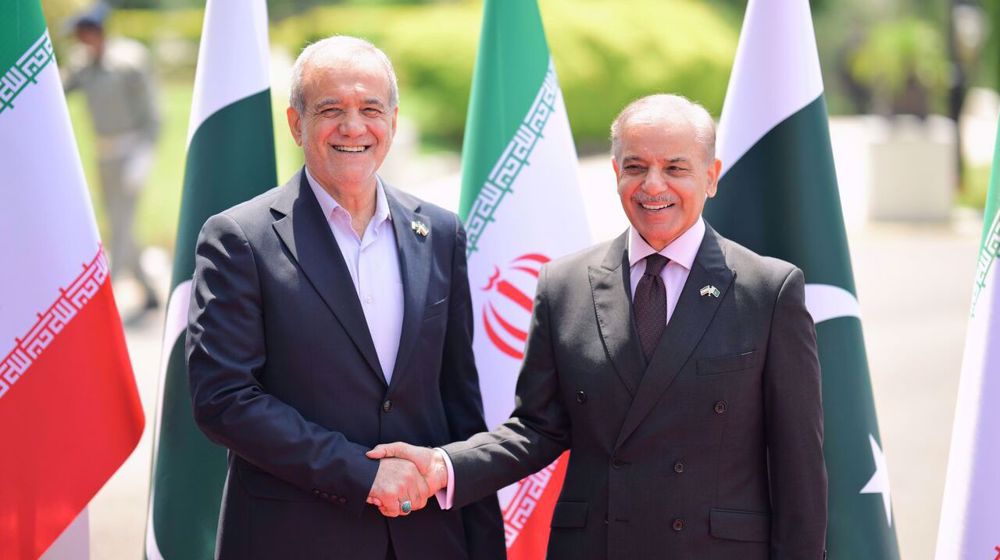
Iranian President Masoud Pezeshkian said that Tehran would never negotiate over its defense and deterrence capabilities, arguing that the country's missile arsenal had prevented it from suffering the same fate as Gaza.
Iranian President Masoud Pezeshkian on Tuesday firmly ruled out any negotiations over Iran's military capabilities, saying the country's defense strength was essential to safeguarding its sovereignty against external threats.
Speaking alongside Pakistani Prime Minister Shehbaz Sharif during a joint press conference in Islamabad, Pezeshkian said Iran would never discuss its defense and deterrence capabilities with any party under any circumstances.
"We will never negotiate with anyone over our defense capabilities," he said. "Had we not built the missiles needed to defend ourselves, Israel and the United States would have treated Iran as they treated Gaza, showing no mercy to the old or the young."
The Iranian president said Tehran's military strength had served as a deterrent against aggression, rejecting calls for discussions on the country's defense program.
"The Islamic Republic of Iran will never, under any conditions, hold talks with any side about its defense and deterrence capabilities," he said.
Pezeshkian also criticized Western countries that portray themselves as defenders of human rights, saying such claims were inconsistent with their actions.
"Those who speak of human rights are telling a great lie," he said. "If we were unable to defend ourselves, they certainly would not have shown mercy to our country and would have sought to destroy our power."
His remarks came amid lingering tensions between Tehran and Washington despite a recently signed memorandum of understanding aimed at ending a war that erupted following US-Israeli aggression against Iran earlier this year.
Pakistan played a key role in facilitating the Iran-US MoU, with Prime Minister Sharif and Army Chief Field Marshal Asim Munir helping mediate negotiations. The agreement paved the way for a ceasefire and outlined future discussions on issues including sanctions relief and regional security.
However, Iranian officials have repeatedly stressed that any future diplomacy must lead to the full implementation of the agreement, including the lifting of sanctions and guarantees against further military action.
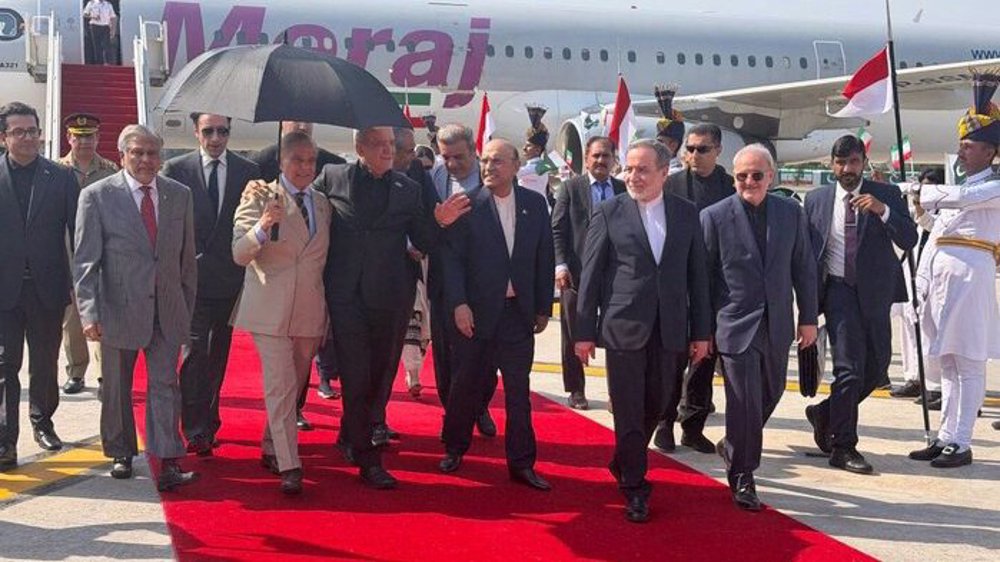
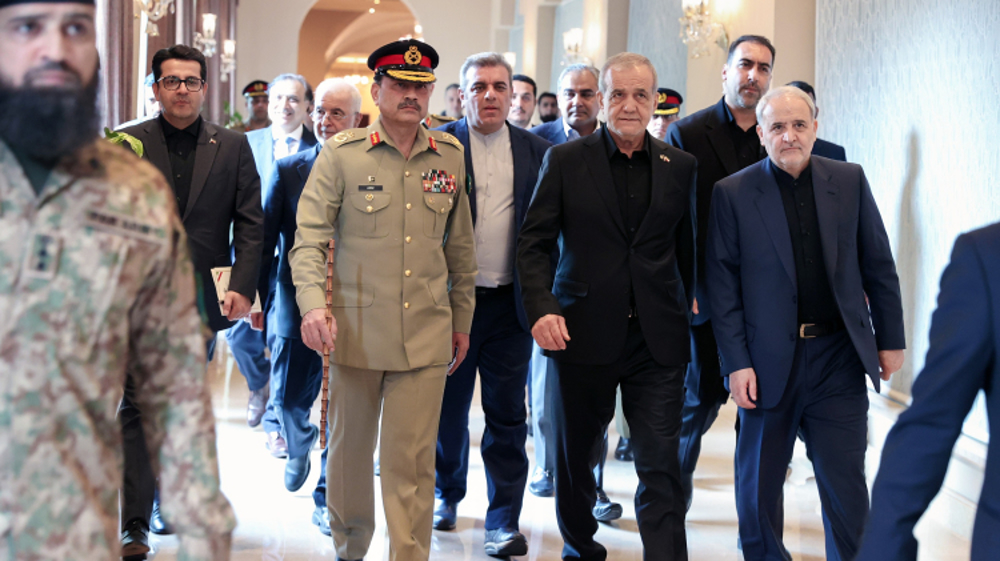
Pezeshkian's comments on Iran's defense posture came during a one-day visit to Pakistan, where he held talks with Sharif, Pakistani President Asif Ali Zardari and Field Marshal Munir.
Opening his remarks with verses from renowned poet Muhammad Iqbal, the Iranian president described Tehran-Islamabad ties as being rooted in mutual respect, goodwill and historical trust.
He said discussions with Pakistani leaders had covered bilateral relations as well as regional and international developments, adding that both sides were determined to capitalize on the current positive atmosphere to open "a new chapter" in relations.
Pezeshkian said Iran believes peace, stability and prosperity in West Asia and the Persian Gulf can only be achieved through sincere dialogue, regional cooperation and interactions based on mutual respect.
He also called for closer cooperation among Muslim countries, saying Iran was extending "the hand of friendship" to regional states in pursuit of a new security architecture. He named Qatar, Saudi Arabia, Egypt and Turkey as countries that could play an effective role in shaping such a framework.
The Iranian president thanked Pakistan's leadership and people for what he described as their support for Iran during the recent war.
"The people of Pakistan stood sincerely and wholeheartedly by our side from the beginning of this war," he said. "We have come here to express our gratitude for that unwavering support."
'Productive discussions'
Pakistani Prime Minister Shehbaz Sharif described his talks with Iranian President Masoud Pezeshkian as "very productive discussions in a very cordial atmosphere," saying the meeting felt "like a family reunion" between two brotherly nations.
He stressed that Pakistan and Iran have consistently supported each other during difficult times and that recent events had once again demonstrated the strength of their partnership.
Sharif called the visit a "historic moment between Pakistan and Iran" and welcomed the end of the war between Iran and the United States under the Islamabad Memorandum of Understanding.
He said it was "a matter of great happiness that this war has come to an end, which could have engulfed the entire region and beyond."
The premier highlighted Pakistan's role as an "honest and sincere mediator" in the peace process and thanked Iran's leadership for trusting Islamabad's efforts. He also praised the support provided by Qatar, Saudi Arabia, Turkey and Egypt in facilitating diplomacy.
Expressing solidarity with Iran, Sharif said, "Your happiness is our happiness. Your sorrow is our sorrow," adding, "Iran’s success is our success. Iran’s loss is our loss." He announced plans to visit Tehran next week to attend the funeral procession of the late Islamic Revolution Leader Martyr Ayatollah Seyyed Ali Khamenei.
Iran rejects US ‘suffocation’ claim, says sanctions addiction exposes Washington’s policy failure
Iran’s vice president urges upgrading cybersecurity amid enemy plots
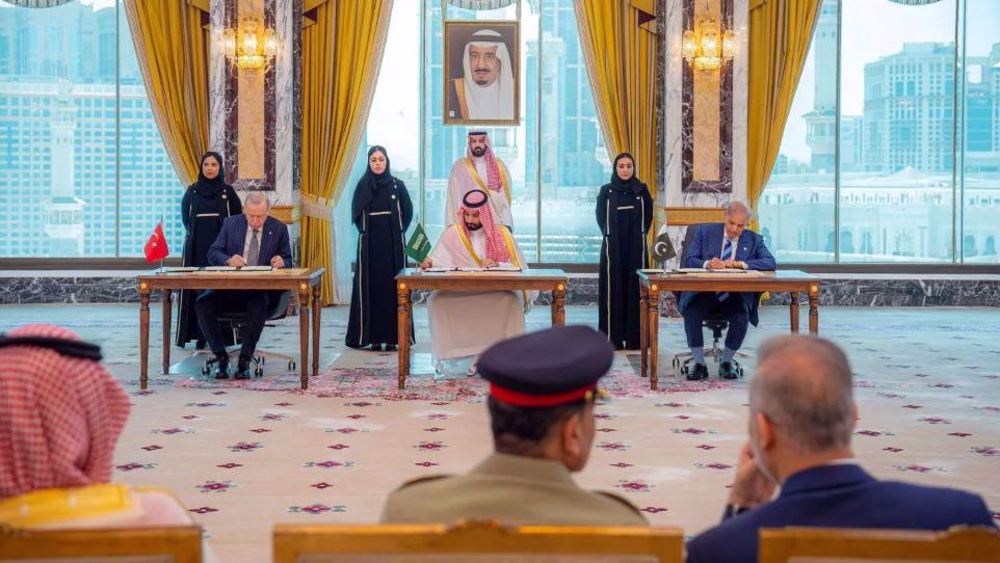
Pakistan reassures Iran defense pact with Turkey, Saudi Arabia aims for regional stability



Trump secretly switched aircraft in Turkey over ‘Iranian threat’: Reports
Iran condemns Israeli aggression against Lebanon, slams US for complicity
VIDEO | Human chains as rescue crews search for survivors in Colombia's Pereira after deadly quake
Israel holding bodies of 1,700 Palestinians for potential future exchanges
Colombia's right-wing win reflects deep polarization as US alignment and Israel ties loom: Analyst
US, Israel solely to blame for Hormuz insecurity; world should hold Washington accountable: Iran FM
Qalibaf congratulates senior commanders on appointments in Iran’s Armed Forces
VIDEO | Press TV's news headlines


 PressTV NEWSLETTER
now
PressTV NEWSLETTER
now
 This makes it easy to access the Press TV website
