Architecture of endurance: Understanding Iran's defense doctrine beyond Western spin
By Iqbal Jassat
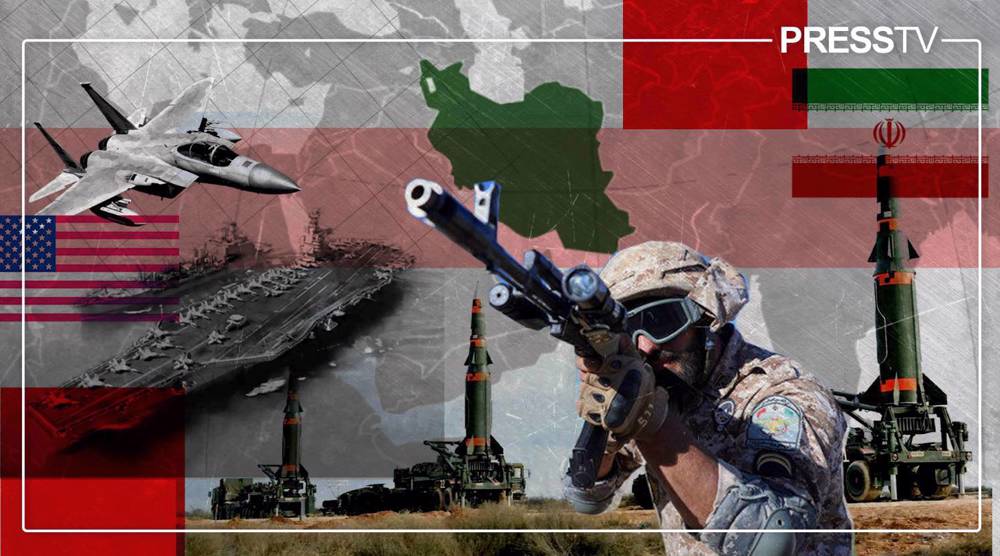
Led by the Israeli regime and Zionist allied "think tanks", Western political leaders, military planners and media institutions have portrayed Iran as an "irrational actor" driven by ideological extremism and regional aggression.
This deceptive narrative has served a strategic purpose by obscuring a more uncomfortable reality: Iran's military doctrine is not built around conquest, expansion or conventional battlefield dominance, but around survival.
Absent from much of the public discourse is the fact that Iran's entire military structure evolved in response to isolation, sanctions, encirclement and repeated threats of "regime change."
Following Iran's historic 1979 Islamic Revolution, which overthrew a Western puppet and was followed by a devastating Western-imposed war by Saddam Hussein's Ba'athist regime on Iran, Tehran concluded that it could not compete directly with the overwhelming technological superiority of the US and its allies.
The result was the development of a defense doctrine focused on deterrence, endurance and resilience rather than conventional superiority.
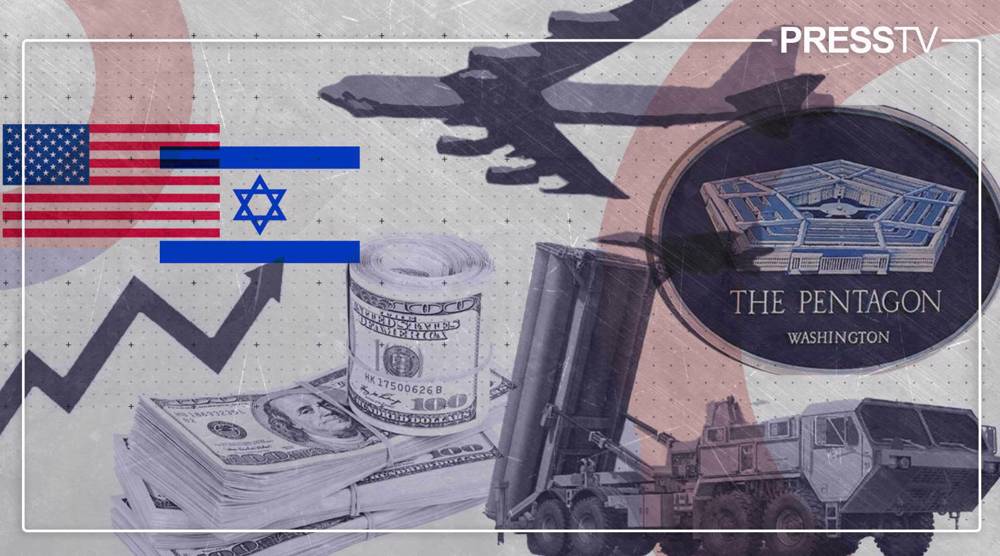
What is routinely presented as aggression is often the visible component of a much broader strategy designed to impose costs on any adversary contemplating aggression. The objective is to make any act of military aggression so costly, prolonged and disruptive that political leaders in Washington or Tel Aviv reconsider the value of war itself.
While Western militaries often seek rapid, decisive victories through technological superiority and overwhelming firepower, Iran seeks to stretch war over time. The longer a war continues, the greater the financial, political and social burden imposed on its adversaries. Iranian strategists calculate that democratic societies have lower tolerance for prolonged military and economic pain than Iran itself does.
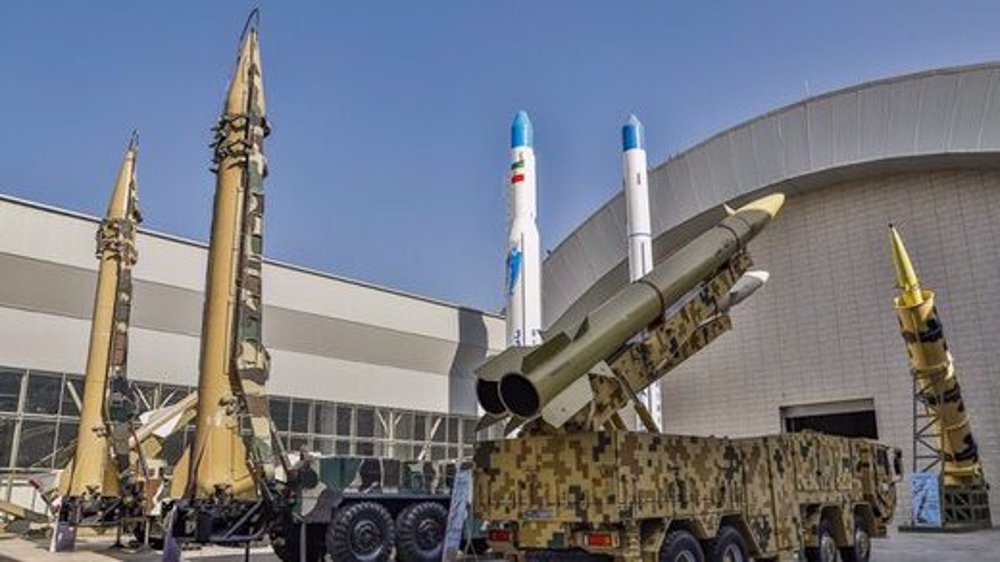
This explains its enormous investment in missiles and drones.
The logic is simple. A relatively inexpensive drone can force an adversary to expend interceptor missiles costing many times more. The objective is not merely military damage but economic exhaustion. Every interception becomes a financial drain.
✍️ Analysis - Leader’s strategic vision leverages Iran’s post-war ascendancy to reshape regional power dynamics
— Press TV 🔻 (@PressTV) June 21, 2026
By Press TV Strategic Analysis Desk https://t.co/ldvVF1jpXg
Every wave of drones becomes a test of sustainability. The battlefield extends beyond military installations into budgets, supply chains and political patience.
This approach exposes a vulnerability rarely discussed in mainstream coverage. Advanced military technology often comes with extraordinary costs. Iran's strategy seeks to weaponise that imbalance.
Another element routinely omitted from public discussion is the extent to which Iran has redefined the battlefield itself.
Through support for Hezbollah, Iraqi Resistance, the Ansarullah and Palestinian liberation movements Hamas and Islamic Jihad, Iran has developed what it describes as an Axis of Resistance. Western governments portray these relationships exclusively through the language of proxy warfare. Yet from Tehran's perspective, they represent strategic depth.
A war against the Islamic Republic of Iran can thus no longer be confined to a single battlefield. It immediately and automatically becomes regional.
The beneficiaries of narratives that reduce these dynamics to simple "terrorism frameworks" are clear. Such framing eliminates historical context and removes discussion of broader regional security calculations. It simplifies a sophisticated deterrence architecture into a morality play that is easier to sell to domestic audiences.
Perhaps the most significant and least understood component of Iran's doctrine is its decentralized command structure.
For decades, Western and Israeli military planning has relied heavily on leadership decapitation strategies. The assumption is straightforward. Removing key commanders and military organizations makes them ineffective.
Iran spent years studying the failures of Saddam Hussein's military during the 2003 US invasion of Iraq and concluded that centralized command structures were fatal vulnerabilities. The result was the development of the mosaic defense doctrine.
Under this model, Iran is divided into multiple semi-autonomous regional commands capable of functioning independently if central leadership is affected. Each command possesses local intelligence capabilities, logistics infrastructure and operational authority. If communications collapse or senior leaders are martyred, regional commanders are expected to continue fighting under preplanned directives.
✍️ Analysis - From battlefield superiority to strategic leverage: Iran’s new post-war doctrine takes shape
— Press TV 🔻 (@PressTV) June 15, 2026
By Press TV Strategic Analysis Deskhttps://t.co/QHmgtsFazC
If one commander is martyred, another immediately assumes responsibility. The objective is simple: ensure that the military never stops functioning.
Iran's military doctrine also treats geography as an active component of warfare.
Its mountainous terrain provides natural defensive barriers. Vast distances complicate any ground invasion. Underground missile complexes carved deep into mountains preserve critical assets from aerial bombardment.
Most importantly, the Strait of Hormuz gives it leverage over one of the world's most important energy chokepoints.
Western reporting frequently focuses on missile inventories and military hardware while giving far less attention to the strategic reality that geography itself remains one of Iran's most powerful deterrents.
The ability to influence global energy markets transforms regional war into an international economic crisis. This expands the political costs of war far beyond the immediate participants.
Then comes the element or information dissemination. Iran knows the importance of correct messaging. The United States, NATO members, Israel, Russia and China all engage in similar information operations. Yet mainstream discussion often presents Western strategic communication as public diplomacy while framing Iranian messaging as propaganda.
The most important lesson from Iran's military doctrine is that it was never designed to produce traditional military victory. Its purpose is deterrence and evidently has proven to be successful, as we observe in how both the US and Israel have been pushed into a corner.
Iran's military planners have built a system designed to survive bombardment, absorb leadership losses, stretch wars over time and impose escalating economic and political costs on aggressors.
This reality is frequently absent from public debate because it complicates prevailing narratives of "irrationality and aggression". It reveals a military doctrine shaped less by ambitions of conquest than by calculations of survival.
The evidence demonstrates that Iran's strategic focus is not battlefield dominance but endurance.
Iqbal Jassat is an executive member of the Media Review Network, Johannesburg, South Africa.
(The views expressed in this article do not necessarily reflect those of Press TV)
IRGC commander martyred in anti-terror operation in southeastern Iran
Top commander calls President Pezeshkian’s UN address ‘resounding voice of the proud Iranian nation’
IRGC dismantles terrorist team in southeastern Iran, killing five



IAEA inspectors cannot return to Iran amid US threats: Russia
IRGC commander martyred in anti-terror operation in southeastern Iran
Yemeni woman killed, girl injured as Saudi warplanes launch 50+ airstrikes in 24 hours
Iran’s Khodaei wins historic pommel horse silver at 2026 Asian Games
OpenAI models 'infiltrated' Australian govt. websites during internal testing: PM
Pezeshkian’s strong UN speech exposed US-Israeli crimes: Judiciary chief
Austria's hijab ban tells Muslim girls their religious visibility is political problem: Activist
Israel’s election body bars both main Arab parties from Knesset race



 PressTV NEWSLETTER
now
PressTV NEWSLETTER
now
 This makes it easy to access the Press TV website
