‘Stronger than before’: Inside Tehran’s bombed Laser and Plasma Institute that resumed work in days
By Mina Mosallanejad
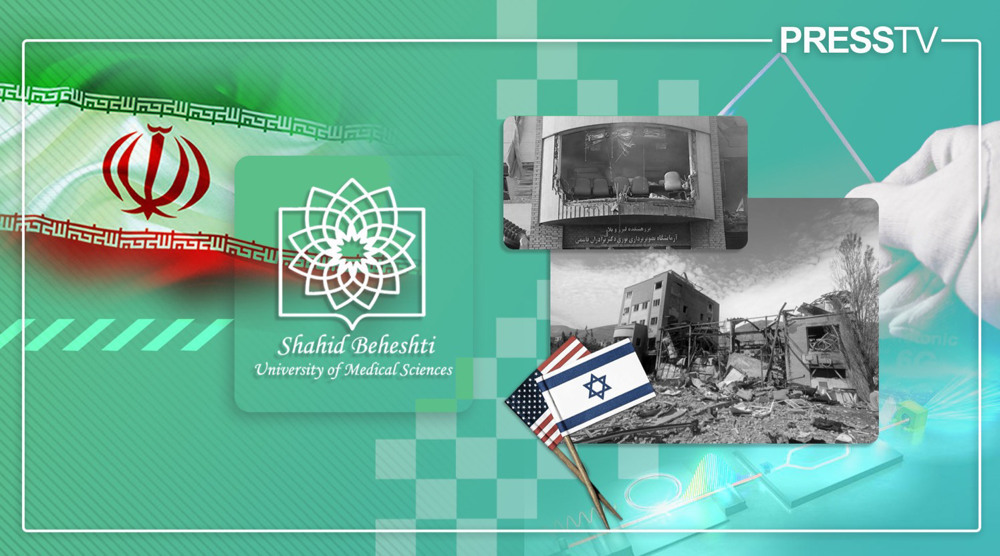
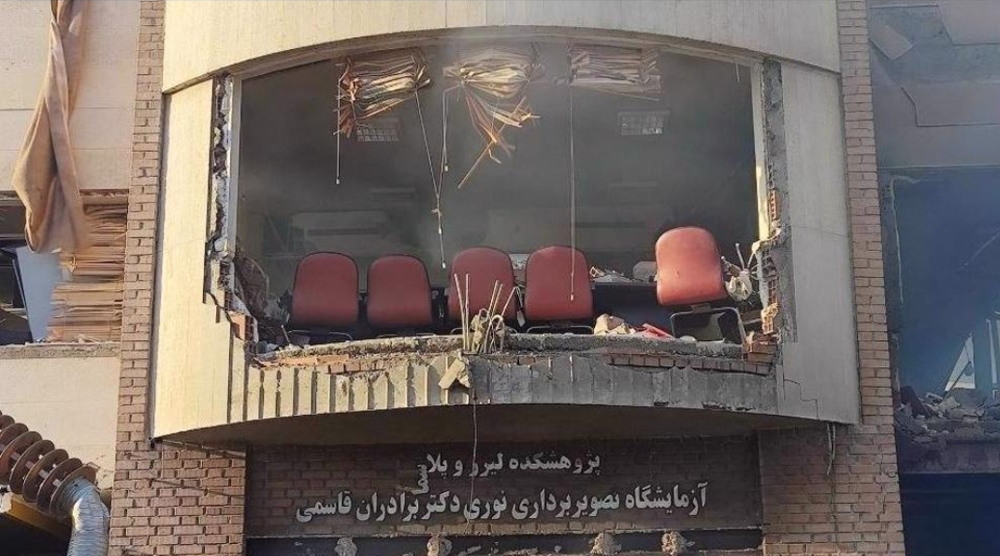
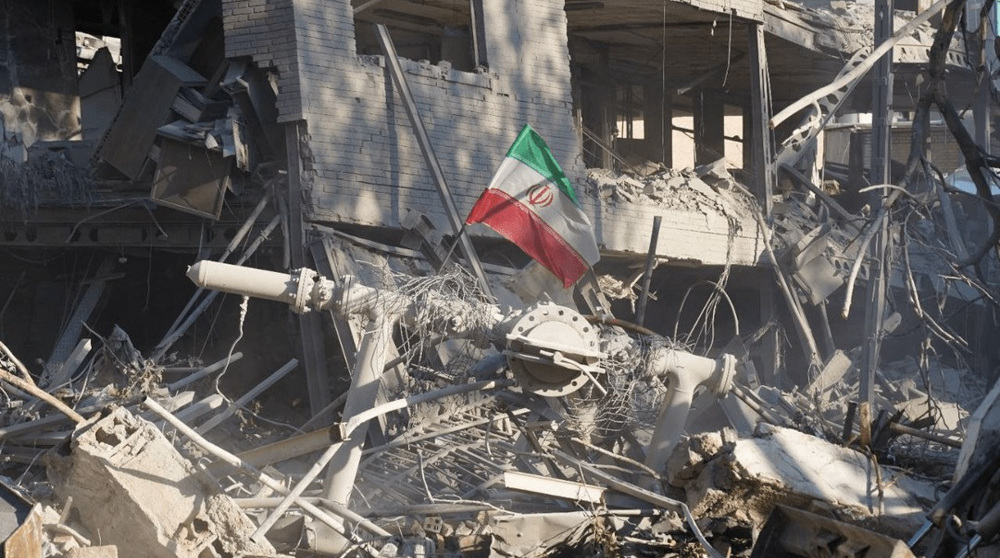
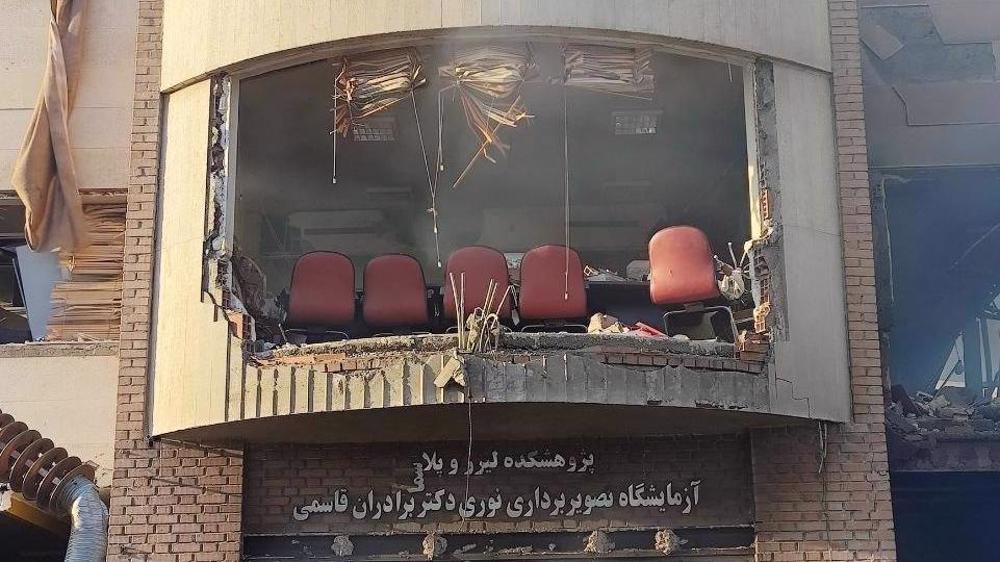
The shattered walls and damaged laboratories of the Laser and Plasma Research Institute at Tehran’s Shahid Beheshti University bear the scars of an unprovoked and illegal military aggression carried out by the US-Israeli war machine against the Islamic Republic of Iran.
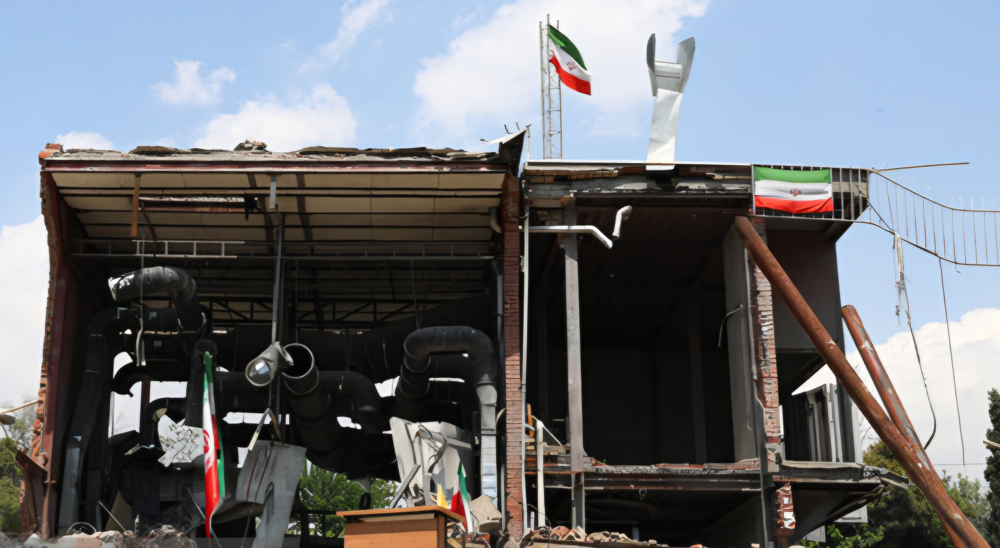
Windows were fully blown out, and some of the institute’s most advanced scientific equipment, optical systems, and critical research infrastructure were completely destroyed or severely damaged, while one of the main buildings directly hit in the April 3 US-Israeli attacks on the university, remains out of operation.
Yet despite the massive scale of the destruction, scientific activity inside the institute resumed with remarkable speed only days after the attack and continues.
Only days after the attack, faculty members, researchers, university staff, and volunteer forces returned to clear debris, restore laboratories, and restart research operations. Several neighboring buildings that had also sustained damage also saw rapid repair work.
“We will return with a deeper vision, with greater power, and with greater speed,” Seyed Hassan Tavassoli, head of the institute and a PhD in physics, told the Press TV Website in an exclusive conversation.
For decades, the Laser and Plasma Research Institute has stood at the forefront of Iran’s work in photonics, optics, plasma engineering, laser applications, and advanced imaging technologies.
From developing plasma medicine for diabetic wounds and rare skin diseases to designing sophisticated optical brain-imaging systems, the institute has long represented one of the country’s most advanced scientific hubs.
Now, after enduring damage in an imposed war and losing part of its critical infrastructure, researchers say the institute is not merely rebuilding, but it is reimagining itself for a new phase of scientific growth and technological advancement.
Images of the Laser and Plasma Research Institute as well as the girls' dormitory of Tehran's Shahid Beheshti University targeted by US airstrikes.
— Press TV 🔻 (@PressTV) April 3, 2026
Follow Press TV on Telegram: https://t.co/LWoNSpkc2J pic.twitter.com/kOEUWwXAi5
A scientific center built over three decades
The institute began its work in 1993 under the Faculty of Sciences at Shahid Beheshti University in northern Tehran.
It received official approval from Iran’s Ministry of Science, Research and Technology in the mid-1990s and later expanded into plasma sciences. In 2004, it officially became the Laser and Plasma Research Institute.
Over the years, the institute evolved into one of Iran’s leading centers for photonics and plasma research. Today, it houses 22 active laboratories and 17 faculty members, while training graduate students in photonics and plasma engineering at both master’s and doctoral levels.
Its mission extends far beyond academic research. The institute focuses on three core pillars, including training highly specialized researchers, producing scientific knowledge, and transferring technology into society and industry.
According to Tavassoli, the institute’s work has always been closely tied to national needs.
“Projects were defined based on the country’s demands,” he told the Press TV Website. “Different organizations would communicate their needs to the university, and the university would pass them on to us. Many student projects at the master’s and PhD levels were designed around solving real national problems.”
The results of those projects, he said, eventually found their way into industries and institutions across the country, in different industries.
That practical orientation gradually transformed the institute from a purely academic center into a technology-development hub, where scientific research increasingly moved toward commercialization, he noted.
“In recent years, the institute had shifted strongly toward technology development,” Tavassoli said. “Many of the products developed here had already been commercialized and were being used to address different societal and industrial needs.”
A national hub for photonics and plasma science
The institute eventually became home to Iran’s national scientific hubs in photonics and plasma science, both recognized among the country’s highest-ranking academic centers.
“The Laser and Plasma Research Institute is the number one center in the country in photonics and plasma,” Tavassoli said. “Both scientific hubs here hold Grade A national status.”
But he emphasized that the institute’s ambitions and standards extended far beyond domestic recognition.
“At the international level, especially within the region, I can confidently say the institute ranks first,” he noted. “Our laboratories are capable of competing with some of the most reputable scientific laboratories in Europe and the United States.”
According to Tavassoli, many of the advanced scientific activities carried out at leading international universities in optics, photonics, and plasma research were also being conducted inside the institute’s laboratories in Tehran.
The institute’s academic achievements helped cement that reputation. Over the years, researchers affiliated with the center earned recognition at the prestigious Khwarizmi International Festival and received multiple national honors from Iran’s Ministry of Science.
Yet Tavassoli believes one of the institute’s greatest accomplishments has been its students.
“One of our main outputs is our students,” he said. “When they continued their education at internationally recognized universities, they were often told they lacked nothing scientifically and possessed all the necessary skills to work in highly advanced laboratories.”
For Tavassoli, that served as a powerful confirmation of the institute’s international academic standards and the quality of education and training it provided.
“We were confident that the scientific standards here were truly world-class.”
Laboratories working at the frontiers of science
Inside the institute, research spans a wide range of fields, many of which directly affect everyday life, from medicine and agriculture to electronics and industrial manufacturing.
One of the institute’s major areas of activity centers on laser spectroscopy laboratories, where researchers use laser-based techniques to rapidly identify the composition of different materials.
These advanced technologies have broad applications in medical diagnostics, industrial quality control, and even counterfeit detection.
Researchers have explored methods for identifying signs of diseases such as diabetes through biological samples, including nails and teeth.
Similar systems can also assess the quality of industrial materials in sectors such as cement and steel manufacturing or distinguish authentic products from counterfeit pharmaceuticals and gemstones.
Another major branch of research focuses on optoelectronic devices and advanced materials.
Scientists at the institute are developing miniature electronic and optical components used in sensors, communication systems, lasers, and other high-tech applications.
They are also working on nanomaterials and engineered structures that could contribute to future generations of optical and electronic technologies.
Plasma engineering forms another central pillar of the institute’s scientific work.
Plasma, an energized state of matter, has drawn growing global attention for its applications in sterilizing medical instruments, improving agricultural processes, assisting food preservation, and supporting wound-healing treatments.
Researchers at the institute have carried out extensive work on cold plasma systems capable of disinfecting surfaces and biological materials without causing thermal damage.
In the biomedical optics and imaging laboratories, scientists have developed advanced imaging techniques designed to help physicians study tissues and skin lesions noninvasively.
Laser-based systems developed at the institute enable detailed imaging of biological tissues, optical stimulation of nerves, and high-resolution skin analysis, technologies that could contribute to earlier disease diagnosis and new rehabilitation methods.
✍️ Exclusive: Pasteur Institute director opens up on the US-Israeli attack, vows health mission will endure
— Press TV 🔻 (@PressTV) June 3, 2026
By Mina Mosallanejadhttps://t.co/3mxeQIDjjx pic.twitter.com/cX6TPstQiu
Bringing advanced science into hospitals
Some of the institute’s most tangible achievements have emerged in the field of medicine.
In 2018, Iranian researchers at the institute unveiled four advanced optical neuroimaging and optogenetics systems developed with the support of Iran’s Cognitive Sciences and Technologies Development Headquarters.
The systems enabled several forms of optical brain imaging, including intrinsic signal imaging, voltage-sensitive dye imaging, laser speckle imaging, and optogenetic stimulation technologies.
The development of optogenetics marked one of the major scientific achievements of researchers at the institute in collaboration with the Neuroscience Research Center of Shahid Beheshti University of Medical Sciences.
The technique allows scientists to stimulate and control neural systems by rendering nerve cells sensitive to light and manipulating neural activity with high precision. It also enables researchers to simultaneously perform optical stimulation and record brain activity in both anesthetized and freely moving animals.
The achievement represented a significant step toward the domestic production of advanced neuroscience research equipment.
Researchers at the institute also developed sophisticated optical microscopy systems, including a four-wavelength confocal laser microscope and structured illumination microscopy technologies capable of high-resolution imaging.
These systems provided Iranian neuroscience researchers with advanced imaging capabilities without relying entirely on imported equipment.
Another major breakthrough emerged in plasma medicine.
Beginning around 2010, researchers at the institute launched extensive studies on the medical applications of cold plasma technology.
Their work explored plasma-based therapies for cancer treatment, wound healing, dentistry, sterilization, and cosmetic medicine.
According to researchers involved in the projects, cold plasma allows biological tissues to be treated without causing thermal burns or significant tissue damage.
The technology can disinfect tissue, stimulate collagen production, accelerate healing, and suppress microbial growth.
One of the institute’s most notable applications involved the treatment of patients suffering from epidermolysis bullosa (EB), commonly known as “butterfly disease,” a rare genetic disorder that causes severe skin blistering and chronic wounds.
In 2018, researchers launched a plasma medicine pilot project at Shohada-ye Tajrish Hospital in Tajrish, northern Tehran, to treat EB patients using plasma-based therapies.
In some cases, wounds that had persisted for years reportedly showed significant improvement following treatment.
The institute also used plasma systems to treat diabetic wounds at Razi Hospital, where researchers said at least 15 diabetic patients suffering from chronic wounds underwent plasma-based treatment during clinical studies.
Scientists additionally designed plasma devices for skin rejuvenation and cosmetic medicine, eventually moving toward portable plasma systems intended for wider public use.
Taken together, the projects reflected the institute’s broader strategy of connecting advanced scientific research to practical public and medical applications.
Iran University of Science and Technology in the aftermath of US-Israeli strikes
— Press TV 🔻 (@PressTV) March 29, 2026
Follow: https://t.co/mLGcUTSA3Q pic.twitter.com/gN1dcvGepM
‘The activities here were entirely scientific’
Despite years of research focused on civilian science, medical technologies, industrial applications, and advanced academic work, the institute was targeted in the US-Israeli attacks – a contradiction that Tavassoli says reveals the real objective behind the aggression.
For him, the destruction can only be understood as an attack on scientific infrastructure itself.
“The reason the institute was targeted was absolutely to damage the country’s scientific and technological infrastructure,” he told the Press TV Website.
“Beyond causing damage and destruction to scientific infrastructure, there is no other explanation for what happened.”
He firmly rejected claims in Western media that only military facilities had been targeted by the enemy in the Islamic Republic of Iran during the 40-day war of aggression.
“That was simply not true,” he said. “The work being done here was ordinary scientific work, the same type of research carried out in laboratories throughout the world.”
The attacks inflicted severe damage on parts of the institute, including one of its main buildings and multiple research facilities.
Yet assessing the full scale of the losses remains difficult, Tavassoli noted.
“Scientific equipment everywhere in the world is extremely expensive,” he stated. “A number of systems were damaged and will need to be replaced.”
Still, he stressed that Iran’s domestic scientific manufacturing capabilities have advanced significantly over recent decades.
“Fortunately, because the country has made major progress in building scientific equipment domestically, most of what we need can now be produced inside Iran,” he said.
Although some highly specialized components will still need to be imported, Tavassoli estimated that more than 80 percent of the institute’s previous capabilities can ultimately be restored through domestic resources and expertise.
Scientific work resumed within days
Despite the vast scale of destruction, the institute moved quickly to resume operations.
According to Tavassoli, faculty members, university staff, and volunteer workers rapidly organized cleanup and restoration efforts in the immediate aftermath of the attack.
“Even in the first days after the strike, colleagues came in, university staff came in, and many people worked in a truly self-sacrificing spirit,” he said.
While the main building directly struck in the attack has not yet fully resumed operations, neighboring buildings that also sustained damage returned to activity after a relatively short period.
“Scientific operations there became possible again very quickly,” Tavassoli noted. “There was no need to wait.”
Rebuilding beyond what existed before
Rather than merely restoring the institute to its previous condition, managers and researchers at the institute are now planning a far deeper transformation.
“Our priority now is to rebuild the institute beyond what it was before,” Tavassoli said.
Instead of simply reinstalling older systems, the institute intends to replace damaged equipment with more advanced technologies, many of them domestically produced, according to Tavassoli.
“We will naturally use equipment that is far better than what existed previously,” he explained.
New laboratory designs are already being developed to support more advanced scientific work and significantly expand research capacity.
Tavassoli expressed confidence that within less than a year, the institute could generate even greater scientific output than it did before the attacks.
“Whenever you redesign a structure, some destruction is inevitably part of the process,” he said.
In that sense, he noted, the destruction imposed by the US-Israeli war on Iran may unintentionally create an opportunity for renewal and advancement.
“Perhaps this unprovoked destruction imposed on us by the enemy has also prepared us for a new redesign, for continuing our path with deeper vision, greater power, and greater speed.”
For decades, this institute helped train scientists, develop advanced technologies, and push Iran’s research capabilities into increasingly sophisticated fields.
Today, amid damaged walls and ongoing reconstruction efforts, researchers at the iconic institute insist that the mission continues with the same passion.
If anything, they say, it has become even more urgent.
“We hope,” Tavassoli said, “that in the future we will emerge much stronger than before.”
Iran’s 1,100-year-old Alamut Castle, its military fortifications inscribed on World Heritage List
Veteran Iranian actor Akbar Abdi passes away at 66

Iranian film star wins Best Actress Award at SCO Film Festival, dedicates it to Minab martyrs



Canadian travel to US falls 25% amid Trump tariffs, '51st state' remarks
Yemen vows relentless strikes on Saudi Arabia until siege lifted
No Hormuz passage for those taking payouts from Iran’s frozen assets: Top military command
Iranian women have given new meaning to womanhood through their active role amid war: Alamolhoda
VIDEO | As unified as Axis of Resistance
Karim Khan’s ouster tied to Netanyahu arrest warrant lays bare Western manipulation of ICC
White phosphorus leak at US base sparks evacuation in South Korea
Inside Yemen’s target bank: Why Saudi Arabia’s critical infrastructure is sitting on a tinderbox


 PressTV NEWSLETTER
now
PressTV NEWSLETTER
now
 This makes it easy to access the Press TV website
