Israeli escalation in Lebanon and US adventurism in Persian Gulf test Iran's ceasefire red lines
By Press TV Strategic Analysis Desk
A ceasefire is meaningful only when all parties respect it in letter and spirit. Otherwise, it degrades into little more than a tactical interlude, a breathing space for the aggressor to regroup while continuing to pursue its sinister objectives through other hostile means.
While diplomatic efforts continue to stitch together frameworks aimed at ending the US-Israeli war of aggression against the Islamic Republic of Iran, events unfolding in Lebanon and the Persian Gulf raise a fundamental question: can any ceasefire truly survive if the aggressor’s provocations persist with impunity?
After 40 days of the "Third Imposed War," a fragile ceasefire took hold. Yet from the very first moments of this pause in the enemy's aggression, a dangerous deception was laid bare.
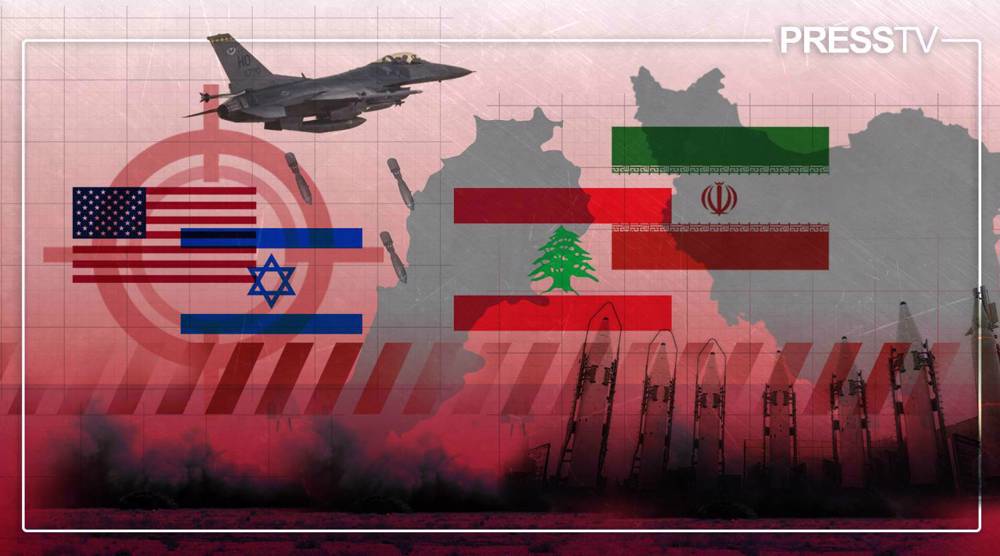
In practice, it refused to accept peace, merely recalibrating its instruments of coercion. The Israeli regime's escalating attacks on Lebanon, coupled with ongoing US military provocations in the Persian Gulf, are not isolated incidents. They constitute a coordinated, desperate campaign to break the "unity of fronts" doctrine, the very strategic logic that inflicted a crushing, undeniable defeat on the American-Zionist axis just weeks earlier.
For Iran, the equation remains simple and stark: the ceasefire is indivisible. An attack on Lebanon is an attack on the terms of the truce itself. And if Washington and Tel Aviv believe they can unilaterally redefine the ceasefire's geography – carving out zones where aggression remains permissible – they have gravely miscalculated.
Iran not only reserves the right to respond militarily, but it bears a strategic duty to do so, employing asymmetric warfare to restore deterrence and prevent a broader catastrophe. This position has been reiterated throughout recent negotiations and has remained one of Tehran's core, non-negotiable conditions for any lasting agreement.
It was made emphatically clear by Parliament Speaker Mohammad Baqer Qalibaf and Foreign Minister Abbas Araghchi in their separate statements on Monday.
‘Every choice has a price’: Speaker Qalibaf warns US, Israel over naval blocakde, Lebanon carnagehttps://t.co/EGWHlZ4weS
— Press TV 🔻 (@PressTV) June 1, 2026
The anatomy of deceit – Israel’s ground advance into Southern Lebanon
To understand the current escalation, one must revisit the ceasefire's foundational premise. From the outset, Iran was unambiguous that any permanent end to the imposed war would be conditional upon its cessation across all fronts of the Resistance Axis.
This was not a diplomatic nicety but a strategic imperative, resulting from hard-won lessons of the recent war that started with the assassination of the Leader of the Islamic Revolution, Ayatollah Seyyed Ali Khamenei. The "unity of fronts" proved to be the enemy's undoing.
The simultaneous blows inflicted by Hezbollah's precision missiles, Yemen's threat of blockade, and Iran's drone swarms did not merely slow the Zionist war machine, they accelerated its defeat. The enemy learned, in real time, that you cannot isolate Tehran from Beirut, nor Beirut from Sana'a. They are a single, inseparable entity.
And that is precisely why, the day after the Iran-US ceasefire was announced, Israeli warplanes resumed their indiscriminate bombardment of Lebanon, killing over 300 people in a single day. Within hours, Israeli ground forces advanced deep into southern Lebanon, occupying strategic strips of territory adjacent to the occupied Palestinian lands. This was not a response to any Hezbollah provocation. It was a protest – violent an desperate – against the new regional order taking shape under the Islamic Republic's leadership.
From Netanyahu's perspective, the consolidation of a powerful, victorious Iran, with Hezbollah standing as a newly hardened military and political force, is an existential nightmare. It would reduce the regime's position to that of its Arab allies: wealthy but vulnerable as their American protector slips into oblivion.
Consider the enemy's strategic dilemma. The 15-month ceasefire in Lebanon following the initial war against the country did not destroy Hezbollah. Despite the martyrdom of the movement’s leader, Sayyed Hassan Nasrallah and a generation of senior resistance commanders, despite the political earthquake of Syria's fall, Hezbollah has re-emerged.
It is far from broken. More critically, it has innovated and returned as a more formidable force than before. The Lebanese Resistance has unveiled a new arsenal of small, controlled drones – weapons that have already inflicted significant casualties on Zionist occupying forces, including senior commanders, in recent months.
✍️ Analysis - Finger on trigger: Iran prefers diplomacy to end imposed war, yet military stands locked and loaded
— Press TV 🔻 (@PressTV) May 26, 2026
By Press TV Strategic Analysis Deskhttps://t.co/TxVgUz8tNN pic.twitter.com/NTUeBLIGPL
These are not the massive, explosive drones of 2023 but small, surgical, and devastating platforms. They represent a natural, legitimate form of resistance against occupation, a principle as old as international law itself. In a country where the state army is either incapable or unwilling to resist, Hezbollah's legitimacy is not derived from foreign decree but from the simple, undeniable fact of Israeli occupation tanks on Lebanese soil.
The regime's response has been disproportionate and panicked. It has escalated attacks on Tyre and Nabatieh, crossed the Litani River, occupied the strategic heights of Shaqif and its historic fortress, and now threatens airstrikes against the suburbs of Beirut.
This is the behavior of a party that is frustrated and helpless. Zionist regime officials have publicly expressed their inability to suppress Hezbollah's new drone capabilities. Their ground advance is an asymmetric response to Hezbollah's asymmetric success, a clear confession of weakness disguised as aggression.
They are trying to change the facts on the ground before the ink dries on a permanent agreement. They are betting that Iran will tolerate a limited violation to preserve the larger truce with Washington. That bet is a fatal error.
The American complicity – Hypocrisy in the Persian Gulf
If Israel is the sword, the United States is the shield – and the enabler in every sense. Washington's behavior is a masterclass in strategic hypocrisy. On one hand, US diplomats publicly claim to accept Iran's primary condition for ending the war: a definitive cessation of hostilities against the entire Resistance front, with particular emphasis on Lebanon.
On the other hand, the Pentagon has given the Israeli regime a free hand to systematically dismantle that very condition. The American war machine views these Israeli aggressions not as a flagrant violation of the ceasefire, but as a "final opportunity" to impose its maximalist demands on Tehran before a war-ending agreement is irrevocably locked in.
This duplicity is mirrored in the Persian Gulf. As the moment of American "surrender" to Iran's terms draws closer, terms that implicitly recognize Tehran's sovereign authority over the Strait of Hormuz, US military provocations have paradoxically increased.
The US naval forces have in recent days carried out many cowardly attacks on Iran's coastal areas, triggering powerful and spontaneous retaliation from Iranian armed forces.
That’s because the United States built its entire “superpower” status on uncontested maritime dominance. Since World War II, no country has been able to challenge the American Navy's freedom of navigation. For Washington, formally accepting Iran's authority over the Strait of Hormuz is not a minor concession but the symbolic end of American naval supremacy in the region's most vital waterway.
It would imply, over time, the eventual closure of US naval bases and the withdrawal of the Fifth Fleet. No American president can sign that document. So instead, the US military engages in calibrated harassment: moving warships just below the threshold of open confrontation, testing the feasibility of transiting under American protection, and attempting to normalize the false idea that the Strait remains a shared, contested waterway.
✍️ Analysis - Iran’s growing leverage exposes emptiness of Trump’s psychological warfare in high-stakes standoff
— Press TV 🔻 (@PressTV) May 30, 2026
By Press TV Strategic Analysis Deskhttps://t.co/TRT3NhW9tV pic.twitter.com/fANSuPdcG5
But from Iran's perspective, there is no "shared" authority. No transit through the Strait of Hormuz is legal without prior coordination with, and explicit recognition of, Iranian sovereignty. The Islamic Republic's armed forces have been crystal clear: any such encroachment will face a proportionate and immediate military response.
And more critically, the Iranian armed forces have signaled that if this pattern of American harassment persists, they will respond differently and appropriately. The meaning of that warning is unmistakable. Iran is preparing to deploy asymmetric tools that have not yet been unveiled to any adversary. The era of tit-for-tat naval skirmishes may be ending.
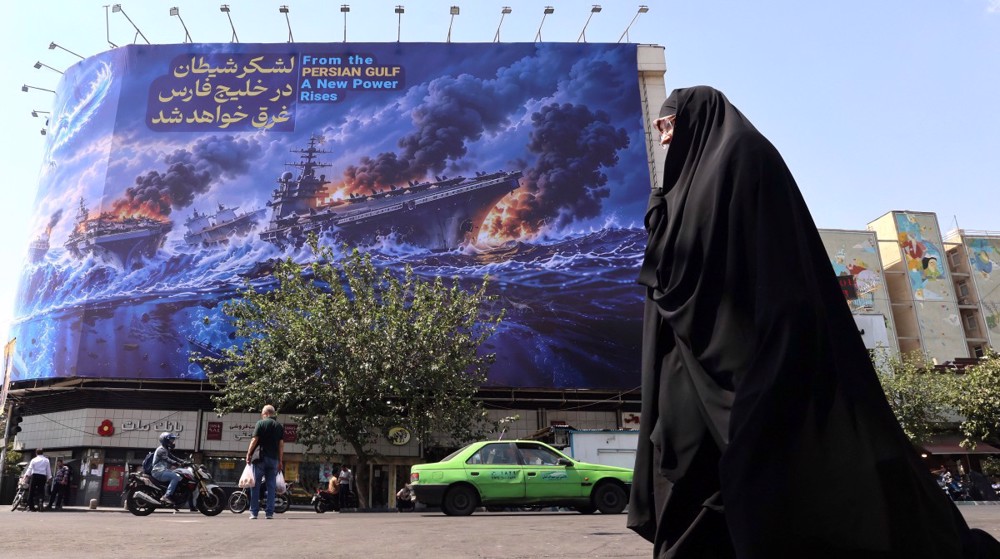
The next phase could involve novel tactics – swarming drone boats, seabed warfare, or cyber-physical attacks on naval navigation systems – designed not necessarily to sink a carrier, but to render the American military presence strategically untenable through relentless, unpredictable cost imposition.
The strategic imperative for an Iranian asymmetric response
This brings us to the core of the argument: why Iran must respond militarily, and why that response must be asymmetric. This is not a matter of revenge, but a cold and strategic calculation about the very durability of the ceasefire itself.
The current ceasefire is built on a single, fragile premise: that the United States will enforce a permanent end to Zionist aggression across the region. If Iran ignores Israel's blatant violation of that premise – the ongoing occupation of southern Lebanon, the systematic bombing of Beirut's suburbs, the military crossing of the Litani River – then the first and most important clause of the entire understanding collapses.
Why would the Zionist regime respect any other clause? Why would it halt its nuclear sabotage or its repeated attacks on Iranian shipping? If the violation in Lebanon is normalized, the path to another, wider war becomes not merely possible but inevitable. Ignoring Lebanon today means preparing to defend Tehran or Isfahan tomorrow.
Therefore, a firm Iranian response is not an escalation but the very defense of the fragile ceasefire. It is the only language the enemy appears to understand. By firmly responding to the repeated and grave violations in Lebanon – through tangible, painful, and precisely calibrated military action – Iran reaffirms the indivisibility of the "unity of fronts."
It tells Washington and Tel Aviv, in no uncertain terms, that there is no separate peace with Iran that excludes Hezbollah. The Iranian response could take many forms: a significant transfer of advanced air defense systems to Hezbollah, a public demonstration of new missile capabilities from Iranian territory, or even a coordinated, low-level engagement in the occupied Golan Heights to open a third pressure point.
The key is that the response must be unmistakably linked to the Lebanese violation and must impose immediate, visible costs on the aggressor.
Moreover, defending Hezbollah is, in essence, Iran defending its own territorial integrity. Hezbollah is not merely an ally, but it is the forward line of Iran's defense against the Zionist settler-colonial project. During the Third Imposed War, Hezbollah gave over 3,300 martyrs in direct support of Iran and the Iranian people.
Araghchi: Israeli attacks on Lebanon violate Iran-US ceasefirehttps://t.co/3A5Y0xsI7k
— Press TV 🔻 (@PressTV) June 1, 2026
To abandon them now, after such immense bloodshed, would be a moral and strategic betrayal of the highest order. It would signal to every resistance ally across the region that Iran's commitments are conditional on convenience rather than principle. The message to Tehran's adversaries would be dangerously clear: pressure works.
Asymmetric warfare is the ideal tool for this precise moment. Iran does not need to launch a conventional offensive that risks a full-scale US aggression. It needs to demonstrate, decisively, that the rules of engagement have fundamentally changed.
Asymmetric options – precisely targeted drone strikes on Israeli military headquarters in the occupied territories, naval mine-laying exercises near US warships (without detonation, as a clear warning), or cyber-attacks that shut down Israeli water infrastructure for days – send an unmistakable message without triggering Armageddon.
These are the tools of a patient, innovative power that has studied the enemy's weaknesses for four decades and is now ready to apply those lessons.
The path forward – Breaking the pattern
The United States and Israel are operating on an outdated, dangerous assumption that Iran will tolerate limited aggression to preserve a larger diplomatic victory. They believe that Tehran's desire for sanctions relief and a formal end to the imposed war will force it to swallow the occupation of southern Lebanon and the systematic harassment of its waters.
This is a catastrophic misreading of Iranian strategic culture. Iran has never accepted the principle of "saving the agreement" by sacrificing its core deterrents. The nuclear deal, the various truces in Syria, the ceasefire after the 40-day war – each time, Tehran has demonstrated that credibility is more valuable than the deal itself.
To break this dangerous pattern, Iran's armed forces must now operationalize the warning they have already issued: "If these aggressions continue, we will respond differently."
That "different" response could take many forms: the unveiling of a new generation of hypersonic anti-ship missiles, a public demonstration of a drone carrier vessel, or the establishment of a permanent Iranian military advisory presence in the occupied Golan Heights, thereby creating a new front of friction.
The goal is not to start a wider war, but to raise the cost of the current low-level war so prohibitively high that the enemy demands a return to the original ceasefire terms.
Simultaneously, Iran must weaponize the diplomatic space with equal vigor. A formal complaint to the UN Security Council, backed by irrefutable evidence of Israeli ground movements post-ceasefire, is necessary but entirely insufficient.
Tehran should also demand an emergency session of the Non-Aligned Movement and publish a detailed, public "White Paper on US Ceasefire Violations," framing every Iranian response as a lawful act of self-defense under Article 51 of the UN Charter.
Iran must win the narrative war while it wins the military one. There is no other way.
Top security, military brass hail 200 nights of rallies as proof of Iran’s strength
IRGC chief slams assassination of Sunni cleric in southeastern Iran, vows retaliation
Iranian armed forces inflicted ‘serious damage’ on US warships: Senior commander



Yemen's control of Bab al-Mandab 'deepens crisis' in Israel
Iran calls for ‘zero-tolerance’ policy on attacks against nuclear facilities at IAEA
Skyrocketing US inflation
US clears way for F-35 sale to Saudi Arabia amid aggression against Yemen
‘Nightmare for enemies’: Iran launches mass ‘Sacrifice for Iran’ drill
Iran: Unilateral US weaponization of space accelerates arms race
Russia, China veto rejects ‘political abuse’ of UNSC, marks end of ‘unipolar order’: Qalibaf
Iran finds new platform in SCO to develop its rare-earth potential



 PressTV NEWSLETTER
now
PressTV NEWSLETTER
now
 This makes it easy to access the Press TV website
