

Leading American political theorist John Mearsheimer says the United States and Israel have failed in their war against Iran, emphasizing that Washington "does not know how to extricate itself" from the quagmire.
"At the beginning of the war, [US President Donald] Trump and [Israel’s prime minister Benjamin] Netanyahu thought a surprise and heavy military operation that would plunge Tehran into 'shock and awe,' along with what is called decapitation of the power pyramid, would quickly lead to victory. But they failed, and the war became protracted," Mearsheimer said at an event titled Forum Focused on Iran.
Mearsheimer noted that all Persian Gulf Arab countries are deeply worried amid emerging reports showing US bases in the Persian Gulf have been damaged far more than initially stated.
He added that Saudi Arabia, the United Arab Emirates, Kuwait, and Qatar are all pleading with the US not to resume the war because they know the Islamic Republic has the capacity to retaliate and heavily hit targets in their countries if the war escalates.
Mearsheimer stressed that Washington has no clear plan to resolve the war, telling the audience, "This is going to have enormously negative consequences for all of you. You have to understand this. We are in a very difficult predicament in Iran, and it was predictable."
‘Points of disagreements’
Commenting on the ongoing indirect talks between Washington and Tehran, Mearsheimer said there is a fundamental disagreement over sequencing.
"The central question is this: should we deal with the nuclear issue from the very beginning, or first create a general framework, end the war, open the Strait of Hormuz, and then address the nuclear issue? This is a critical issue," he said.
The Americans, Mearsheimer said, deeply prefer to resolve the nuclear issue first because they believe that achieving a favorable outcome on that front would allow them to take a harder line on other matters.
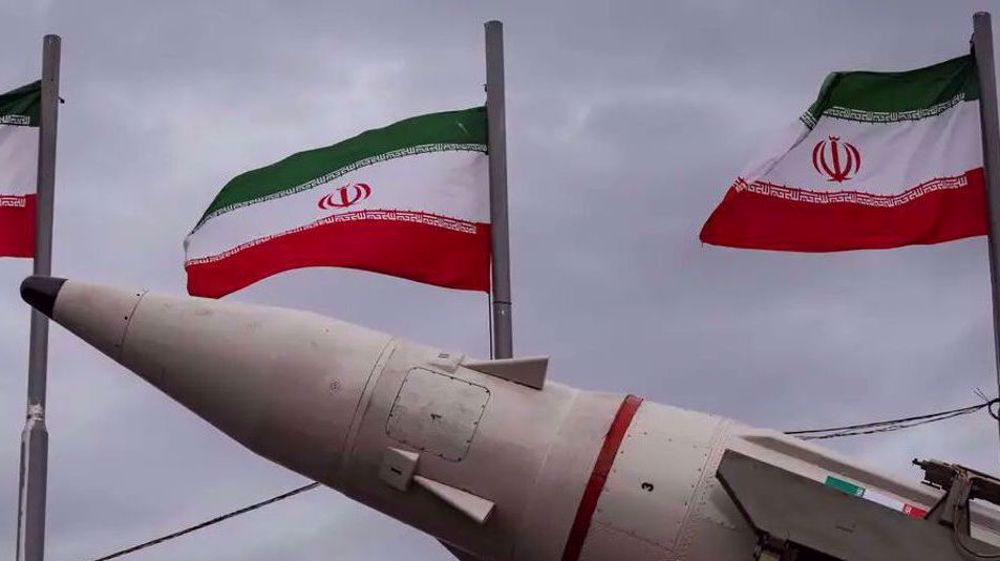
Meanwhile, Iran has asserted it is after a permanent end to the imposed war before any discussion on the nuclear issue.
Mearsheimer stated that Iran has “succeeded” in advancing its position, adding that the war has stopped, exchanges of fire have ended, the Strait of Hormuz has been reopened, and the blockade has been lifted while Iran is to receive its frozen assets and sanctions relief to sell oil, with the nuclear issue and the future of the Strait deferred to a second round of negotiations.
He also pointed to Washington’s demand to destroy Iran’s enrichment infrastructure as “another serious point of disagreement.”
“Now there is talk of completely destroying that infrastructure, and Iran will not accept that. So this is another serious point of disagreement," Mearsheimer stated.
According to his remarks, Lebanon marks the third major issue. Mearsheimer said Iran wants a stop to the war in Lebanon, while “the Israelis will not be happy about this."
Trump could face impeachment
Mearsheimer outlined three options for the US, including the resumption of war, which he dismissed as impractical.
The second option, he mentioned, is an agreement similar to what is being discussed. He said this might work, but stressed that its problem is that it would mean “accepting defeat” against Iran.
He also referred to maintaining the status quo – continuing the current path and relying on blockade instead of bombing – as the third option which will increasingly damage the global economy each day.
Mearsheimer warned of catastrophic consequences if the conflict is not resolved by the end of July and the Strait of Hormuz remains closed into August.
"That is why Trump is under pressure to resolve this crisis as quickly as possible," he said, as the US president knows the global economy is heading toward a precipice.
Amid rising inflation, the Federal Reserve will also be forced to raise interest rates, slowing economic growth and leading to stagflation.
"Trump wants to stop this crisis before it gets out of control, especially with the midterm elections in November," Mearsheimer added. If the economy collapses before then and Democrats take control of Congress, Trump could face impeachment and this time be convicted.
Mearsheimer also dismissed the effectiveness of the claim that Trump could increase pressure on Iran by combining intensified bombing with a naval blockade, questioning, "What will Iran do in response? Will it raise its hands and surrender? No."
‘Colossal mistake’
Pointing out that diplomatic historians chose the 2003 Iraq war as the biggest US foreign policy mistake when they were asked by the Council on Foreign Relations a couple of years ago, Mearsheimer said, "But I believe the attack on Iran on February 28 will be recorded by a wide margin as the biggest US foreign policy mistake, far surpassing the Iraq war."
He noted that Robert Kagan, a staunch neoconservative and supporter of the US invasion of Iraq, has also described the decision to attack Iran as a catastrophic mistake.
"I completely agree with him, and in my opinion, this event will be recorded in history books as a colossal mistake," Mearsheimer noted.
 This makes it easy to access the Press TV website