'We will not give up the Strait of Hormuz at any cost': Iran’s VP Aref
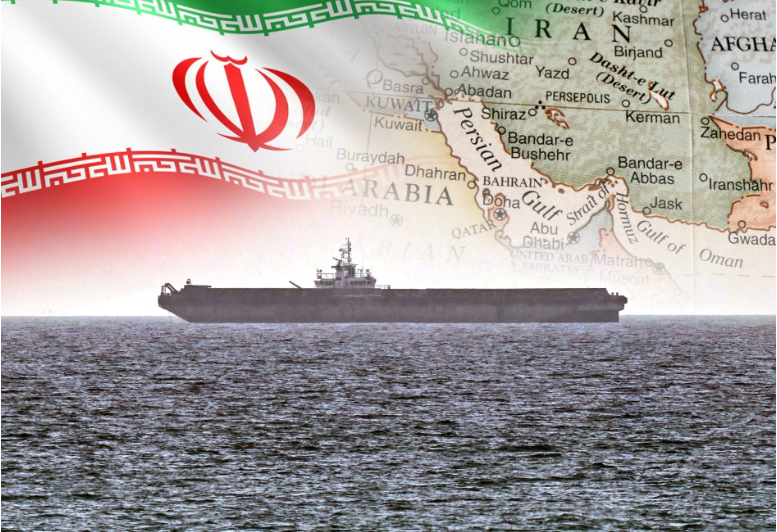
Iran’s Vice President Mohammad Reza Aref says the Strait of Hormuz belongs to Iran, stressing that “we will not give it up at any cost.”
Aref reaffirmed on Thursday that Iran will “never give up” the Strait of Hormuz, describing the strategic waterway as Iran’s “property,” as Tehran moved to facilitate the passage of Chinese vessels under Iranian management protocols for the narrow strait.
“We will not give up the Strait of Hormuz at any cost,” he said, emphaszing that “the Strait of Hormuz belongs to us in the first place.”
The strategic waterway “has always been our property, although for some time we were not making good use of what belonged to us,” the vice president added.
Iran shut down the Strait to its enemies and their allies following the unprovoked US-Israeli aggression.
Iranian authorities introduced much stricter controls last month after US President Donald Trump announced a blockade targeting Iranian vessels and ports.
Tehran says the measures violate the terms of a Pakistan-brokered ceasefire that took effect on April 8 and was later extended unilaterally by Washington.
The Islamic Republic insists it will not reopen the Strait of Hormuz, through which one-fifth of the world’s oil and gas supplies pass, unless the illegal blockade is lifted and the war reaches a permanent end.
On Thursday, Iranian media reports said arrangements were made to facilitate the passage of Chinese vessels through the Strait of Hormuz, reflecting the deep ties and strategic partnership between Tehran and Beijing following consultations between China's foreign minister and the Chinese ambassador to Iran.
Tasnim news agency reported that it was ultimately agreed that several Chinese ships requested by Beijing would be allowed to pass through the waterway after an understanding was reached regarding Iran's Strait management protocols, noting that transit began on Wednesday night.
Experts say the move, grounded in Iran's domestic protocols, prevents any political exploitation of the strait's capacity for external pressure while strengthening Tehran's position as a responsible manager of the vital waterway.
The war of aggression on Iran has triggered widespread criticism inside the United States, as Americans continue to suffer from rising energy prices driven by Iran's firm control over shipping lanes in the Persian Gulf.
On Thursday, Iranian media reports said arrangements were made to facilitate the passage of Chinese vessels through the Strait of Hormuz, reflecting deep ties and the strategic partnership between Tehran and Beijing following consultations between China's foreign minister and ambassador to Iran.
Tasnim news agency reported that several Chinese ships requested by Beijing would be allowed to pass after an understanding was reached regarding Iran's Strait management protocols, with transit beginning on Wednesday night.
Experts say the move, grounded in Iran's domestic protocols, prevents political exploitation of the strait while strengthening Tehran's position as a responsible manager of the waterway.
The war of aggression on Iran has triggered widespread criticism inside the United States, as Americans continue to suffer from rising energy prices driven by Iran's firm control over Persian Gulf shipping lanes.
The Strait of Hormuz is 21 nautical miles wide at its narrowest point. Under the UN Convention on the Law of the Sea, which Iran has signed but not ratified, coastal nations may claim territorial waters extending 12 nautical miles from their shores.
This creates a mathematical reality that neither side disputes. The strait is narrow enough that the territorial waters of Iran and Oman overlap or abut, leaving no high-seas corridor where international transit passage is unambiguously guaranteed.
The US-Israeli war of terrorism has prompted Iran to finally put aside its longstanding diplomatic hesitation and historical reluctance over its Hormuz rights, fully enforcing its sovereign authority under the 12-mile territorial waters provision of international law to administer, regulate, and control traffic through the strait.
Iran Army chief announces $30,000 bounty for killing or capturing US troops
Iran’s Armed Forces vow no retreat until ‘complete defeat’ of US, Israel
Arab Persian Gulf states frustrated with Trump’s handling of war on Iran: Report



VIDEO | US-Israeli war takes heavy toll on Iran's environment, Persian Gulf
VIDEO | Paris protesters demand Western action, not words, on Gaza and West Bank
VIDEO | US seeks to save face as Iran stands firm over sovereignty: Pundits
Hamas calls on mediators to compel Israel to end ceasefire violations, accept peace roadmap
‘Enemy should expect strategic surprises’: IRGC commander warns of shift to offensive posture
Iran spokesman slams Canada's participation in war on Iran despite Trump's hostility
VIDEO | Gaza’s diagnostic crisis: Damaged medical equipment dismantled to keep hospitals running
Iran will defeat enemy in 'economic war' as it did on battlefield: VP Aref


 PressTV NEWSLETTER
now
PressTV NEWSLETTER
now
 This makes it easy to access the Press TV website
