High costs, slow scaling, structural limits: Why US shale can't offset Strait of Hormuz disruption
By Mohammad Molaei
Over the past two decades, the rise of US shale oil has often been framed as a structural shift capable of transforming power dynamics in global energy markets, typically portrayed as an agile and dynamic response to disruptions originating in other geographic contexts.
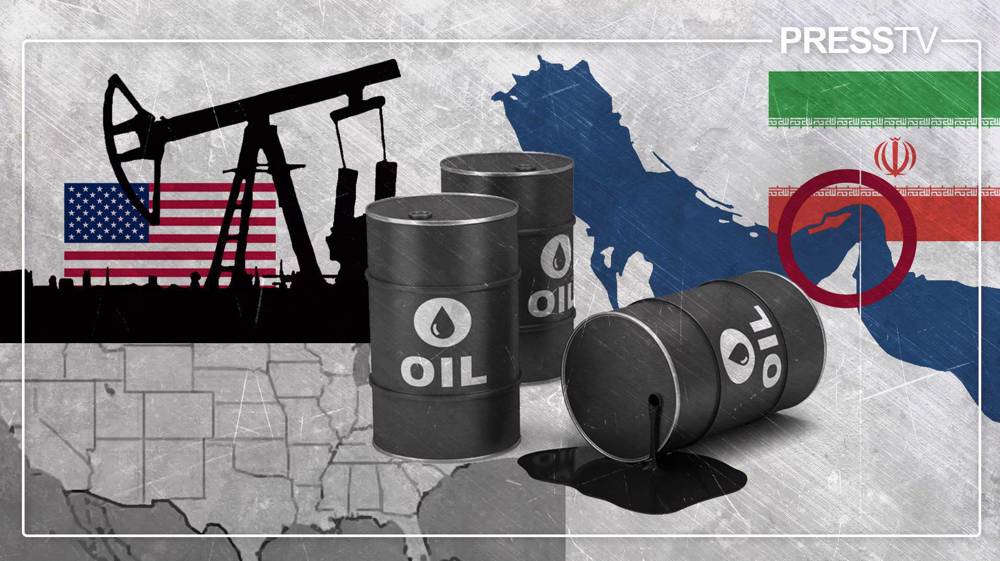
This narrative has been particularly prominent in discussions about the closure of the Strait of Hormuz, a maritime chokepoint through which nearly one-fifth of globally traded oil passes daily, and which remains shut amid US piracy and banditry.
In such scenarios, shale oil is frequently described as a form of backup capacity that can be rapidly deployed to help stabilize markets.
However, a closer, more technical examination of production dynamics, cost structures, geological constraints, and infrastructure realities reveals that this characterization does not hold up under scrutiny when assessing the magnitude and timeliness of a response to a Strait of Hormuz-related supply shock.
The fundamental distinction between shale oil and conventional production lies in both reservoir type and extraction method.
Conventional oil fields – particularly those in strategic regions such as the Persian Gulf – benefit from high-permeability reservoirs, natural pressure support, and low lifting costs, allowing for prolonged production with minimal reinvestment.
In contrast, shale oil is extracted from low-permeability reservoirs using horizontal drilling and hydraulic fracturing, a process that is not only technologically complex but also expensive.
Short productive lifespans and steep decline rates
Individual shale wells have relatively short productive lifespans and steep decline rates, with most losing 60-70 percent of their production capacity within the first year.
This decline profile creates a structural dependence on continuous drilling: production levels are not naturally sustained but must be supported by ongoing capital expenditure and favorable market conditions.
This structural dependence translates into a relatively high breakeven threshold compared to conventional production. Although specific figures vary by basin and operator, most shale projects require oil prices between 60 and 70 dollars per barrel to make drilling economically viable, with some marginal projects needing $75 or more.
This is especially significant at the current stage of shale development, as many of the most productive "sweet spots" have already been extensively depleted.
As a result, operators are increasingly forced to drill in less favorable areas, which offer lower well productivity and higher per-barrel costs. Consequently, the marginal cost of new shale production is not declining; in many cases, it is rising – undermining the assumption that shale can scale up continuously and cost-effectively in response to price signals alone.
US stock markets slip and oil prices climb as uncertainty over ceasefire talks between Washington and Tehran rattle investors and markets.
— Press TV 🔻 (@PressTV) April 22, 2026
Follow Press TV on Telegram: https://t.co/LWoNSpkJSh pic.twitter.com/GItfWTaS6T
The issue of scalability
The question of scalability becomes even more pressing when considering the magnitude of potential disruptions in the Strait of Hormuz. The approximately 20 million barrels per day that transit this chokepoint form a systemic component of global supply.
Any interruption – even a partial one on the order of 5 to 10 million barrels per day – would trigger an immediate and severe market imbalance. In comparison, US shale production has only limited incremental growth capacity due to operational schedules and the constant need for new drilling.
Under ideal conditions, shale output can be increased by several hundred thousand barrels per day within months, and in exceptional circumstances, it might reach up to one million barrels per day within a year.
Yet these figures remain far below what would be required to counter a large, abrupt supply shock originating in the Strait of Hormuz. The mismatch between the speed and scale of shale's potential response and the severity of a plausible disruption thus represents a critical bottleneck.
Logistical factors
Moreover, shale is constrained not only by production limits but also by logistical factors, further diminishing its viability as a global stabilizer. Moving crude oil from production centers to export hubs requires an extensive network of pipelines, storage facilities, and port infrastructure, all of which have capacity constraints.
Although the US has significantly increased its export capacity in recent years – particularly with the development of Persian Gulf Coast terminals – the system is not designed to handle an instantaneous surge in output.
Any attempt to rapidly boost exports would likely be hampered by bottlenecks in pipeline and terminal capacity, as well as by the availability of tankers. Furthermore, a disruption in the Strait of Hormuz would likely have broader implications for global shipping, including higher insurance premiums, route diversions, and congestion on alternative shipping lanes, none of which facilitate the redistribution of supply, even if additional barrels were available.
American political scientist Robert Pape argues that Iran has emerged as the world's fourth focal power alongside the US, Russia, and China, warning that awakening the military might of a nation holding 20% of global oil and gas reserves was America's gravest strategic error. pic.twitter.com/1GPUukgFpq
— Press TV 🔻 (@PressTV) April 4, 2026
Time lag in production
Another critical limitation is the time lag inherent in shale production. Unlike traditional spare capacity, which can be activated relatively quickly, shale requires a sequence of steps – leasing, drilling, completion, and connection to infrastructure – before new production can come online.
Even under the most efficient operating conditions, this process takes several months. Consequently, shale cannot respond immediately to acute supply shocks. Instead, it should be viewed as a medium-term adjustment mechanism, one whose primary reaction is to long-term price signals rather than to short-term disruptions.
This lag dramatically reduces any stabilizing effect shale might provide in the event of a Hormuz closure, where market responses would be instantaneous and potentially drastic.
Another point that warrants attention is the role of price in shaping these dynamics. In the event of an emergency supply disruption, oil prices would likely spike sharply, potentially well above the breakeven thresholds needed to incentivize additional shale drilling.
However, such price increases would also trigger demand-side responses, including reduced consumption, fuel substitution, and broader economic adjustments.
Supply growth and demand contraction
Therefore, any market rebalancing would not result solely from an increase in supply; rather, it would emerge from a combination of supply growth and demand contraction.
While shale production could contribute to this process, it would not be the primary mechanism for restoring equilibrium. Instead, it would operate in coordination with strategic petroleum reserves, policy interventions, and demand-side measures.
Even the evolving financial and strategic posture of the shale industry itself imposes constraints on rapid expansion. Following a series of boom-and-bust cycles, much of the shale sector has shifted toward prioritizing capital discipline and shareholder returns over aggressive production growth.
This shift has fostered a more cautious approach to investment, even in a high-price environment, thereby limiting the industry's capacity to respond swiftly to acute external shocks. Additionally, supply chain constraints – such as the availability of drilling rigs, labor, and specialized materials – can further impede rapid scaling, particularly when multiple operators attempt to ramp up activity simultaneously.
Former IRGC commander Mohsen Rezaei:
— Press TV 🔻 (@PressTV) April 27, 2026
No country is capable of blocking Iran's oil exports. The President of the United States is advised to focus on organizing the chaos prevailing over the US government, economy, and armed forces, instead of engaging in empty boasting. pic.twitter.com/gOnUEzvq4u
Significant qualitative differences
Strategically, the portrayal of shale as a substitute for low-cost West Asian oil also overlooks significant qualitative differences among crude types.
Not all barrels are interchangeable with respect to refining characteristics, sulfur content, or compatibility with existing refinery configurations. Many refineries, especially in Asia, are optimized for the heavier crude grades typically exported from the Persian Gulf and cannot readily process the lighter US shale oil. This mismatch imposes further limitations, restricting the extent to which shale can directly replace lost supply in specific markets.
All of these technical, economic, and logistical considerations point to a similar conclusion: while US shale oil is undoubtedly a significant component of the international energy system, it cannot compensate for a large-scale supply shock in the Strait of Hormuz, at least not in the immediate term.
Rather than serving as an immediate or complete substitute for substantial supply losses, shale's contribution is better understood as that of a price-responsive, incremental source of supply that facilitates market adjustment over the longer run.
The sheer magnitude of oil flows transiting the Strait of Hormuz, combined with the intrinsic production characteristics of shale, means that any shortfall of that scale simply cannot be filled by shale alone.
In this light, the narrative that shale oil can guarantee energy security warrants critical reexamination. While the growth in US production has undoubtedly contributed to diversifying global supply, it has not eliminated the strategic importance of key maritime chokepoints nor the world's dependence on them.
The international oil market remains tightly integrated and vulnerable to major disruptions in supply regions. Responding to such disruptions involves a complex interplay of factors – strategic reserves, demand-side adjustments, policy interventions, and logistics – that far exceed the capabilities of any single source of supply.
313,000-strong ‘Jan-Fada’ drill signifies Iran’s popular mobilization and social readiness amid war
Leader’s advisor: Any foreign forces attempting to land in Iran ‘will certainly be destroyed’
Iran’s military warns of ‘unpredictable blows’ in response to US threats



VIDEO | Riyadh’s alliance exposed
VIDEO | US energy, diesel prices
VIDEO | The Saudis' dangerous predicament
President Pezeshkian says UN visit aims to defend Iran’s rights, engage in dialogue
VIDEO | East Azarbaijan: The land of firsts and opportunities
Iran will resist pressure, force-based policies, President Pezeshkian tells Swiss counterpart
Top commander calls President Pezeshkian’s UN address ‘resounding voice of the proud Iranian nation’
IRGC dismantles terrorist team in southeastern Iran, killing five




 PressTV NEWSLETTER
now
PressTV NEWSLETTER
now
 This makes it easy to access the Press TV website
