Trump's unilateral ceasefire signals not goodwill, but fear of re-entering unwinnable war
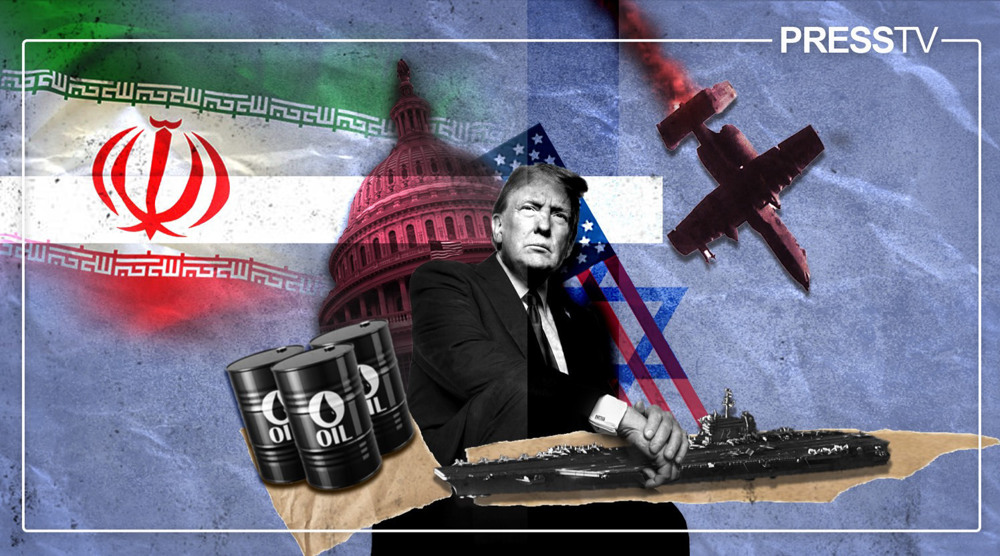
By Press TV Strategic Analysis Desk
The 40-day war imposed by the US-Israeli axis on the Islamic Republic of Iran and its aftermath, including the talks in Islamabad, where the Iranian side demonstrated its uncompromising stance and upper hand, show the new balance of power.
Having emerged as the undisputed victor on the battlefield, the Islamic Republic now dictates the terms of any future diplomatic engagement.
The unilateral ceasefire announced by US President Donald Trump late on Tuesday is not a gesture of goodwill toward Iran, but an admission of defeat. The United States sought to disintegrate Iran, but it ended up breaking itself against the wall of Iranian resilience.
The ceasefire: A US retreat, not a diplomatic opening
The unilateral extension of the two-week ceasefire signals that Washington now considers the risk of re-launching the war of aggression against Iran to be prohibitively high.
From the American perspective, a renewed war would not only consolidate Iran’s full and unchallenged control over the Strait of Hormuz but also provide it with new and even more significant strategic leverage in the region.
Trump would then be forced to make greater concessions to the Islamic Republic in post-war negotiations simply to exit the quagmire his country and its military find themselves in.
The ceasefire is therefore a strategic retreat born of necessity, not choice.
✍️ Analysis - Iran holds all the cards: Victorious on the battlefield, united at home, and armed with strategic assets
— Press TV 🔻 (@PressTV) April 20, 2026
By Press TV Strategic Analysis Deskhttps://t.co/AiKDeAt4CO
Economic pressure 2.0: A hollow tool after military failure
After the military defeat and diplomatic debacle, the US has returned to the same old playbook of economic pressure, this time threatening a naval blockade.
However, this round is fundamentally different from previous rounds marked by unjust sanctions. While past embargoes were harsh, arguably harsher than any physical blockade, they were backed by “military options.” That is no longer the case.
The United States has just endured a full-scale, failed military campaign against Iran. Its much-hyped “military options” have been discredited on the battlefield by the Iranian armed forces who inflicted painful blows on the enemy during the 40-day war.
Consequently, if this new round of economic pressure proves ineffective, Washington has no credible fallback. The options on the US table have expired. They are relics of a bygone era when America could threaten force with impunity.
Iran's new leverage: The Strait of Hormuz as a counter-weapon
Another critical difference sets this round apart: Iran now possesses its own highly effective economic and sanctions tool – the Strait of Hormuz, which some have even referred to as “economic nuclear weapon” due to its impact on the global economy.
In the past several decades, Iran was merely at the receiving end of pressure and sanctions. Today, it is the imposer of economic pressure on the United States and its allies.
This symmetric capability has fundamentally altered the nature of the economic confrontation. Washington threatens a blockade; Tehran can respond in kind, but with far greater regional impact. The US is no longer the only party holding economic weapons.
✍️ Analysis - Battlefield has spoken: Trump wants an off-ramp – concessions to Iran are the only way out
— Press TV 🔻 (@PressTV) April 19, 2026
By Press TV Strategic Analysis Deskhttps://t.co/FqoVcXvp8l
Two US retreats in two weeks: The fear of confrontation
Trump's refusal to re-enter the war and his request for a unilateral ceasefire, under the transparent pretext of a request from Pakistani army chief Field Marshal General Asim Munir, marks America's second avoidance of war against Iran in just two weeks.
The reason is clear: the United States fears confronting Iran again because Iran has already imposed its military superiority on the enemy in direct combat. By any measure of political and military power, Iran is the undisputed winner of the third imposed war.
Iran has discredited the enemy's most advanced military assets – giant aircraft carriers such as the USS Gerald Ford and USS Abraham Lincoln, advanced fighter jets including the F-35, sophisticated air defense systems, and other multi-billion dollar weapons.
Simultaneously, Iran revealed new defensive and offensive capabilities in the recent imposed war of aggression that inflicted heavy, irreparable blows on the enemy.
By every military metric, Iran now holds the upper hand. From this perspective, Trump's two desperate attempts to avoid war with Iran within a single fortnight are entirely understandable – and deeply revealing of the new balance of power.
The naval blockade: A strategic illusion
The theatrical display of a naval blockade by the US should not and cannot serve as a tool to influence Iran's negotiating strategy, which is firmly rooted in policies and principles.
Iran's extensive land and maritime borders, combined with its hard-earned experience during decades of extensive and wide-ranging sanctions, fundamentally reduce the impact of any naval blockade against the country.
All these decades, Iran learned to survive and thrive under “maximum” pressure while the world cut off its access to global markets. A naval blockade will not break a nation that has already mastered the art of resistance economics.
It is a profound strategic error, driven by Trump and his emotionally volatile, ill-informed Secretary of War Pete Hegseth, to compare Iran to Venezuela or any other country.
Based on their failed experiment in Caracas, they assume Iran will collapse the same way. This assumption is catastrophic folly. Iran is not Venezuela.
The blockade that worked against a fragile, oil-dependent South American country will not work against a resilient, multi-dimensional power with 40 years of experience in defying the world's most powerful sanctions regime.
✍️ Analysis - Iran's new strategic posture ends win-win diplomacy, leaves US no choice but to concedehttps://t.co/wiDxjW9Hdp pic.twitter.com/xP86gVaY8A
— Press TV 🔻 (@PressTV) April 18, 2026
Why Iran skipped second round of Islamabad talks
Iran's decision not to take part in the second round of Islamabad talks is not primarily about the naval blockade, though the blockade has certainly added another lock to the door of negotiations with the US.
The main reason is far more fundamental: the United States insisted on introducing topics that are entirely irrelevant to ending the war permanently.
In the first round, the US, assuming an unwarranted posture of victory, raised the nuclear issue. In the second round, Washington persisted, attempting to blackmail Iran into surrendering its strategic, indigenous nuclear asset.
This is the same asset that survived years of crushing sanctions, two full-scale wars, and a failed coup. The enemy hoped to seize at the negotiating table what it could not achieve on the battlefield. It does not work this way. A loser cannot dictate terms.
The claim that the naval blockade is a precondition for Iran's return to talks is a diversionary tactic pushed by certain circles. The truth is simple and must be stated clearly: even if the blockade were lifted tomorrow, Iran would still refuse to participate in any talks as long as the enemy insists on addressing the nuclear issue.
Iran will not negotiate under the shadow of blackmail, and it will not allow the nuclear file, which is a source of national pride and strategic independence, to be used as a bargaining chip by a defeated adversary. The nuclear issue is effectively off the table.
Iran holds the cards and US must concede
The 40-day imposed war ended with Iran as the clear and undisputed victor. On the battlefield, in the war of narratives, and in the strategic balance of power, Iran holds the upper hand now, a fact acknowledged even by most vocal critics in the West.
The United States, by contrast, has exhausted its military options, exposed its technological vulnerabilities, and revealed its diplomatic desperation.
Going forward, Iran will negotiate only from a position of strength. The United States must abandon its maximalist demands, accept Iran's terms, and offer genuine concessions, not the other way around. Washington wanted to change Iran's behavior. Instead, Iran has changed the rules of the game forever.
Iran now holds the cards – all cards. The United States must now pay the price for its miscalculation, starting with unconditional concessions and an end to all forms of pressure, whether economic, military, or diplomatic.
The era of one-sided demands is over. The era of Iranian strength and authority has begun.
US lawmaker admits American people footing bill for Trump’s failed aggression against Iran
Iran’s Armed Forces vow to inflict further defeats on US, Israeli enemies
IRGC: Iran will change war’s geography, weapons if attacked again



UN chief warns Israeli violence in West Bank raises ‘specter of ethnic cleansing’
VIDEO | ‘Korea gets nothing, loses everything, with Hormuz deployment’
Iran parliamentary commission approves penalties for violators of Hormuz laws
VIDEO | Trump’s war disrupts the world
Araghchi urges world to hold US accountable for ‘war crimes’ at UNGA
VIDEO | Press TV's news headlines
US F-16 fighter jet crashes at air base in Germany
Iran warns US against new attack, says Washington will gain ‘nothing but failure’



 PressTV NEWSLETTER
now
PressTV NEWSLETTER
now
 This makes it easy to access the Press TV website
