Never again: Why Iran denies concessions and negotiates from position of strength
By Press TV Strategic Analysis Desk
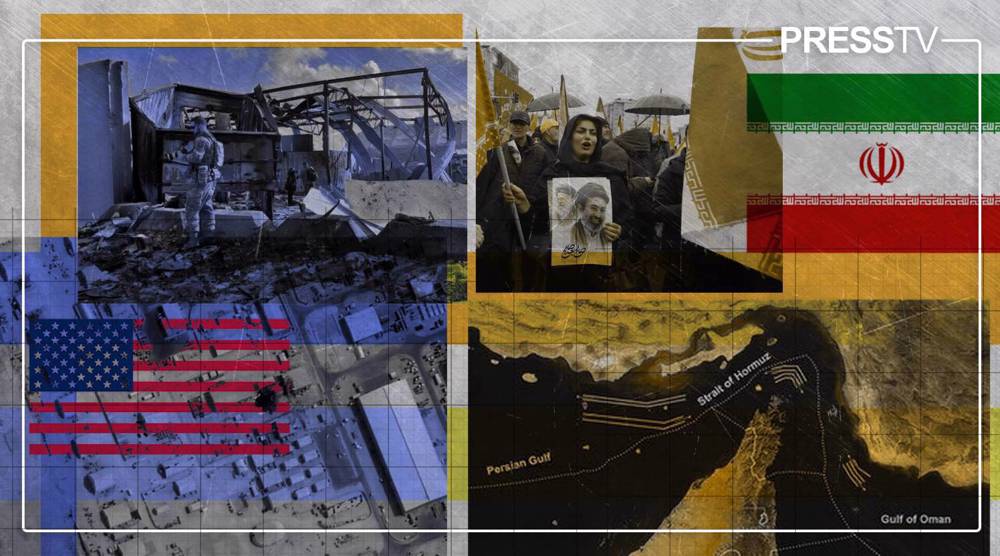
As the two-week ceasefire approaches its end and the stalemate over the next round of talks continues, Tehran has laid out a clear strategic framework to permanently end the war.
It will negotiate only from a position of strength. No concessions will be given. Iran is the victor on the battlefield, and the victor dictates the terms.
The US entered the war with ambitious objectives – from "regime change" to the obliteration of Iran's military and nuclear infrastructure. It achieved none of them.
On the contrary, Iran not only survived 40 days of no-holds-barred aggression but emerged stronger, more united, and more capable of inflicting pain on its adversaries.
Iran's triumph in the third imposed war rests on four pillars:
- Strategic control over the Strait of Hormuz – a game-changing asset that allows Iran to regulate global energy traffic.
- Million-strong popular mobilization – nightly street presence demonstrating unwavering public support for the Islamic Republic's leadership and armed forces.
- Effective military prowess – despite the assassination of senior commanders, Iran's retaliatory strikes were implemented with precision and success.
- Global public opinion – the world now views Iran as standing on the side of right and justice, while America and Israel are seen as terrorist regimes.
As acknowledged by Western pundits, the United States achieved none of its declared objectives, faced severe criticism from domestic and international public opinion, and exhausted all its military cards after 47 years of threatening Iran with "military action."
Now, it is desperately seeking negotiations – not out of goodwill, but out of necessity.
✍️ Analysis - Iran holds all the cards: Victorious on the battlefield, united at home, and armed with strategic assets
— Press TV 🔻 (@PressTV) April 20, 2026
By Press TV Strategic Analysis Deskhttps://t.co/AiKDeAt4CO
Negotiation as a trade-off over ending war, not over Iran's assets
Iran's analytical framework makes a critical distinction: negotiation is not about giving up strategic assets. It is about agreeing to end the war permanently and in a dignified way.
The logic is clear and uncomplicated. Iran did not start this war. It was imposed on Iran by the US and Israel amidst nuclear talks in Geneva. Tehran has merely agreed to a ceasefire, a silence on the battlefield, but the war has not formally ended.
Any negotiation, therefore, is about the terms of ending the war permanently, not about dismantling Iran's defensive or nuclear capabilities. Both issues are effectively off the table.
In this framework, what Iran "gives" is an agreement to permanently end the war. What Iran "takes" is recognition of its control over the Strait of Hormuz, war reparations, lifting of illegal sanctions, termination of anti-Iran resolutions and binding guarantees against any future act of aggression by the aggressors.
This is the "give and take" equation of negotiations. Nothing more. Nothing less.
Why Iran refuses to negotiate over missile and nuclear capabilities
The most significant aspect of Iran's stance is its categorical refusal to discuss its missile, defense, and nuclear programs. There is a compelling strategic rationale for this position.
First, these capabilities are non-negotiable national assets. They are the "strategic wealth" of the Iranian people, akin to the nation's territory or sovereignty.
Just as no country would negotiate over its land and borders, Iran also refuses to negotiate over its hard-earned defensive and nuclear capabilities.
Second, the enemy failed to dismantle these capabilities despite using overwhelming and indiscriminate force. The US and Israel waged two major wars and a coup attempt to strip Iran of these assets, but failed.
After decades of crippling and illegal sanctions, military pressure, and assassination campaigns, Iran's missile and nuclear programs remain not only intact but have seen phenomenal growth.
✍️ Analysis - Iran's new strategic posture ends win-win diplomacy, leaves US no choice but to concedehttps://t.co/wiDxjW9Hdp pic.twitter.com/xP86gVaY8A
— Press TV 🔻 (@PressTV) April 18, 2026
If the enemy could not take them on the battlefield, why should Iran surrender them at the negotiating table, especially from a position of strength, not weakness?
Third, negotiating over these assets would legitimize the enemy's aggression. If Iran were to sit down and discuss its enrichment levels, uranium stockpiles, or missile ranges, it would implicitly accept that these are legitimate subjects of foreign intervention.
Enrichment, uranium ownership, dilution or non-dilution – these are the country's internal affairs in which no foreign entity has any right to interfere.
Fourth, the historical lesson is clear. If Iran makes concessions now, it will trap itself in a destructive cycle: war, ceasefire, negotiations, concessions, then another war.
The enemy would learn that aggression pays – that by launching illegal and unprovoked wars and imposing so-called "maximum pressure," it can extract Iranian concessions.
That lesson will not be taught again. Iran has learned it too well.
The "dignified negotiation" doctrine
Iran's stance must not be misconstrued as a rejection of diplomacy. It is a commitment to dignified negotiation – a principle consistently emphasized by the martyred Leader of the Islamic Revolution, Ayatollah Seyyed Ali Khamenei, and his worthy successor, Ayatollah Seyyed Mojtaba Khamenei, in their speeches.
Dignified negotiation means showing up from a position of strength, not weakness. It means setting conditions, not accepting them. It means determining the framework, the topics, and the outcomes.
Dignified negotiation also means safeguarding the trust placed in negotiators. The authority achieved by the armed forces on the battlefield and the people on the streets is a sacred trust – and negotiators are the custodians of this trust.
Above all, dignified negotiation means the categorical refusal to discuss red lines. Missile capabilities. Defense capabilities. Nuclear capabilities. These are off the table.
✍️ Analysis - Battlefield gains have fundamentally changed Iran's strategic posture, shifting from giving concessions to decisively dictating terms, leaving the US with just one option – to concede.
— Press TV 🔻 (@PressTV) April 20, 2026
By Press TV Strategic Analysis Deskhttps://t.co/FqoVcXvp8l pic.twitter.com/CmQgTG6Hnd
Why America desperately needs talks
America's aggressive media campaign around the Islamabad talks reveals deep desperation.
The United States has nothing to show for its war imposed on the Iranian people. It cannot claim victory. It cannot claim progress. It cannot even claim to have weakened Iran.
All it can do is spin narratives, spread lies, and try to deceive public opinion.
This is not the behavior of a confident power, let alone a superpower. It is the behavior of a defeated party trying to escape a quagmire it finds itself trapped in.
This desperation gives Iran extraordinary leverage. And that leverage must be used, not squandered. If Iran were to rush into negotiations, offer concessions, or allow discussion of its red lines, it would be throwing away the hard-won gains of two imposed wars and decades of indomitable resistance against the global arrogant powers.
The red lines are clear. And Iranian negotiators know that fully well.
A calculated strategic position
Iran's stance on negotiations is a calculated strategic position, rooted in a clear assessment of the battlefield, the enemy's desperation, and the value of its own strategic assets.
Iran is willing to end the war. It is willing to negotiate the terms of that end. But it will not negotiate away its defensive capabilities, its rightful nuclear program, its legitimate control over the Strait of Hormuz, and its people's right to reparations.
In the history of warfare, the defeated side has never been the claimant.
America lost. And until Washington internalizes that reality, any negotiation – in Islamabad, Geneva, or anywhere else – will remain an exercise in futility.
The ball is in America's court. But the rules of the game are written by Iran.
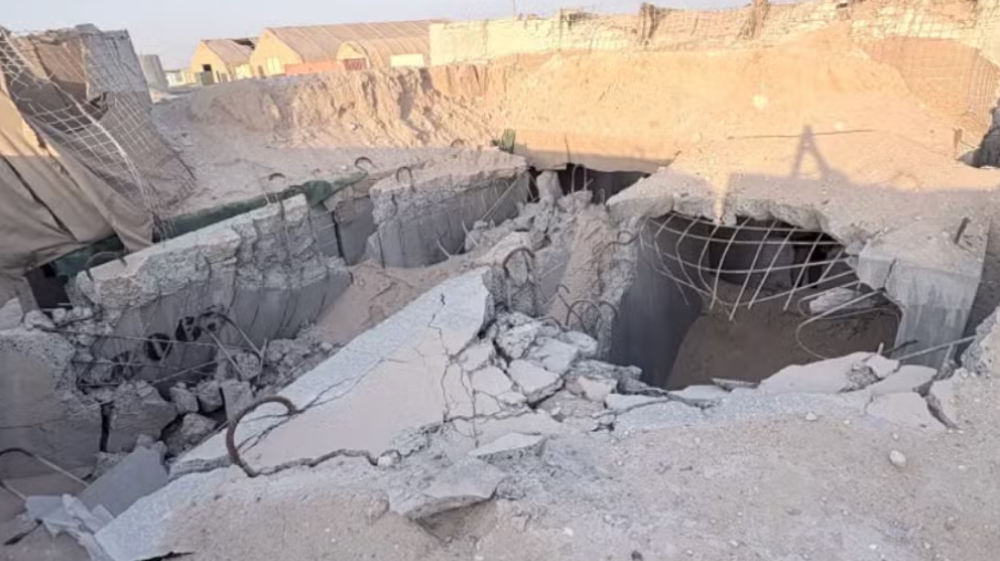
New images reveal severe destruction at US base in Kuwait after Iranian strikes
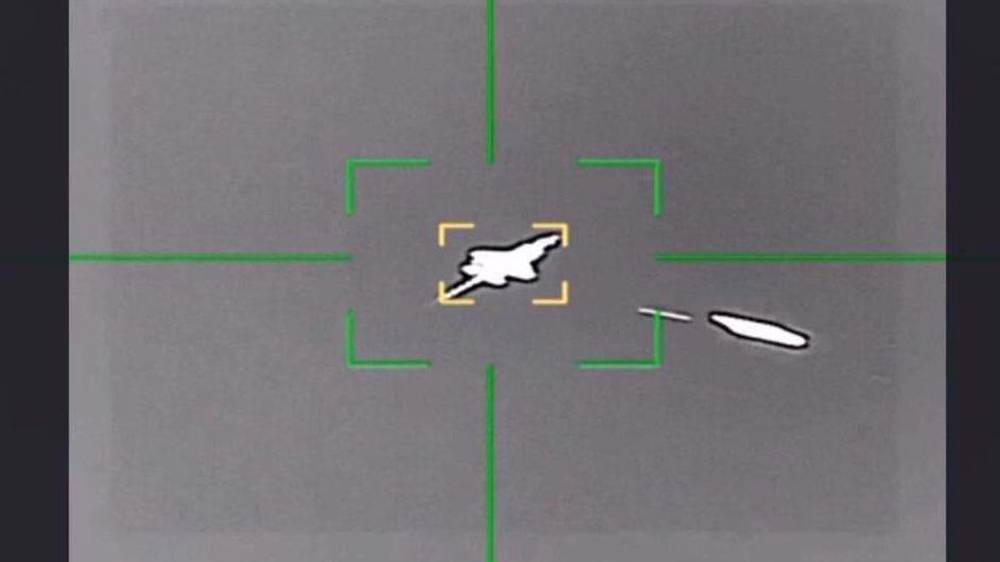
‘Live with it’: Era of US F-35s being ‘hunted down’ has begun, Qalibaf says
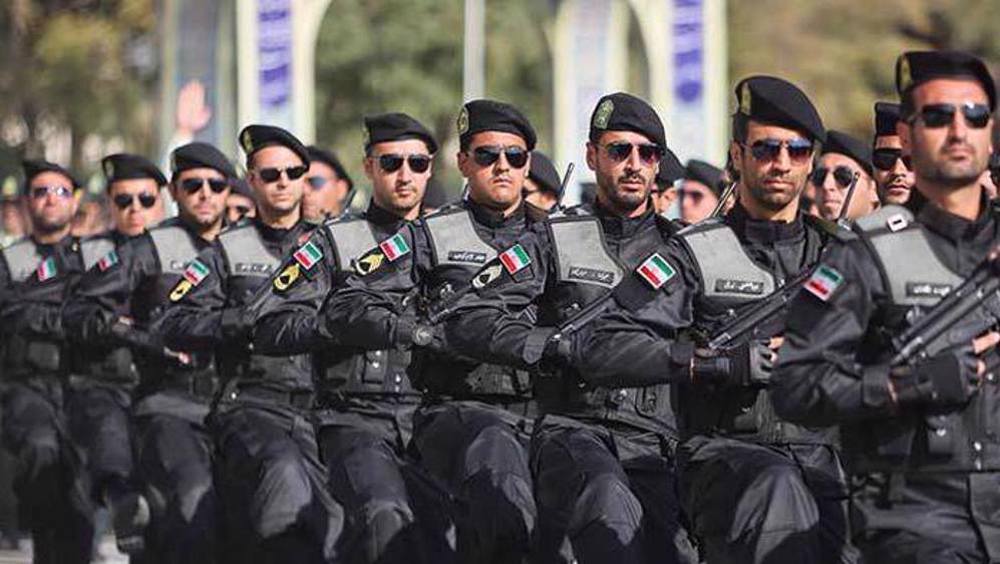
IRGC intelligence forces eliminate two terrorists in southeast Iran



Pentagon says four killed in US strike on alleged drug boat in Caribbean
Iran sets 7 conditions for US to escape war quagmire: Rezaei
Stories Beyond Numbers: Mojtaba, three-day-old infant whose life was cut short before it could bloom
Discover Iran: Tabriz’s ‘Mausoleum of Poets,’ where centuries of Persian literary history live on
Moscow intercepts massive Ukrainian drone strike amid elections; civilian casualties reported
Understanding Iran’s tourism momentum amid war and sanctions
How Yemeni retaliatory strike on Saudi East-West pipeline exposed limits of bypassing Hormuz
Israeli forces abduct eight Palestinians in West Bank amid settler violence




 PressTV NEWSLETTER now
  This makes it easy to access the Press TV website