Iran's refusal to put nuclear file back on negotiating table grounded in martyred Leader's warnings
By Mina Mosallanejad
After 40 days of unprovoked US-Israeli military aggression against Iran and a two-week ceasefire, Washington is now attempting to lure Tehran back to negotiations.
While the US wants to discuss Iran's nuclear program, Tehran would only consider talks based on the ten-point proposal previously accepted by America before the Islamabad talks.
For now, Iranian officials have made clear there are no plans for the next round of talks with Washington, primarily due to its maximalist demands and constantly shifting positions.
The US naval blockade constitutes an act of maritime banditry and piracy that further undermines any prospect of renewed negotiations.
Following its decisive victory in the third imposed war, Iran maintains that the nuclear issue is off the table due to past betrayals and current realities.
This deep skepticism is rooted in experience, most notably the fate of the 2015 Joint Comprehensive Plan of Action, commonly known as the Iran nuclear deal.
The agreement, signed in 2015 between Iran and the five permanent members of the UN Security Council plus Germany, required Tehran to accept some limitations on its nuclear program in exchange for sanctions relief.
Iran implemented its commitments under the multilateral deal in good faith, with international verification confirming full compliance.
Yet in May 2018, Donald Trump unilaterally withdrew the US from the agreement, in defiance of international consensus, and reimposed sweeping economic sanctions, effectively dismantling a functioning multilateral deal while Iran remained fully compliant.
Tehran even continued to honor its obligations for a year after Washington’s exit, underscoring what it saw as its commitment to diplomacy, in stark contrast to US conduct.
For Iran, this episode was not an exception but a confirmation of a broader pattern.
Martyred Leader’s advice and warnings
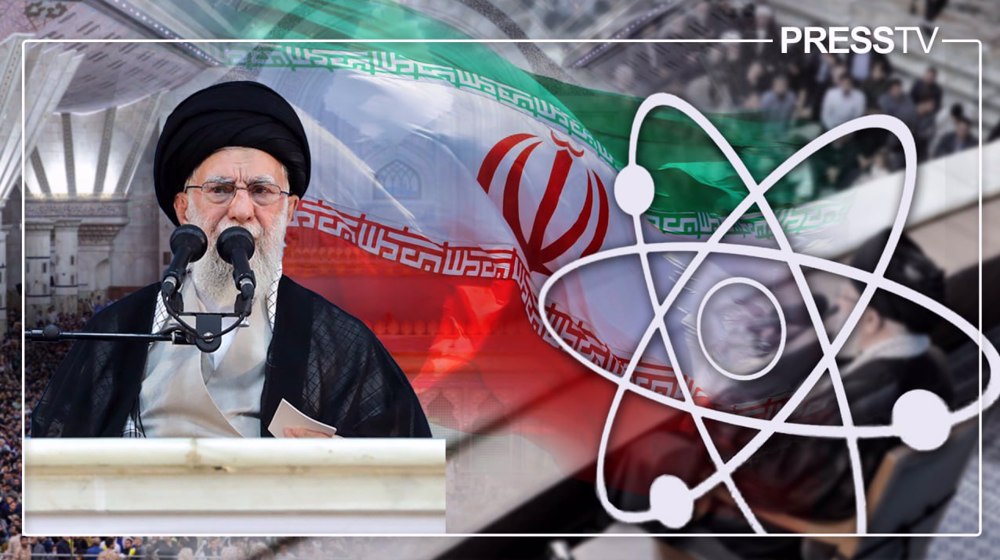
The late Leader of the Islamic Revolution, Ayatollah Seyyed Ali Khamenei, martyred on February 28 in the initial wave of US-Israeli aggression against Iran, had repeatedly warned over the past decade that the United States cannot be trusted in negotiations.
His statements – both during the lead-up to the JCPOA and after Washington’s unilateral and illegal withdrawal – consistently highlighted America’s duplicity, bad faith, and tendency to renege on its commitments once it secures concessions.
In hindsight, the collapse of the JCPOA stands as a defining example of those warnings.
Across various issues, including the nuclear file, Ayatollah Khamenei repeatedly stressed that the arrogant nature of American officials and their deep-rooted hostility toward Iran must be made increasingly clear to the public, especially to the younger generation.
This reality, he often pointed out, became evident through different stages of negotiations, particularly through repeated breaches of commitments and backtracking by the US.
During a speech on January 9, 2014, before the deal was reached, Ayatollah Khamenei pointed to one of the outcomes of the negotiations.
✍️ Viewpoint - File closed: Why Iran's nuclear program must never return to the negotiating table
— Press TV 🔻 (@PressTV) April 21, 2026
By Amin Mohammadihttps://t.co/XHrDz0OshQ
“One of the blessings of these recent negotiations was that the hostility of the Americans and the officials of the United States toward Iran and the Iranian people, toward Islam and Muslims, became clear and evident; it was proven for everyone, everyone understood this.”
As negotiations advanced and Western officials demanded “changes” in Iran’s “behavior,” he rejected what he saw as an attempt to redefine Iran’s identity under pressure.
In a speech on September 3, 2015, the martyred Leader warned that such demands were not technical, but ideological and geopolitical:
“Among the things they say is that they expect the officials of the Islamic Republic to act ‘differently.’ What does ‘different’ mean? Different from what? Different from the past of the Islamic Republic? No—such a thing will not happen. ‘Different’ means abandoning Islamic values, losing commitment to Islamic principles,” he remarked at the time.
“That is what they mean. This will not happen… What they want is for Iran to enter the framework of US policies in the region… They expect our officials and policymakers to act in line with these policies. Such a thing will never happen.”
He also made clear that even engagement itself must be tightly limited, because of a fundamental, irreconcilable divide.
“We have said and announced that we will not negotiate with the Americans on any issue other than the nuclear matter… The reason is that their orientation is exactly the opposite of ours—we differ by 180 degrees,” he stated.
Caution to warning
When the JCPOA was finalized, the tone in Ayatollah Khamenei’s powerful speeches shifted from caution to explicit warning against the US deception.
In a letter to then-President Hassan Rouhani on October 21, 2015, outlining conditions for accepting the deal, the Leader described the negotiation process itself as proof of US bad faith.
“The behavior and statements of the US government in the nuclear issue and during the long and exhausting negotiations showed that this, too, is part of the chain of their hostile enmity toward the Islamic Republic… Their deception, the contradiction between their initial statements and their repeated violations during the two years of negotiation—along with their alignment with the demands of the Zionist regime and their coercive diplomacy toward European governments and institutions involved in the talks, all indicate that America’s entry into the nuclear talks was not aimed at a fair resolution, but at advancing its hostile objectives,” read the letter.
After implementation, as tensions resurfaced, he noted that the flaws of the agreement reflected exactly what Iran had feared from the outset.
In a meeting with officials on June 14, 2016, Ayatollah Khamenei stated: “The flaws are exactly what we were always concerned about and kept repeating… We said: these people break promises, they are ill-natured, they go back on their word—they do not act on their commitments. And these are the flaws.”
Following the unilateral US withdrawal from the JCPOA, he placed the issue in a longer historical context, explaining that American hostility predates the nuclear file altogether.
In a meeting with students on November 3, 2019, he traced the origins of US hostilities toward the Islamic Republic back to the 1953 coup d'état.
✍️ Analysis - Iran holds all the cards: Victorious on the battlefield, united at home, and armed with strategic assets
— Press TV 🔻 (@PressTV) April 20, 2026
By Press TV Strategic Analysis Deskhttps://t.co/AiKDeAt4CO
“With that coup, the Americans did not even spare Mossadegh’s government, which had trusted them… By overthrowing the national government, they installed a dependent, corrupt, and dictatorial regime… From that day until today, America has not changed— the same malice, the same predatory nature, still exist in America—only now with greater brutality and shamelessness,” the Leader said.
He further rejected the idea that negotiations could resolve tensions or disputes, calling such expectations fundamentally misguided.
“Those who think negotiating with America will solve problems are 100 percent mistaken. Nothing will be achieved from talks with the Americans, because they will certainly give no concessions,” he said.
As debate over reviving the deal continued, Ayatollah Khamenei emphasized that rhetoric from Washington was meaningless without tangible action.
In a televised address to the people of Azerbaijan on February 17, 2021, he stated: “We have heard many good words and promises that were later broken… Words are useless, promises are useless. This time, only action—action from the other side. The Islamic Republic will not be convinced by words and promises as it was in the past.”
Faulty premise of US diplomacy
Ayatollah Khamenei also directly challenged the premise of US diplomacy, noting it was not about compromise but coercion.
Speaking during a Quranic gathering on April 14, 2021, the Leader said: “The Americans constantly talk about negotiations… but this is not because they want to accept a just position—no. They want to negotiate in order to impose a false one. That is their method.”
He added, “We are not reassured by their promises because they have failed to fulfill their promises dozens of times and have acted against them, and now they will do the same.”
Even with a change of administration in Washington, Ayatollah Khamenei dismissed the idea of any meaningful shift in the US policy, which remains the same.
In his first meeting with President Ebrahim Raeisi’s cabinet on August 28, 202, he warned that the new US government was no different from the previous one.
“What they demand today is the same as what Trump demanded. He said it in one language; they say it in another,” he noted.
He then described the nature of US diplomacy, akin to a “ferocious wolf.”
“In reality, behind the scenes of diplomacy, America is a ferocious wolf. The appearance is diplomacy, smiling, talking, and sometimes making seemingly justified statements, but in nature it is a wolf—a savage, ferocious wolf, as can be observed in many parts of the world. Sometimes it is a wolf, sometimes a cunning fox; it takes on different forms,” the Leader said.
✍️ Analysis - Trump’s unilateral ceasefire extension not a sign of goodwill, but fear of re-entering an unwinnable war
— Press TV 🔻 (@PressTV) April 22, 2026
By Press TV Strategic Analysis Deskhttps://t.co/qrhcDPbT21
In later remarks, he sharpened the argument further, portraying negotiations not only as futile but actively harmful – especially when conducted under pressure
In a meeting with students on March 12, 2025, he stated: “If the goal of negotiations is to lift sanctions, negotiating with this US government will not lift them – it will make them more complex and increase the pressure… Negotiation solves no problem; it unties no knot.”
In one of his most definitive rejections of nuclear negotiations with Washington, Ayatollah Khamenei addressed the Iranian nation in a televised speech at the start of the academic year on September 23, 2025, months after a 12-day US-Israeli war against Iran in June 2025.
In this address, he sought to settle a debate where some political voices argued that engagement with the US on the nuclear file could ease pressure or resolve economic challenges.
A position rooted in experience
Ayatollah Khamenei began his speech by acknowledging the diversity of opinions within Iran’s political sphere, but emphasized that his position was not theoretical but rooted in decades of experience with US conduct.
“My point is that, under the present circumstances—perhaps in twenty or thirty years, conditions may change, but that is not our concern now—negotiating with the US government today provides no benefit whatsoever to our national interests. It brings no gain, offers no advantage, and removes no harm. It is an action without benefit, without any usefulness for the country, without preventing any damage. It has absolutely no positive effect,” he asserted.
The Leader went further, warning that the issue is not merely ineffectiveness. In his view, negotiations actively harm Iran, creating risks that could be lasting or even irreversible.
“On the contrary, it entails serious harms. Not only does it bring no benefit, but it also carries major damages for the country, some of which may even be irreparable. This is even more important than its lack of benefit,” he remarked.
At the core of his argument was the belief that the US does not enter negotiations in good faith, which has been proved repeatedly, including more recently in February this year.
Instead, Ayatollah Khamenei described a process in which Washington predetermines the outcome and uses talks as a tool of imposition rather than compromise.
“The American side has already determined the outcome of the negotiations in advance. They say they are ready to negotiate, but only for a result in which Iran’s nuclear activities and enrichment are shut down. That means we sit at the table only to arrive at what they have already dictated. This is not negotiation—this is dictation, this is imposition,” he said.
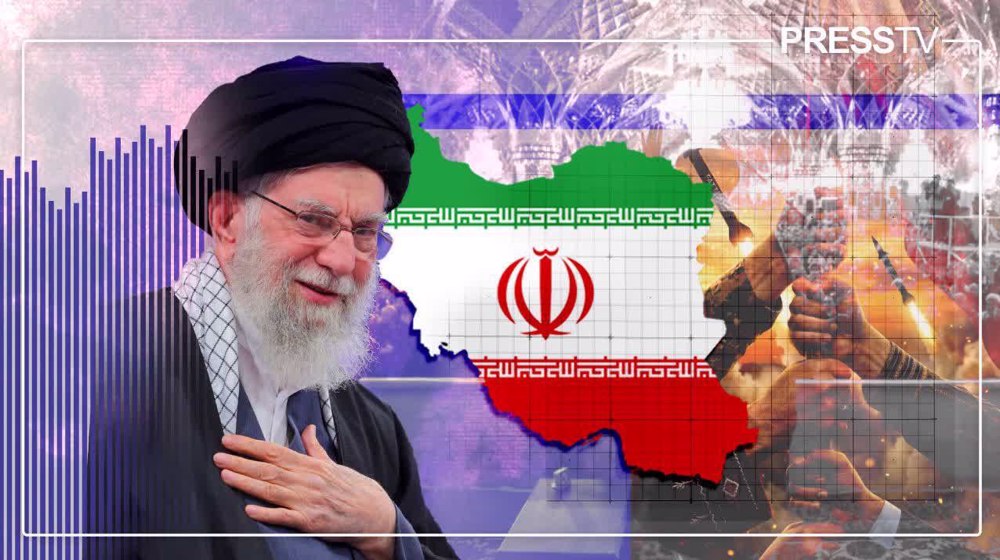
Expanding on this, he warned that US demands go beyond nuclear limitations and extend to stripping Iran of its broader defensive capabilities, effectively rendering it powerless:
“They say let us negotiate so that Iran ends enrichment. Then, just days ago, their officials said Iran must not have missiles—neither long-range, nor medium-range, nor even short-range. This means Iran should be left so defenseless that if it is attacked, it cannot even respond. This is the meaning of their proposal,” he said in one of his speeches.
Coercion, not diplomacy
Entering such negotiations, the Leader said, would amount to accepting coercion, not diplomacy:
“This is not negotiation; it is coercion. Accepting such talks means accepting American imposition and bullying. These expectations arise from a failure to understand the Iranian nation and the Islamic Republic.”
He also highlighted what he said was a dangerous dynamic behind US pressure: negotiations conducted under threat. The Leader noted that agreeing to talks in such conditions signals weakness and invites further escalation.
“They threaten – sometimes explicitly, sometimes indirectly – that if you do not negotiate, there will be consequences. Accepting negotiations under threat means showing that the Islamic Republic is susceptible to intimidation. If this happens, it will never end. Today they demand one thing; tomorrow they will demand more.”
He then reinforced his argument by returning to the experience of the JCPOA, presenting it as concrete proof that US promises cannot be trusted.
According to Ayatollah Khamenei, Iran fulfilled its obligations, while Washington failed to deliver and ultimately abandoned the agreement.
“They may say we will give concessions in return—this is a lie. Ten years ago, we reached an agreement with the Americans, known as the JCPOA. [...] We fulfilled all our commitments. They were supposed to lift sanctions and normalize Iran’s nuclear file. [...] But not only did they fail to do so, they broke their promises and ultimately tore up the agreement and withdrew from it,” he said.
In this context, he framed negotiations not only as ineffective but as degrading, highlighting that accepting US terms would amount to surrender:
“If you accept what they demand, it means surrender and weakening the country, destroying the dignity of a nation. [...] And if you do not accept, then you return to the same conflict and pressure. Therefore, such negotiations are fundamentally flawed.”
He also broadened his critique beyond diplomacy, portraying the United States as a fundamentally untrustworthy actor across all domains – from sanctions and threats to military actions and assassinations:
“[US] breaks promises in everything, lies in everything, deceives constantly, threatens militarily, and if it can, it carries out assassinations—as it did with our martyr Soleimani—or attacks nuclear facilities. With such a party, one cannot negotiate with trust or confidence.”
These remarks represent one of the clearest articulations of Ayatollah Khamenei's long-standing position: that negotiations with Washington on the nuclear file are not a pathway to resolution, but a mechanism of pressure – one that, based on past experience, cannot be trusted to produce fair or lasting outcomes.
15 nations reject attacks, threats against safeguarded nuclear facilities
Iran calls for ‘zero-tolerance’ policy on attacks against nuclear facilities at IAEA
Iran says attacks cannot destroy nuclear science, vows not to surrender to ‘bullies’



Poll: Over half of US Jews say Netanyahu fueling American anti-Semitism
Trump and Netanyahu will face same fate as Saddam Hussein: Top Iranian cmdr.
VIDEO | Protesters flood Buenos Aires in rally against Milei's economic policies
Iran claim basketball bronze at 2026 Asian Games, win delegation’s first medal
Yemen warns Saudi escalation will draw stronger response
Iraqi MP: Resistance weapons aimed at enemies, terrorist groups
South Korea rejects Hormuz deployment plan
VIDEO | News Review: US accused of understating troop deaths in war on Iran



 PressTV NEWSLETTER
now
PressTV NEWSLETTER
now
 This makes it easy to access the Press TV website
