Iran's new strategic posture ends win-win diplomacy, leaves US no choice but to concede
By Press TV Strategic Analysis Desk
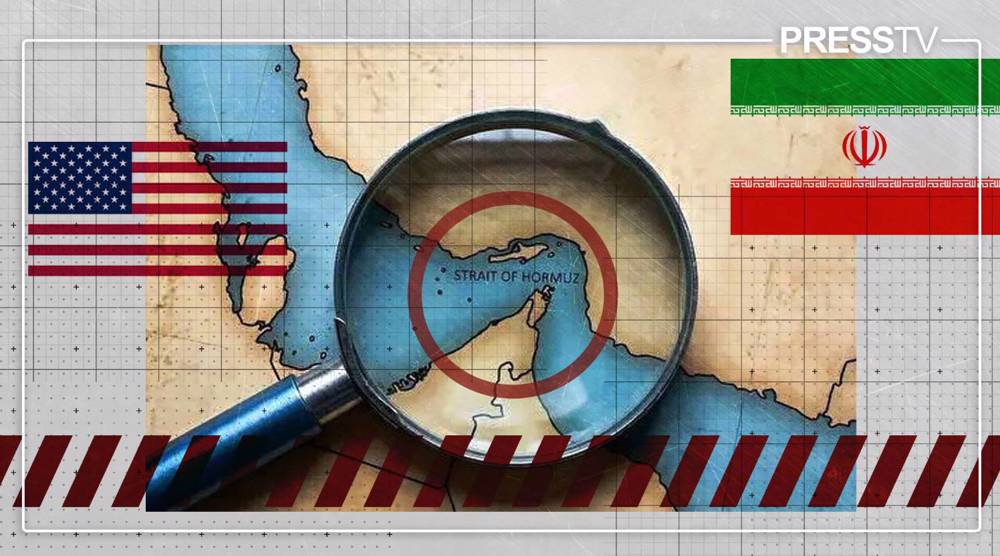
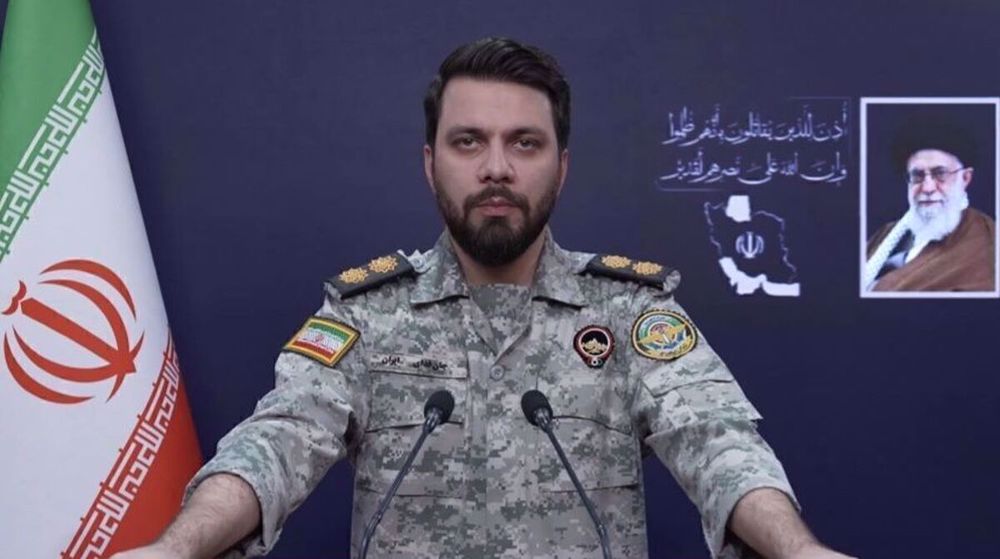
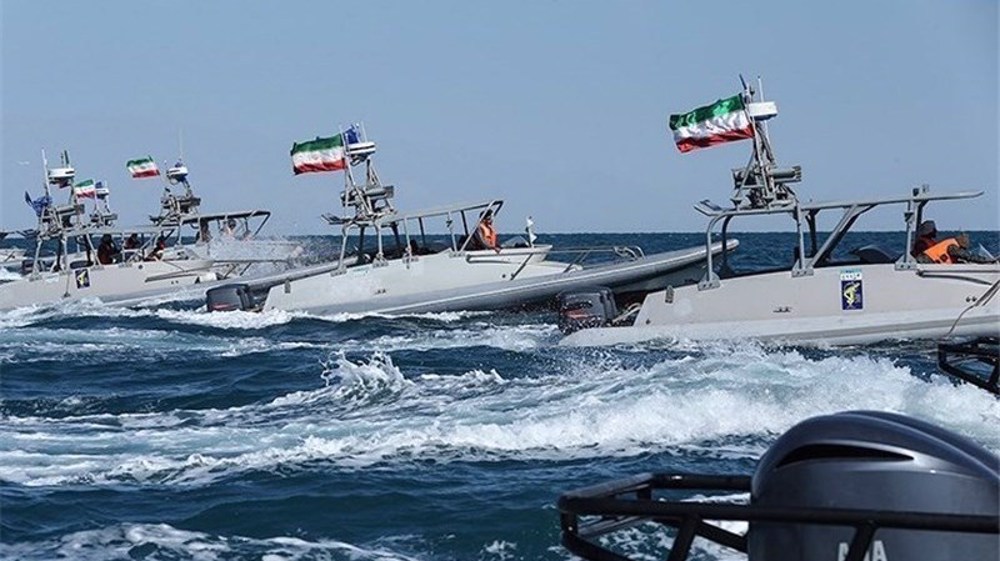
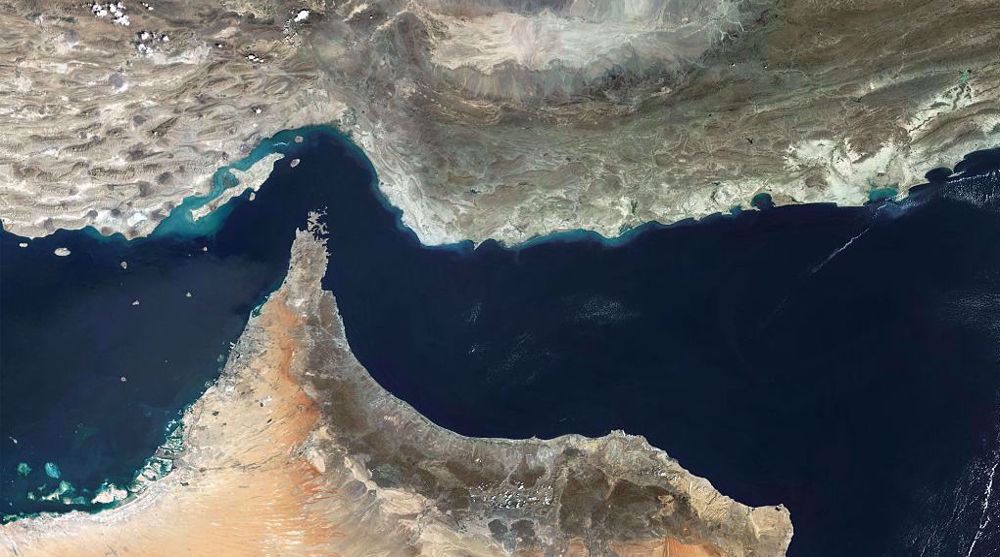
The spokesperson for the Khatam al-Anbiya Central Headquarters on Sunday announced that Iran has reasserted full control over the Strait of Hormuz in response to the American naval blockade and acts of "piracy" in the strategic waterway.
According to Lieutenant-Colonel Ebrahim Zolfaghari, the Islamic Republic of Iran, acting in good faith and in line with previous agreements, had initially agreed to the managed passage of a limited number of oil tankers and commercial ships through the strait.
However, he added that the Americans, given their track record of repeated breaches of faith, continue to engage in banditry and piracy under the guise of a so-called blockade.
Unless the American side fully ends its disruption of the free passage of vessels originating from Iran to their destinations and back, the situation in the Strait of Hormuz will remain under severe control and will stay in its previous state, the spokesperson asserted.
For Iran, the strategic waterway is not a bargaining chip or a threat. It represents permanent leverage: 1,600 kilometers of northern coastline, unsinkable island outposts, and an asymmetric doctrine that neutralizes conventional naval power.
The fact that this waterway – through which over 20 percent of global liquefied natural gas trade flows on a daily basis – has been in the news in recent weeks amid the US-Israeli war of aggression against the Islamic Republic proves it represents a strategic asset for Iran.
After the ceasefire in Lebanon came into effect on Friday, Iran agreed to allow certain commercial vessels through the chokepoint even as the Islamic Revolution Guards Corps (IRGC) Navy announced that a "new order" is now in place over the Strait of Hormuz, outlining strict new regulations for all maritime traffic.
According to the IRGC Navy, all transits, commercial or otherwise, will only be allowed with the explicit authorization of the IRGC's naval forces.
It’s the US, not Iran, chasing a deal
However, that did not translate into reality on the American side. They continued their banditry and kept blocking Iranian vessels despite Iran's goodwill, jeopardizing the potential next round of talks in Islamabad.
Contrary to prevailing assumptions in Western capitals, it is not Iran that is seeking an agreement with the US. Having paid the high cost of war – including the loss of its Leader, senior military commanders, and thousands of ordinary citizens – Iran has made clear that it will continue to fight until a new strategic equation is established in the region and beyond.
Having achieved an unarguable victory on the battlefield and inflicting enormous military and economic costs on the United States and its allies, including the Israeli regime, Iran will not agree to any negotiation unless all its conditions are met.
On the other side, contrary to US President Donald Trump's repetitive social media rhetoric, Washington has no choice but to accept Iran's demands if it wants to come out of the quagmire it finds itself in – partly due to its own follies and partly due to Zionist pressure.
Tehran has already signaled that it will make no concessions regarding its inalienable and legal nuclear rights under the Nuclear Non-Proliferation Treaty (NPT) and will continue to manage the Strait of Hormuz in the manner it deems fit.
Just as it considers the enemy as a single entity comprising the United States, Israel, and their regional allies, Iran firmly believes in the unity of the Axis of Resistance and will not allow the fate of the various fronts to be separated.
Press TV Exclusive: US destroyers' Strait of Hormuz transit stunt failed, came close to destructionhttps://t.co/zVeCCKGJlO https://t.co/m348SyV1uz pic.twitter.com/KhKXTTwWA5
— Press TV 🔻 (@PressTV) April 12, 2026
New regional and global order
The Islamic Republic of Iran, in line with its strategic doctrine, has defined a new order in the region and the world following the 40-day war of US-Israeli aggression.
The slightest mistake by the enemy is now monitored and assessed by the country that has emerged as one of the new superpowers, and it is Iran that is now in a position to impose its will upon the enemy, irrespective of their military or economic muscle.
The case of Lebanon serves as a clear example. Through 45 days of courageous and indomitable resistance against the arrogant enemy, Hezbollah and the Lebanese nation imposed its will on the Zionist enemy and forced it to halt its aggression.
Iran, by maintaining strict control over the Strait of Hormuz, actively supported the will of Hezbollah and the broader resistance. In reality, a united, coordinated, and synergistic front of the resistance imposed its collective will on the enemy.
With the re-closure of the Strait of Hormuz as announced on Saturday, this new order will once again manifest itself. Iran now safeguards its interests and imposes its will on the enemy, not through threats or diplomatic action alone, but on the ground and in practical terms, demonstrating conclusively who holds the upper hand.
This new order reflects a fundamental shift in the global balance of power. Iran, which until recently had to abide by a "win-win" rule in the political games of the great powers, has now reached a stage where it shows its real, practical, and credible power before the enemy.
This time, it is Iran that is sanctioning the enemy – and the most stubborn and powerful enemy at that. Iran has rediscovered itself, its powers, capabilities, assets, and privileges.
The unparalleled self-confidence observed today among the Iranian people, the armed forces, and the country’s officials is the direct result and fruit of this renewed self-belief.
No concessions to the enemy
Based on this authority, power, and self-belief, which even the enemy now acknowledges, no concession should be made. The era of the passive "win-win" discourse has ended.
Iran now holds the upper hand and is in a position to assert its authority. Its hand remains full, its capacities are yet to be demonstrated in full, and many options remain at its disposal.
It is the enemy that has burned through and exhausted all its options, as demonstrated in the 40-day war. Iran has emerged victorious in the war that the enemy imposed, and the Iranian people – like the country’s armed forces – have remained on the scene from the very beginning of the war and refuse to take a step back.
They support the armed forces with all they have, standing like a mountain behind them and the country’s leadership, and demanding that not the slightest concession be made to the enemy – on the battlefield or on the negotiating table.
The strategic imperative is clear: the enemy must be taught a lesson once and for all, and never again dare to insult or attack Iran.
The Red Sea closure represents not merely an event but a historical, game-changing milestone in global economic affairs. It will deliver a fatal blow to the current global economic system, dominated by the US, end the era of Western maritime dominance...https://t.co/QhC7ylLCcl
— Press TV 🔻 (@PressTV) April 18, 2026
The sanctity of Iran's nuclear capability
Iran's nuclear capability and industry are as sacred as its soil, as foreign ministry spokesman Esmaiel Baghaei clearly emphasised in a TV interview on Friday, and no one has the right to bargain over them in any form or capacity.
This national wealth belongs to the Iranian people and must remain outside any negotiations, and no promise or commitment should be made regarding it in talks.
The subject of these negotiations is not – and should not be – the nuclear issue at all. Rather, any negotiations are meant to force the enemy to accept an end to the war that it unfairly, illegally and unjustifiably imposed on the Iranian people.
Where Iran holds the upper hand, it must exact its rights from the enemy. These include compensation for the three imposed wars, reparations for the martyrs and wounded, return of Iranian assets seized and withheld from the country through the bullying power politics of past years, restoration of Iran's legitimate right to manage the Strait of Hormuz, lifting of sanctions and annulment of international resolutions against Iran, among other points.
In these negotiations, Iran must reclaim its rights, not grant new concessions. It is the enemy that must make concessions, not the Iranian people. In any war, it is the defeated side that must make concessions, not the victorious side. That’s the universal rule.
Therefore, Iran must not make the slightest concession, especially regarding its legitimate nuclear rights, and should not negotiate over the nuclear issue at all.
Iran, no longer a passive player
Iran's strategic posture has undergone a fundamental transformation, especially after the three imposed wars in the past year, including the most recent 40-day war of aggression.
It is no longer a passive player seeking accommodation with big powers. Iran now positions itself as a protagonist of the new regional and global order.
With battlefield victories, economic leverage, unified resistance fronts, and an unshakeable self-belief backed by popular public support, Iran is demanding that the enemy make the concessions.
The nuclear file is declared off-limits. The Strait of Hormuz remains a strategic lever. And the era of win-win diplomacy is over. Now it’s the winner taking it all and we know the setbacks the US-Israeli war coalition faced in the recent 40-day war.
Whether Washington and its allies are prepared to accept this new reality remains the central question of the current geopolitical crisis. Indecisiveness won’t help at this stage.

Understanding Iran’s tourism momentum amid war and sanctions

BRICS paving way for alternative world order, not a war machine against West: Analyst
Iran finds new platform in SCO to develop its rare-earth potential



VIDEO | Trump's America is dying for Israel
US visa ban on Iranian president’s media team is bid to hide the truth: FM spokesman
VIDEO | Iran fully prepared to respond to new aggression
US aggression, economic warfare amount to crimes against humanity: Iran's UN envoy
Protests erupt in US as ICE agent shoots Venezuelan driver
US pressure fuels cooperation among Muslim states: Pezeshkian
Major TV networks suspend White House pool coverage after Trump ban
US visa ban on Palestinian UN delegation violates international agreements: Hamas


 PressTV NEWSLETTER
now
PressTV NEWSLETTER
now
 This makes it easy to access the Press TV website
