Amid war at home, Iranian wrestling and taekwondo teams bring glory to country abroad
By Mohammad Ali Haqshenas
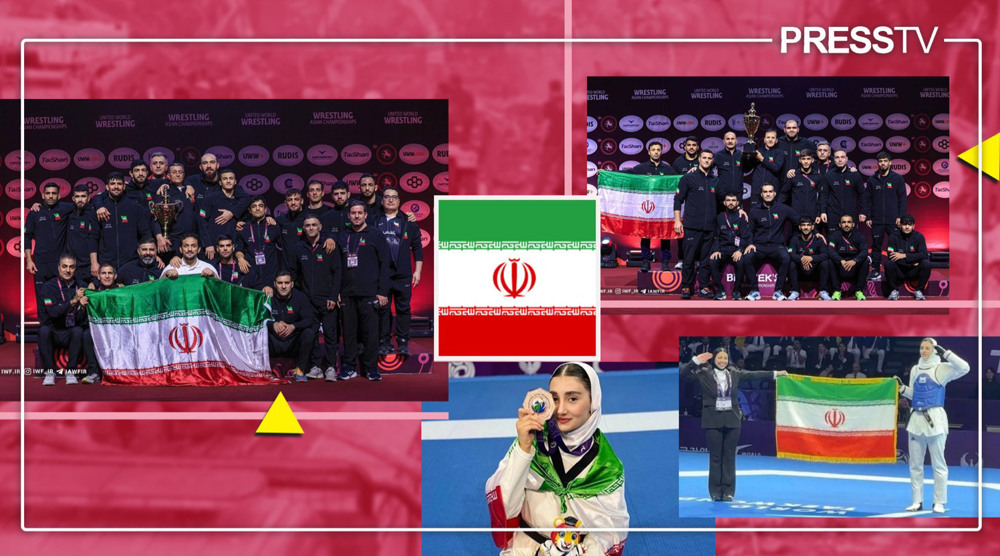
Rising from the rubble of their destroyed training arenas – and the daily traumas of an unprovoked aggression – Iran's national wrestling and junior taekwondo teams channeled their nation's grief and resilience into a powerful display of championship dominance on the international stage.
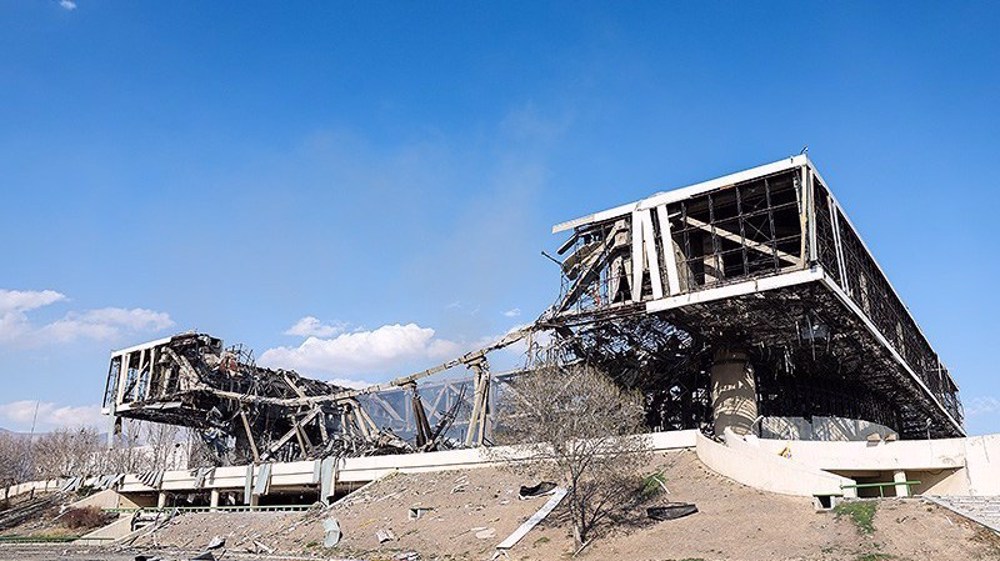
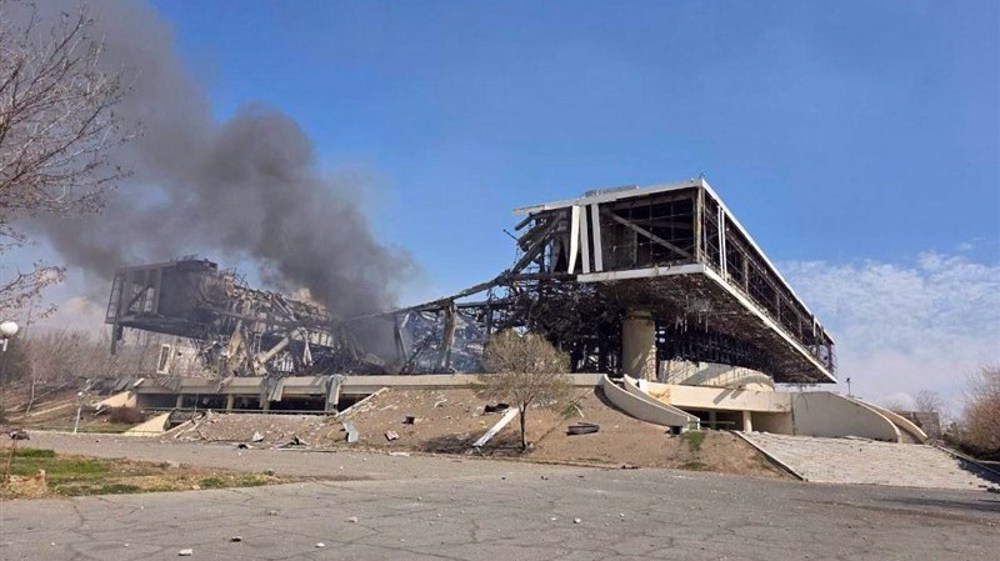
The iconic 12,000-seat Azadi Indoor Stadium in Tehran was once the beating heart of Iranian sports, especially wrestling. Beneath its sweeping roof, generations of athletes had forged their legacies.
But by early March, the stadium lay in ruins. Its historic architecture was reduced to rubble by illegal and unprovoked US-Israeli bombings. The strikes also severely damaged the national wrestling teams' camp and a host of other sports facilities within the iconic Azadi Complex.
For the Iranian teams, the destruction of their sporting sanctuary was hard to fathom, but it did not break them. It only made them and their resolve to pursue their goals stronger.
Against the grim backdrop of the imposed war on Iran, which began on February 28 in the middle of nuclear talks, these athletes embarked on a journey that transcended sport.
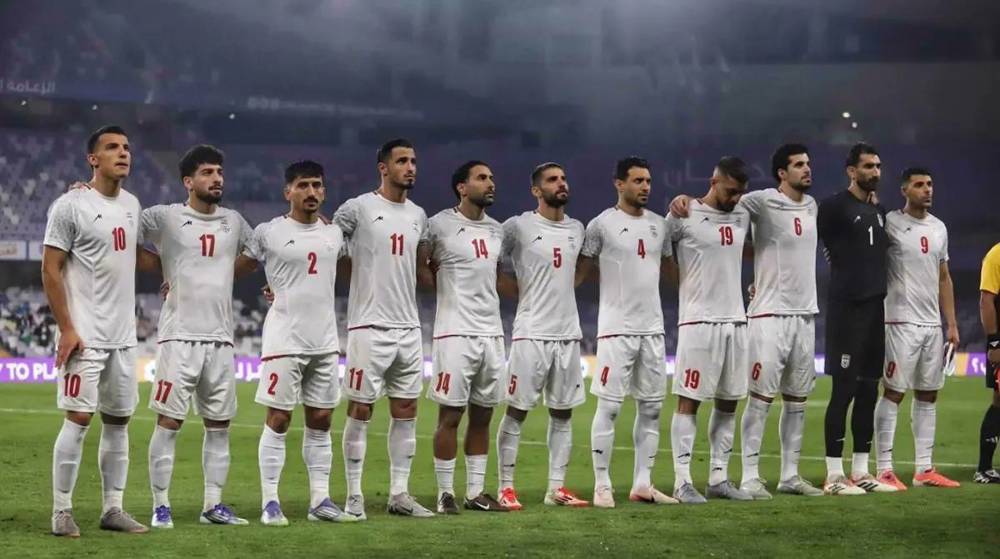
Across the arenas of Tashkent and Bishkek, Iran's junior taekwondo practitioners and senior wrestlers secured World and Asian championships, respectively, making strong statements on the world stage.
🥋 Khodaei secures Iran's first gold at 2026 World Taekwondo Junior C’ships@presstvsports https://t.co/HpzBpqb5iM
— Press TV Sports (@presstvsports) April 14, 2026
A gold dedicated to Minab children
Iran's junior taekwondo squad was in Uzbekistan last week for the 15th World Taekwondo Junior Championships. Competing at Tashkent's Olympic Sports Complex against a massive contingent of 986 competitors from 115 countries, the 19-athlete Iranian squad, including 10 boys and 9 girls, delivered a masterclass.
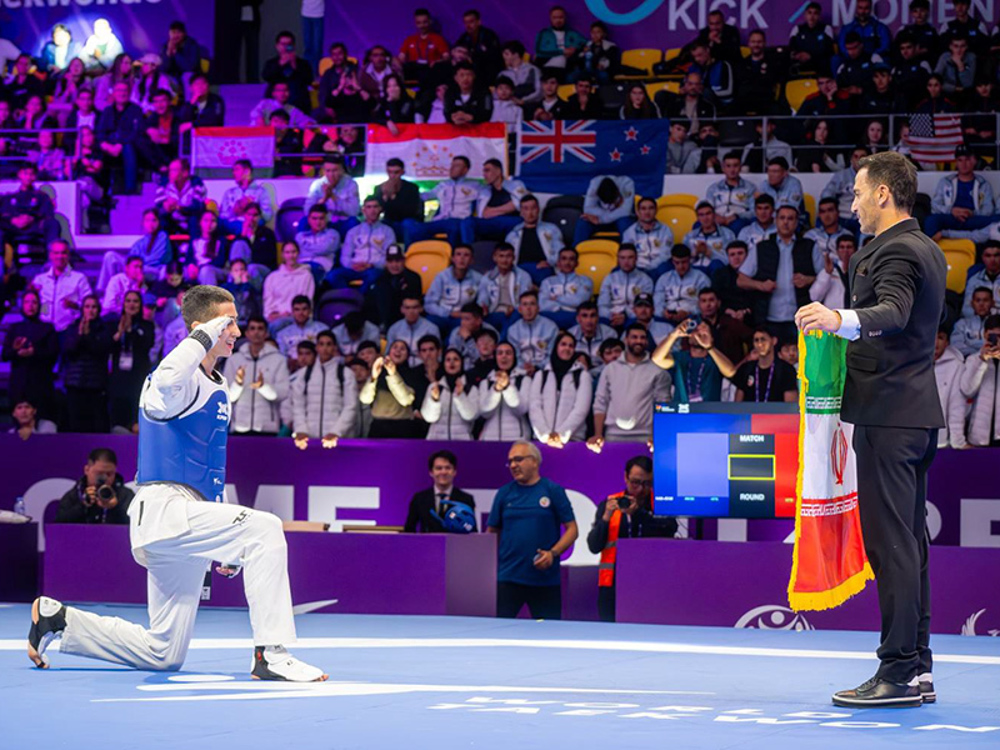
The emotional zenith was reached by Mohammad Erfan Khodaei. Competing in the boys' -55 kg weight class, Khodaei won all six of his bouts without dropping a single round.
He swept El Salvador's Astorga Melgar 2-0, followed by identical 2-0 thumping victories against Malaysia's Prakash and Albania's Gjikaj.
After defeating Chinese Taipei's Po-Yu Cheng and Kazakhstan's Medetbay, Khodaei faced Poland's Sokolowski in the final and swept the match in two consecutive rounds.
Social media footage captured a teary-eyed Khodaei taking a victory lap, eventually laying the Iranian flag on the mat and kissing it with a tremendous sense of patriotism.
"I dedicate this medal to the martyrs of the Shajareh Tayyibeh school of Minab," Khodaei said after winning the gold, referring to the elementary school in southern Iran's Minab that was bombed by the US-Israeli coalition on the first day of the war, killing 170, mostly children.
The gold rush in Tashkent continued. In the girls' +68 kg category, Hana Zarrinkamar proved invincible. She defeated competitors from Greece (2-0), the Netherlands (2-1), Tunisia (2-0), and Croatia (2-0) before a decisive 2-0 sweep of the Czech Republic’s Binova in the final.
Benyamin Soltanian matched this dominance in the boys' -73 kg division, claiming gold without conceding a round. After a bye, he blanked opponents from Greece, Bosnia, Mexico, and Ukraine 2-0, culminating in a 2-0 title bout victory over South Korea’s Seung Min Ahn.
Parsa Hoshiyar added to the golden tally in the -63 kg class, fighting through a rugged bracket to defeat France's Rosemond 2-1 in the final.
Bahar Tahmasebi (girls' -42 kg), Pinar Lotfizadeh (girls’ -59 kg), and Helia Ebrahimian (girls’ -49 kg) added hard-fought bronze medals to the overall tally.
The Iranian boys' team claimed the World Vice-Championship title with 397 points and three golds, finishing just behind Uzbekistan (404 points). The girls' team placed fourth globally.
The significance of their achievement was recognized at the highest levels in the country.
"Dispatching this future-building caravan in the critical conditions of the imposed battle is beyond a sporting presence; it is a decisive proof of this truth that the pulse of life, growth, and hope in the veins of this nation, even in the turbulence of the hardest tests of history, does not stop beating," Iranian Ministry of Sports noted in a statement.
The National Olympic Committee echoed this, noting that winning 7 medals in such a sensitive time "shows that the sports community has not backed down alongside its people in defending the values of the motherland."
Absolute dominance on the wrestling mat
In Bishkek, Kyrgyzstan, senior Iranian wrestlers dominated the competition in both Greco-Roman and freestyle divisions despite disrupted preparations and a long route.
The weeks leading up to the Asian Wrestling Championships were defined by disruption, especially after the place that hosted wrestling training sessions was also attacked. With Tehran under heavy bombardment, the national wrestling camp was forced out of the capital.
"We spent many days trying to find a safe place to practise," recalled Iranian freestyle chief coach Pejman Dorostkar, following the competition.
"With the help of the head of the federation, we were able to find a place to practise in the north of Iran (Mazandaran). But we were nowhere close to the kind of readiness and calm we needed before a major competition."
Even in Mazandaran, roughly 200 kilometers north of the capital, the psychological toll was immense. "It was a very difficult situation, something we had never faced before," Dorostkar noted. "We were in a state of war. Our country was under bombardment. Our guys were worried about their families."
To reach the Asian Championships in Bishkek, the team navigated a logistical nightmare.
With international airports heavily bombed and transit routes closed, the squad endured a grueling 22-hour bus ride to the border and it took them a total of 48 hours to reach Bishkek.
The Greco-Roman team delivered a flawless campaign, capturing 10 medals in 10 weight classes to lift the Asian Championship with 195 points.
The team vastly outpaced Kyrgyzstan (153) and Uzbekistan (136). Mohammad Hadi Saravi (97 kg) and Amin Mirzazadeh (130kg) claimed gold medals for Team Iran.
Erfan Jarkani (63 kg), Mohammad Javad Rezaei (72 kg), Ali Eskou (77 kg), Mohammad Amin Hosseini (82 kg), and Gholamreza Farrokhi (87 kg) won silver medals, while Mohammad Hesseinvand Panahi (55 kg), Ali Ahmadi Vafa (60 kg), and Ahmadreza Mohsenzadeh (67 kg) claimed bronze medals, ensuring no member of the team returned empty handed.
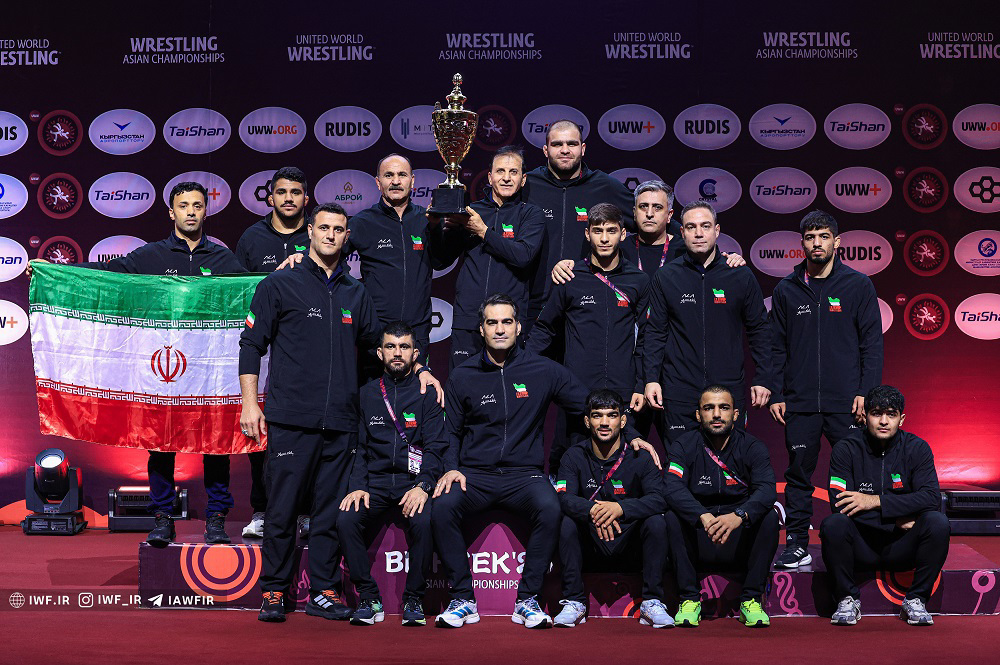
Just days later, Iran's senior freestyle team also claimed the Asian title with 178 points, overcoming India (162) and Japan (127), with four golds, one silver, and three bronzes.
Milad Valizadeh, the young wrestling prodigy competing at 57 kg, was named the tournament's best wrestler.
He amassed 35 points, averaging a blistering one minute and 51 seconds per victory, all ending before regulation time. He shut out India's Ankush 10-0 and Japan's Fuga Sasaki 11-0 before dismantling Mongolia's Monkh Erdene Batkhuyag 14-3 in the final.
At 92 kg, Mohammad Mobin Azimi demonstrated the tournament's best defense, winning gold without conceding a single point (26-0 aggregate), including a 6-0 victory over Kazakh world bronze medalist Azamat Dauletbekov.
Seasoned wrestler Kamran Ghasempour (86 kg) overwhelmed his bracket, capping his run with a 7-0 technical superiority win over India's Mukul Dahiya to clinch the gold.
Reflecting on the triumph, Ghasempour struck a somber tone: "In these days when many of our compatriots have seen mourning, maybe these things are small, but just the fact that our medals made the people happy for a moment is enough for us."
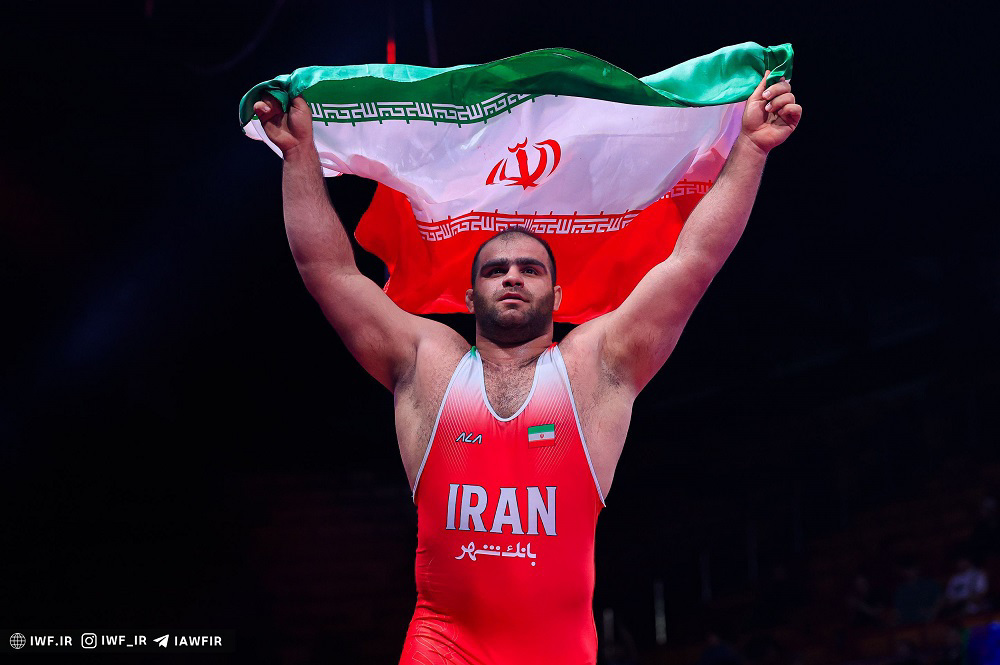
The emotional anchor of the Bishkek campaign was 25-year-old heavyweight Amir Hossein Zare. The three-time world champion and two-time Olympic medalist bulldozed through the 125 kg class, defeating Kazakhstan's Yedighe Kassymbek 7-0, China's Buhurdon 5-0, and Bahrain's Shamil Sharipov 4-0 to secure gold.
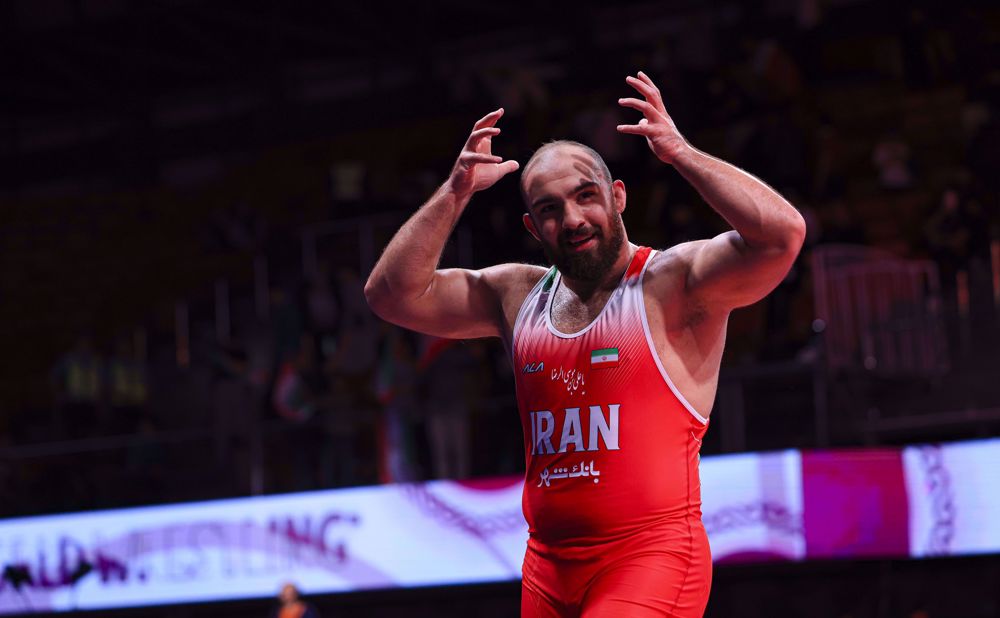
For Zare, this victory stood apart from the rest. "This gold medal is 100 per cent the most emotional one for me. I was able to win this despite the situation my country is in," he said.
Zare spoke candidly of the perspective the team maintained while training under airstrikes.
"All the guys in the team supported each other. We cheered for each other. We also understood, however hard it was, that what we were doing was not harder than what others were facing. We were wrestling. They were having bombs dropped on them. There were children who were martyred... With their love, we faced whatever challenges we had to face," said the young wrestling champion from northern Iran.
"We are not rich people. But we will always perform at the highest level against any competition. I know whenever I fight, the people of my country support me. That is what gives me strength. For me, lifting the flag is the least I can do."
Amir Ali Azarpira (97 kg) won a silver for the team while Ahmad Mohammadnejad Javan (61 kg), Sina Khalili (70 kg), and Amir Mohammad Yazdani (74 kg) bagged bronze medals.
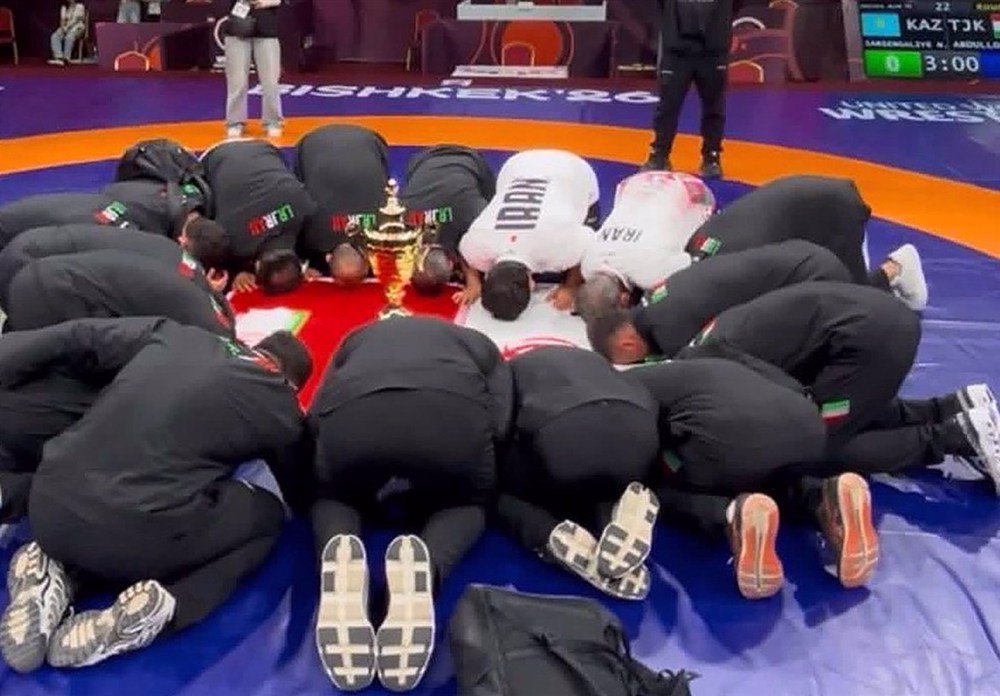
Coach Dorostkar noted the profound symbolism of his team's actions on the podium. "Kissing the flag as a team after the championship title was the wrestlers’ own idea," he revealed.
"This flag had a special importance... The members of the team, to say that they are alongside their country and their people and that they love the flag of Iran, did this very heroic and valuable movement with all their heart."
Rising from the ashes
As the athletes returned home with a tally of colorful medals, they saw the destruction of sports facilities, especially the Azadi Stadium, as not an end, but a rallying cry for the future.
"Azadi Stadium was a piece of history. I don’t know why they attacked it," Dorostkar reflected.
"You don’t attack historic places. Azadi Stadium held many memories for the people of Iran, especially the wrestlers who competed there. Five World Cups were held at this venue. We became champions of the world twice in that venue."
Despite the rubble, the spirit of Iranian combat sports remains unbroken.
"But we are not worried," Dorostkar remarked, looking ahead to the 2026 World Championships. "Our enemies can’t cut out our roots for the sport. That stadium will be rebuilt. It will be better, and I hope we will be champions again."

Iran tops Asian Youth Karate Championships with 31-medal haul

Iran’s Rahimi wins gold at 2026 World Archery Para Series in India
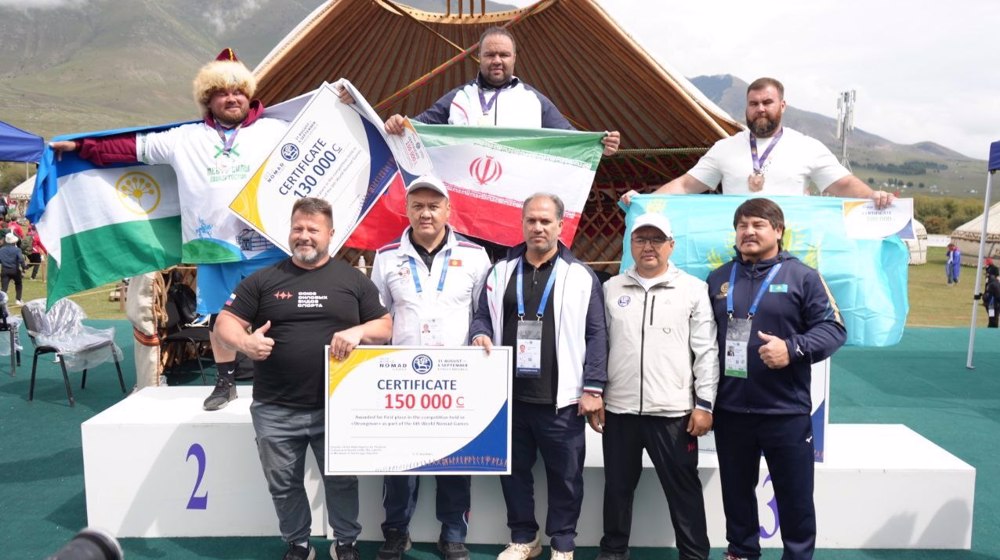
Iran adds two more gold medals at 2026 World Nomad Games



Trump bars CNN, MS NOW and Politico from White House for ‘fake news’
Discover Iran: Tabriz, where Iran’s Silk Road legacy meets industry, trade and a new economic future
Sirens blare in Riyadh, across Saudi Arabia amid amid Yemeni retaliatory strikes
New images reveal severe destruction at US base in Kuwait after Iranian strikes
Israeli strike on motorcycle kills Palestinian in Gaza City, injures child
VIDEO | Russians head to polls as 3-day parliamentary elections kick off
VIDEO | South Korean president drops Hormuz deployment plan amid protests
VIDEO | Yemenis slam Saudi claims of targeting holy city of Mecca


 PressTV NEWSLETTER
now
PressTV NEWSLETTER
now
 This makes it easy to access the Press TV website
