US-Israeli bombing of Tehran’s Azadi Stadium shatters moral facade of global sports
By Behnam Sarmadi
US-Israeli aggression against the Islamic Republic of Iran – unprovoked, unjustified and illegal – has crossed all red lines in the past week, from the assassination of the country’s top leadership and indiscriminate attacks on the civilian infrastructure.
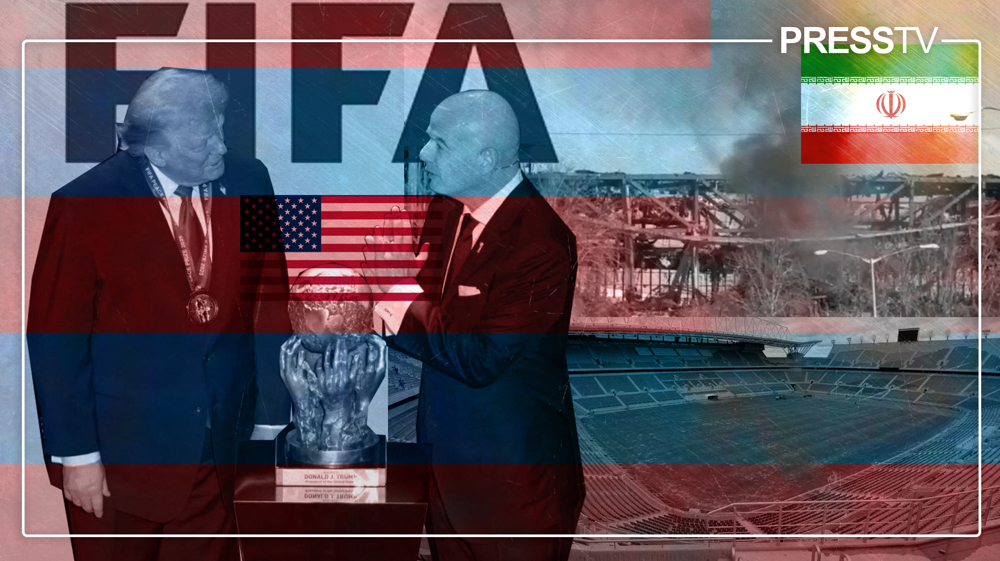
On Thursday, in yet another horrendous war crime, the aggressors targeted Tehran's 12,000-seat Azadi Sports Stadium, destroying the indoor facilities.
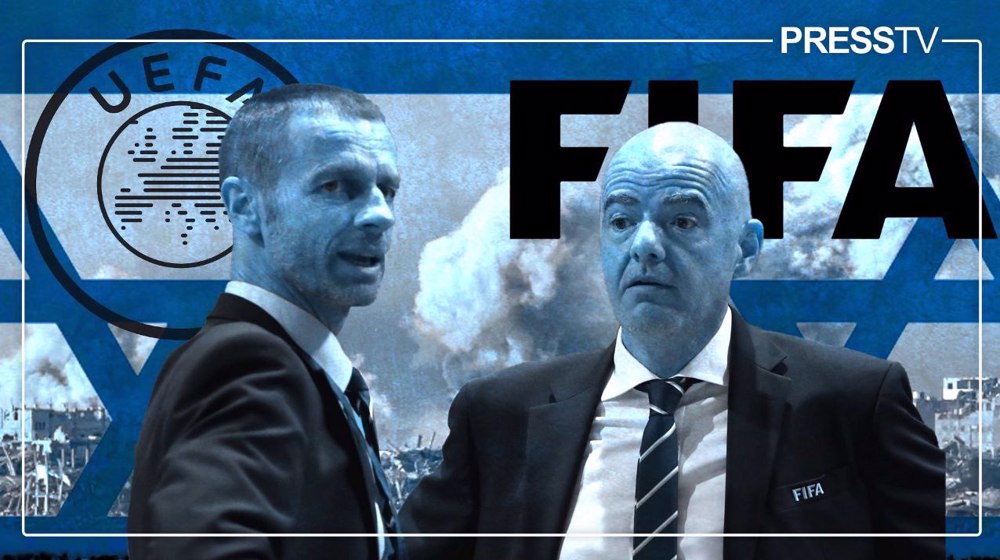
Yet, there has been no statement of condemnation or anguish from any of the sports federations worldwide, including the international football governing body FIFA, which is currently administered by Donald Trump’s friend Gianni Infantino.
There are moments when the carefully constructed mythology of global sport – that it exists on a plane above the grime of geopolitics – collapses into rubble.
We saw it again in the skyline of Tehran, when bombs tore through the Azadi Sports Complex, which has served as a launch pad for many of Iran's athletes over the years.
This is not just any stadium; it is Iran’s most iconic sporting cathedral, inaugurated during the 1974 Asian Games and home to generations of national triumphs in football, volleyball, and wrestling.
On Thursday, less than a week into the new round of Israeli-American aggression against the Islamic Republic of Iran, it became another crime scene.
Three missiles struck the 12,000-seat Azadi hall, reducing it to rubble. The noise was so deafening that it was heard across the city.
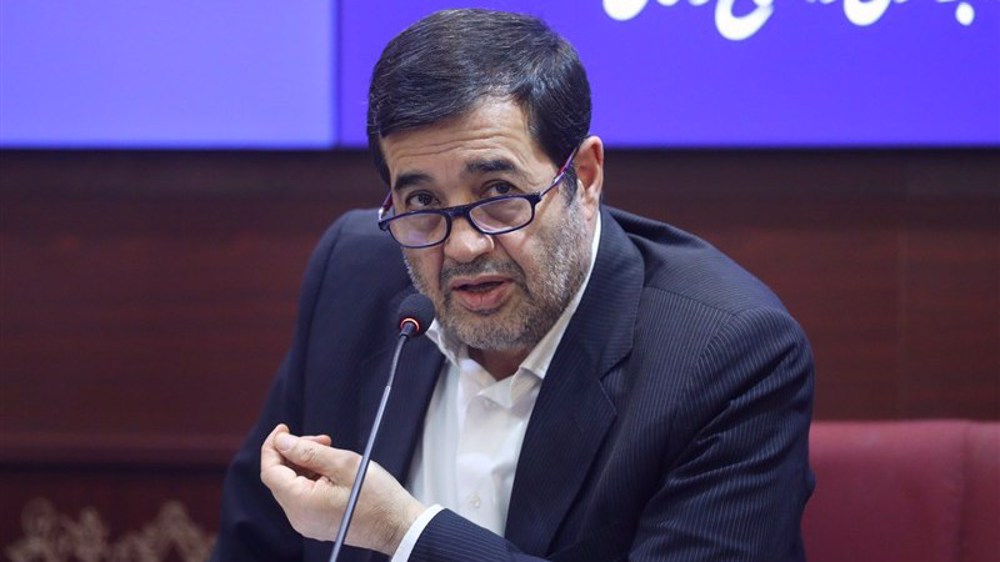
Iranian Sports Minister Ahmad Donyamali, who inspected the site immediately after the attack, said these are civilian spaces, and fortunately, the stadium was empty at the time of the strike. No casualties were reported there.
"Under the Olympic Charter, targeting such sites amounts to a war crime," he said.
Another US-Israeli attack on Tehran resulted in the destruction of the 12,000-seat Azadi Stadium.
— Press TV 🔻 (@PressTV) March 5, 2026
Follow: https://t.co/mLGcUTSA3Q pic.twitter.com/X11YF1T13i
Other than Azadi Stadium, two other facilities in Tehran—the Be'sat and Azadegan halls—were also targeted by the Israeli-American axis of evil.
Yet, in the aftermath of these attacks, the most deafening sound has been the silence of the institutions that claim guardianship over the moral universe of sport.
Neither FIFA nor the International Olympic Committee has bothered to condemn the aggression on these sports facilities. No statements about the sanctity of sport. No reminders that stadiums are supposed to be sanctuaries of talent, not targets.
This silence would be understandable had these same organizations not, in recent years, been so enthusiastic in making hue and cry about these same principles.
The uncomfortable truth is that sport’s governing bodies internationally, including FIFA, have developed a habit of moral clarity that depends almost entirely on political geography.
When Russia launched its military operation against Ukraine in 2022, both FIFA and IOC moved with remarkable speed, expelling Russian teams and issuing statements about the incompatibility of war and sport. It was framed as a defense of universal sporting values.
Yet the boundaries of that principle have proven surprisingly flexible. For more than two years, the world has mutely watched the genocide unfold in Gaza, where Israeli bombardment has systematically destroyed sports infrastructure and killed hundreds of athletes, mostly footballers.
Palestinian appeals for sanctions against the murderous Israeli regime have been met with bureaucratic silence. Now, Iran is facing the same selective morality.
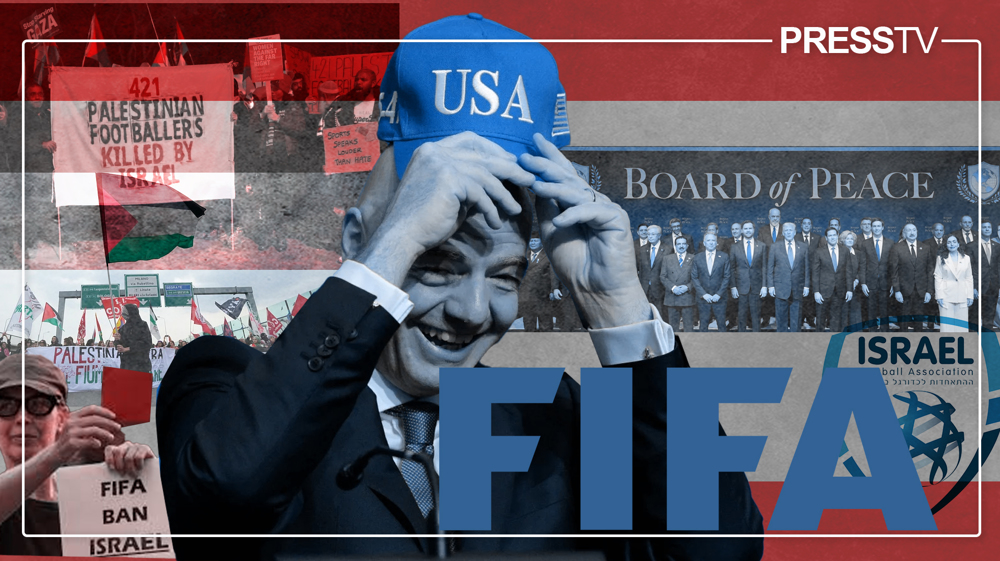
To understand the grotesque irony of the current moment, one must recall the peculiar piece of symbolism that now hangs over Tehran’s shattered venue: the much-criticized "FIFA Peace Prize" handed to the chief war-monger, child-abuser and child-killer, Trump.
Infantino invented the prize to give to the US president, who had failed to secure a Nobel Peace Prize despite all sorts of lobbying and pressure campaigns.
The destruction of Iran's 12000-seat Azadi stadium in the Israeli American attack.
— Press TV 🔻 (@PressTV) March 6, 2026
Follow: https://t.co/LWoNSpkc2J pic.twitter.com/V3R4A86Sk9
The prize was little more than Infantino currying favor in Washington, proof that FIFA is now a political body that works at the behest of the powerful political figures.
When a stadium in Tehran is bombed by the terrorist forces of the same country whose leader was recently feted by FIFA for "peace," the symbolism becomes dark parody.
In fairness, FIFA and the IOC would argue they are not geopolitical actors. Their mandate, they claim, is to organize tournaments, not adjudicate wars and conflicts.
That argument once held merit. But these institutions abandoned strict neutrality the moment they chose to weaponize sport against Russia. By making that conscious choice, they aligned the global game with political judgments.
Once that precedent exists, silence elsewhere becomes complicity.
This latest aggression against Iran, which assassinated the Leader of the Islamic Revolution, Ayatollah Seyyed Ali Khamenei, and over 1,300 civilians, including 165 schoolchildren in southern Hormozgan province, did not occur in a vacuum.
It is part of a wider war imposed upon the Iranian nation in the past decades, which has taken different forms over the years.
While Iran has responded with legitimate acts of self-defense, launching waves of missile and drone attacks against occupied territories and American bases across the region, the US and Israel continue to target civilian infrastructure.
No one seriously expects FIFA to resolve the wars in West Asia. But acknowledging that the bombing of a stadium violates the Olympic Charter and the spirit of sport is not asking for too much. It’s both the legal and moral responsibility of the football governing body.
It would simply mean applying the same principle everywhere. Instead, the response has been the sound that now echoes across Tehran’s battered venue: nothing.
The message for observers is clear. When the violence comes from Washington or Tel Aviv, global sport suddenly loses its voice. When it comes from elsewhere, the rhetoric of universal values returns. This is not neutrality; it is selective morality dressed in a blazer.
Behnam Sarmadi is a Tehran-based writer and commentator.
(The views expressed in this article do not necessarily reflect those of Press TV)
‘Not FIFA’s to sell’: UEFA revolts against FIFA’s Trump-linked $20bn privatization plan
Iran wins mixed air pistol gold, sets world final record at Para Shooting World Cup
FIFA president asked to appear before US Congress over Trump ties, lack of transparency



Iran FM warns of Israeli false-flag plots after drone attack in Egypt
Coffins now part of US equipment in region: Top Iranian commander
Response to US-Saudi aggression must protect Iraq’s sovereignty, deter future attacks: Analyst
Tel Aviv seeks deeper military integration with Washington as US support for Israel erodes: Report
VIDEO | Press TV's news headlines
IRGC releases evidence debunking CENTCOM’s claims of 'zero damage' in Jordan strike
VIDEO | Gaza students continue education despite limitations
Israeli troops stage 'mutiny' at notorious Sde Teiman base


 PressTV NEWSLETTER
now
PressTV NEWSLETTER
now
 This makes it easy to access the Press TV website
