Iran rejects UAE proposal on ‘maritime corridor’ in Strait of Hormuz
Iran has vehemently rejected a UAE-backed proposal adopted by the International Maritime Organization (IMO) on establishing a so-called “safe maritime corridor” in the Strait of Hormuz, slamming it as legally-groundless and politically-motivated.
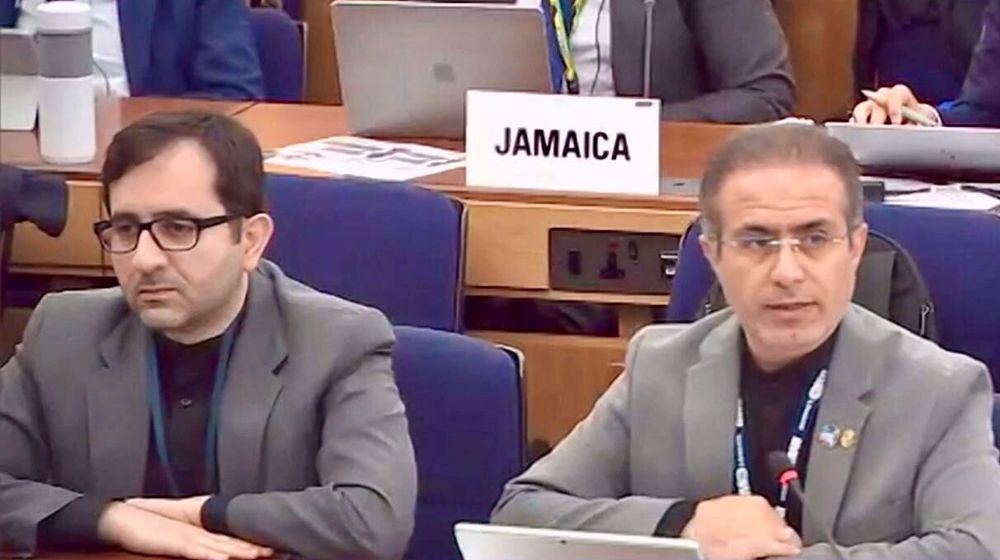
At the 113th meeting of the IMO Legal Committee on Tuesday, Deputy Permanent Representative of the Ports and Maritime Organization of Iran to the IMO Pouria Kolivand categorically rejected an Emirati proposal on a “safe maritime corridor” through the strategic waterway.
He firmly rejected claims by the United Arab Emirates (UAE) and its proposal on the status que of the Strait of Hormuz, describing the paper as based on an arbitrary narrative full of groundless claims and legally invalid conclusions.
Kolivand also stressed that the IMO adopted a deeply-flawed proposal that is procedurally invalid, emphasizing that any corridor must be agreed with the full consent and coordination of Iran as the key coastal state.
An unprovoked war of aggression by a US-Israeli military coalition against Iran on February 28 is the root cause of the current deterioration of maritime safety in West Asia and that such an act of war violates the UN Charter, Tehran says, stressing that any legal assessment that isolates the maritime consequences from this root cause is “incomplete and legally flawed.”
Since the onset of war, Iran has closed the Strait of Hormuz only to hostile vessels – those directly or indirectly linked to the aggressors – but at the same time maintained that non-hostile vessels not participating in or supporting aggression against Iran may pass through the narrow waterway after coordination with relevant Iranian authorities and compliance with safety regulations.
“The current situation in the region, particularly in the Strait of Hormuz, is the direct consequence of savage and illegal war by the US and the Israeli regime against the Islamic Republic of Iran, a war that is in sheer violation of fundamental principles of the UN Charter, particularly the principle of prohibition of appeal to force,” Kolivand said at the IMO meeting.
Those states participating in the aggression and those paving the way for the aggression have to bear international responsibility, he added, referring to principles of international law and relevant documents on the definition of aggression.
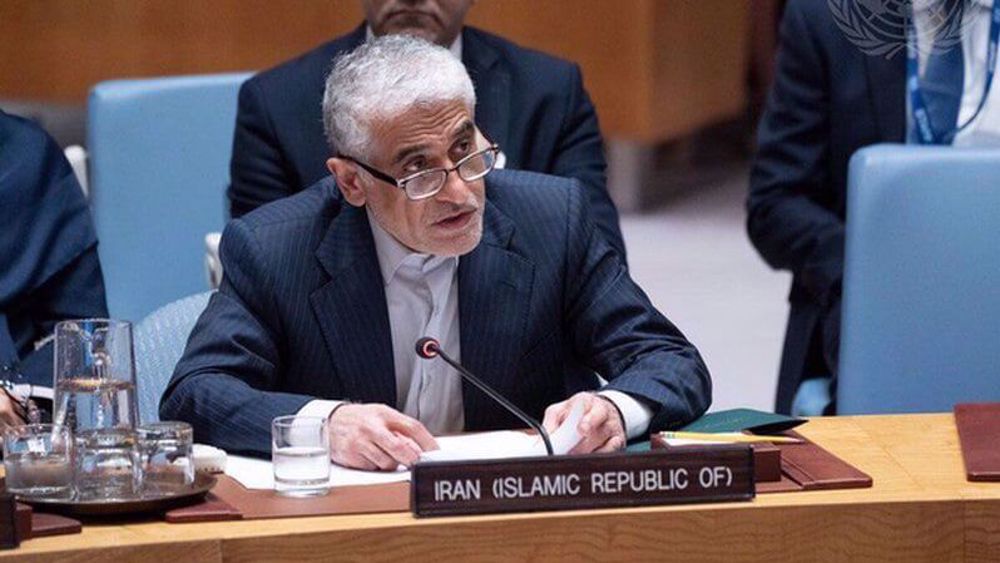
Kolivand also stressed that despite the war-triggered situation in the strait, the waterway has always been open and the maritime traffic has not been blocked, adding that attempts by the UAE’s proposal in making Iran responsible for the status que of the Strait of Hormuz severely suffers from legal and technical flaws.
According to Iran’s assessment, 39 of Iranian commercial vessels have been attacked and sunk, while 20 seafarers have been killed during the 40 days of war.
Iran has issued a strongly-worded statement to the IMO, lambasting the US and Israel for breaching international law and the organization for acting outside of its remit.
“These acts constitute serious violations of international law, including international humanitarian law, the law of the sea, and the principles enshrined in IMO instruments ... These are not simple numbers; these are war crimes and crimes against humanity,” read a paper by Iran submitted to the IMO’s Legal Committee, which plans to hold a meeting this week in London.
It also condemned the unlawful use of force against Iran by the US and Israel and argued that the current deterioration of maritime safety and security in Persian Gulf region is a direct consequence of acts of military aggression by the US and the Israeli regime against Iran.
“In response to this aggression, Iran has exercised its inherent right of self-defense under Article 51 of the UN Charter. Any legal assessment that isolates the maritime consequences from this root cause is incomplete and legally flawed,” the Iran paper further stressed.
It also went on to call for an immediate cessation of all acts targeting maritime safety infrastructure, medical vessels and civilian shipping.
Iran further stressed that any attempt to agree a safe maritime corridor without Tehran’s explicit approval risks “further politicizing the work of the IMO and undermining its technical integrity.”
Tehran says some Persian Gulf states, including the UAE, have contributed to the US-Israeli aggression by allowing the aggressors to use their territories to launch attacks against the Islamic Republic, stressing that using a state's territory to commit aggressive acts triggers international responsibility.
Kolivand also condemned the recent naval blockade by the US against Iranian ports on the Persian Gulf and the Sea of Oman, slamming it as the continuation of Washington’s unilateral behavior that undermines international law and endangers the lives of seafarers.
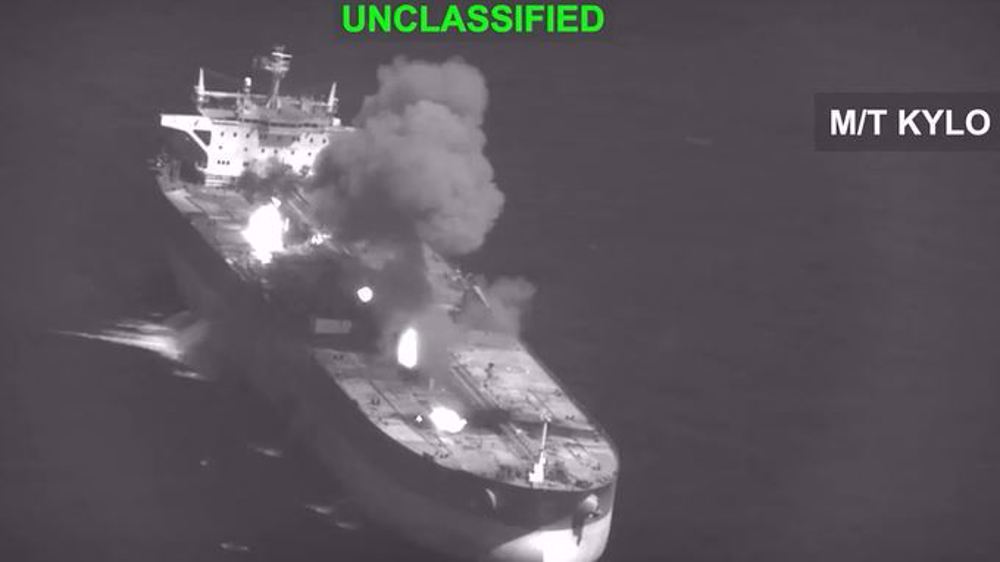
US military claims it struck three Iranian oil tankers in Persian Gulf waters
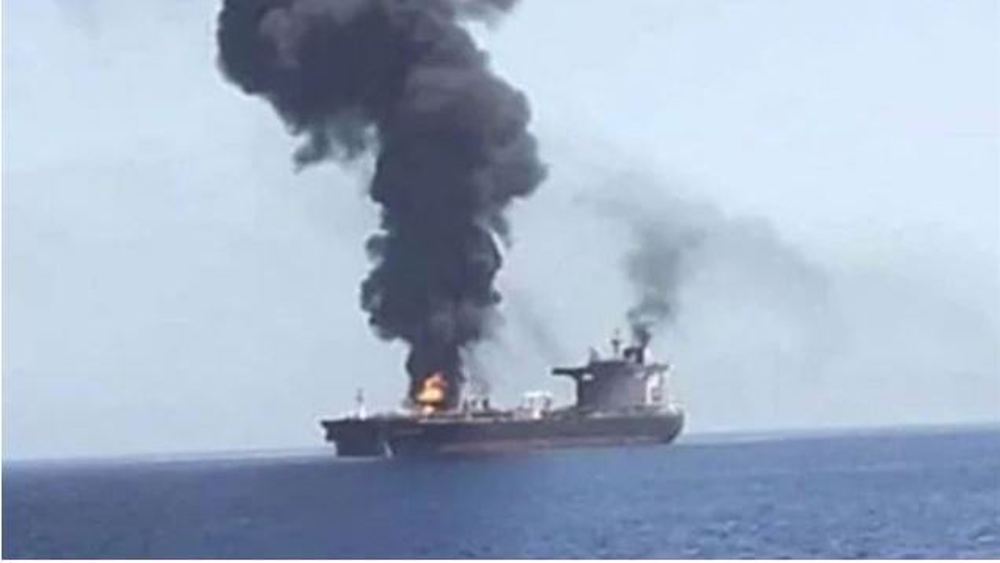
US forces hit Iranian oil tanker near Kharg Island, escalating aggression

European officials dismiss Bessent’s claim of EU joining Iran sanctions



VIDEO | Press TV's news headlines
VIDEO | Yemen’s roads, bridges devastated by years of war, blockade
VIDEO | Analyst: Failed cycle of US Iran policy serves corporate interests
IRGC ballistic missile retaliation forces US aircraft carrier, destroyer to flee
VIDEO | ‘US escort a big lie’: IRGC unveils decisive targeting of non-compliant vessels in Strait of Hormuz
IRGC strikes 3 US-linked vessels, 3 trespassing oil tankers in retaliation for American attacks
VIDEO | Trump downplays costs, consequences of war on Iran
VIDEO | News Review: Trump downplays war on Iran, calling it 'small potatoes'


 PressTV NEWSLETTER
now
PressTV NEWSLETTER
now
 This makes it easy to access the Press TV website
