Iran on blockade of Hormuz: US can’t win ‘war of choice’ through ‘revenge of choice’
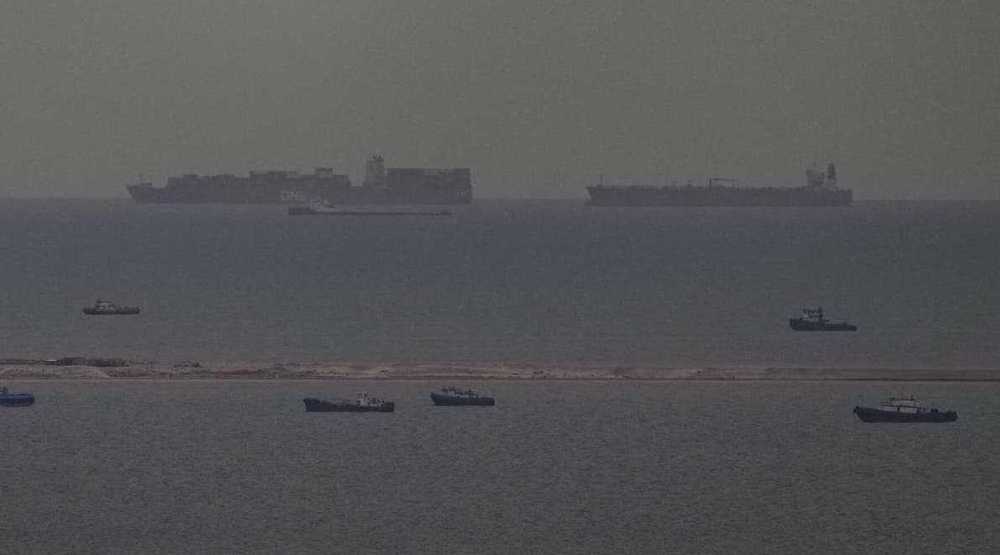
Iran has condemned the US attempt to impose a naval blockade of the Strait of Hormuz, questioning whether a “revenge of choice” against the global economy can be an option to win an unlawful “war of choice.”
In a post on X on Monday, Foreign Ministry spokesman Esmaeil Baghaei asked, “Can an illegal ‘war of choice’ be won through a ‘revenge of choice’ against the global economy?!”
“Is it ever worthwhile to cut off one’s nose to spite one’s face?!”
The comment came as the US military claimed it began its blockade of all maritime traffic entering and exiting Iranian ports, with President Donald Trump warning that any attack ships will be “immediately eliminated” if they attempt to break it.
In yet another bizarre post on X, Trump claimed that the US had “obliterated” 158 Iranian ships in the Persian Gulf and that the Iranian navy is “laying at the bottom of the sea.”
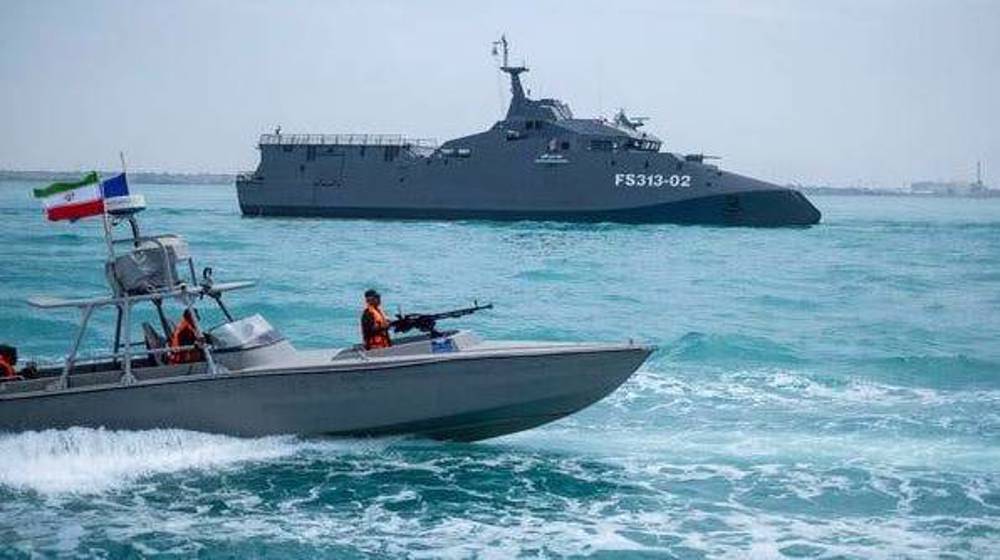
“What we have not hit are their small number of, what they call, ‘fast attack ships,’ because we did not consider them much of a threat,” he wrote on Truth Social.
“Warning: If any of these ships come anywhere close to our blockade, they will be immediately eliminated, using the same system of kill that we use against the drug dealers on boats at Sea.
Press TV Exclusive: US destroyers' Strait of Hormuz transit stunt failed, came close to destructionhttps://t.co/zVeCCKGJlO
— Press TV 🔻 (@PressTV) April 12, 2026
In a social media post on April 12, Trump said he intended to clear the Strait of Hormuz of mines and reopen it to all shipping.
US Central Command (CENTCOM) also announced the beginning of the blockade of all Iranian Persian Gulf ports and coastal areas, and the UK’s Maritime Trade Operations (UKMTO) said it had received warnings that the blockade applies to all vessel traffic, regardless of flag.
In a statement on Monday, Iran’s military warned any threat to the ports would trigger a broader regional response, declaring that no port in the Persian Gulf or the Sea of Oman would remain secure if Iranian ports are targeted.
Spokesman for the Iranian Armed Forces Lieutenant Colonel Ebrahim Zolfaqari said ensuring security in the two strategic water bodies is a collective matter, and such security must either apply to all or to no-one.
He underscored that the Iranian Armed Forces consider the defense of the national rights a natural and lawful obligation, which includes the exercise of sovereignty in territorial waters.
“Enemy-affiliated vessels do not and will not have the right to pass through the Strait of Hormuz,” he added. “Other vessels will be allowed to transit the strait in compliance with the regulations of the Armed Forces of the Islamic Republic of Iran.”
The Islamic Revolution Guards Corps (IRGC) warned on April 12 that any attempt by military vessels to transit the Strait of Hormuz will be deemed a violation of the two-week ceasefire with the United States.
The IRGC said it would give a firm and decisive response to such a violation.
Iran has placed restrictions on passage through the Strait of Hormuz in response to the US-Israeli war of aggression that began on February 28. Iran has allowed vessels operated by friendly nations to pass through while barring ships affiliated with aggressor countries and their supporters.
The Iranian Parliament has advanced draft legislation to impose transit fees in national currency and explicitly ban US and Israeli vessels.
Yemen vows to stand by Iran’s side amid continued US aggression, backs Tehran’s retaliation

US strike hits wedding reception in southern Iran, martyring five, including a child
Iran vows 'crushing' retaliation following latest US airstrikes on southern provinces



Araghchi reaffirms Iran’s firm support for Palestine
Iran says strikes on US bases ‘legitimate self-defense’ after wedding massacre
Iran space agency says readying Pars 2 satellite, Martyr Soleimani constellation for launch
Iran's Gheitasi wins gold in mas-wrestling at 2026 World Nomad Games
VIDEO | Israeli politicians exploit Palestinians’ suffering for electoral gain
Iran vows much stronger response to any provocative move by enemy
VIDEO | Press TV's news headlines
Resistance won’t give up weapons as long as US troops stay in Iraq: Badr Organization



 PressTV NEWSLETTER
now
PressTV NEWSLETTER
now
 This makes it easy to access the Press TV website
