Forty days that shook the Empire: How Iran turned the tables on US and prevailed
By Press TV Strategic Analysis Desk
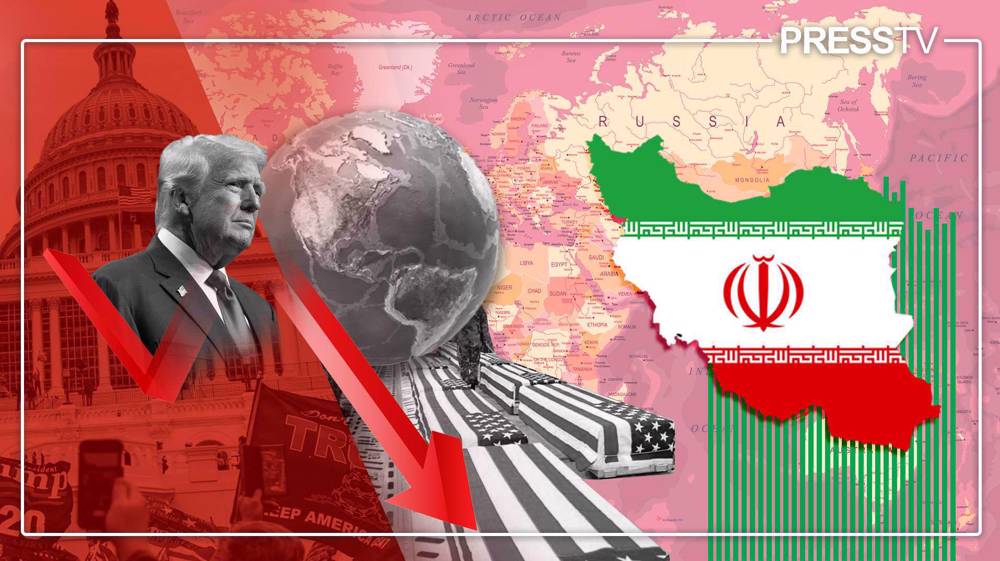
Forty days into the war imposed illegally on the Islamic Republic of Iran, the unthinkable has happened. The United States has retreated unceremoniously, and Iran has declared a "historic victory," stamping its authority as a new global superpower.
And the enemy, despite unleashing overwhelming force, has been forced to accept a 10-point Iranian proposal that includes a permanent ceasefire, the removal of all primary and secondary sanctions, and the withdrawal of US combat forces from the region.
The proposal also includes Iran’s complete and firm control over the Strait of Hormuz, a strategic waterway that disrupted the global energy momentum in the past month.
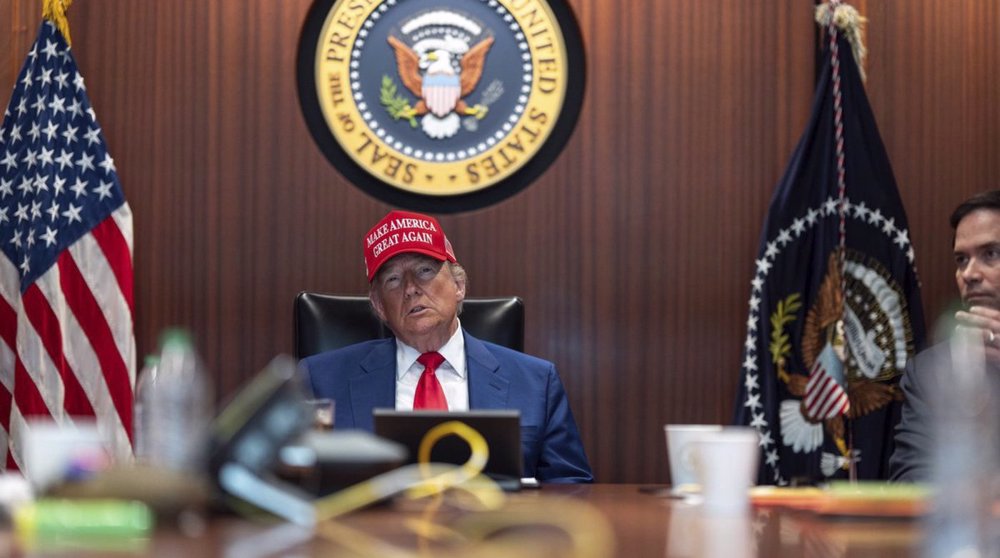
After 40 days of the war that should never have happened in the first place, the aggressors have failed to achieve any of their stated objectives. Trump desperately looked for an off-ramp from the quagmire he helped create, and the world witnessed something unprecedented: the defeat of a superpower at the hands of a nation that refuses to bend.
The war of aggression was launched against Iran on February 28, amid indirect nuclear talks between Tehran and Washington. Its initial aim was audacious: "regime change" in Iran. The first wave of strikes specifically targeted the Leader of the Islamic Revolution, Ayatollah Seyyed Ali Khamenei, along with several top-ranking military commanders. The subsequent waves targeted both commanders and top officials.
Washington and Tel Aviv believed this time would be different. Unlike the 12-day war of June last year, which also came in the middle of nuclear talks, this time the proponents of "regime change" felt that the collapse of the Islamic Republic was imminent. They were catastrophically wrong, which they must have realised now.
Immediately after launching what was dubbed "Operation Epic Fury," Trump exuded confidence that the US aggression would allow the Iranian people to overthrow their own government, hoping to plant someone subservient to Washington.
Perhaps the plan was to do what they did in Venezuela. But Trump and his aides forgot that Iran is not Venezuela. And the Iranian people are not passive bystanders.
WATCH: Press TV's Live Coverage of US-Israeli War on Iran https://t.co/PEC6tiLqGk
— Press TV 🔻 (@PressTV) March 8, 2026
Following devastating Iranian retaliatory strikes that obliterated nearly all US military installations across the region, President Trump made a strained declaration two weeks ago. He claimed that "regime change" had already happened in Iran, referring to the election of Ayatollah Seyyed Mojtaba Khamenei as the country's new Leader.
He was ridiculed for making such an outlandish claim. As one observer quipped, the US-Israeli war machine could not even change Iran's revolutionary slogans, let alone topple the system that has survived nearly five decades of plots and conspiracies.
When Ayatollah Mojtaba Khamenei addressed the nation on March 13, he struck a defiant tone – vowing revenge for martyrs, reaffirming resistance against aggression, and emphasizing the strategic value of controlling the Strait of Hormuz.
Far from indicating collapse, his election demonstrated institutional strength, which the products of the Epstein class will never understand. The Islamic Republic rests on constitutional structures that are not tied to one individual. Its strategic doctrine remains unshaken, which has been demonstrated yet again during this war.
Trump has long framed Iran's nuclear program as an existential danger. Before the Ramadan war, he threatened military action to dismantle it, even though, as many social media users pointed out, he had, after the 12-day war, claimed the program was already "obliterated."
Eventually, after 40 days of war and mindless rhetoric, the "regime change" fantasy also evaporated. His attempt to attack nuclear facilities in Isfahan failed spectacularly, as Americans lost a vast fleet of aircraft in the process, without achieving anything.
Trump was also fixated on the Strait of Hormuz, vowing to open it. Iran's navy had effectively closed the waterway to American and allied vessels following the launch of the unprovoked war. Any attempt to cross the Strait without Iran’s consent was a recipe for disaster.
Trump issued several warnings: reopen the strait or face strikes on Iranian power plants. Deadlines changed from 48 hours to five days to ten days and then again 48 hours before he eventually gave up and accepted Iran’s 10-point proposal.
Press TV's correspondent reports from Tehran's Enghelab Square, where a huge crowd has gathered to celebrate Iran's triumph over its enemies.
— Press TV 🔻 (@PressTV) April 8, 2026
Follow https://t.co/B3zXG73Jym pic.twitter.com/pLMHTsUX7i
The shifting goals of America's futile military campaign, from day one to day forty, revealed a stunning absence of strategy or clarity. Even US politicians and pundits condemned the war as unnecessary and unprovoked, with many of them even suggesting the 25th Amendment to have the megalomaniac president removed from office.
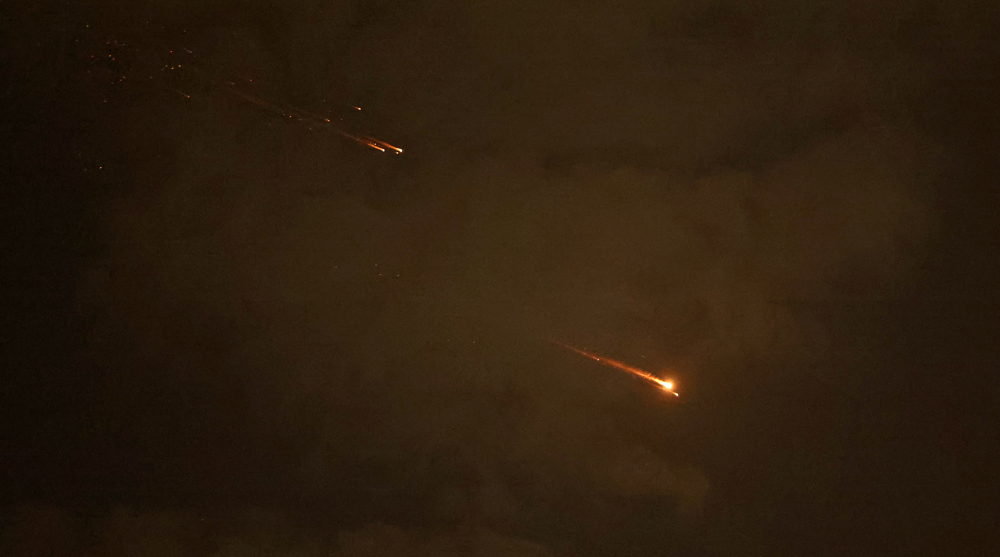
Beyond strategic failure, the United States suffered crippling military and economic damage from Iran's Operation True Promise 4 retaliatory strikes – 99 of them in 40 days.
During the first week alone, Iranian retaliatory strikes cost American taxpayers over $1 billion, as per reports. Carrier and warplane deployment accounted for $630 million, while lost F-15E jets in Kuwait added nearly $300 million, as per Press TV analysis.
The war had become a costly trap for the Trump administration, widely seen as a strategic miscalculation with no gains and only losses. That’s precisely why the role of Netanyahu was the key. He couldn’t do it on his own, so he dragged Trump into the unnecessary war.
A total of 99 waves of Iranian missile and drone strikes leveled US bases across the region, as American forces were compelled to abandon fortified positions for hotels and office spaces. Americans have downplayed the casualty toll, particularly the death toll, but independent estimates have put the deaths into hundreds, if not thousands.
The Fifth Fleet in Bahrain, the bastion of US military presence in the region, particularly suffered the heaviest damage. Iranian strikes repeatedly targeted its headquarters in Manama, demonstrating a new model of asymmetric warfare, inflicting irreparable damage on infrastructure, ammunition depots, and command buildings there.
American air power was completely decimated in the region. On March 27, the IRGC destroyed a $700 million E-3 Sentry AWACS at Prince Sultan Air Base in Saudi Arabia, along with multiple electronic warfare planes and refueling aircraft. Days earlier, Iran and Iraqi resistance forces downed six KC-135 Stratotankers, the important air-refueling backbone.
Iran declares 'historic victory' over US, says enemy forced to accept its proposalhttps://t.co/xzRPSZ5ckJ
— Press TV 🔻 (@PressTV) April 7, 2026
Days later, Iran successfully hit an F-35 Lightning II stealth fighter for the first time ever. The multi-trillion-dollar asset of the American military was targeted in central Iran.
A number of F-15s, F-16s, F-18s, over a dozen MQ-9 Reaper drones and over 170 drones were also downed or damaged. Four AN/TPY-2 THAAD radars and a billion-dollar Qatar early-warning installation were also hit.
On April 3, dubbed the “darkest day” for the US Air Force, F-15E Strike Eagle, an A-10 Thunderbolt II, multiple MQ-9 Reaper drones, and Hermes reconnaissance platforms were also downed by the Iranian air defenses, which have vastly improved since the 12-day war.
On the other hand, due to the closure of the Strait of Hormuz for American and allied vessels, oil prices hit three-year highs, which had ripple effects across the globe.
Gasoline prices in the US climbed above $4 per gallon, and diesel also hit $6 in many states. Supply disruptions spread to LNG, fertilizer, and other commodities as well.
To make it worse, Trump's approval rating nosedived to 36 percent, his lowest since returning to office, with 59 percent disapproval, the highest of his political career.
Now the Republicans are concerned about the midterm elections.
Now, 40 days after launching its war of aggression, the US has been forced to accept Tehran's 10-point proposal: a permanent ceasefire, Iranian control over the Strait of Hormuz, acceptance of enrichment, full sanctions removal, termination of all UN resolutions, war compensation, US combat withdrawal from the region, and an end to fighting on all fronts, including against Lebanon's Islamic Resistance.
This is not a stalemate. This is a defeat – historic, undeniable, and crushing.
The era of unchecked American power in West Asia has ended. Iran has emerged as a regional superpower and the world must come to terms with this undeniable fact.
Border guards seize 33 firearms in anti-smuggling operations in northwestern Iran
Water restored in Sirik
Iran’s resistance against US aggression echoes China’s Korean War, signaling end of Western hegemony



US 'investment' project in Iraq is cover for plundering national wealth: Resistance leader
‘Trump lost this war’: US senator warns America gets weaker as war on Iran drags on
Parliament speaker Qalibaf congratulates Mohsen Rezaei on appointment as SNSC Secretary
VIDEO | Iran demands for re-opening Srait of Hormuz
Israeli restrictions on Gaza aid network threaten to deepen famine: Euro-Med
VIDEO | There is disunity between US and Israel on Gaza peace plan: Analyst
VIDEO | Press TV's news headlines
Rights group files war crimes complaint against Israeli soldier in Vietnam


 PressTV NEWSLETTER
now
PressTV NEWSLETTER
now
 This makes it easy to access the Press TV website
