Silence of the stealth: How Iran shattered the 'invincibility' of US F-35 fighter jet
By Yousef Ramazani
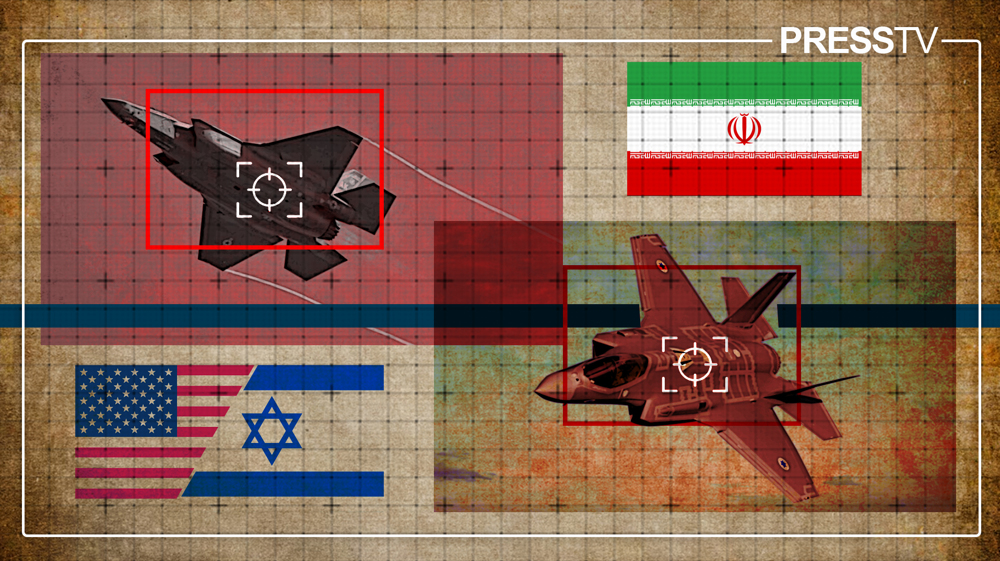
In the early morning hours of March 19, 2026, the Islamic Republic of Iran achieved what no country had ever accomplished before: a successful engagement against the US Air Force’s crown jewel, the F-35 Lightning II stealth fighter, irrevocably altering the strategic calculus of the ongoing US-Israeli aggression against Iran.
For nearly two decades, the F-35 program represented the zenith of American military hegemony – a multi-trillion-dollar fifth-generation platform designed to penetrate the most sophisticated air defenses on the planet with total impunity.
That myth was dismantled over the skies of central Iran, where the Islamic Revolution Guards Corps (IRGC) deployed the indigenous Majid infrared-guided system to expose the fundamental vulnerabilities that marketing campaigns had long concealed.
As the aggression enters its fourth week, Iran’s integrated air defense network has not only withstood the most intensive aerial bombardment since the Persian Gulf War but has systematically eroded the technological arrogance of the US-Israeli war machine.
From the destruction of more than 125 advanced drones to the confirmed engagement of the first F-35, Iran has demonstrated that it possesses the capability to defend its sovereignty against the most advanced weaponry the Western military-industrial complex can produce, while forcing a humiliating reassessment of American air power by allies and adversaries alike.
Anatomy of a historic engagement
The operation began at 2:50 a.m. local time on March 19, when IRGC air defense operators detected an anomalous signature penetrating central Iranian airspace.
Although some reports attributed the engagement to the Talaash system, multiple lines of evidence suggest the Majid short-range air defense system was the platform responsible for downing the American stealth fighter.
Unlike conventional radar-based systems that would have alerted the F-35’s sophisticated electronic warfare suite, the Iranian operators utilized the Majid short-range air defense system (AD-08), an indigenous platform that operates on infrared guidance.
This choice of weaponry was no accident. The F-35’s vaunted stealth capabilities, achieved through painstaking reductions in radar cross-section, have always been compromised by a persistent vulnerability: its heat signature.
The Pratt & Whitney F135 engine, while powerful, generates immense thermal emissions that no amount of engineering can fully mask.
The Majid system, produced by the Iranian Armed Forces Logistics Department’s Defence Industry Organization and first unveiled in April 2021, exploits precisely this weakness.
With an engagement range of at least 700 meters and a ceiling of around 6 kilometers, it was designed for point defense rather than area coverage.
First strike on US F-35: Iran hits stealth jet in central airspacehttps://t.co/2VvImkhIs4
— Press TV 🔻 (@PressTV) March 19, 2026
Its infrared seeker operates without emitting any radar signature, meaning the F-35’s radar warning receivers remained silent.
The aircraft’s electronic countermeasures, designed to jam radar frequencies, were rendered useless against a passive optical system.
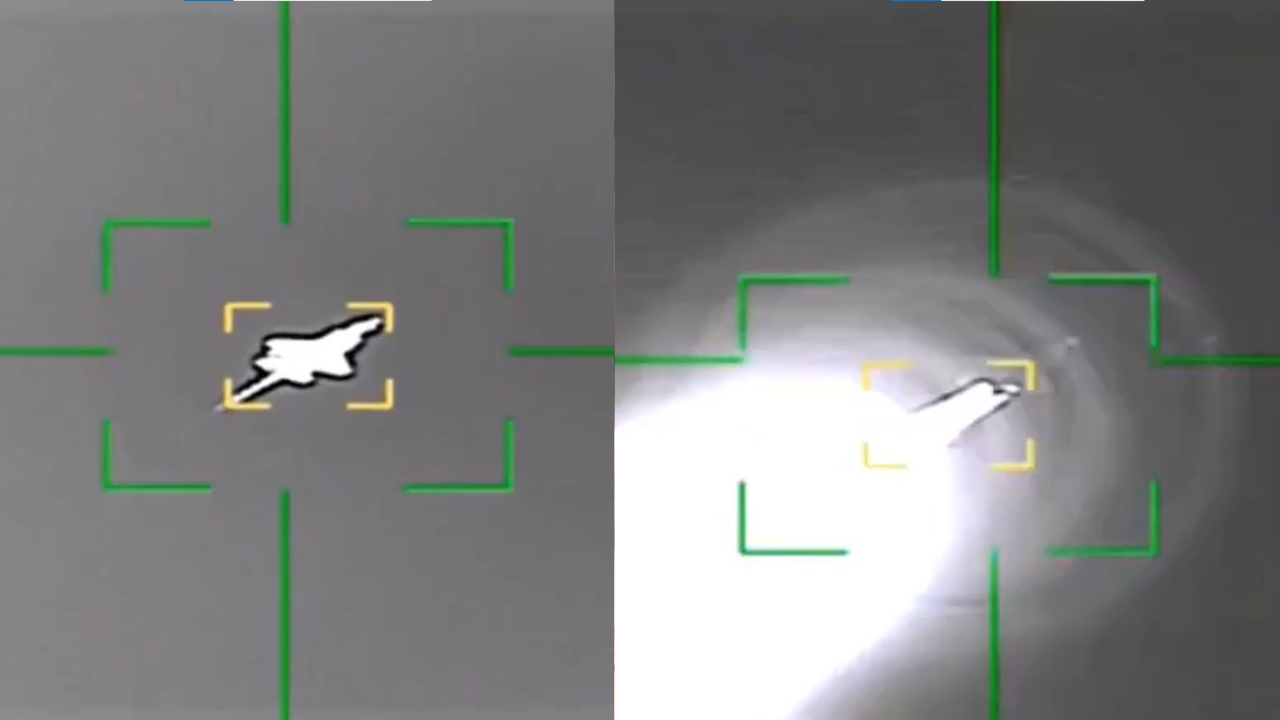
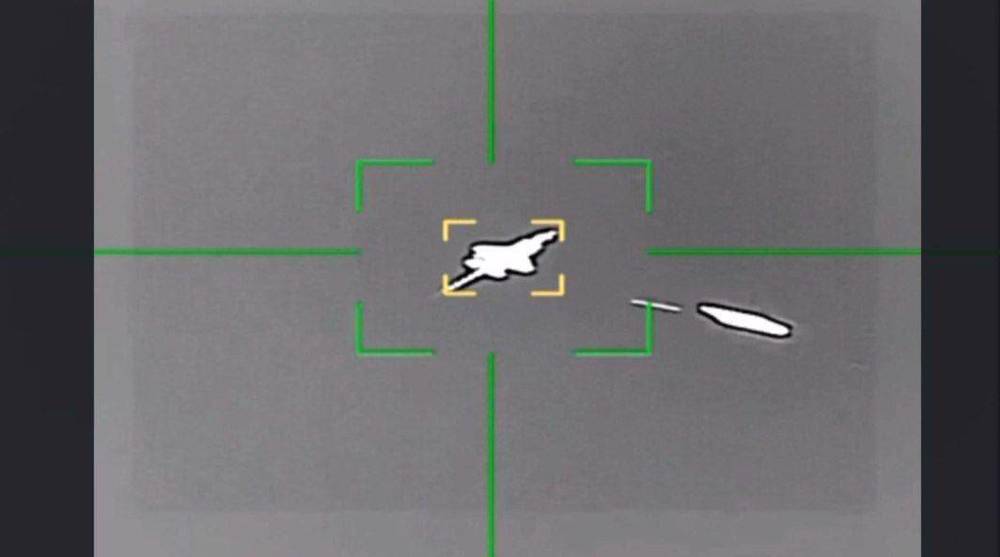
Iranian footage of the engagement reportedly shows that a single missile was sufficient—a testament to both the system’s precision and the F-35’s thermal vulnerability.
Decoy strategy: Luring the predator into the trap
The successful strike on the F-35 did not occur in isolation but represented the culmination of a sophisticated tactical deception that began on the very first night of the US-Israeli aggression.
Military sources within Iran have revealed that on February 28, when American and Israeli warplanes initiated their initial bombardment, Iranian commanders executed a calculated withdrawal of operational radar systems from active service.
These assets were concealed in hardened positions while an elaborate network of decoy installations was activated across strategically significant areas.
These were not rudimentary mock-ups. Iranian military engineers have developed radar decoys capable of emitting false signals indistinguishable from genuine batteries, each costing upwards of $10,000.
Israeli and American drone operators, relying on electro-optical and infrared sensors to conduct battle damage assessment, observed what appeared to be successful strikes against Iranian air defense positions.
The destruction of these decoys, coupled with the absence of active radar emissions, led US Central Command and Israeli Air Force planners to conclude that Iranian air defenses had been effectively “flattened” – a claim publicly boasted by US war secretary Pete Hegseth on the morning of March 19, coinciding with the very hours his F-35 was being engaged.
This miscalculation proved catastrophic. Believing they had achieved air superiority, American and Israeli commanders authorized deeper penetration missions, sending fifth-generation fighters into airspace they assumed was defenseless.
Iranian operators, meanwhile, had quietly reactivated their concealed radar networks and positioned short-range infrared systems like the Majid along likely approach vectors.
When the F-35 entered the kill zone, it was met not by a crippled defense network but by a fully integrated, strategically deployed air defense system that had been waiting for precisely this moment.
Trump should know we have surprises for him, Israel: Commander says after IRGC hits F-35 warplanehttps://t.co/BJzhbyo4gF
— Press TV 🔻 (@PressTV) March 20, 2026
Beyond the F-35: A pattern of attrition
The March 19 engagement represents the first confirmed strike against an American F-35 in operational history, but it is far from the only loss suffered by US-Israeli forces since the aggression began.
According to comprehensive assessments, Iranian air defenses have destroyed at least 10 MQ-9 Reaper drones, with nine eliminated in flight and one struck by a ballistic missile while parked at an airfield in Jordan.
The MQ-9, valued at approximately $30 million per unit and representing the backbone of American unmanned surveillance and strike capabilities, has proven particularly vulnerable to Iranian infrared-guided systems, which have previously demonstrated their effectiveness against similar platforms in Yemen.
The losses extend beyond unmanned systems. The Islamic Resistance in Iraq successfully intercepted a KC-135 strategic tanker aircraft over western Iraq, employing an appropriate weapon that killed all six crew members aboard.
An additional five KC-135 tankers sustained damage from Iranian missile strikes while parked at an airfield in Saudi Arabia.
US reports also indicate that three American F-15s were lost to so-called “friendly fire” incidents in Kuwait, a euphemism that cannot conceal the broader disarray within US operational coordination as Iranian missiles and drones force constant repositioning and create conditions for catastrophic errors.
These attrition rates surpass any comparable US air campaign since the 2011 aggression in Libya, where only three combat losses were reported over four months. That the US-Israeli coalition has sustained such losses in less than one month of operations speaks to both the intensity of the aggression and the effectiveness of Iran’s multi-layered defense strategy.
Qalibaf: Iran's strike on US F-35 signals 'collapse of an order' https://t.co/5B95q7GXoc
— Press TV 🔻 (@PressTV) March 20, 2026
Technological sovereignty: Majid and beyond
The astounding success of the Majid system underscores a broader trend in Iranian military development: the achievement of genuine technological sovereignty in the face of decades of sanctions and military pressure.
The system’s infrared guidance represents a deliberate doctrinal choice that circumvents the electronic warfare supremacy that US and Israeli forces have long enjoyed.
By operating outside the radar spectrum, Iranian air defenses deny adversaries the ability to detect, track, or jam incoming threats using standard electronic warfare platforms.
This approach has been further reinforced by strategic acquisitions. Leaked documentation from early 2026 indicated that Iran had finalized a $580 million agreement to procure 500 9K333 Verba man-portable surface-to-air missile launchers and 2,500 9M336 missiles from Russia.
The Verba system, widely considered the most capable man-portable air defense system in existence, features a three-spectral seeker—ultraviolet, near-infrared, and mid-infrared—that provides unparalleled discrimination between actual targets and countermeasures such as flares or directional infrared countermeasures.
Should deliveries continue despite the ongoing aggression, Iran’s low-altitude airspace will become among the most contested environments any adversary has ever faced.
The combination of indigenous systems like the Majid with advanced imports like the Verba creates a layered defense architecture that addresses the F-35’s operational profile at multiple altitudes.
The F-35’s continued reliance on Block 3 software—with the more advanced Block 4 upgrades still delayed—has left the aircraft unable to launch air-to-surface missiles from standoff ranges, forcing pilots to approach targets more closely and thereby exposing themselves to precisely the short-range systems Iran has prioritized.
Iran releases footage capturing the moment Iranian air defenses locked on and struck an American F-35 fighter jet over central Iran.
— Press TV 🔻 (@PressTV) March 19, 2026
Follow Press TV on Telegram: https://t.co/LWoNSpkc2J pic.twitter.com/GFywxuZIVW
Global repercussions: F-35’s reputation in ruins
The destruction of an American F-35 over Iran has sent shockwaves through defense establishments worldwide, undermining the foundational assumptions upon which dozens of nations have based their air force modernization strategies.
The F-35 program, already the most expensive weapons system in human history at an estimated $1.7 trillion over its lifecycle, was built on the premise of near-invulnerability—a stealth aircraft so advanced that it could operate freely in denied environments where fourth-generation fighters could not survive.
That premise is now untenable. Iran’s achievement has provided empirical proof that fifth-generation stealth aircraft are not immune to modern air defense systems, particularly those employing infrared and optical tracking methods that bypass radar-based countermeasures.
The implications for global defense procurement are already manifesting, with nations reassessing their commitments to the American platform.
Spain, a NATO member and traditional US ally, has formally abandoned plans to acquire the F-35, redirecting its €6.25 billion procurement budget toward European alternatives including the Eurofighter Typhoon and the Franco-German-Spanish Future Combat Air System (FCAS).
The Spanish Ministry of Defense confirmed that the F-35 was no longer under consideration, citing sovereignty concerns over US control of aircraft software and data, as well as broader geopolitical considerations in the wake of the Israeli military debacle over Iran in June 2025.
Turkey, expelled from the F-35 program in 2019 following its acquisition of Russian S-400 systems, has taken decisive steps toward finalizing an agreement for 40 Eurofighter Typhoon jets, with preliminary agreements signed with the United Kingdom and Germany.
India has formally informed American officials of its decision to forgo F-35 procurement, preferring co-development partnerships that support its domestic defense industry rather than the F-35’s limited customization options.
Swiss lawmakers have called for cancellation of a $9.1 billion F-35 purchase, while Canadian military sources have reiterated that they are reviewing alternatives to an additional 76 aircraft.
These decisions, intensifying in the weeks following Iran’s first announced successful engagements in 2025—then without concrete evidence but now likely true—reflect a fundamental shift in the global defense market.
The myth of American technological invincibility, carefully cultivated through decades of marketing and limited combat against asymmetric adversaries, has been exposed as hollow by Iranian air defenses operating against the full might of US-Israeli air power.
‘The world just changed’: Netizens react to Iranian air defenses ending US F-35 stealth jet invincibility
— Press TV 🔻 (@PressTV) March 20, 2026
Follow Press TV on Telegram: https://t.co/LWoNSpkc2Jhttps://t.co/XbSyo5N6a8
A new military reality
As the US-Israeli aggression against Iran continues into its fourth week, the military-technological landscape of West Asia has been permanently altered.
Iran has demonstrated that fifth-generation stealth aircraft, the most expensive and heavily promoted weapons systems ever devised, are not the invulnerable platforms their manufacturers claimed.
The combination of indigenous infrared-guided systems, strategic decoy operations, and integrated Axis of Resistance coordination has produced a defense architecture capable of not merely surviving American air power but defeating it.
The F-35 that now sits—whether in pieces across central Iran or damaged in a US facility—represents far more than a single aircraft loss.
It represents the end of the era in which American military technology could be marketed as invincible, the beginning of a global reassessment of defense procurement priorities, and the demonstration that the Islamic Republic of Iran possesses both the strategic patience and the technological sophistication to defend its sovereignty against the most powerful military the world has ever seen.
For the United States and the Israeli regime, the implications are profound. The air campaign designed to force Iranian submission has instead produced a series of humiliating losses, from the decimation of the MQ-9 fleet to the first-ever combat engagement of an F-35.
The narrative of inevitable American victory, proclaimed by officials who view their aggression in quasi-religious terms, has collided with an undeniable reality: Iran’s air defenses remain not only operational but increasingly deadly, and the Axis of Resistance has proven capable of inflicting costs that no amount of Crusader rhetoric can obscure.
The silence of the stealth has been broken, and the sound it made was the unmistakable crack of Iranian precision.

Iran Army vows stronger response to any renewed US aggression
IRGC captures second US underwater drone in Strait of Hormuz

Regional insecurity will spare no one: Iran’s Army chief warns neighbors



VIDEO | Press TV's news headlines
VIDEO | Gaza’s hidden crisis: Thousands face hearing loss amid war and collapsing healthcare
VIDEO | Flooded Bangkok street turns into floating market
Domestically produced insulin to enter Iranian market for first time in January
New front will open if Iran is attacked again, Leader’s advisor warns
Iraqis hold nationwide rallies against suspension of Iranian flights
Iran, resistance forces to deliver ‘devastating’ response to any threat: Top cmdr.
Saudi jets strike school, residential villages in Yemen



 PressTV NEWSLETTER
now
PressTV NEWSLETTER
now
 This makes it easy to access the Press TV website
