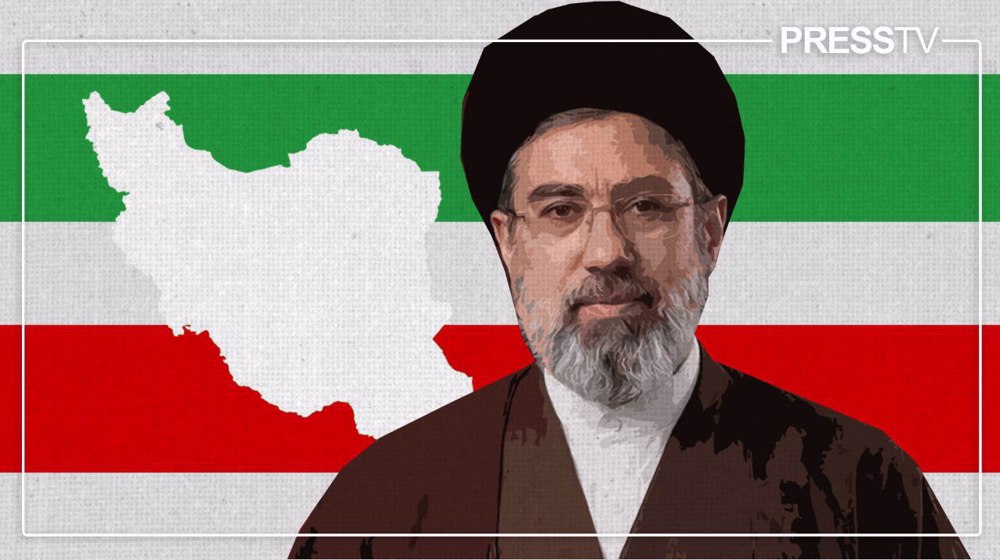
Profile: Ayatollah Seyyed Mojtaba Khamenei, third Leader of the Islamic Revolution
By Humaira Ahad
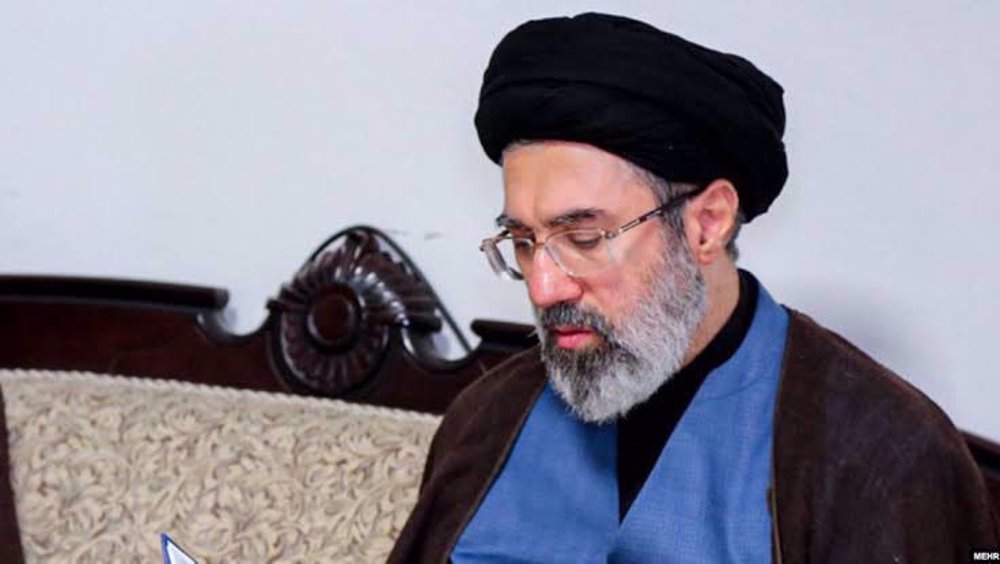
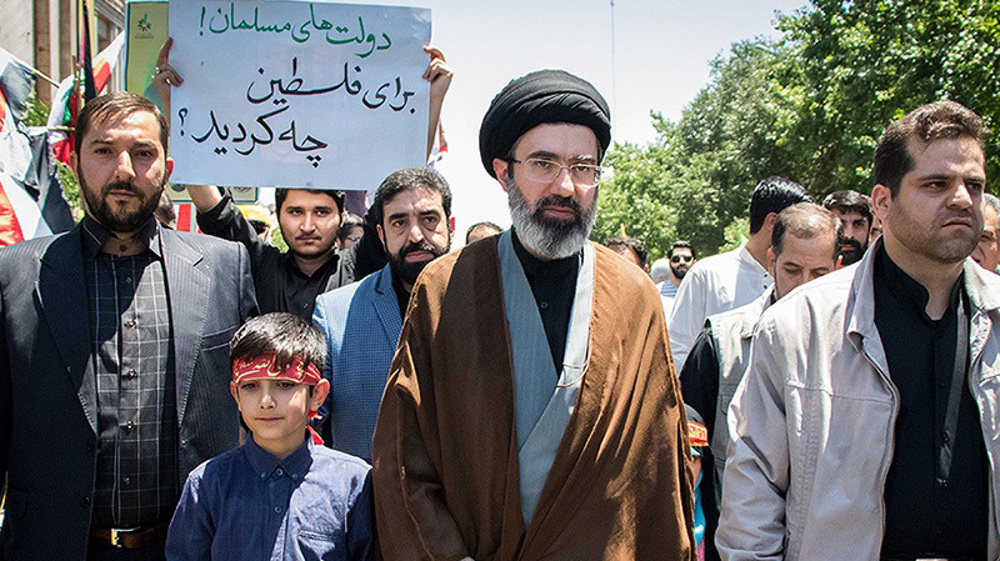
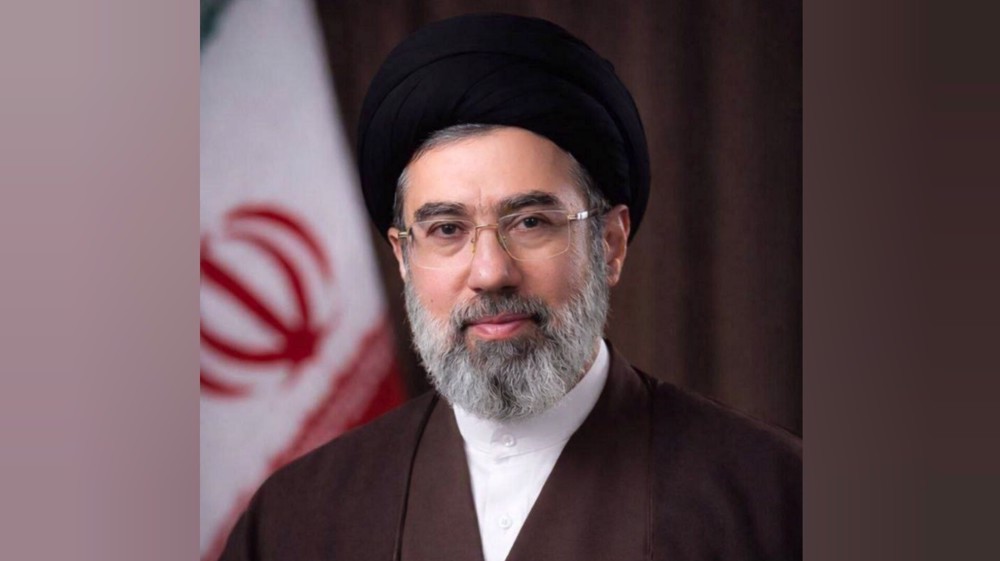
The Assembly of Experts on Sunday announced Ayatollah Seyyed Mojtaba Khamenei as the third Leader of the Islamic Revolution after a rigorous process that lasted more than a week.
Late on Sunday, as people were in mosques immersed in special Ramadan prayers, Iran’s Assembly of Experts announced Ayatollah Seyyed Mojtaba Khamenei as the third Leader of the Islamic Revolution, following the martyrdom of Imam Seyyed Ali Khamenei.
"By a decisive vote, the Assembly of Experts elected Ayatollah Seyyed Mojtaba Hosseini Khamenei as the third Leader of the sacred system of the Islamic Republic of Iran," the assembly said in a statement.
Born in 1969 in the holy city of Mashhad, Ayatollah Mojtaba Khamenei is the second son of the martyred Leader of the Islamic Revolution, who shouldered the responsibility for 37 years after the passing of the founder of the Islamic Revolution, Imam Khomeini.
He spent his formative years in Tehran, completing his secondary education at the renowned Alavi School, an institution known for nurturing many prominent figures of the Islamic Republic’s intellectual and political life.
His early youth coincided with one of the most turbulent periods in modern Iranian history. At just seventeen years old, during the Iran-Iraq War, he volunteered on the front lines and served as a member of the Habib ibn Mazaher Battalion of the 27th Mohammad Rasulollah Division in Tehran.
The experience would go on to shape his outlook and deepen his commitment to the ideals of the Islamic Revolution.
After the war, in 1989, he moved to the holy city of Qom to begin advanced seminary studies.
He remained there until early 1992 before returning to Tehran, where he continued his religious education for five years.
"A man who lost his father, wife, and mother in a US-Israeli attack."
— Press TV 🔻 (@PressTV) March 8, 2026
Press TV's @HashemiMarzi highlights the significant personal pain that the new Leader of Iran has been subjected to.
Follow https://t.co/B3zXG73Jym pic.twitter.com/dNZm6jf8hq
In 1997, he married Zahra Haddad Adel. The couple has three children, two sons, Mohammad‑Bagher and Mohammad Amin, and a daughter, Fatemeh.
His wife was martyred on February 28 in the illegal US-Israeli military aggression against the Islamic Republic that also led to the martyrdom of the Leader of the Islamic Revolution.
Following his marriage, Ayatollah Mojtaba Khamenei returned to the holy city of Qom to complete his higher seminary education.
He studied advanced levels of jurisprudence and principles of jurisprudence under some of the most distinguished scholars of the Qom seminary.
He also attended the highest-level of seminary lectures, in which senior scholars engage in independent juristic reasoning.
According to several prominent religious authorities in Qom, Ayatollah Mojtaba Khamenei distinguished himself through intellectual rigor, precision, and independence of thought.
His scholarly work has contributed to innovative discussions within traditional seminary sciences, particularly in jurisprudence, principles of jurisprudence, and the science of narration.
Over the years, his lectures in Qom seminary have attracted thousands of students, making his classes among the most widely attended in the world-famous seminary.
Religious experts note that the new Leader of the Islamic Revolution possesses a coherent and structured intellectual framework across the codified Islamic sciences.
Millions of Iranians across the country pledge allegiance to Ayatollah Seyyed Mojtaba Khamenei, the new Leader of Iran's Islamic Revolution.
— Press TV 🔻 (@PressTV) March 8, 2026
Follow https://t.co/B3zXG73Jym pic.twitter.com/naEsy7ODq3
His commitment to principled scholarship and his methodical approach to research have been reflected in a growing body of academic work addressing a range of religious and social questions.
In addition to supporting various revolutionary jurisprudential institutes and research centres, he has independently helped establish academic institutions and specialized schools of jurisprudence aimed at cultivating the next generation of scholars.
Ayatollah Mojtaba Khamenei is also known for maintaining close relations with leading religious authorities and prominent scholars in the seminaries of Qom and Mashhad.
Within Iran’s religious establishment, the new Leader has been active in supporting academic and jurisprudential institutions aimed at strengthening the intellectual foundations of the Qom seminary.
At the same time, he has placed significant emphasis on social responsibility and service to disadvantaged communities.
Through educational initiatives and social programs, Ayatollah Mojtaba Khamenei has encouraged the development of a generation of committed and socially conscious scholars and activists.
Beyond religious scholarship and social work, he has been involved in discussions on a wide range of national priorities, including economic stability, housing development, agricultural modernization, technological advancement, and support for knowledge-based industries and emerging fields such as artificial intelligence.
During the tenure of his father as the Leader of the Islamic Revolution, he assisted him in overseeing a number of important national affairs.
Ayatollah Seyyed Mojtaba Khamenei elected new Leader of the Islamic Revolutionhttps://t.co/KnBfHrDB5X
— Press TV 🔻 (@PressTV) March 8, 2026
As one of his father’s advisers, he participated in numerous consultations and working meetings with senior officials across different governments of the Islamic Republic.
Ayatollah Mojtaba Khamenei has also maintained strong ties with figures associated with the Axis of Resistance, known for supporting their causes.
He shared a particularly close relationship with Sayyed Hassan Nasrallah, the martyred leader of the Lebanese resistance movement Hezbollah.
He also maintained a longstanding relationship with Iran’s renowned anti‑terror commander, General Hajj Qasem Soleimani, who was martyred in 2020.
However, Ayatollah Mojtaba Khamenei is known for keeping a low public profile. Avoiding personal publicity, he has emphasized strengthening the broader intellectual current of the Islamic Revolution, particularly the legacy of Imam Khomeini and Imam Khamenei.
His conscious effort to not be associated with any particular political current in the country has earned him tremendous respect across Iranian society, winning the confidence of senior clerics, political figures, scholars, and the wider public.
With decades of scholarly training, close engagement with the country’s governing institutions, and longstanding connections within the religious circles, Ayatollah Mojtaba Khamenei now assumes leadership of the Islamic Republic at a pivotal moment in its history, when the United States and Israel have launched a brutal war against the country.
Going by the statements issued by top officials of the country, as well as armed forces who have pledged their allegiance to him, the new Leader will be looking to carry forward and build on the illustrious legacy of his martyred predecessor.
Iran calls on UN to protect Lebanese civilians as Israel’s attacks continue
Oman deal will not mean reopening of Hormuz Strait: Iran FM
Pezeshkian urges BRICS to play more active role in upholding non-use of force principle



VIDEO | Gaza’s women: The sole providers of families shattered by war
VIDEO | News Review: Trump’s comments on Irish unification spark backlash among his British allies
VIDEO | Press TV's news headlines
Yemen reports 58 Saudi attacks in one day, vows decisive response
VIDEO | US failed economic policy on Iran
Swedes head to polls to vote in general elections
Palestinian detainees report severe conditions, medical neglect in Israeli prison
Hamas welcomes BRICS's supportive position on Palestine


 PressTV NEWSLETTER
now
PressTV NEWSLETTER
now
 This makes it easy to access the Press TV website
