The engineering feat behind Iran’s record gas output
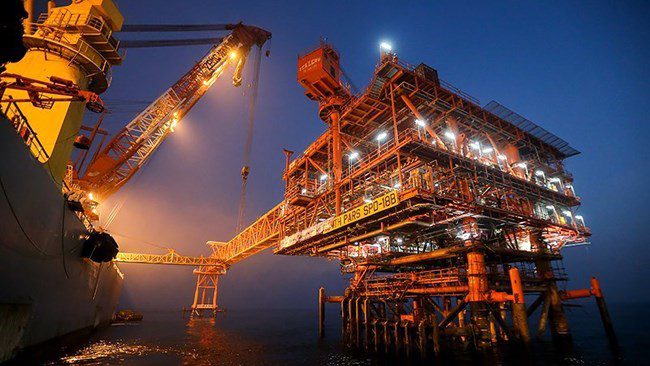
Last week, Minister of Petroleum Mohsen Paknejad announced a new record in gas extraction from the South Pars field, which is the world’s largest shared gas field.
According to him, Iran’s daily gas extraction from the field has reached 730 million cubic meters, a milestone that came despite the harsh conditions of draconian Western sanctions.
This achievement is particularly remarkable as the field, which straddles the border between Iran and Qatar, has long been a focal point of intense competition.
Qatar, with its access to international companies, has often seemed to have the upper hand. Yet, over the past decade, Iran has not only managed to keep up but has pulled ahead, surpassing its neighbor in daily gas production.
Pioneering efforts by Iranian engineers and technicians have played a crucial role in this success.
In recent years, despite sanctions and limited resources, these professionals have made impressive strides in gas extraction and processing, achieving results that would have seemed impossible just a few decades ago.
In fact, the developments at South Pars have become a symbol of Iran's industrial strength, its ability to overcome challenges, and its determination to remain independent, even in the face of external pressures.
South Pars is the backbone of Iran’s energy strategy. The field provides more than 70% of the country’s natural gas and serves as the feedstock for the production of about 40% of Iran's gasoline.
This makes South Pars a vital component of Iran’s economy, providing energy for industry, power generation, and households alike.
With each new phase of development, the field has brought Iran closer to self-sufficiency and strengthened its ability to withstand global economic pressures.
For Iran, the success at South Pars has been nothing short of transformative. The country has managed to build a massive energy infrastructure, including 13 gas processing plants, 3,200 kilometers of 32-inch underwater pipelines, and 39 offshore platforms.
These facilities together produce over 730 million cubic meters of gas per day, a staggering amount considering the challenges involved in managing such a large field.
Every processing plant handles an enormous volume of gas, turning it into valuable products like liquefied natural gas, petrochemicals, and condensates, generating annual revenues of around $3.5 billion.
Yet, even as the field has entered its later stages, with natural pressure declines and the onset of reservoir depletion, Iranian engineers continue to break records.
In the winter of 2023-2024, maintenance work on 35 offshore platforms was completed in just 179 days, a remarkable feat considering the technical complexity of the operation.
These efforts have been crucial not only for maintaining production levels but for increasing them, despite the challenges posed by a maturing field.
One of the key innovations in maintaining production at South Pars has been the development of pressure-boosting technologies. As the field ages, the pressure in the reservoir naturally decreases, which can result in reduced production.
To counter this, Iran has embarked on a project to boost the pressure in the reservoirs, ensuring that gas continues to flow efficiently to processing plants.
This has been a particularly critical challenge, given that the distance between the offshore platforms and onshore processing plants can be up to 120 kilometers.
The pressure loss during transportation could easily reduce the efficiency of production if not properly managed. By implementing cutting-edge technologies and a comprehensive field study, Iran has found a way to mitigate this risk and maintain high production rates.
A key aspect of this pressure-boosting project has been the decision to rely on domestic capabilities. Faced with Western sanctions, which have restricted access to foreign technology, Iran has adapted by developing its own solutions.
This has included the design of smaller, more manageable offshore platforms capable of withstanding the harsh conditions of the Persian Gulf, where the field is located.
These platforms, which can be built using local materials and expertise, have allowed Iran to continue the development of South Pars without depending on foreign contractors.
The decision to scale down the size of the platforms, reducing their weight and complexity, has been a strategic move that ensures the project can continue despite ongoing sanctions.
In addition to the pressure-boosting technology, the construction of new underwater pipelines to connect the platforms to the onshore processing facilities has been a major achievement.
These pipelines, which must withstand extremely high pressures and corrosive sea conditions, are made from specialized materials that have been developed domestically.
The pipelines play a vital role in ensuring the continued flow of gas from the field to the processing plants, and their construction represents a significant technical breakthrough for Iran.
These efforts have not been without challenges. The scale of the project requires a large amount of investment, and Iran has had to find ways to fund these initiatives despite the economic constraints imposed by sanctions.
The cost of the pressure-boosting project alone is estimated at around $17 billion, a sum that would have been difficult to raise without the involvement of the private sector.
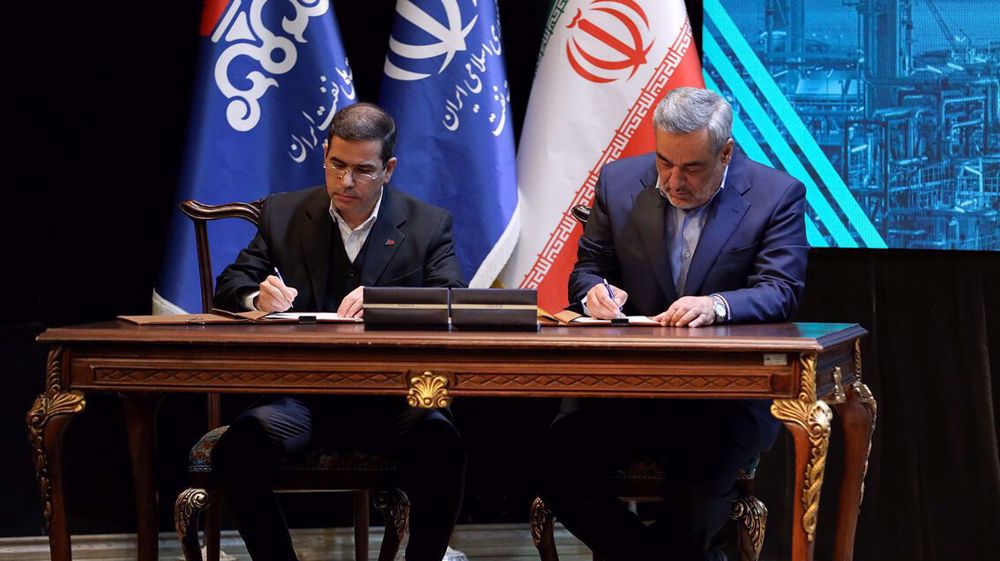
Iranian companies, many of which have extensive networks in both domestic and international markets, have played a crucial role in the success of the project.
Their ability to navigate the complexities of sanctions and provide reliable solutions has been a key factor in ensuring the continued development of South Pars.
The success at South Pars has not only been a triumph for Iran’s energy industry but also a testament to the resilience of its private sector.
Companies that have worked alongside the state-owned entities in the development of the field have shown a remarkable ability to adapt and innovate under difficult conditions.
Their work has been crucial in overcoming the technical and logistical challenges that have arisen throughout the life of the project.
In addition to its economic and strategic importance, South Pars has become a symbol of Iran’s ability to navigate the challenges of the modern world.
Despite being surrounded by competitors with access to far greater resources, Iran has proven that with determination, innovation, and reliance on its own people, it can not only survive but thrive.
The progress made at South Pars is a direct result of the tireless efforts of the engineers, workers, and companies that have made it all possible.
Their achievements have not only helped secure Iran’s energy future but have also placed the country at the forefront of technological innovation in the oil and gas industry.
Iran turns a dormant volcano into a clean energy asset
Iran’s first geothermal power plant joins national electricity grid
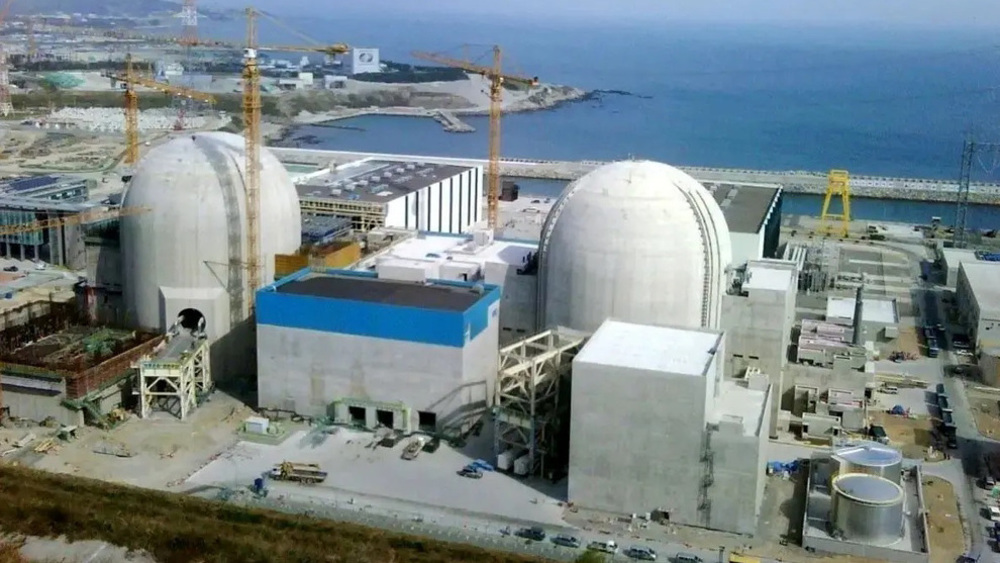
Darkhovin: Revisiting US barbarity against an icon of Iran's nuclear renaissance



Hezbollah chief: Lebanon’s direct talks with Israel have yielded nothing but shame
Hezbollah MP: Trump unwillingly acknowledged Iran’s key role on global stage
VIDEO | Heavy rains in Chile displace thousands, flood homes and open a sinkhole
Israeli forces raid West Bank sites, abduct Palestinians as settlers attack homes, vehicles
Arbaeen: The eternal journey of remembrance, resistance and revival of the message of Karbala
Another ICE detainee dies in custody, raising 2026 death toll to 22
Millions of pilgrims descend on holy city of Karbala to mark Arba’een
Iran's Royan Institute preserves fertility of two girls with cancer through advanced surgery


 PressTV NEWSLETTER
now
PressTV NEWSLETTER
now
 This makes it easy to access the Press TV website
