Explainer: How job scarcity is pushing working-class Americans to enlist in the military
By Ali Zeraatpisheh
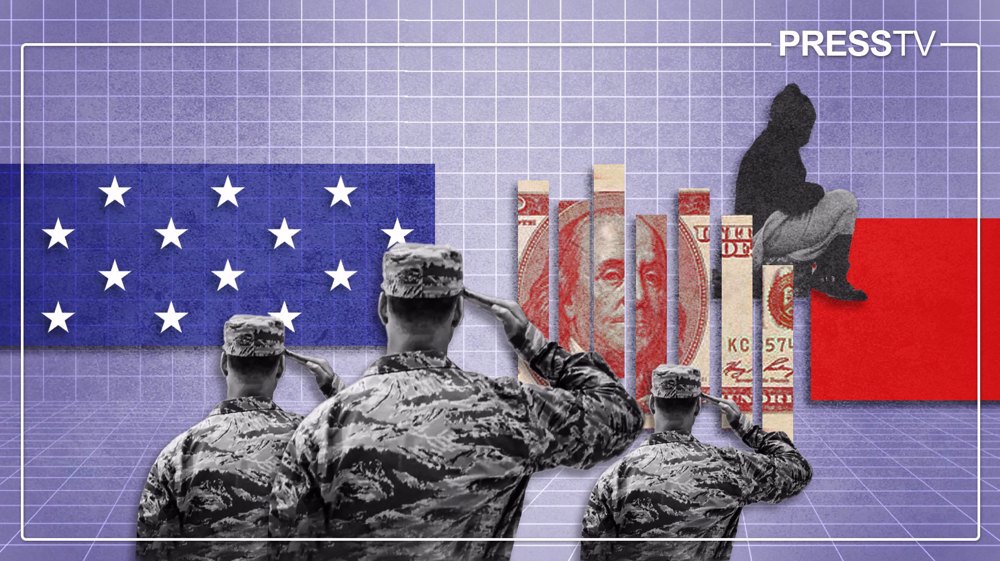
By 2025, the US military employed approximately 1.3 million active-duty personnel and about 760,000 reservists across its branches, according to figures released by the Department of Defense (DoD). Since then, those numbers have continued to climb even further.
After decades of decline following the end of conscription, enlistment numbers have begun to rise again. The Pentagon reported 146,473 new enlistees in fiscal year 2024 – marking an increase of roughly 14 percent compared with 2022 – and recruiting officials say they are on track to meet or exceed their targets in 2025.
This rebound does not necessarily signal renewed public confidence or a surge of patriotic fervor, according to observers. Rather, it has unfolded against a backdrop of prolonged economic strain in multiple sectors in the country.
Median household income remained largely stagnant throughout the 2010s and early 2020s, while housing prices and tuition costs climbed far faster than wages.
The traditional markers of middle-class security – a home, a college degree, stable employment – have become increasingly difficult for many families to attain.
In this climate, the armed forces stand out as one of the few institutions offering a guaranteed income, subsidized healthcare, and substantial education benefits.
For young people in economically strained communities, enlistment often appears less a calling than a calculated decision. Officially, military service is voluntary. In practice, however, when civilian pathways narrow and upward mobility contracts, the line between opportunity and economic compulsion can grow increasingly blurred.
Where are America’s recruits coming from?
A closer look at US military recruitment reveals a consistent pattern. New enlistees disproportionately come from working-class towns and rural counties rather than affluent suburbs or elite university communities.
Staffing the armed forces falls heaviest on regions where economic opportunities are limited.
In 2023, roughly 63 percent of new active-duty recruits hailed from non-urban areas – the highest share since at least 2010.
Many rural counties, facing stagnant wages, shrinking industries, and limited access to higher education, now supply a disproportionate share of the force. Military service in these areas often represents one of the few institutions offering predictable pay, healthcare, and tuition assistance.
The demographic profile underscores this divide. About 87 percent of new enlistees in 2023 were aged 18 to 24, with a median age of 21. Most entered with only a high school diploma or equivalent (82-85 percent), while only a small minority had college experience.
These are young adults at the very start of their working lives, often with limited bargaining power in a labor market that has failed to provide stable alternatives.
Although the Pentagon does not publish detailed data on recruits’ family income, available household income proxies suggest many come from communities where median earnings fall below the national average.
The regional imbalance is longstanding. Southern states account for an estimated 40 percent of US military personnel, more than any other region and well above their share of the national population.
By contrast, much of the Northeast and Upper Midwest remains underrepresented in recruitment figures. These disparities mirror broader economic divides.
Parts of the South and rural America continue to lag in job creation, wage growth and educational opportunities. For many, enlistment is not a career choice. It is one of the few stable options left.
Why does economic inequality make military service attractive?
For many young Americans without family wealth or a college degree, enlistment is less an expression of patriotism than a financial calculation. The civilian labor market draws sharp lines based on education, and those on the wrong side of that divide face shrinking opportunities.
Data from the US Bureau of Labor Statistics highlight the gap. In 2024, adults aged 25 and over with only a high school diploma earned median weekly wages of $930. Those with a bachelor’s degree earned $1,543 per week – more than 65 percent higher.
Workers without a high school diploma earned just $738 per week and faced higher unemployment rates. These numbers make clear that education determines not only income but also economic stability.
Yet higher education has become increasingly inaccessible to the very families who need it most. Tuition costs have risen for decades at a pace far exceeding wage growth. While college graduates earn more on average, the upfront costs – often financed through debt – deter many working-class students. The promise of mobility comes with financial risk that many cannot afford.
Against this backdrop, the military offers certainty. From the first day of service, recruits receive a guaranteed paycheck, healthcare coverage, housing allowances, and structured career progression. Education benefits remain a powerful draw.
Under the Post-9/11 GI Bill, qualifying service members in 2023 could receive up to $26,094 per year in tuition assistance. Army surveys from 2023 indicate that tuition support and enlistment bonuses were major factors in many recruits’ decisions to join.
When civilian pathways to stable employment appear blocked – particularly in economically distressed regions – the armed forces stand out as one of the few institutions offering immediate income and a defined route to education.
In a system where opportunity is increasingly rationed by wealth and geography, military service functions as a pressure valve. Economic inequality does not merely coexist with recruitment patterns; it helps sustain them.
How do government policies sustain this system?
The modern US military does not rely on volunteers arriving of their own accord. It depends on sustained, costly recruitment policies designed to compete in a labor market where civilian opportunities are uneven and often unstable.
Between 2022 and 2024, the Department of Defense and the individual service branches spent more than $6 billion on recruitment and retention. This increase followed repeated enlistment shortfalls and funded signing bonuses, retention payments, advertising campaigns, and expanded recruiter outreach, a clear signal that maintaining force levels requires continuous financial intervention.
Cash incentives have become central to the model. By 2023, enlistment bonuses averaged roughly $12,000 across the services, with some reaching as high as $50,000 for high-demand fields such as cyber operations, engineering, and medical specialties.
Entry-level personnel were also eligible for housing allowances averaging about $1,400 per month, a substantial supplement in regions where rent consumes a large share of income.
Education benefits remain a cornerstone of recruitment policy. The Post-9/11 GI Bill continued to provide up to $26,094 per year in tuition support for qualifying service members in 2023.
At a time when civilian students often graduate burdened with debt, this benefit is promoted as a debt-free path to higher education, a deliberate and effective contrast.
Congress has reinforced these efforts through appropriations and legislative adjustments. In fiscal year 2025 defense funding, lawmakers allocated tens of millions of dollars specifically for enlistment and retention bonuses.
Eligibility for basic needs allowances was expanded, and additional incentives targeted junior enlisted personnel. These measures reflect Washington’s acknowledgment that recruitment gaps cannot be solved through messaging alone – they require direct economic inducements embedded in pay structures and federal spending.
Recruitment strategy has also evolved beyond financial rewards. The services expanded digital outreach, intensified targeted advertising, and increased investment in recruiter staffing and training.
After the COVID-19 pandemic disrupted traditional recruitment channels, including school visits and public events, the military shifted heavily to online platforms and data-driven marketing to sustain its pipeline.
Who bears the long-term social cost?
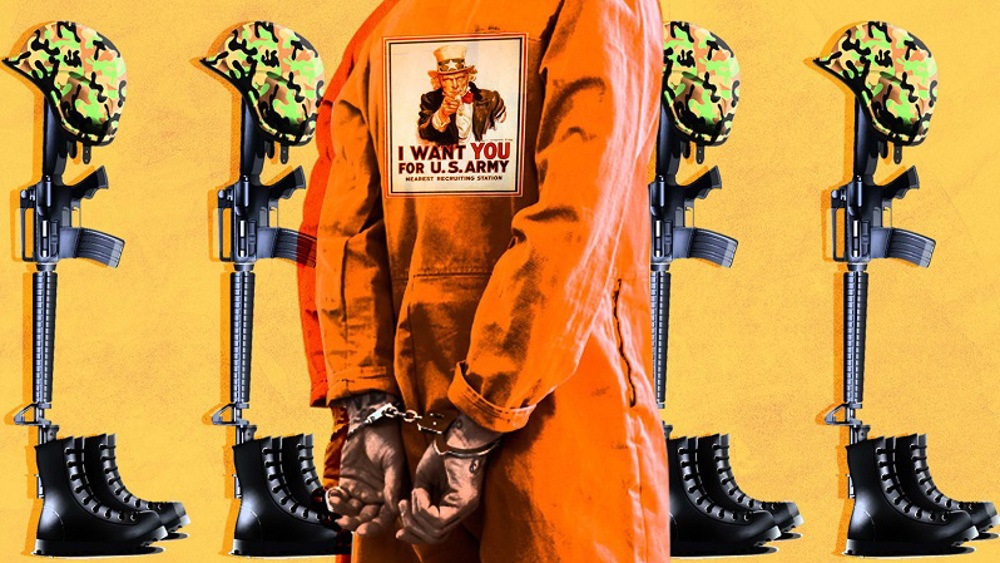
While enlistment may provide short-term economic stability, the long-term social and economic outcomes for many US military veterans are uneven and often fraught with ongoing challenges.
According to the US Bureau of Labor Statistics, the overall unemployment rate for veterans in 2025 hovered around 3.8 percent, slightly below the national average.
However, this aggregate figure masks significant disparities within subgroups. Young and Post-9/11 veterans saw unemployment rates above 5 percent, and female veterans experienced higher rates than their civilian peers.
Such volatility reflects the difficulty some former service members face in transitioning to civilian labor markets that do not always recognize or reward military experience.
Employment outcomes also vary considerably by occupation and rank. Data from the US Census Bureau’s Veteran Employment Outcomes (VEO) project show that veterans with specialized training, such as operational intelligence or unmanned systems operations, often earn more than $50,000 in their first post-service year.
Others, particularly infantry veterans, see average earnings closer to $33,000, highlighting how economic prospects heavily depend on the type of military role served.
Beyond employment, veterans face disparate health and well-being outcomes. Survey data indicate that a significant share report poorer physical health and elevated mental health challenges compared to the general population.
Estimates published in 2026 suggest roughly 20 percent of veterans screen positive for severe mental health conditions, including post-traumatic stress disorder (PTSD) and major depression. Veterans are also 1.2 times more likely to die by suicide than non-veterans, with about 6,500 veteran suicides reported in 2022.
Economic stress extends to veterans’ families and communities. Research from late 2025 shows that about half of the roughly 200,000 service members transitioning to civilian life each year enter jobs different from their military roles within the first year, with many experiencing underemployment.
This mismatch contributes to personal economic strain and broader societal costs, including reduced regional productivity and missed opportunities to leverage veterans’ skills in civilian sectors.
The long-term social cost of this system is multi-layered. While some veterans secure stable employment and leverage military experience for future success, many confront fractured transitions, health burdens, and economic under-recognition.
These outcomes ripple outward, affecting families, local economies, and communities, often in regions with few alternative avenues for economic mobility.
What begins as a solution to limited opportunity can, for many service members and their communities, become a persistent struggle for stability and recognition long after the uniform is folded away.
US F-16 fighter jet crashes at air base in Germany

IRGC air defenses destroy another US MQ-1 drone over Strait of Hormuz

Pentagon says four killed in US strike on alleged drug boat in Caribbean



VIDEO | Poll: 64% of Americans say US is not winning the war on Iran
Eight US sailors of USS Abraham Lincoln attempted suicide during war on Iran: Navy
Tehran blasts Canada for downplaying Trump’s threat to ‘annihilate’ Iran
VIDEO | Tunisia fuel truck drivers go on strike over social rights
Bahraini demonstrators censure Khalifah regime’s detention, trial of Shia scholars
'We fight for Iran': Female athletes win two rowing golds, silver at 2026 Asian Games
VIDEO | From blockade to harvest: Yemen's push for agricultural independence
2026 Asian Games: Iran secures one wushu gold, three silvers



 PressTV NEWSLETTER
now
PressTV NEWSLETTER
now
 This makes it easy to access the Press TV website
