

The United Nations has sounded the alarm over the energy crisis in Cuba after it was cut off by the US President Donald Trump administration from fuel supplied by Venezuela.
A US blockade of oil deliveries from Venezuela to Cuba has plunged the island state into crisis.
The United Nations said on Friday it is "extremely worried" by the rapidly worsening energy crisis in Cuba.
"We are extremely worried about Cuba's deepening socio-economic crisis -- amid a decades-long financial and trade embargo, extreme weather events, and the recent US measures restricting oil shipments," UN human rights office spokeswoman Marta Hurtado told a media briefing in Geneva.
Hurtado said that given the dependence of health, food, and water systems on imported fossil fuels, oil scarcity in Cuba had put the availability of essential services at risk. She added that the frequent power cuts in Cuba were undermining access to safe water, sanitation, and hygiene.
The UN spokeswoman pointed out that more than 80 percent of water pumping equipment in Cuba is powered by electricity generated from power plants that burn oil.
"Intensive care units and emergency rooms are compromised, as are the production, delivery, and storage of vaccines, blood products, and other temperature-sensitive medications," she said, warning that "this is having an increasingly severe impact on the human rights of people in Cuba.”
The spokeswoman pointed out that UN rights chief Volker Türk sees the US blockade of oil deliveries from Venezuela to Cuba as a broad human rights violation.
"[Turk] reiterates his call on all states to lift unilateral sectoral measures, given their broad and indiscriminate impact on the population. Policy goals cannot justify actions that in themselves violate human rights," the spokeswoman stated.
In the meantime, since the US abduction of Venezuelan President Nicolas Maduro in early January, the administration of President Donald Trump has deprived Cuba of its largest source of oil, Caracas.
Trump is also pressuring Mexico to stop its fuel shipments to Havana, threatening to impose economic tariffs on all countries that ship oil to Cuba.
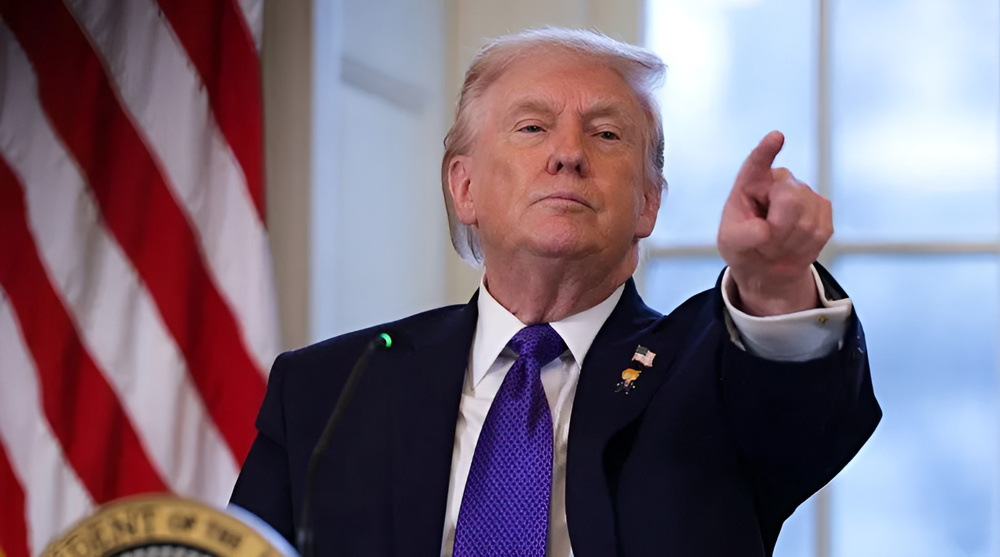
Trump and US Secretary of State Marco Rubio, himself a Miami-born son of Cuban immigrants, have made no secret of their desire to bring down the revolutionary government in Havana.
A decades-long US trade embargo was slapped on Havana shortly after the Cuban revolution of 1959, when Fidel Castro took power and established a socialist government in Havana. In 1962, the economic sanctions imposed on Havana were tightened into a full embargo.
Until US forces kidnapped Maduro from his residence in Caracas last month, Cuba had depended on Venezuela for oil supplies. Then, Trump claimed control of the nation's oil, promising to starve Cuba of the commodity. He labelled Havana an "unusual and extraordinary threat" to Washington.
On Jan. 11, Trump wrote on his Truth Social platform, "THERE WILL BE NO MORE OIL OR MONEY GOING TO CUBA - ZERO! I strongly suggest they make a deal, BEFORE IT IS TOO LATE."

Cuban President Miguel Diaz-Canel dismissed Trump's description of Havana as a “false and baseless” accusation, calling it a pretext "to suffocate" Cuba's weak economy.
He pointed out that Cuba is a free, independent, and sovereign nation, and no one has the right to dictate what it should do.
"Cuba does not attack; it has been attacked by the US for 66 years, and it does not threaten; it prepares, ready to defend the homeland to the last drop of blood," Diaz-Canel said on X.
He said, "Those who blame the Revolution for the severe economic hardships we suffer should be ashamed and keep quiet. Because they know and recognize that they are the result of the draconian measures of extreme asphyxiation that the United States has imposed on us for six decades."
 This makes it easy to access the Press TV website