Historians slam White House's whitewashing of US invasion of Mexico
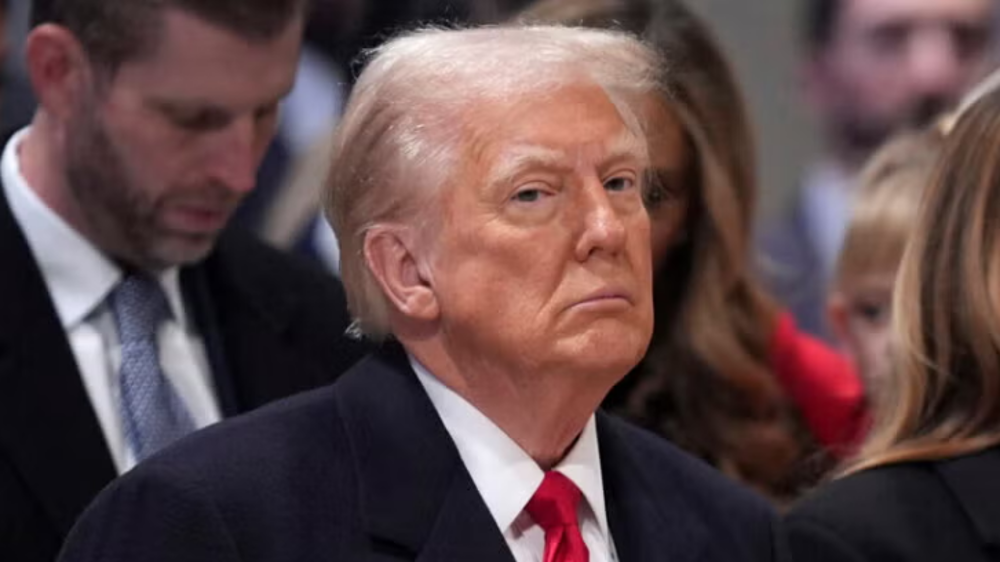
Historians and political observers have hit out the Trump administration of deliberately rewriting American history to legitimize its contemporary foreign policy toward Latin America.
The denunciation came after the White House published a statement commemorating the Mexican-American War that scholars described as historically false, imperialist, and deeply misleading.
The unsigned statement, released Monday, hailed the 1846–1848 war as a “legendary victory that secured the American Southwest, reasserted American sovereignty, and expanded the promise of American independence across our majestic continent.”
It framed US territorial expansion as a defensive and righteous act, drawing direct parallels between the 19th-century invasion of Mexico and the administration’s modern efforts to militarize the US-Mexico border and project power across the Western Hemisphere.
“Guided by our victory on the fields of Mexico 178 years ago, I have spared no effort in defending our southern border against invasion,” the statement read, invoking language critics say inverts historical reality by portraying the aggressor nation as the victim.
Scholars argue the statement erases the war’s widely acknowledged status as an act of US colonial expansion driven by racial ideology, economic ambition, and the desire to expand slavery.
The White House made no mention of the central role slavery played in motivating the conflict, nor of the broader doctrine of Manifest Destiny — a belief system rooted in white supremacy that justified territorial conquest, the displacement of Indigenous nations, and the subjugation of non-white peoples.
“The Mexican-American War was a clear war of invasion waged by a stronger nation against a weaker one,” said Alexander Aviña, a professor of Latin American history at Arizona State University.
“It required extraordinary levels of violence, occupation, and coercion to seize half of Mexico’s territory. To frame this as defensive or liberatory is historically indefensible.”
The war was precipitated by the United States’ annexation of Texas in 1845 — a territory Mexico still claimed — following years of illegal American settlement.
Mexico had abolished slavery, and many US politicians feared that without new territory, the balance of power between free and slave states would shift. The war, abolitionists warned at the time, was an attempt to expand slavery westward.
After US forces invaded Mexico and occupied its capital, the Treaty of Guadalupe Hidalgo forced Mexico to cede more than 525,000 square miles of land — including present-day California, Arizona, New Mexico, Nevada, Utah, and parts of Colorado — in exchange for payment under military duress.
Former President Ulysses S. Grant later denounced the war as “one of the most unjust ever waged by a stronger against a weaker nation,” a judgment widely echoed by modern historians.
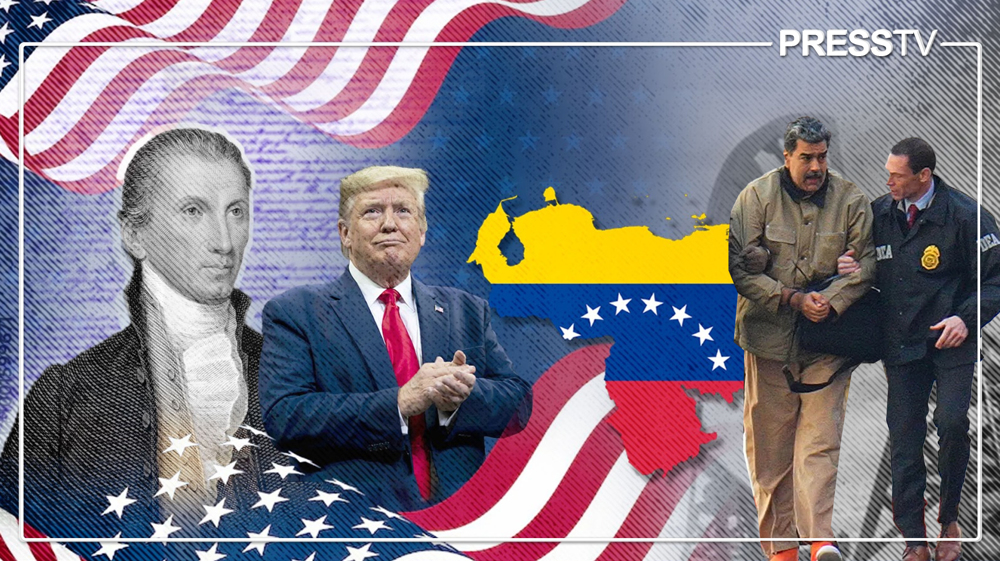
Criticism of the White House statement spread quickly online and internationally. Mexican President Claudia Sheinbaum responded with open derision, reminding reporters that Mexico is a sovereign nation and mocking the historical revisionism implicit in the statement.
Her remarks echoed broader concerns in Mexico that the Trump administration’s rhetoric reflects a renewed willingness to disregard national sovereignty in the name of US security.
The episode comes amid increasingly aggressive US posturing toward Latin America, including attempts to undermine Venezuela’s government, interference in regional elections, and repeated threats of unilateral military action against Mexican drug cartels — proposals that would violate international law.
Historians say the statement fits a broader pattern within the Trump administration of reshaping public history to align with nationalist ideology.
The administration has ordered revisions to exhibits at the Smithsonian Institution, claiming it is “restoring truth and sanity” to American history, while critics say it is erasing scholarship on slavery, Indigenous genocide, US imperialism, and systemic racism.
Federal websites have been purged of historical records, legal documents, and climate data deemed politically inconvenient.
Trump has also ordered the removal of language that “inappropriately disparages Americans,” including references to slavery, the destruction of Native American cultures, and US colonial violence.
“This is not about historical debate — it’s about historical denial,” said Albert Camarillo, a professor of history at Stanford University.
“The administration is promoting a distorted, imperialist narrative that sanitizes conquest and violence while silencing generations of scholarship.”
Aviña added that the statement seeks to rhetorically justify an “America First” doctrine across the hemisphere by recasting US imperialism as benevolent and inevitable.
“The danger,” he said, “is that rewriting the past becomes a way of excusing abuses in the present.”

Greenland escalates warning to Trump-linked oil firm over unauthorized drilling equipment

US war on Iran depletes American arsenal, emboldens global rivals: Report

US 'investment' project in Iraq is cover for plundering national wealth: Resistance leader



Colombia’s new far-right regime recognizes Israeli occupation of Golan Heights
Iran rejects US ‘suffocation’ claim, says sanctions addiction exposes Washington’s policy failure
Iran’s vice president urges upgrading cybersecurity amid enemy plots
VIDEO | Palestinian resistance groups say Netanyahu prolonging war for political gains
Israeli genocide in Gaza continuing unabated despite ceasefire: UN experts
VIDEO | Press TV's news headlines
Pakistan reassures Iran defense pact with Turkey, Saudi Arabia aims for regional stability
Israel to expand three settlements in occupied East al-Quds with 3,400 settler units


 PressTV NEWSLETTER
now
PressTV NEWSLETTER
now
 This makes it easy to access the Press TV website
