US used warplane disguised as ‘civilian aircraft’ in deadly Caribbean strike: Report
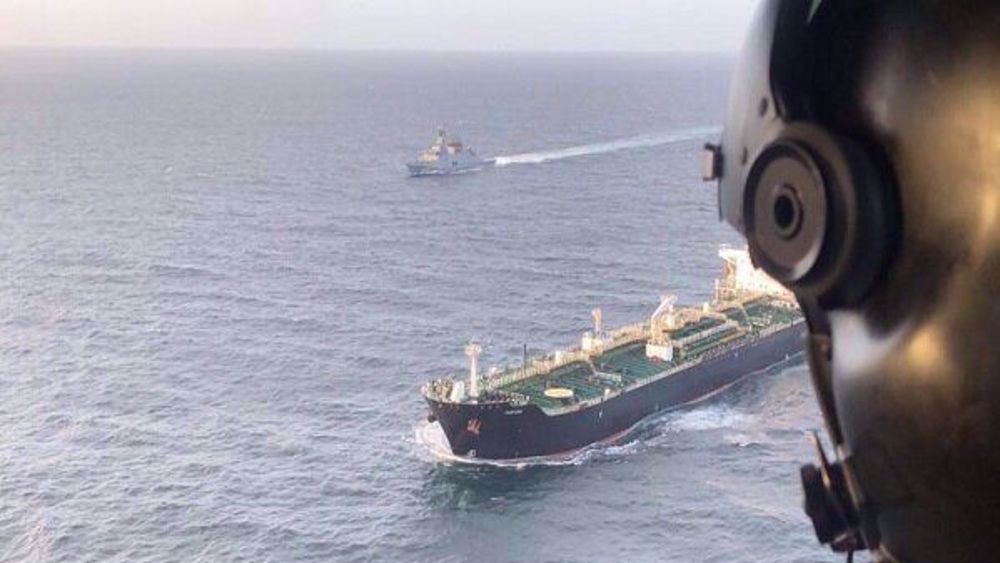
A US attack on a boat in the Caribbean in September that claimed the lives of 11 people used a military aircraft that was disguised as a civilian one, a report says.
The New York Times carried the report on Tuesday, citing officials briefed on the matter.
The aggression used, as its so-called justification, a narrative that President Donald Trump’s administration had come up with for some time alleging that Washington was in a “drug war” with Venezuela and that it, therefore, had to take on, what it claimed were, boats smuggling drugs.
It featured dual strikes that first claimed nine people and then killed the remaining two, who were hanging onto the boat’s wreckage.
According to the report, the involved “secret” warplane had been painted to look like a civilian aircraft and was carrying munitions inside the fuselage, rather than visibly under its wings.
‘War crime’
The disguise prevented the boat’s passengers from taking any precautions or evasive measures, something that experts cited by The Times said amounted to a “war crime” as well as what they referred to as “perfidy” in official combat terminology.
“Shielding your identity is an element of perfidy,” said retired Maj. Gen. Steven J. Lepper, a former deputy judge advocate general for the United States Air Force. “If the aircraft flying above is not identifiable as a combatant aircraft, it should not be engaged in combatant activity.”
Hegseth’s ‘kill everybody’ order
The daily did not specify the date of the strike, but on September 2, American media were rife with reports of an attack with the same features and dimensions on a vessel in the Caribbean.
Reports ensuing the September 2 attack said the second strike on its targeted vessel had been approved by War Secretary Pete Hegseth, who had ordered Adm. Frank Bradley to “kill everybody” on board.
In a rare bipartisan alignment, some members of the US Congress have pointed to the gravity of allegations arising from the approval, saying the second attack could amount to a war crime.
Such attacks claimed scores of lives in the Caribbean amid widespread criticism of Washington’s violation of international law as well as strict warnings about their threatening the sovereignty of regional nations.
They came amid a rapidly increasing American naval buildup in the waters and were followed by a US attack on Venezuela’s capital, during which American forces kidnapped Venezuela’s President Nicolas Maduro and his wife.
Ever since the kidnapping, Trump has called on American companies to resume capitalizing on oil resources in Venezuela, the world’s largest.
Iraqi MP: US forces’ September 30 withdrawal certain; foreign troops no longer needed

The farce of ‘war on terror’: How US military-industrial complex bred terrorism after 9/11 attacks

Vance sought 'blunt' truth about war on Iran amid false picture fed to Trump: Report



Yemeni Armed Forces launch fresh retaliatory strikes on Saudi targets
VIDEO | Press TV's news headlines
VIDEO | Iraq’s fuel crisis deepens amid supply disruptions
US tested Lockheed cluster missiles on Iranian civilians, Baghaei says
Iran, Oman jointly postpone Persian Gulf foreign ministers’ meeting
VIDEO | Gaza’s women: The sole providers of families shattered by war
VIDEO | News Review: Trump’s comments on Irish unification spark backlash among his British allies
VIDEO | Press TV's news headlines


 PressTV NEWSLETTER
now
PressTV NEWSLETTER
now
 This makes it easy to access the Press TV website
