

The United Nations human rights office has urged the international community to deliver a clear message that the recent US military operation in Venezuela, including the abduction of President Nicolás Maduro, has made the world “less safe.”
Ravina Shamdasani, chief spokeswoman for the Office of the UN High Commissioner for Human Rights (OHCHR), told reporters in Geneva on Tuesday that the US attack on Venezuela “undermined a fundamental principle of international law.”
"States must not threaten or use force against the territorial integrity or political independence of any state. The international community needs to come together with one voice to insist on that," Shamdasani stated.
Far from being a victory for human rights, the military intervention damages the architecture of international security and makes every country less safe, she added.
The spokeswoman said that the brazen move by President Donald Trump's administration in Venezuela “sends a signal that the powerful can do whatever they like.”
Shamdasani also echoed broader international concerns, adding that the future of Venezuela must be determined by its people alone.
Spokesperson for the UN High Commissioner for Human Rights, Volker Türk, also warned on Tuesday that the US raid on Venezuela “undermined a fundamental principle of international law.”
In a statement, the spokesperson said Türk, a career UN official and human rights lawyer, is “deeply worried” about the “situation in Venezuela.”
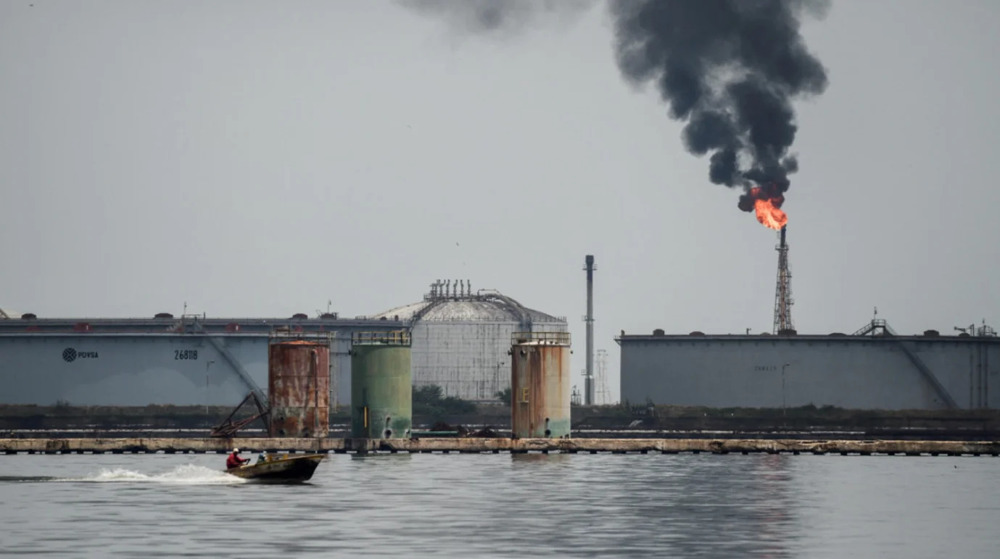
In the early hours of Saturday, the United States attacked Venezuela’s largest military complex in the capital, Caracas, as well as strategic sites in the states of Miranda, Aragua, and La Guaira.
US forces also kidnapped Maduro and his wife, Cilia Flores, transferring them to the United States to stand trial on charges including “narco-terrorism, conspiracy, cocaine importation, and weapons trafficking."
During an emergency meeting of the UN Security Council on Monday, the move was widely condemned as a "crime of aggression" by US adversaries and allies.
Maduro, who has long denied the allegations, told a court in New York on Monday that he is a prisoner of war and pleaded not guilty to the drug-related charges.
Trump has acknowledged that a core objective of the military action against Venezuela was to place the country’s oil sector under US control.
He has also threatened Venezuelan Vice President Delcy Rodríguez, saying she would “pay a very big price” if she failed to align with US interests.
Rodríguez, who has been sworn in as Venezuela’s interim leader, said “we are ready to defend our natural resources” and insisted that Maduro remains the legitimate head of Venezuela’s government.
 This makes it easy to access the Press TV website