Long read: Inside 2026 World Cup's intense battles promising infinite drama
By Mohammad Ali Haqshenas
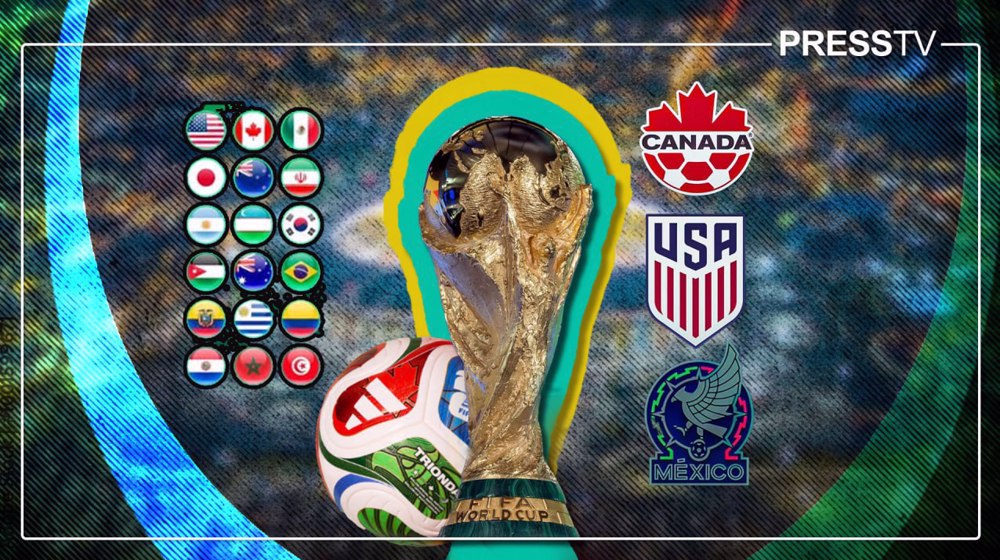
As the dust settles on the 2026 FIFA World Cup draw, for the first time in the marquee soccer competition's history, 48 countries have begun charting their path to ultimate glory.
The expansion has fundamentally reshaped the tournament's geometry — 12 groups, the introduction of a Round of 32, and an unforgiving schedule that leaves little room for slow starts or early missteps.
For the host countries — Mexico, Canada, and the United States — the theoretical advantage of home has now transformed into a tangible reality, defined by specific opponents, demanding travel routes, and complex logistical challenges.
The term "Group of Death" is being thrown around casually, yet the true narrative of the competition's group stage lies in the razor-thin margin for error.
While the top two teams are guaranteed progression and the eight best third-place finishers also advance, tactical conservatism may shape the early rounds.
Still, for genuine title contenders, the formidable sides, the process of building momentum starts now.
We break down all 12 groups, examining the favorites as well as underdogs, the teams fighting for survival, and the matchups set to define the tournament's all-important first stage.
🇮🇷⚽ INFOGRAPHIC - FIFA World Cup 2026 draw has placed 48 teams into 12 groups, with Iran facing Group G challenge against Belgium, Egypt, and New Zealand, as world football’s biggest spectacle is set to unfold across North America in June 2026.@presstvsports pic.twitter.com/xSjNsKxaME
— Press TV Sports (@presstvsports) December 13, 2025
Group A: History repeats at the Azteca
Mexico, South Africa, Korea Republic, UEFA Play-off Winner D
(Play-off D Contenders: Czechia, Denmark, North Macedonia, Republic of Ireland)
- Overview
This is a group defined by narrative symmetry and intense pressure. Mexico, hosting the tournament for a record third time, landed a draw that feels eerily familiar.
They will open the tournament at the Estadio Azteca against South Africa, a direct rematch of the 2010 World Cup opener. It is a balanced, tricky group.
While Mexico avoids the European giants of Pot 1, they face a technically disciplined South Korea and a European wildcard (likely Denmark or Czechia) that could even end up topping the table.
The difficulty level is moderate to high, driven more by tactical parity than star power.
- Favorites to qualify
Mexico: On paper, El Tri should advance, fueled by the exuberant support at the Azteca and Estadio Akron. Under veteran manager Javier Aguirre, they have prioritized defensive solidity.
If they can manage the psychological weight of the opener, their path to the Round of 32 is clear.
Korea Republic: The Asian powerhouse enters 2026 as a tactically mature team that enjoys a history of success in recent World Cup finals. Led by manager Hong Myung-bo, they breezed through qualifying unbeaten.
Their spine, anchored by Bayern Munich's Kim Min-jae and driven by the creative engine of PSG's Lee Kang-in, can give them a technical edge over South Africa. They will challenge Mexico for the top spot.
- Dark horses
UEFA Play-off Winner D (likely Denmark): This "TBD" slot is the group's landmine. If Denmark navigates the March playoffs as expected, Group A suddenly contains a European semi-finalist from Euro 2020.
A European team often disrupts host nation parties, and their organized press could stifle Mexico's midfield.
South Africa: Bafana Bafana are the true wildcards. Coached by Hugo Broos, they eliminated Nigeria in the qualifying round and play with a fearless, counter-attacking style.
While they lack global superstars, their cohesive domestic-heavy squad (largely Mamelodi Sundowns players) provides chemistry that international all-star teams often lack.
- Must-watch matches
Mexico vs. South Africa (June 11): The tournament opener. The atmosphere at the Azteca will be suffocating. A draw here — just like in 2010 — would throw the group into chaos immediately.
South Korea vs. UEFA Play-off D: This fixture will likely decide second place.
- Prediction & final word
Mexico and South Korea can find a way through. The home advantage should carry El Tri through, while South Korea's elite European-based core gives them the consistency needed over three games.
Wildcard Scenario: A scoreless draw in the opener puts immense pressure on Mexico, who then crumble against the European playoff winner, forcing a nervous wait to qualify as a third-place team.
✍️Explainer: As countdown begins for FIFA World Cup 2026, what is in store for Iran
— Press TV Sports (@presstvsports) December 7, 2025
Iran faces Group G rivals – Belgium, Egypt, New Zealand – in 2026 FIFA World Cup, eyeing a historic knockout stage breakthrough
By Mohammad Ali Haqshenas@presstvsportshttps://t.co/ZG0Iy81nB4
Group B: The waiting game
Canada, Switzerland, Qatar, UEFA Play-off Winner A
(Play-off A Contenders: Italy, Wales, Bosnia & Herzegovina, Northern Ireland)
- Overview
Group B is a fascinating mix of tactical discipline and high-variance potential, largely because the fourth team is effectively a ghost, and a terrifying one.
The "UEFA Play-off Winner A" slot will likely be filled by Italy, the four-time world champions who missed the last two World Cup finals. If the Azzurri qualify, this can be arguably labeled as a "Group of Death." If they falter, Canada and Switzerland will breathe much easier.
- Favorites to qualify
Switzerland: The Swiss are the definition of tournament consistency, having reached the knockout stages in their last five major tournaments.
With Granit Xhaka controlling the tempo and Manuel Akanji marshalling the team's defense, they are the most settled side in their group.
Canada: Playing group matches at BMO Field and BC Place gives Jesse Marsch's side a clear home-field advantage, with familiar conditions and strong local support.
Canada's attacking identity is built around speed and direct transitions, particularly through wide areas, which can be effective against teams that struggle to recover defensively.
Under Marsch, however, the high-pressing approach has at times left the back line exposed.
- Dark horses
UEFA Play-off Winner A (potentially Italy): It is impossible to ignore the elephant in the room. If Italy survives the playoffs, they instantly become the group favorite.
Their tactical sophistication would pose a severe test for Canada's high-energy press.
Qatar: The 2022 host is eager to prove it belongs on the world stage after a lackluster campaign at home. They have retained Akram Afif and play a disciplined low block, but they remain the clear underdogs against European and North American intensity.
- Must-watch matches
Canada vs. UEFA Play-off Winner A (June 12): Canada opens the campaign in Toronto. If their opponent is Italy, this is a blockbuster test of them against elite opposition. A win here would be historic.
Switzerland vs. Canada (June 24): The final group game in Vancouver. This could be a straight shootout for the top spot, determining who gets a favorable path in the knockout bracket.
- Prediction & final word
On paper, Qatar has the least chance of advancing. Switzerland and Canada can finish top of the table.
Assuming Italy qualifies, they likely take the top spot, bumping Canada or the Swiss to second. However, without a confirmed Italy, the Swiss are the most likely winner.
Wildcard scenario: Italy fails to qualify for the World Cup again (losing in the playoffs), and Wales takes the spot. Canada capitalizes on the weaker European entry to win the group outright, sparking hysteria.
🇮🇷⚽️ Former Iran coach Heshmat Mohajerani says the team has got its best-ever World Cup draw, but warns against complacency.
— Press TV Sports (@presstvsports) December 10, 2025
He believes Egypt and New Zealand are beatable, yet stresses preparation and discipline are key to turning this opportunity into success.@presstvsports pic.twitter.com/KLiwcwkZyR
Group C: Brazil sets the tone
Brazil, Morocco, Scotland, Haiti
- Overview
This is not a "Group of Death," but it is a Group of anxiety. Brazil, seemingly eternally in transition, faces a tricky path. It is paired with Morocco, the 2022 semi-finalists who have established themselves as an elite defensive side, and a Scotland team whose physical intensity and structure make it an uncomfortable matchup.
Haiti, the CONCACAF representatives, brings fearlessness but remain clear underdogs.
The difficulty level is high, not because of star power across the board, but because three very different tactical profiles threaten to disrupt Brazil's rhythm in different ways.
- Favorites to qualify
Brazil: Despite an uneven cycle, Brazil remains the apex predator. Under Carlo Ancelotti, the team has shifted away from Neymar-centric buildup toward a more vertical system that maximizes Vinícius Júnior and Rodrygo in transition.
The key question remains midfield control, particularly against compact or physical opponents. If Brazil manages game tempo more effectively, it should still top the group.
Morocco: The Atlas Lions are no longer a surprise package; it is an established tournament team. Walid Regragui's side retains its defensive organization while offering more creativity through Brahim Díaz and wide overloads.
Morocco's compact block and disciplined pressing make them uniquely suited to frustrate possession-heavy sides, and they will approach Brazil with confidence rather than caution.
- Dark horses
Scotland: Scotland arrives with a clear identity built on structure, intensity, and rapid vertical play. Players like Scott McTominay and John McGinn give the team midfield drive and late runs into the box, while its back three system is designed to absorb pressure.
They may lack elite flair, but their physicality and tactical discipline make them dangerous in tight, low-margin matches.
Haiti: Haiti relies on physicality, speed, and direct attacking play rather than prolonged possession. While it lacks the depth and experience of the other teams, its willingness to attack and press can unsettle opponents, particularly in early tournament matches.
Haiti's role can be seen as more disruptive than dominant, but it is capable of forcing mistakes.
- Must-watch matches
Brazil vs. Morocco (June 14): A clash of styles. Brazil's attacking freedom meets Morocco's defensive structure. If Morocco scores first, pressure and impatience could creep into Brazil's play.
Morocco vs. Scotland: A potential battle for second place. Morocco's positional discipline against Scotland's physical, high-energy midfield could decide qualification margins.
- Prediction & final word
Brazil and Morocco remain the most likely qualifiers, but neither will coast. Scotland is well-positioned to challenge for second place if either favorite slips, particularly in low-scoring matches.
Wildcard scenario: Brazil stumbles to a draw against Scotland, tightening the group and turning the final round into a tense qualification scramble.
🇮🇷⚽ Fox Sports ranks Iran’s group among 3 easiest at FIFA World Cup 2026
— Press TV Sports (@presstvsports) December 8, 2025
Group G: Belgium, Iran, Egypt, New Zealand (avg FIFA rank 37).
Other easy groups include K (Portugal, Colombia, Uzbekistan, playoff) and E (Germany, Ecuador, Ivory Coast, Curaçao).@presstvsports pic.twitter.com/iSSlR4U8xL
Group D: Hosts under pressure
US, Paraguay, Australia, UEFA Playoff C Winner (Turkey/Romania/Slovakia/Kosovo)
- Overview
This group is defined by contrast rather than star power. Paraguay brings South American grit and defensive discipline, Australia offers physicality, while the UEFA Playoff C winner adds a variable European opponent with strong tactical foundations.
US supplies athleticism and attacking pace, but no team enjoys stylistic comfort.
There are no glamour fixtures here — only tightly contested matches where patience, discipline, and execution will decide qualification.
- Favorites to qualify
USA: Under Mauricio Pochettino, the USMNT has developed greater structure and defensive balance. Home-field advantage should amplify their intensity.
With Pulisic, McKennie, and Antonee Robinson, the US has the talent edge in the group, but the team must break down compact, physical opponents rather than rely on transition moments.
UEFA Playoff C Winner: Regardless of which nation emerges, this spot likely belongs to the most tactically refined team in the group.
Turkey would bring attacking flair and emotional volatility, Romania organization and counter-attacking discipline, Slovakia tournament pragmatism, and Kosovo aggressive pressing.
Any of the four would enter as a serious contender for qualification.
- Dark horses
Paraguay: Paraguay can frustrate any opponent. Compact, physical, and comfortable without the ball, they thrive in low-scoring matches decided by set pieces or isolated moments.
It may not dominate possession, but it excels at dragging opponents into attritional battles. And let's not forget that Paraguay defeated both Argentina and Brazil on the road to the 2026 finals.
Australia: The Socceroos remain one of the physically demanding teams in the tournament. Their high work rate, aerial strength, and direct approach make them difficult to control, especially for teams not used to sustained physical pressure. It is unlikely to dominate games, but very capable of winning ugly.
- Must-watch matches
USA vs. UEFA Playoff C: Likely decisive. A clash between hosts and European tactical discipline that could define the group hierarchy.
USA vs. Paraguay: A classic contrast — tempo versus patience. Breaking Paraguay down could be the US' toughest challenge.
- Prediction & final word
The United States should qualify, but nothing suggests dominance. Second place is wide open, with the UEFA Playoff C winner holding a slight edge due to tactical consistency.
Paraguay and Australia remain close enough to punish any complacency.
Wildcard scenario: The US stumbles to two draws, leaving qualification dependent on a tense final-day result and reminding everyone that hosting guarantees nothing.
🇮🇷⚽ Los Angeles Times reports on Iran’s exciting World Cup presence in an American city that feels familiar
— Press TV Sports (@presstvsports) December 7, 2025
Organizers welcome hosting two of Team Melli’s matches in Los Angeles, noting the large Iranian community and the vibrant atmosphere.@presstvsports pic.twitter.com/vFl8XE9K9R
Group E: Power meets pace
Germany, Curaçao, Ivory Coast, Ecuador
- Overview
This group offers a compelling mix of pedigree, physicality, and tactical contrast. Germany, rebuilding but still elite, faces two demanding opponents Ivory Coast and Ecuador — both athletic, well-organized sides capable of disrupting rhythmand a Curaçao team playing with freedom and minimal pressure.
The difficulty level is moderate, driven less by star power and more by matchups that punish complacency and reward discipline.
- Favorites to qualify
Germany: As hosts of Euro 2024 and now under the steady hand of Julian Nagelsmann, Germany arrives with renewed structure and clarity. Its midfield control, anchored by Joshua Kimmich and supported by dynamic wide players like Jamal Musiala, gives the Die Nationalelf a clear technical edge.
While still prone to defensive lapses in transition, Germany should control games through possession and positional play.
Ivory Coast: The reigning Africa Cup of Nations champion is battle-tested and resilient. Its 2023 AFCON triumph demonstrated depth, physical dominance, and tactical adaptability rather than reliance on a single star.
With a powerful midfield and athletic back line, Ivory Coast is well-suited to tournament football and favored to edge the race for second place.
- Dark horses
Ecuador: Ecuador is the most tactically uncomfortable opponent in the group. Aggressive without the ball and quick in transition, they thrive on disrupting buildup play.
With Moisés Caicedo driving midfield intensity and a youthful core accustomed to high-tempo matches, Ecuador is fully capable of upsetting one of the favorites.
Curaçao: Curaçao enters as clear underdogs, but their technical base, largely shaped by Dutch football schooling, allows them to play with confidence on the ball. Results will be hard to come by, but their lack of pressure and willingness to attack in moments could complicate matches late.
- Must-watch matches
Germany vs. Ivory Coast: A heavyweight tactical test. Germany's positional control against Ivory Coast's athletic, reactive structure could decide first place.
Ivory Coast vs. Ecuador: Likely the swing match for qualification. Expect a high-intensity battle where midfield dominance and set pieces are decisive.
- Prediction & final word
Germany should advance, though not without moments of tension. Ivory Coast holds a narrow edge over Ecuador for second place, but that margin is thin and matchup-dependent.
Wildcard scenario: Ecuador's press overwhelms Germany in a chaotic group-stage match, tightening the table and forcing a final-day scramble for qualification.
🇮🇷⚽ Iran’s football team schedule at the 2026 World Cup group stage:
— Press TV Sports (@presstvsports) December 6, 2025
🔴 June 14: Iran vs New Zealand, 9 PM local, Los Angeles
🔴 June 20: Iran vs Belgium, 3 PM local, Los Angeles
🔴 June 26: Iran vs Egypt, 11 PM local, Seattle #WorldCup2026@presstvsports pic.twitter.com/XV32x6u3rO
Group F: Tactics and tempo
Netherlands, Japan, Tunisia, UEFA Playoff B Winner
(Winner of UEFA Playoff B: Ukraine, Sweden, Poland, or Albania)
- Overview
This group is rich in tournament experience. The Netherlands brings organized play, stars, and pedigree; Japan offers tempo and collective organization, Tunisia supplies resilience and defensive control, while the UEFA Playoff B winner adds a late-arriving European variable.
There are no soft matchups, each team is comfortable playing without the ball and punishing mistakes.
- Favorites to qualify
Netherlands: The Oranje arrives with a settled identity relying on creative stars and controlled buildup. With Virgil van Dijk anchoring the back line and a flexible midfield capable of dictating tempo, the team is well equipped for group-stage management.
While attacking fluidity can fluctuate, their structure and experience make them favorites to finish well.
Japan: Japan's rise as a consistent tournament side is no longer a surprise. The Samurai Blue's disciplined press and tactical intelligence allow them to compete comfortably against higher-ranked opponents.
Comfortable in both possession and transition, Japan is well-positioned to capitalize on any slip from the group's traditional powers. The team overpowered both Germany and Spain in the group stage of the 2022 World Cup and finished top of its group.
- Dark horses
UEFA Playoff B winner: Whoever emerges will arrive battle-hardened. Ukraine would bring intensity, Sweden physical structure and aerial threat, Poland individual firepower, and Albania compact organization. Any of the four would be capable of immediately competing for qualification.
Tunisia: Tunisia is a specialist in containment. Compact, disciplined, and comfortable in low-scoring games, the team excels at frustrating opponents and forcing contests into narrow margins as it gained a 1-0 victory over France in the 2022 World Cup.
The team's lack of attacking depth limits upside, but they are well-suited to grind out results.
- Must-watch matches
Netherlands vs. Japan: This will be a tactical benchmark for both teams as it could determine the group winner.
Japan vs. UEFA Playoff B Winner: Likely pivotal in the race for second place, with contrasting European pragmatism and Japanese intensity.
- Prediction & final word
The Netherlands remains the most favorite to advance, with Japan narrowly poised to finish runner-up. The UEFA Playoff B winner looms as a genuine threat, while Tunisia will keep every match tight.
Wildcard scenario: A slow Dutch start opens the door for Japan to top the group, reshaping the knockout bracket early.
🇮🇷⚽ Iran football coach, Ghalenoei, reacts to the FIFA World Cup draw:
— Press TV Sports (@presstvsports) December 6, 2025
“There is no such thing as an easy opponent. Our team has the technical ability to achieve great things, but we need four strong preparatory matches to be fully ready.”@presstvsports pic.twitter.com/VaMcpCctg9
Group G: No easy wins
Belgium, Iran, Egypt, New Zealand
- Overview
Group G blends established European quality with athletic dynamism and disciplined transitional sides.
Belgium stands out with elite technical resources and a deep squad, Iran brings structured organisation and counter-attacking threat, Egypt will look to balance Salah-led creativity with defensive resilience, while New Zealand offers physicality and aerial presence.
The group's narrative will hinge on control versus intensity and how teams manage the tactical shifts between phases of play.
- Favorites to qualify
Belgium: Belgium arrives as the clear top seed, ranked among the world's elite and boasting a wealth of top-flight experience. Despite a generational transition, the team topped its UEFA qualifying section and retains strong midfield creativity and attacking depth.
The Red Devils' tactical flexibility, ability to manage tempo, and capacity to dominate possession make them favorites to top the group.
Iran: Iran enters as a serious candidate. Ranked around 20th globally, Team Melli combines disciplined defensive organisation with quick vertical transitions and aerial strength on set pieces.
Under head coach Amir Ghalenoei, Persian Leopards secured their ticket to the finals for the fourth consecutive time. A win against New Zealand in the opening match and competitive results against the group's stronger sides would position Iran strongly for advancement.
- Dark horses
Egypt: Egypt qualified by winning their CAF group with notable attacking output in qualifying, largely built around Mohamed Salah's incisive presence and goal threat.
They balance tactical discipline with transitional intent but face questions about how consistently they can control play against technically superior sides.
The Pharaohs' ability to exploit moments could see them push for qualification.
New Zealand: New Zealand relies on physical organization, set-piece aggression, and work rate. Led by experienced forwards like Chris Wood, they may not dominate possession, but their aerial threat and defensive discipline can frustrate opponents and make them competitive in narrow matches.
- Must-watch matches
Belgium vs. Iran: First official meeting between these sides; a tactical duel between Belgian possession control and Iran's disciplined transitions.
Iran vs. Egypt: A key contest to determine second place; sharply contrasting athletic profiles and reliance on transitional moments.
- Prediction & final word
Belgium is expected to lead the group. Iran looks well-placed to finish second, with their structured approach and counter-pressing threat. Egypt remains capable of complicating matters, particularly if they exploit isolated defensive lapses, while New Zealand will aim to make matches tight.
Wildcard scenario: A draw between Belgium and Iran opens the door for Egypt to shake up the order, turning the final matchday into a three-way battle for qualification.
⚽️ Names of the champions of 22 FIFA World Cup editions over the years.@presstvsports pic.twitter.com/8HVUhAEaJZ
— Press TV Sports (@presstvsports) December 5, 2025
Group H: Technique meets grit
Spain, Cape Verde, Saudi Arabia, Uruguay
- Overview
Spain arrives as the clear heavyweight, seeking to reclaim the glory of 2010, but they face a stern test from two-time champions Uruguay.
Saudi Arabia will aim to channel their 2022 giant-killing energy to upset the odds again. Cape Verde enters as the underdog, looking to disrupt the hierarchy in this technically demanding group.
- Favorites to qualify
Spain: With a midfield orchestrated by Pedri and the electric Lamine Yamal on the wing, La Roja’s technical dominance makes them the team to beat.
Spain's ability to control possession suffocates opponents, meaning anything less than a deep semi-final run would be considered a failure for this talented generation.
Uruguay: Under Marcelo Bielsa, Uruguay has transformed into a high-pressing machine. The La Celeste is expected to advance comfortably alongside Spain.
With a midfield powered by Valverde and relentless attacking energy, they have the grit and quality to grind down top European sides in the knockout stages.
C. Dark horses
Saudi Arabia: The Green Falcons shocked the world in 2022 by beating Argentina, and fans hope that they show the same fearlessness here.
If their domestic league's heavy investment translates to improved national team cohesion, they could pinch a result against Uruguay or Spain, complicating the group for the heavyweights.
Cape Verde: Making their debut, the Blue Sharks are the unknown quantity. While the team lacks top-tier stars, its defensive organization and physical resilience could frustrate superior teams.
Qualification is unlikely, but a draw or win against Saudi Arabia or a narrow loss to the giants would be a respectable showing.
- Must-watch matches
Spain vs. Uruguay: A defining encounter contrasting positional dominance with intensity. The winner will most likely top the group.
Uruguay vs. Saudi Arabia: A match likely to shape the race for second place, decided by midfield duels.
- Prediction & final word
Spain, the reigning European champion, is favored to advance, with Uruguay expected to follow.
Saudi Arabia remains capable of disrupting the order, while Cape Verde will aim to frustrate and capitalize on narrow margins.
Wildcard scenario: A disciplined Saudi performance against Uruguay could turn the final group matchday into a three-team battle for direct tickets to the knockout stage.
🏆⚽ The 2026 FIFA World Cup draw is complete. 48 teams split into 12 groups, with Iran in Group G alongside Belgium, Egypt, and New Zealand.#WorldCup2026@presstvsports pic.twitter.com/nSgJCBoaSg
— Press TV Sports (@presstvsports) December 5, 2025
Group I: Elite collision course
France, Senegal, Intercontinental Playoff 2 Winner, Norway
(Intercontinental Playoff 2: Iraq, Bolivia, or Suriname)
- Overview
France is the overwhelming favorite, looking to build on their back-to-back finals appearances in 2018 and 2022. It faces Senegal, which is desperate to replicate its historic 2002 run.
With Norway bringing European physicality and a final Playoff Winner completing the quartet, the race for the second knockout spot will be fierce.
- Favorites to qualify
France: The Les Bleus remain one of the most complete tournament teams. With the pace and lethal finishing of Mbappé and Dembélé and a defense anchored by Saliba, Didier Deschamps's side hopes to bring home the World Cup trophy for the third time.
Their experience in recent finals makes them arguably one of the favorites to reach the latter stages.
Norway: Norway finally returns to the big stage, powered by Erling Haaland's mastery in goalscoring. If he receives adequate service, they can beat anyone.
However, their defense remains suspect. The Løvene is the classic "wildcard"capable of upsetting France or crashing out early depending on whether their attack clicks.
- Dark horses
Senegal: Senegal is Africa's strong hope for a deep run. With a spine of experienced European-based players, the Lions of Teranga can fight for the second spot. Their physical power and counter-attacking speed will be a nightmare for Norway.
Intercontinental Playoff 2 winner: Likely a team like Bolivia or Iraq, this spot represents the group's biggest underdog, at least on paper. Arriving with momentum from the playoffs, they will aim to get the most from this chance.
In a group that has earned the title of "Group of Death" by some analysts, stealing a point from Norway or Senegal would be a massive achievement.
- Must-watch matches
France vs. Senegal: A high-level physical and tactical contest likely to determine the group winner.
Senegal vs. Norway: A decisive matchup that can determine the likely runner-up and third-place finisher.
- Prediction & final word
France is expected to advance comfortably, with Norway holding a narrow advantage over Senegal for second place. The Intercontinental Playoff 2 winner may not dominate possession but could still influence the group's final standings.
Wildcard scenario: Norway's attackers are not fueled well, and the "TBD" team stuns France, as Tunisia did in 2022, making predictions hard till the last minute of the last game.
⚽ 2026 FIFA World Cup to kick off with Mexico vs South Africa on June 10! An electrifying opener awaits as two countries will clash in the tournament’s first match.@presstvsports pic.twitter.com/x9I3JM5bUF
— Press TV Sports (@presstvsports) December 5, 2025
Group J: Champion surrounded
Argentina, Algeria, Austria, Jordan
- Overview
Defending champion Argentina anchors this group, carrying the heavy expectation of retaining the trophy. It must navigate past a disciplined Austria and the technical flair of Algeria.
Jordan faces a daunting task in this high-profile campaign, as the South American giants look to assert early dominance and secure a smooth path to the Round of 32.
- Favorites to qualify
Argentina: The defending champion remains the gold standard. Even with questions surrounding Messi's age, the squad's chemistry and tactical flexibility under Lionel Scaloni are unmatched.
La Albiceleste is the overwhelming favorite to sweep this group, using these matches to fine-tune its rhythm before the knockout intensity begins.
Austria: Das Team plays a high-octane brand of football under Ralf Rangnick that can overwhelm unprepared defenses. The team is the likely runner-up, possessing the tactical discipline to handle Algeria and Jordan. Its ability to press high makes it a dangerous opponent for anyone looking past it.
- Dark horses
Algeria: The Fennec Foxes blend technical flair with physicality. If Riyad Mahrez and other creative midfielders find space, they can unlock Austria's defense. It is the primary threat to disrupt the expected order, fighting tooth and nail for that second automatic qualifying spot.
Jordan: As a debutant, Jordan enters with zero pressure and high morale. Their disciplined low block will be tested severely by Argentina's creativity.
While advancing is a long shot, The Chivalrous' recent Asian Cup and Arab Cup performances suggest they won't be roll-overs, potentially acting as kingmakers by holding a favorite to a draw.
- Must-watch matches
Argentina vs. Austria: A clash between controlled dominance and structured intensity, likely decisive for first place.
Austria vs. Algeria: A direct contest that could determine the second direct qualification spot.
- Prediction & final word
Argentina is expected to advance, with Austria narrowly favored to finish second. Algeria remains capable of upsetting the balance, while Jordan will aim to keep matches tight and competitive.
Wildcard scenario: Algeria's attacking efficiency swings a decisive match, and enthusiastic Jordan stops or even defeats the favorites, messing up the calculations.
⚽️🏆 The road to 2026 FIFA World Cup Final begins with 48 teams in group play, narrowing through the Round of 32, Round of 16, quarterfinals, and semifinals.
— Press TV Sports (@presstvsports) December 5, 2025
Champions will be crowned July 19 at MetLife Stadium, New Jersey.@presstvsports pic.twitter.com/flTqn5CEjy
Group K: Quietly dangerous
Portugal, Uzbekistan, Colombia, Intercontinental Playoff 1 Winner
(Winner of Intercontinental Playoff 1: DR Congo, Jamaica or New Caledonia)
- Overview
Portugal leads the charge with a star-studded lineup, heavily favored to top the table. However, Colombia brings intense South American pressure and attacking verve that could challenge the European favorites.
With Uzbekistan eager to make a mark on the global stage and a final Playoff Winner rounding out the bracket, this group offers a fascinating clash of football cultures.
- Favorites to qualify
Portugal: Portugal's squad depth is frightening, featuring world-class talent in every position. A Seleção is heavily favored to win the group.
The narrative surrounds Ronaldo's final bow, but the supporting cast of Fernandes, Leão, and Dias ensures they are genuine contenders for the trophy, not just group winners.
Colombia: Revitalized and playing attractive, attacking football, Colombia is expected to join Portugal in the next round. Los Cafeteros' wing play and creative midfield make them potent going forward.
The team has the quality to punish any defensive lapses from Uzbekistan.
- Dark horses
Uzbekistan: A rising power in Asian football, Uzbekistan finally makes its debut. The team is technically sound and disciplined, but lacks experience against elite South American and European sides. Oston Urunov's talent, combined with set pieces, may even make the White Wolves see the knockout stage.
Intercontinental Playoff 1 winner: Whether it's a team like Jamaica or DR Congo, this side will bring athleticism and unpredictability.
They will likely struggle against the tactical sophistication of Portugal and Colombia but could target the match against Uzbekistan as their best chance to secure a historic World Cup victory.
- Must-watch matches
Portugal vs. Colombia: A high-level encounter contrasting control-based possession with physical transitions.
Colombia vs. Uzbekistan: A pivotal match likely to influence second place.
- Prediction & final word
Portugal is favored to advance, with Colombia holding a slight edge for the second spot. Uzbekistan remains capable of disrupting expectations, while the playoff entrant could influence outcomes without dominating play.
Wildcard scenario: A disciplined Uzbek performance forces the group into a compressed final matchday.
🇮🇷⚽ World Cup stadiums for Iran
— Press TV Sports (@presstvsports) December 7, 2025
🏟 Los Angeles Stadium: Opened in 2020, seats 70,000. Home to NFL’s Rams & Chargers, Super Bowl & concerts
🏟 Seattle Stadium: 69,000 seats, iconic open north end, Guinness record for loudest crowd, home to Sounders & Seahawks@presstvsports pic.twitter.com/pEe0TFcevu
Group L: England tested early
England, Croatia, Ghana, Panama
- Overview
England faces a familiar foe in Croatia, reigniting a rivalry sparked by their dramatic 2018 semi-final clash. While these European titans are favored to advance, the Black Stars of Ghana possess the speed and talent to punish any complacency.
Panama completes the group, relying on CONCACAF grit and defensive organization to frustrate their more illustrious opponents.
- Favorites to qualify
England: Under Thomas Tuchel, the Three Lions will be challenging to beat. With Kane, Bellingham, Foden and a full list of other stars, the team possesses match-winning quality.
They are clear favorites to top the group, though the match against Croatia offers a psychological test they must pass to prove their tournament credentials.
Croatia: While their "Golden Generation" has aged, Croatia remains a master of tournament management. Its midfield control, led by seasoned Luka Modrić, allows it to dictate tempo against almost anyone.
The Vatreni are favored to advance, likely battling England for the top spot while using their experience to outmaneuver Ghana and Panama.
- Dark horses
Ghana: Ghana's global rank of 72 should not prompt rivals to underestimate Otto Addo's side. Appearing in their second back-to-back World Cup, the Black Stars can cause problems for the group giants. Jordan Ayew and Mohammed Kudus, both playing in England, are expected to help the team contain the Three Lions.
Panama: Panama relies on physical grit and defensive stubbornness. They will likely play a low block, hoping to frustrate England and Croatia. While scoring goals is a struggle, their ability to turn matches into scrappy battles makes them a frustrating opponent, even if progression is unlikely.
- Must-watch matches
England vs. Croatia: A familiar tactical contest likely to shape the group hierarchy.
Croatia vs. Ghana: A clash of control versus pace that could determine second place.
- Prediction & final word
England is expected to progress, with Croatia favored to follow. Ghana remains a credible challenger, while Panama will look to frustrate and disrupt.
Wildcard scenario: Ghana's physical play contains both Croatia and England, opening the door to a late group reshuffle.
Pezeshkian hails Iran students’ success at World University Combat Sports championship
Iran ‘most oppressed team’ in FIFA World Cup history, says head coach
Iran players stopped at Los Angeles airport while Torabi faces visa issue after World Cup opener



Speaker Qalibaf: ‘We will treat Leader’s directives as our guiding light in negotiations’
Vance rebukes Ben-Gvir and Smotrich for attacking US-Iran MoU
Pezeshkian: Leader’s message guarantees Iran’s great victory in negotiations
Iran FM expresses deep appreciation for Leader’s guiding message
China warns Israel against obstructing Iran-US understanding
Iran condemns desecration of mosques, attacks on Palestinians in West Bank
Iran sets 60-day free transit window for Hormuz shipping under MoU
Leader hails Iranian officials' efforts, says Trump desperate in reaching deal


 PressTV NEWSLETTER
now
PressTV NEWSLETTER
now
 This makes it easy to access the Press TV website
