Iran urges fair process in selecting next UN chief, dismisses Rafael Grossi as unfit

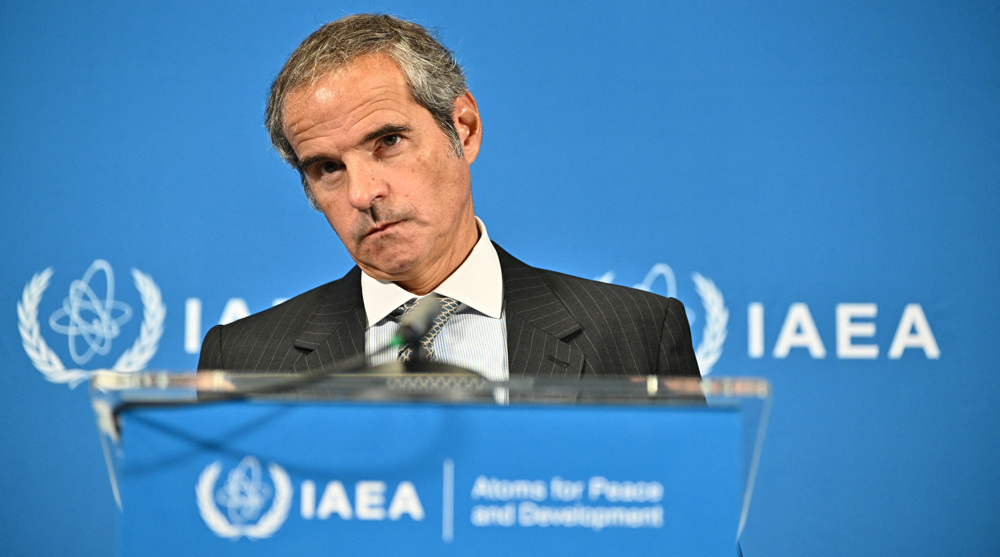
Iran has called for a fair process to select the next UN secretary-general, warning that candidates who remained silent on unlawful military attacks against Iran’s peaceful nuclear program are unfit — in an apparent reference to the head of the International Atomic Energy Agency (IAEA), Rafael Grossi.
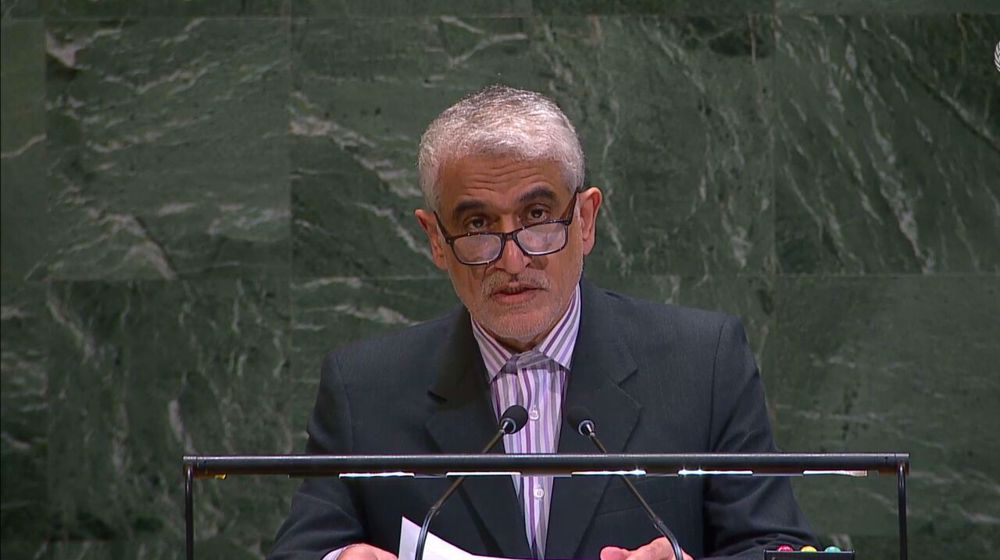
In a statement during a Security Council session on Monday, Iran’s Ambassador and Permanent Representative to the United Nations, Amir Saeid Iravan,i articulated Iran’s vision for principled and effective UN leadership, grounding his remarks in the core provisions of the UN Charter.
He stated that the power granted by Article 99, allowing the Secretary-General to bring threats to international peace before the Council, has been “paralyzed by the veto of a permanent member over the past two years.”
This period, he said, included “the genocidal war and grave war crimes committed by the Israeli regime in Gaza, the killing of UN humanitarian personnel and UN peacekeepers, and acts of aggression against regional countries.”
He added that in these critical moments, the exceptional authority entrusted to the Secretary-General under Article 99 of the Charter “has not been exercised fully, in a timely manner, or with the rigor required by the circumstances.”
Turning to Article 100, Iravani emphasized that the next Secretary-General must embody "independence and integrity."
He warned that “a candidate who has deliberately failed to uphold the UN Charter—or to condemn unlawful military attacks against safeguarded, peaceful nuclear facilities ... undermines confidence in his ability to serve as a faithful guardian of the Charter and to discharge his duties independently, impartially, and without political bias or fear of powerful States, as required under the Charter."
The envoy was referring to the June strikes carried out by the US and Israel against Iran’s peaceful nuclear facilities, which were under the UN supervision. These illegal acts of aggression also targeted Iranian nuclear scientists. Yet the IAEA, whose director general, Rafael Grossi, has now announced his candidacy for the role of UN Secretary-General, chose not to condemn the attacks.
The ambassador also highlighted Article 105 of the Charter, stating that the Secretary-General has “a clear and non-derogable responsibility” to safeguard the rights and privileges of representatives and to ensure the full and equal participation of all Member States.
He said violations such as visa denials, movement restrictions, or harassment must be addressed decisively and without selectivity by the UN Secretariat, noting that such protections are legally binding on the host country.
“Failure to do so weakens the United Nations and erodes the principle of sovereign equality at the heart of the UN system,” he added.

Iravani called for “a transparent and inclusive selection process," while also voicing readiness to engage in meaningful discussions throughout this process, to work with the next Secretary-General “to advance peace, justice, and the purposes and principles of the Charter.”
The term of the current UN Secretary-General, Antonio Guterres, will end on December 31, 2026. The terms of service of the UN Secretary-General are not limited, but the longest term of office of the UN Secretary-General has been 10 years.
According to the current procedure, the Secretary-General should not be chosen from among the five permanent members of the Security Council, including Russia, Britain, China, the United States and France.
Elections or term extensions are also coming up in many other UN bodies.
Iranian strikes leave hundreds of US troops with lasting brain injuries
Iran condemns US nuclear buildup, warns Washington's policies threaten humanity
Iran captures 21 mercenaries linked to Israeli regime in Kerman Province



VIDEO | Press TV's news headlines
‘US vassal’: Medvedev slams Japan for ignoring US role in atomic bombings
Poll: Most Americans expect greater chaos from US war on Iran
Iranian strikes leave hundreds of US troops with lasting brain injuries
Kuwait closes only Iranian private school amid post-war crackdown
Sana’a launches missile, drone strikes on Saudi-backed forces in Yemen
VIDEO | Gaza rubble removal risks erasing war crimes evidence, traces of missing: Rights group
Israel to expand Gilo in occupied East al-Quds with 2,300 settler units


 PressTV NEWSLETTER
now
PressTV NEWSLETTER
now
 This makes it easy to access the Press TV website
