China issues new policy paper on Latin America, Caribbean after 9 years

China has released its third policy paper on Latin America and the Caribbean (LAC), serving as a comprehensive guide for enhancing China-LAC relations.
This latest policy paper follows the first China-LAC policy paper from 2008 and the second from 2016.
With over 10,000 words, the document acts as an extensive "cooperation checklist" outlining key areas of collaboration between China and LAC.
The checklist includes both "hard-core" infrastructure projects essential for LAC's development and "warm-hearted" initiatives in education, healthcare, and cultural exchange.
Current cooperation efforts are undergoing a significant upgrade, focusing on deeper integration of industrial and supply chains, collaborative scientific and technological innovation, and inclusive sharing of benefits for people's well-being.
The new policy paper addresses LAC countries' urgent need for modernization while showcasing China's commitment to shared development in the region.
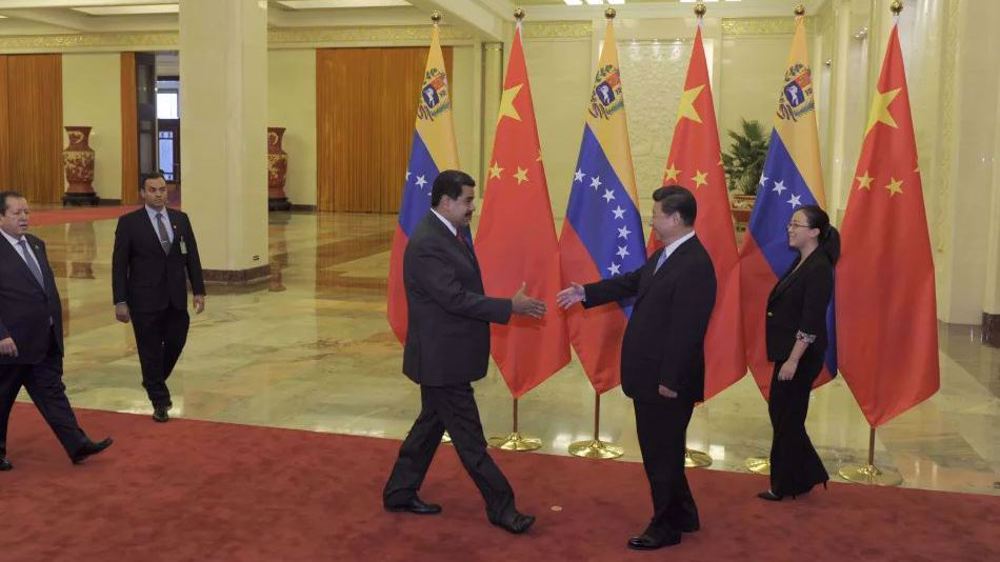
Cai Wei, China's Assistant Minister of Foreign Affairs, emphasized at the launch ceremony—attended by diplomats and media from multiple LAC countries—that this policy paper reflects China's dedication to strengthening ties with LAC.
"This shows the great importance China attaches to this relationship and its deep commitment to pursuing common development with LAC countries," Cai stated, adding that the paper will serve as a roadmap for China-LAC relations in the new era.
Future growth for China-LAC relations is outlined in proposals for exchanges and cooperation across over 40 areas, actively responding to LAC countries' needs in trade, investment, finance, science and technology, innovation, climate change, and more.
The document establishes a framework to advance five key programs with LAC: the Solidarity Program, Development Program, Civilization Program, Peace Program, and People-to-People Connectivity Program.
It addresses high-level exchanges, high-quality Belt and Road cooperation, trade and investment, scientific and technological innovation, as well as military exchanges.
The paper also highlights collaboration in reforming the global economic governance system and advancing the Global Development Initiative, Global Security Initiative, and Global Civilization Initiative.
"In presenting this document, we confirm that our relationship is not limited to economic transactions and exchanges, but is grounded in shared values that transcend political and economic circumstances, and in the deep conviction that together we can build a more prosperous, fair, and sustainable world," said Martin Charles, Dean of the Diplomatic Corps of Latin American and Caribbean States in China and Ambassador of Dominica to China.
He added that implementing the policy paper will be crucial for advancing a China-LAC community with a shared future, directly impacting cooperation in infrastructure construction, education, culture, agriculture, and more.
Araghchi welcomes Xi’s initiatives, hails China-Iran strategic partnership
Russia, China veto US backed anti-Iran resolution at UN Security Council
China rejects US ‘long-arm jurisdiction,’ says trade ties must not face third-party coercion



Israel has carried out 1,068 incursions into Syria since Assad’s fall: Report
Pentagon says four killed in US strike on alleged drug boat in Caribbean
Iran sets 7 conditions for US to escape war quagmire: Rezaei
Stories Beyond Numbers: Mojtaba, three-day-old infant whose life was cut short before it could bloom
Discover Iran: Tabriz’s ‘Mausoleum of Poets,’ where centuries of Persian literary history live on
Moscow intercepts massive Ukrainian drone strike amid elections; civilian casualties reported
Understanding Iran’s tourism momentum amid war and sanctions
How Yemeni retaliatory strike on Saudi East-West pipeline exposed limits of bypassing Hormuz




 PressTV NEWSLETTER now
  This makes it easy to access the Press TV website