Behind the veil: Australia’s latest move against Press TV designed to control the narrative
By Sheida Eslami
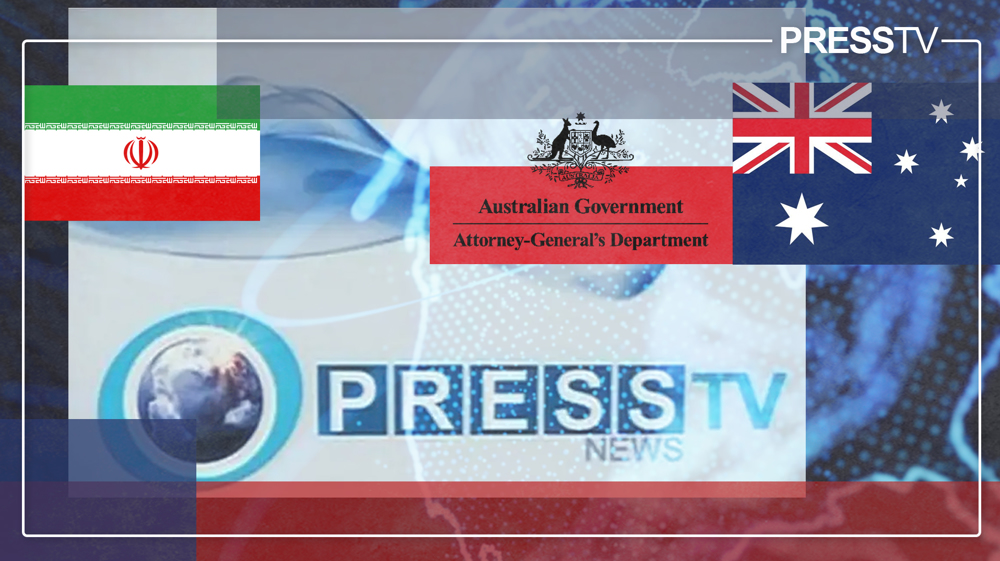
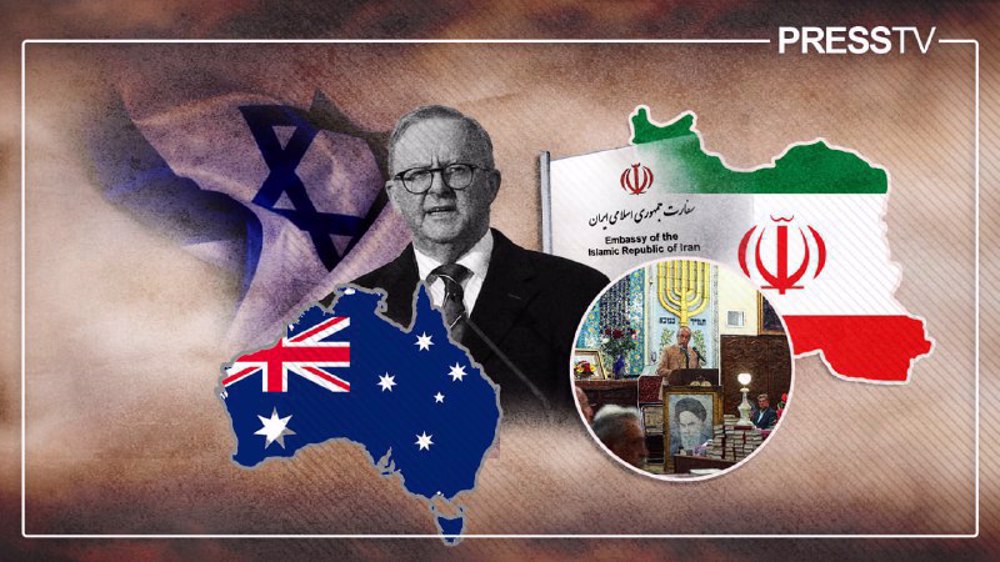
On the surface, the recent action by the Australian Attorney-General’s Department to register the title of Press TV under the “Foreign Influence Transparency Scheme” (FITS) appears to be an administrative procedure within the framework of Australian law.
However, in reality, it is a multilayered move that goes beyond regulatory protocols and, at a strategic level, is one of the clear signs of the decision by Western media blocs to “manage global narratives.”
This move is a continuation of multi-stage pressures against independent and alternative media and those not aligned with the West – pressures that for years have ranged from EU and US Treasury sanctions to domain seizures and platform account blockages targeting Press TV.
Therefore, the registration in FITS should not be seen as a declaration of “transparency” but rather as a form of political labeling under the guise of law, a move that attempts to categorize Iran’s leading international media as a foreign influence entity, thereby undermining the legitimacy of its operation.
According to the logic of this scheme, transparency apparently prevents baseless political influence. But when an international media outlet like Press TV is involved, one that fundamentally has no office, representative, or officially registered journalist on Australian soil, and whose decision-making cycle happens in Tehran rather than Canberra, the fundamental question arises: transparency about what?
On what basis is a network far outside Australian legal jurisdiction included in a scheme whose primary condition is “documented activity within Australian territory”?
The answer to this question lies beyond legal boundaries and must be sought in the geopolitical logic of narrative control, where every voice different from the official Western narrative – even if independent and professional – is interpreted as a threat, not as a global media asset.
The FITS law was originally designed to prevent overt interference by foreign governments and politicians in Australia’s domestic affairs.
According to the text of the law, individuals or entities subject to registration are those who have an “operational presence” in Australia, are effectively directed by a foreign principal entity, and operate with the aim of influencing government decisions or public opinion.
The official report of Australia’s Parliamentary Joint Committee on Intelligence and Security (PJCIS), published in March 2024, acknowledged that since its implementation, the scheme has suffered “structural flaws” and that its enforcement has been “almost exclusively focused on China.”
The report expressed concern over the exclusion of countries such as Iran and Russia from the scheme’s scope, even though there has been no solid, cohesive, and impartial evidence or documentation proving operational presence by countries like Iran or Russia within Australia.
✍️Feature - Dancing to Zionist tune: Australia's diplomatic fallout with Iran on bogus anti-Semitic claims
— Press TV 🔻 (@PressTV) August 28, 2025
By @M_Homaeefar https://t.co/C8PvygvWGF
The committee warned the government in the same report that “a scheme with such limited outcomes provides no benefit beyond creating administrative burden for law-abiding actors,” and even insisted that the government should forcibly register some individuals.
Such a statement is highly meaningful: when the government has the power to compulsorily register persons or entities without their consent, the boundary between legal design and political will is effectively erased.
Regarding Press TV, exactly this invisible boundary has operated, because no official or documented reason for including the network in FITS has been released as of the official announcement.
Press TV neither has an office in Australia, nor local employees or employment contracts with Australian individuals or organizations, nor is there any reported targeted activity aimed at influencing Australia’s domestic environment.
The channel’s content, in terms of news coverage and programming, plays a regional role (given its focus on West Asia developments) or an international one (covering America, Europe, etc.), not a local one. From this perspective, Australia’s move is unfounded and illogical, and in reality has a political meaning: the symbolic inclusion of Iran on the list of states accused of foreign media influence in English-speaking domains to advance Australia’s controlling agendas.
Tasnim News Agency, in a note published on November 22, 2025, pointed out that all Press TV’s news resources are supplied by a network of independent journalists worldwide and that it has no mission to influence the political structures of countries, specifically Australia.
This characteristic distinguishes Press TV from classic state media outlets. Its mission is not propaganda but rather reflecting non-Western perspectives in the international arena.
However, recent years have shown that for Western governments, the concept of “non-Western” is equated with “influenced by rival states.”
In fact, Western security agencies have moved from “content review” to “political intent reading,” and any media that challenge their dominant narrative – from newspapers critical of the Ukraine war to pro-resistance media – are easily classified as foreign influence or interference.
From a media perspective, FITS today is not designed to prevent influence but to regulate platforms of narrative; a system in which the West speaks at the center, and others must speak only with permission.
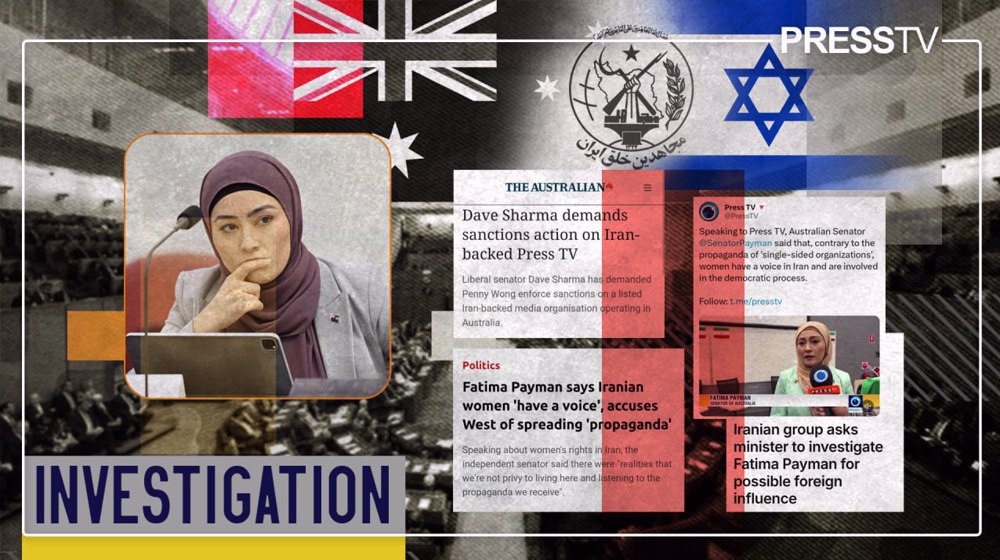
✍️ Investigation: How Zionist lobby silenced Australian senator for commending Iranian women
— Press TV 🔻 (@PressTV) March 18, 2025
By Yousef Ramazanihttps://t.co/FdeT7cXWEu pic.twitter.com/fChmzjwqiB
Such “narrative engineering” has multiple consequences. At the legal level, public trust in the impartiality of regulatory bodies declines. Australian citizens observe numerous cases related to companies, lobbying groups, and political influence inside the country that have either been left unaddressed or quietly archived, while focus remains on countries like China, Russia, and now Iran.
From the public’s viewpoint, this situation creates an image of “politicization of law.”
Domestically, FITS was supposed to translate transparency, but Australia’s government behavior has turned it into a political pressure tool, a tool that has entered the battlefield of narratives through legal means and, with the soft language of diplomacy, has replaced argument with accusation.
At the media level, this decision is part of a longer process of controlling independent media.
First, Press TV’s access to satellite broadcasting via YouTel was stopped. Then, its official accounts on social networks were closed for so-called “security” reasons. After that, its dotcom domain was seized by the US Department of Justice.
Now, its inclusion in Australia’s FITS system is a new link in the same chain. This targeted pressure campaign shows that blocking dissenting media is no longer a scattered reaction but a coherent and coordinated strategy among Western governments: from transparency regulations in Australia to anti-influence laws in Canada and state media blacklisting in the European Union.
In all these cases, official terms such as freedom, transparency, and immunity from foreign interference mask a politically prejudiced reality.
It is noteworthy that simultaneously with this decision, Israeli media reports and programs expressed growing concern about Press TV’s expanding audience.
One report from Israel’s Channel 14, in summer 2025 and just about a month after Israel’s 12-day war of aggression against Iran, stated: “Press TV acts beyond traditional media and has become a real weapon in the war of narratives. Using the English language, it has been able to broadcast the messages and narratives of the Islamic Republic at a level beyond its internal borders.”
Such reactions indicate that the spread of Press TV’s content has influence beyond East and West borders, and perhaps precisely for this reason, efforts to restrict it have intensified.
Press TV is no longer a matter of one country. It is a matter of a global narrative – a justice-seeking narrative that passes through censorship and, despite restrictions, finds its global audience.
✍️ Viewpoint - Austrian media and the West’s deepening structural hostility toward Iran’s Press TV
— Press TV 🔻 (@PressTV) October 22, 2025
By Sheida Eslamihttps://t.co/RbC4ZinNhZ pic.twitter.com/O85vHQnbDb
From Iran’s perspective, this behavior must be analyzed alongside new sanctions against Iran’s missile and defense sectors; because in recent years, alongside expanding sanctions by the US, European Union, and others against Iran, the Australian government has also, several times, added a set of Iranian officials and institutions to its sanctions list, the latest of which occurred just weeks ago.
From this viewpoint, both the technical sanctions and media restrictions lie on the same trajectory: weakening Iran’s representational power. In one, the hard tool of elimination is used; in the other, the soft language of restriction, but the outcome is the same: denial of the right to narrate.
In such a context, registering Press TV in FITS continues the dual behavioral pattern and marks a new step in engineering global public opinion against Iranian media independence.
In the face of such a framework, the type of response by Press TV is more important than the event itself. Past experience shows that despite all restrictions, this network has not only endured but expanded its reach on alternative platforms and reconstructed its news production in a broader linguistic spectrum.
Now it is necessary for mere defense to give way to aggressive legal and narrative action, using the concepts within FITS itself to question the selective behavior governing it and to speak on the contradiction between “oversight” and “censorship” in Western freedom of speech laws. This action will be defensive in content and offensive in discourse.
Overall, the FITS event should be seen as a sign of transformation in Western media policy: a shift from the slogan of “freedom of speech” to a strategy of “access control.”
Transparency no longer means clearer visibility but the removal of voices that “do not say what must be said.” This is the point where Press TV transcends mere media presence and becomes an actor in global narrative – a media that, even when its name is listed in warning registries, remains alive in the memory of international audiences because it is a voice from another side of the world, not a mere echo of the West.
In the logic of soft power, what ultimately remains is the narrative, not the name. From this perspective, FITS may be the last attempt to control form, but the substance will in no way be tamed by the Western narrative path.
Press TV will continue on its natural path, not by denying presence but by stabilizing meaning amid censorship, just as any living media gains new life through the attacks of history, not silence.
Sheida Islami is a Tehran-based writer, poet, media advisor and cultural critic.
Arbaeen: The eternal journey of remembrance, resistance and revival of the message of Karbala
Arbaeen 2026 becomes statement of unity and resilience amid US-Israeli war on Iran, resistance axis
The recycled, futile psychological ops by US, Israeli spy agencies and hostile media against Iran



VIDEO | Israeli raid on Qalandia raises fears of prolonged targeting of West Bank refugee camps
VIDEO | Iran-Oman talks on Hormuz
VIDEO | Press TV's news headlines
Trump increasingly frustrated by Iran retaliation, rages at Hegseth over munitions shortages: Report
Pakistan committed to promoting peace and security through dialogue in West Asia: Envoy
Iran known as a powerful, respected country; enemy targets symbols of its strength: President
Saudi-led EA buyout spotlights Trump's son-in-law's Persian Gulf ties
Yemeni forces say directly hit Saudi oil tanker in Gulf of Aden


 PressTV NEWSLETTER
now
PressTV NEWSLETTER
now
 This makes it easy to access the Press TV website
